
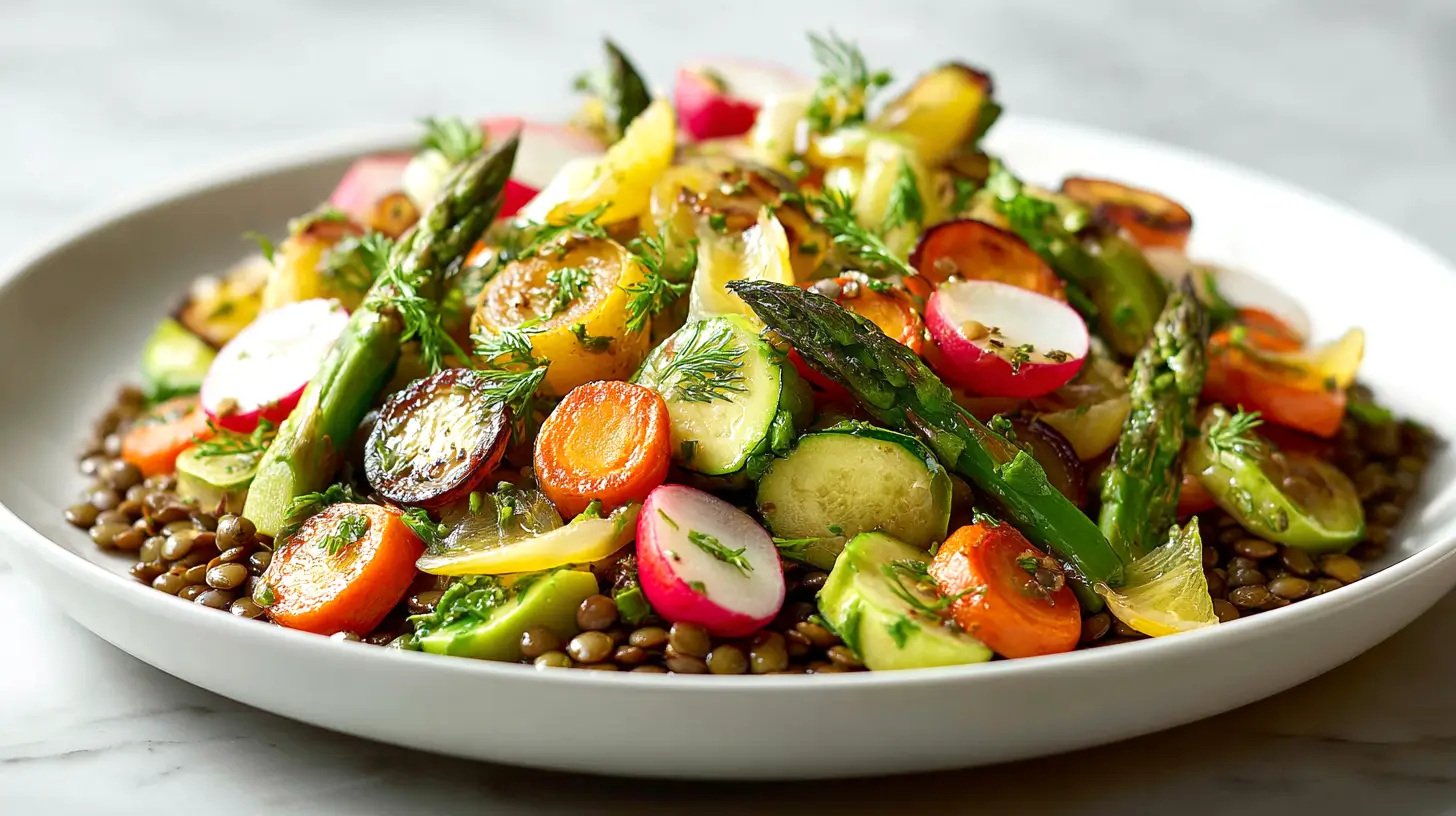
I’ve been craving meals that land somewhere between nourishing and exciting, and that’s how this lentil bowl came to life. It’s colorful, grounded, and full of roasted spring vegetables that actually pull their weight. I’m not talking about sad desk lunch energy here. This is the kind of bowl that makes lunch feel intentional. It’s cozy without being heavy, and fresh without being fussy. Best of all, it works for busy days when dinner still needs to taste like a real choice.
I’ve found that a good lentil bowl balances texture first, then flavor. You want tender lentils, yes, but you also need contrast. That’s where roasting vegetables changes everything. While steaming keeps things soft, roasting adds bite, caramelization, and real depth. As a result, every forkful stays interesting. Nothing blends into beige mush, which matters more than people admit.
Because I live in Florida, spring vegetables show up early and boldly. Zucchini, carrots, radishes, and asparagus don’t whisper here. They announce themselves at the store. So instead of fighting that, I lean in. This recipe uses simple pantry ingredients and turns them into something craveable. It’s practical, but it’s not boring.
Throughout this post, I’ll walk through each part clearly and calmly. You’ll see how to cook lentils properly, roast vegetables evenly, and assemble a bowl that actually satisfies. I’ll also share exact measurements and steps, because guessing rarely helps dinner. If you like meals that work hard and still look pretty, you’re in the right place.
Some of the links on this page are affiliate links, which means that if you click on them and buy something, I might get a small commission. But don’t worry; it never costs you more. You can peek at my full disclosure if you’re curious about the fine print.
Why This Lentil Bowl Works So Well For Spring Meals
This lentil bowl works because it respects the season instead of fighting it. Spring vegetables cook quickly, and lentils offer steady comfort. Together, they create balance without extra effort. I’ve noticed that meals like this support energy without dragging you down later. That matters, especially during busy weeks.
Because the vegetables roast instead of steam, they gain crisp edges and deeper flavor. Meanwhile, the lentils stay tender but structured. As a result, the textures don’t blur together. Each bite stays distinct, which keeps the bowl interesting.
Another reason this lentil bowl shines is flexibility. You can serve it warm or at room temperature. You can pack it for lunch without worrying about sogginess. Also, leftovers hold up well for several days. That reliability matters when schedules get unpredictable.
This recipe also leans on ingredients that are easy to find. You won’t need specialty stores or rare spices. Instead, olive oil, lemon, garlic, and herbs do the heavy lifting. Because of that, the bowl tastes bright without feeling sharp.
Here’s what really makes it click:
- Lentils provide protein, fiber, and grounding texture.
- Roasted vegetables add sweetness and structure.
- A simple dressing ties everything together cleanly.
- Fresh herbs add lift without overpowering.
Even better, this lentil bowl doesn’t require advanced timing skills. While the lentils simmer, the vegetables roast. Meanwhile, the dressing comes together quickly. Everything finishes around the same time, which keeps stress low.
If you like meals that reward you without demanding perfection, this bowl earns its spot. It’s steady, forgiving, and satisfying in all the right ways.
Ingredients For The Lentil Bowl And Roasted Spring Vegetables
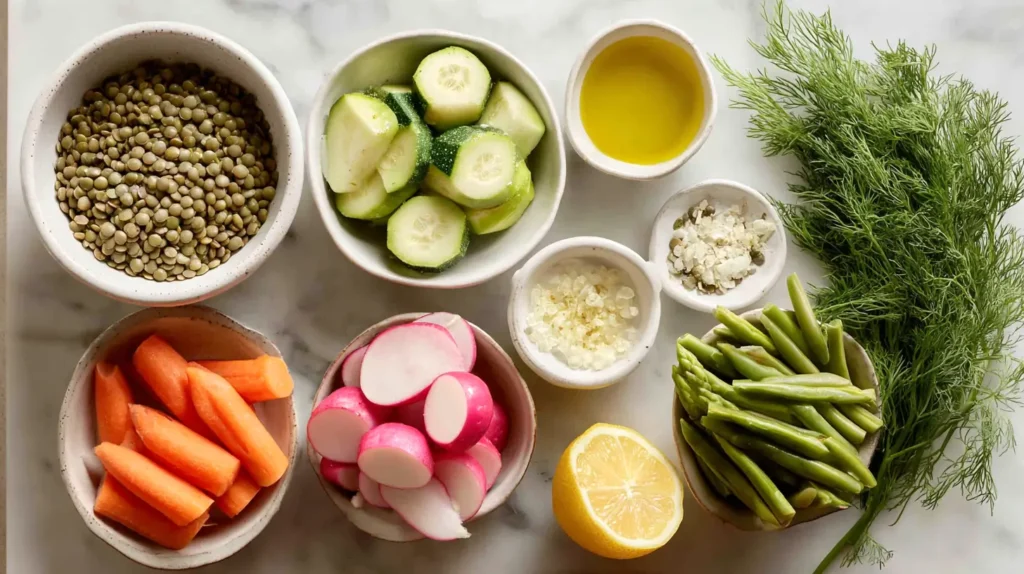
Before cooking, it helps to lay everything out clearly. This lentil bowl uses straightforward ingredients, measured precisely for reliable results. Because balance matters here, I don’t recommend eyeballing amounts.
For the lentils:
- 1 cup dried green lentils, rinsed
- 3 cups water
- 1/2 teaspoon fine sea salt
For the roasted spring vegetables:
- 1 medium zucchini, sliced into half-moons
- 1 cup carrots, sliced into coins
- 1 cup asparagus, cut into 2-inch pieces
- 1 cup radishes, halved
- 2 tablespoons olive oil
- 1/2 teaspoon kosher salt
- 1/4 teaspoon black pepper
For the lemon herb dressing:
- 1/4 cup olive oil
- 2 tablespoons fresh lemon juice
- 1 teaspoon lemon zest
- 1 small garlic clove, minced
- 1/2 teaspoon Dijon mustard
- 1/4 teaspoon salt
For finishing the bowl:
- 1/4 cup chopped fresh parsley
- 2 tablespoons chopped fresh dill
- Optional: crumbled feta, about 1/4 cup
Each ingredient plays a clear role. Lentils anchor the bowl. Vegetables bring color and contrast. The dressing adds brightness without heaviness. Meanwhile, herbs provide freshness that keeps everything lively.
If substitutions are needed, stick close to these categories. For example, you can swap asparagus for green beans. However, avoid watery vegetables like tomatoes here. They change the texture too much.
Once everything is prepped, the cooking process stays smooth. Having ingredients ready first makes this lentil bowl feel calm instead of rushed.
How To Cook Lentils That Stay Tender And Never Mushy
Cooking lentils well sets the tone for the entire lentil bowl. Overcooked lentils collapse, while undercooked ones stay chalky. Fortunately, the process stays simple when you follow a few clear steps.
Start by rinsing the lentils under cold water. This removes dust and helps them cook evenly. Then, add the lentils and water to a medium saucepan. Bring everything to a gentle boil over medium-high heat.
Once boiling, reduce the heat to low. Cover the pan slightly, leaving a small gap. This allows steam to escape without splashing. Let the lentils simmer for 18 to 22 minutes. Stir once halfway through to prevent sticking.
Check for doneness around the 18-minute mark. Lentils should be tender but still hold their shape. When ready, drain any excess water carefully. Then, return the lentils to the warm pan.
Add the salt and stir gently. Salting at the end keeps the skins intact. As a result, the lentils stay structured and pleasant. Let them rest for five minutes off heat. This helps excess moisture evaporate.
Here’s a quick lentil checklist:
- Rinse before cooking.
- Simmer gently, never rapidly.
- Salt after cooking.
- Avoid over-stirring.
These steps matter more than fancy techniques. Well-cooked lentils create a calm base for roasted vegetables. Meanwhile, they absorb dressing evenly without turning soft.
Once cooked, set the lentils aside. They’ll be ready for assembly soon, and they won’t need reheating. That simplicity makes this lentil bowl easier to manage.
Roasting Spring Vegetables For Maximum Flavor And Texture
Roasting vegetables transforms them from simple to craveable. For this lentil bowl, spring vegetables benefit from high heat and enough space. Crowding the pan leads to steaming, which dulls flavor.
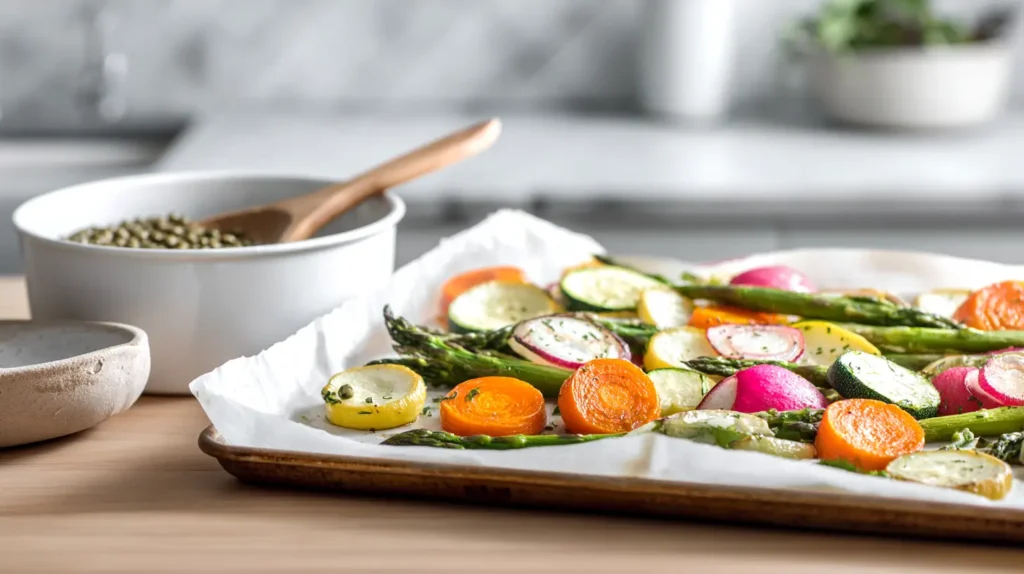
Start by preheating the oven to 425°F. While it heats, prepare a large rimmed baking sheet. Lining it with parchment helps cleanup later.
Add the zucchini, carrots, asparagus, and radishes to the sheet. Drizzle with olive oil, then sprinkle with salt and pepper. Toss everything gently until coated evenly. Spread the vegetables into a single layer.
Place the pan on the middle oven rack. Roast for 20 to 25 minutes. Halfway through, flip the vegetables using a spatula. This ensures even browning on both sides.
Watch for visual cues near the end. Carrots should caramelize at the edges. Radishes soften and mellow as they roast. Meanwhile, asparagus stays bright with slight char marks.
Once roasted, remove the pan from the oven. Let the vegetables rest for five minutes. This short pause keeps them from releasing excess moisture into the bowl.
Helpful roasting tips:
- Use high heat for better browning.
- Cut vegetables evenly for uniform cooking.
- Avoid stacking pieces.
- Rest briefly after roasting.
These vegetables add warmth and contrast to the lentil bowl. They bring sweetness, structure, and seasonal color. Because they roast quickly, timing stays manageable. That efficiency makes this dish weeknight-friendly.
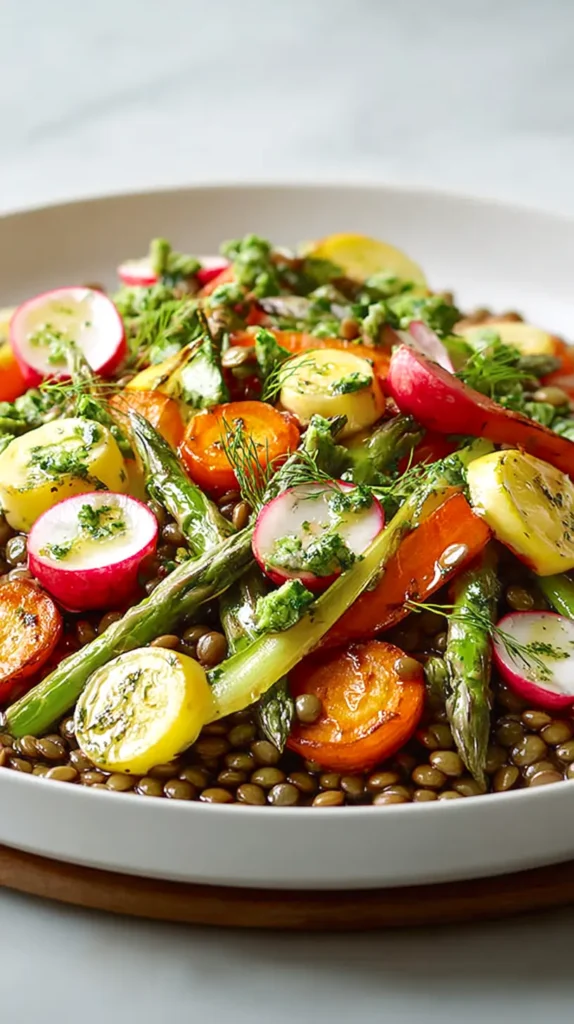
Making A Bright Lemon Herb Dressing That Pulls Everything Together
A good dressing connects every element in a lentil bowl. This one stays bright without overpowering. It uses acidity, fat, and herbs in careful balance.
Start by adding olive oil, lemon juice, and lemon zest to a small bowl. Whisk gently to combine. Then add the minced garlic, Dijon mustard, and salt. Whisk again until smooth.
Taste the dressing carefully. It should taste lively but not sharp. If needed, add a teaspoon of water to soften the acidity. This small adjustment makes a big difference.
Because the lentils are mild, the dressing needs presence. However, it shouldn’t dominate the vegetables. This balance keeps the bowl grounded.
A few helpful notes:
- Use fresh lemon juice, not bottled.
- Mince garlic finely to avoid harsh bites.
- Whisk well for proper emulsification.
Once mixed, set the dressing aside at room temperature. Cold dressing can dull flavors. Meanwhile, the herbs stay fresh until assembly.
This dressing works beyond this lentil bowl too. It pairs well with grains, greens, and roasted vegetables. Still, here it serves a specific purpose. It lifts the dish without stealing attention.
When poured over warm lentils, the dressing absorbs gently. That interaction creates depth without heaviness. It’s subtle, but it matters.
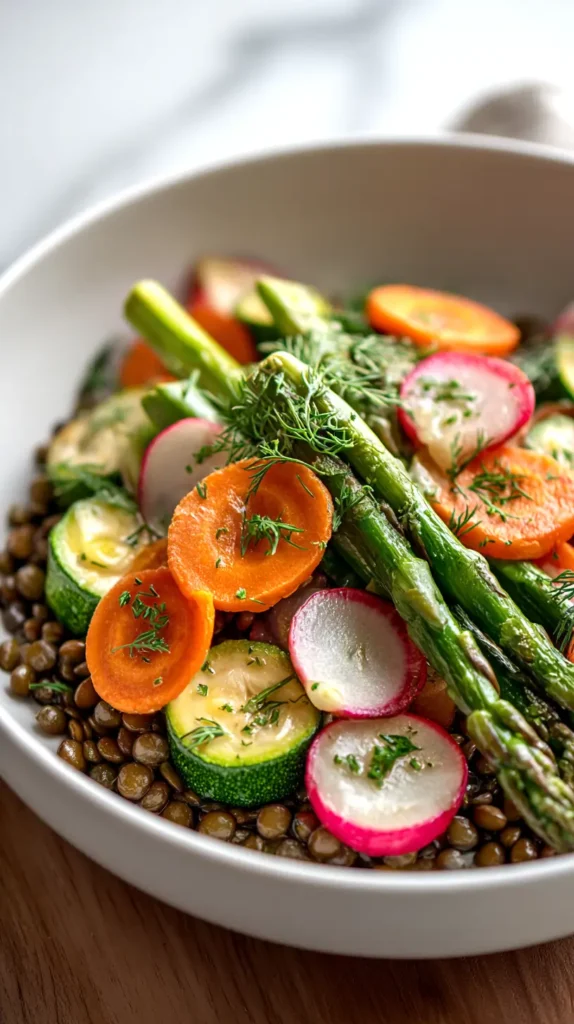
How To Assemble The Lentil Bowl For Best Balance
Assembly matters more than people expect. A lentil bowl tastes better when layers stay intentional. Tossing everything together carelessly can mute textures.
Start by placing warm lentils into each bowl. Use about one cup per serving. Spoon them gently to create an even base. Then, arrange the roasted vegetables on top. Spread them out instead of piling.
Next, drizzle the lemon herb dressing over the bowl. Use about one to two tablespoons per serving. Add gradually, tasting as you go. This keeps flavors balanced.
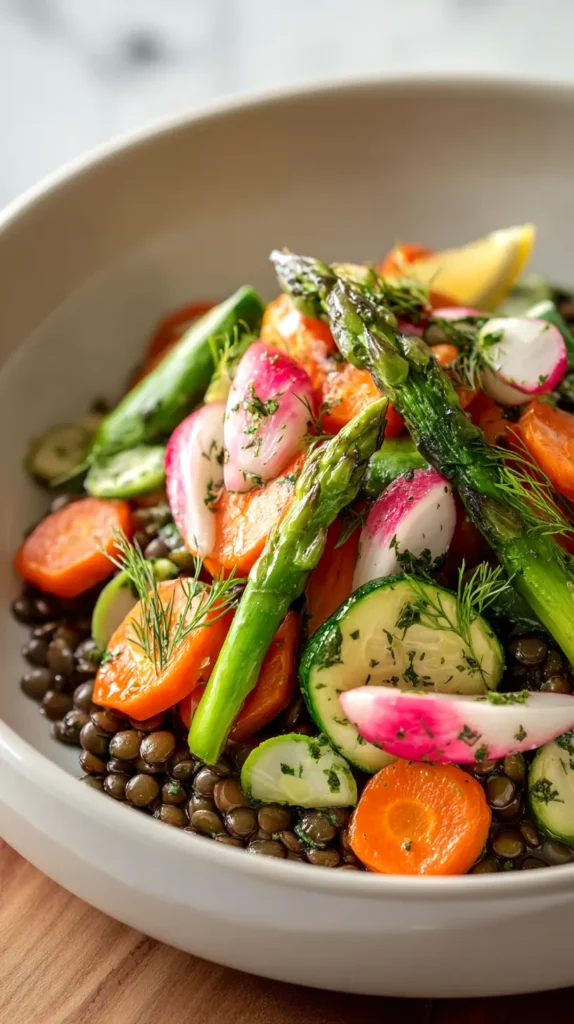
Sprinkle chopped parsley and dill over the top. Herbs should look generous but not overwhelming. If using feta, add it last. Crumble lightly so it stays distinct.
A balanced bowl includes:
- Lentils as the foundation.
- Vegetables layered for contrast.
- Dressing distributed evenly.
- Herbs added fresh.
Because this lentil bowl works warm or room temperature, timing stays flexible. You can assemble just before serving or pack it later. Either way, textures hold up well.
Avoid over-mixing at the end. Let each component remain visible. This keeps the bowl appealing and structured. It also makes leftovers easier to store.
Once assembled, the bowl is ready to enjoy. It’s calm food with personality, which is my favorite combination.
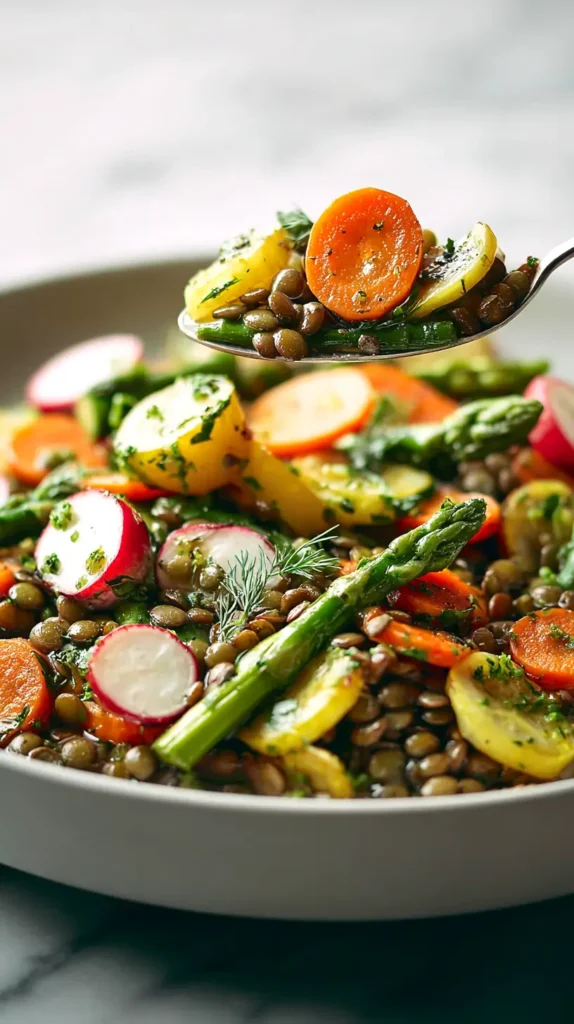
Step-By-Step Instructions For The Full Lentil Bowl Recipe
Clear steps make cooking smoother. Below is the complete lentil bowl recipe from start to finish.
- Rinse 1 cup dried green lentils under cold water.
- Add lentils and 3 cups water to a saucepan.
- Bring to a gentle boil over medium-high heat.
- Reduce heat to low and simmer 18 to 22 minutes.
- Drain excess water and return lentils to the pan.
- Stir in 1/2 teaspoon sea salt.
- Set lentils aside to rest.
- Preheat oven to 425°F.
- Prepare a large rimmed baking sheet.
- Add zucchini, carrots, asparagus, and radishes.
- Drizzle with 2 tablespoons olive oil.
- Sprinkle with kosher salt and black pepper.
- Toss gently and spread into a single layer.
- Roast 20 to 25 minutes, flipping halfway.
- Remove vegetables and rest five minutes.
- In a small bowl, combine olive oil, lemon juice, and zest.
- Add garlic, Dijon mustard, and salt.
- Whisk until smooth.
- Divide lentils into serving bowls.
- Top with roasted vegetables.
- Drizzle with lemon herb dressing.
- Sprinkle parsley and dill.
- Add optional feta if desired.
Each step builds logically. Meanwhile, nothing feels rushed. This structure keeps cooking approachable. Once finished, serve immediately or store for later meals.
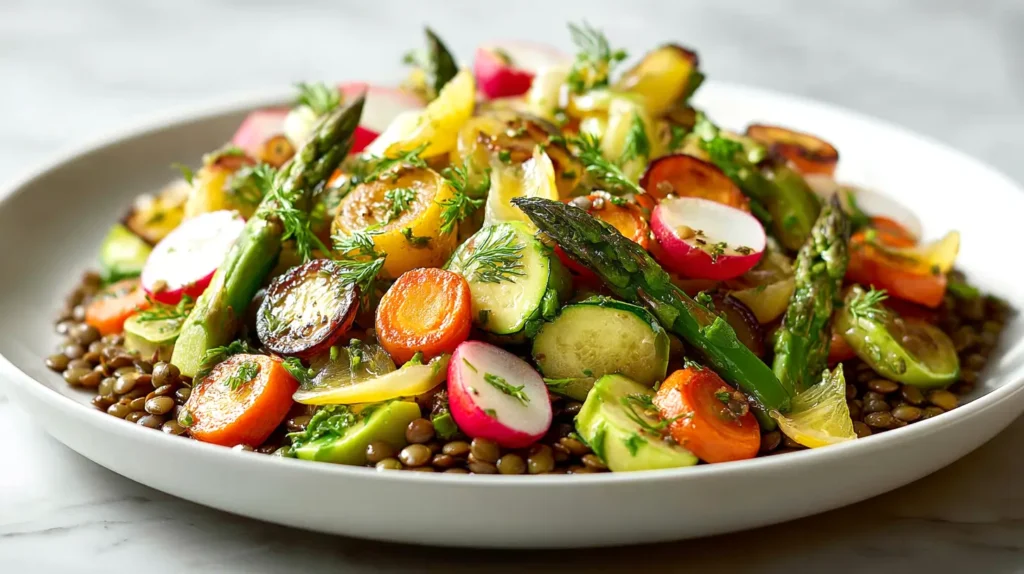
The Spoonable Lentil Bowl Trick That Fixes Dry Bites
Here’s the thing about a lentil bowl that no one really says out loud. The bottom half is usually better than the top. The lentils soak up dressing, the vegetables mingle, and suddenly every bite feels cohesive. Meanwhile, the top bites can run dry if you’re not paying attention.
So here’s the fix, and it’s almost suspiciously simple. Hold back a small portion of the cooked lentils before assembling the bowl. Then, mash that reserved portion lightly with a fork while it’s still warm. Not into a paste. Just enough to break them down. Stir in a tablespoon or two of the lemon herb dressing until the mixture turns spoonable.
Now assemble the lentil bowl as usual, but finish it by dolloping that mashed lentil mixture over the top. As you eat, it naturally mixes into each forkful. You don’t need extra sauce. You don’t need more oil. The bowl stays moist, cohesive, and balanced all the way through.
This works especially well with roasted spring vegetables. Their crisp edges contrast with the creamy lentils, so each bite has structure and comfort. Nothing slides around. Nothing dries out. The bowl behaves.
It’s a small step, but it changes the eating experience completely. Instead of chasing perfect bites, every bite just works. Once you try this spoonable-lentil finish, flat, dry bowls start feeling unfinished. And honestly, no one needs that kind of disappointment at dinner.
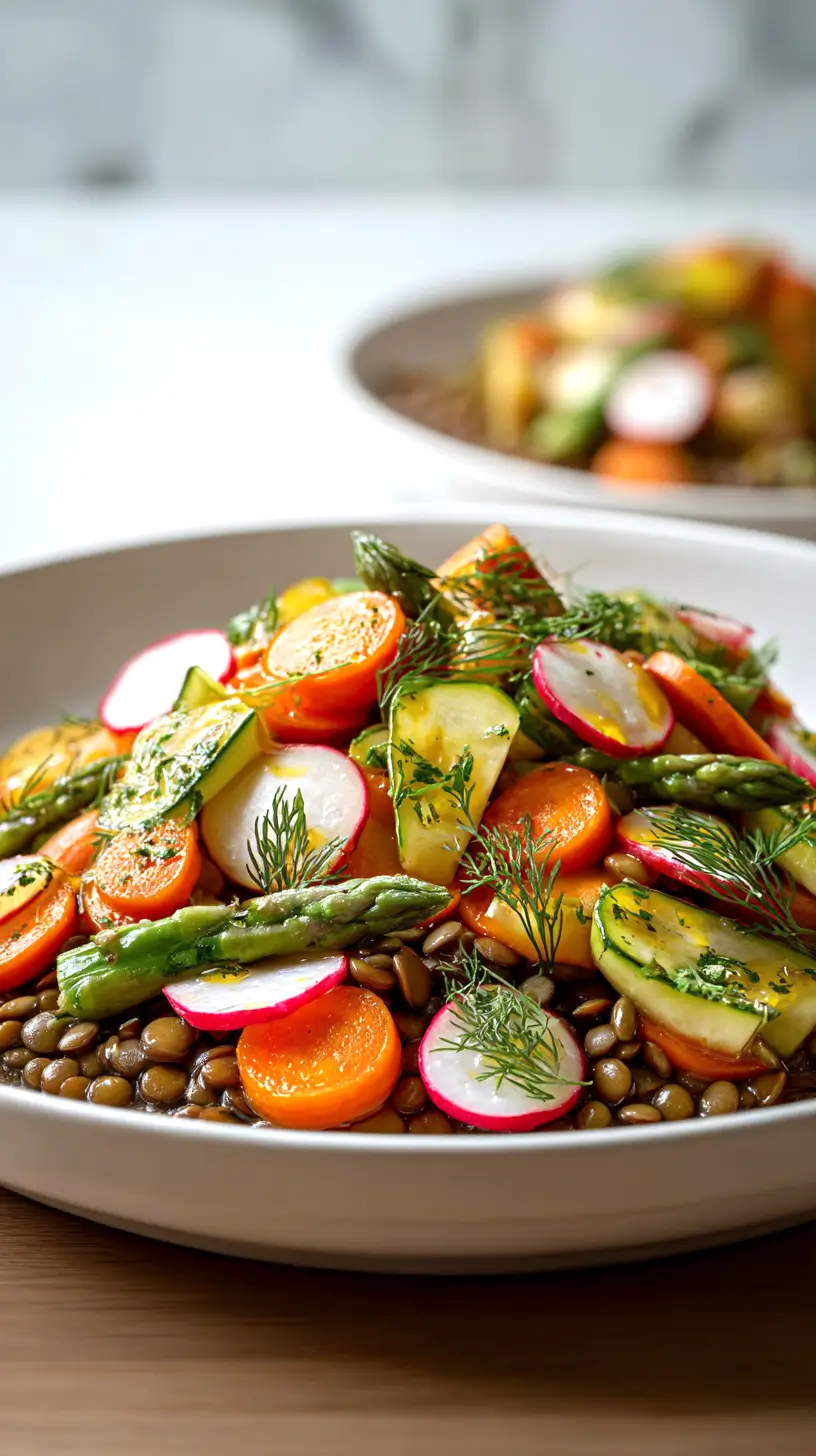
Roasted Spring Vegetable Lentil Bowl
Ingredients
Method
- Rinse the lentils under cold water until the water runs clear.
- Add the lentils, water, and ½ teaspoon kosher salt to a medium saucepan.
- Bring the lentils to a boil over medium-high heat.
- Reduce the heat to low and simmer uncovered for 18 to 22 minutes until tender but not mushy.
- Drain any excess liquid and set the lentils aside.
- Preheat the oven to 425°F.
- Line a large baking sheet with parchment paper.
- Place the carrot coins, zucchini rounds, yellow squash rounds, and asparagus on the baking sheet.
- Drizzle the vegetables with 3 tablespoons olive oil and sprinkle with the remaining ½ teaspoon kosher salt and black pepper.
- Toss gently to coat, keeping the vegetables in a single layer.
- Roast the vegetables for 25 to 30 minutes, flipping once halfway through, until lightly caramelized and tender.
- Remove the vegetables from the oven and let them cool slightly.
- In a small bowl, whisk together the remaining 1 tablespoon olive oil, lemon zest, and lemon juice.
- Add the warm lentils to a large serving bowl.
- Pour the lemon dressing over the lentils and stir gently to combine.
- Top the lentils with the roasted vegetables.
- Scatter the sliced radishes and chopped fresh dill over the bowl.
- Finish with flaky salt to taste.
- Serve warm or at room temperature.
Tried this recipe?
Let us know how it was!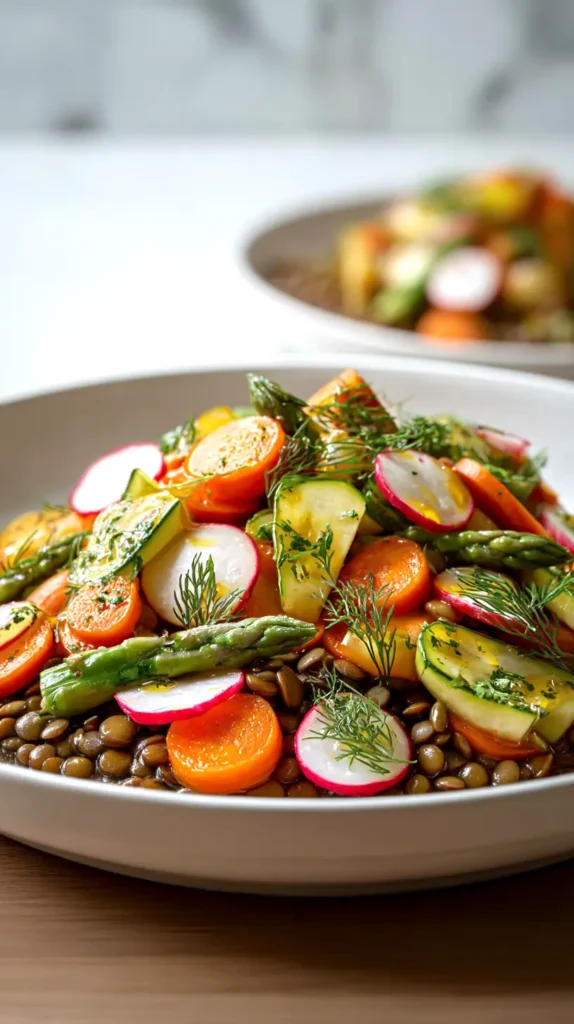
Final Thoughts On This Lentil Bowl And Making It Your Own
This lentil bowl has earned a permanent place in my rotation. It’s steady, adaptable, and genuinely satisfying. I appreciate meals that respect ingredients without turning dinner into a project.
I’ve found that bowls like this support balance. They don’t demand perfection. Instead, they invite adjustment. You can swap vegetables, change herbs, or skip cheese. Still, the structure holds.
Because I live in Florida, this recipe fits my year-round produce rhythm. Roasted vegetables work even when seasons blur together. That flexibility matters when weather doesn’t follow rules.
This bowl also photographs beautifully, which never hurts. If you share food online, it’s Pinterest-friendly without trying too hard. Bright colors and clean layers always catch attention.
More importantly, it eats well. Leftovers stay satisfying. Lunch feels intentional. Dinner stays calm. Those details shape how meals support daily life.
If you’re building a collection of reliable recipes, this one belongs there. It respects time, ingredients, and appetite. It’s not flashy, but it’s confident.
Ultimately, this lentil bowl proves that simple food can still carry personality. With roasted spring vegetables and clear steps, it delivers every time. That kind of reliability deserves repeat cooking.