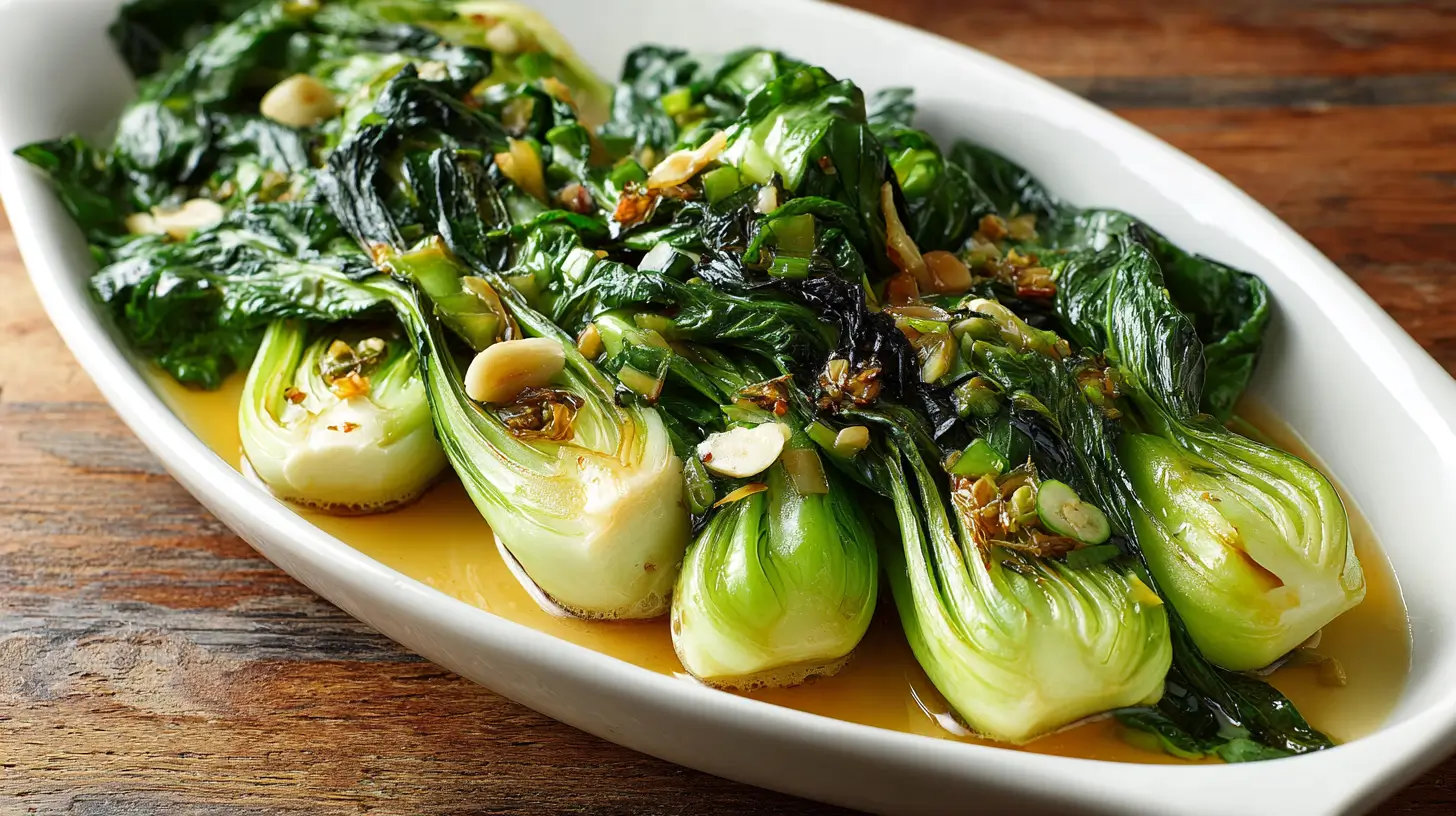
Braised bok choy is one of those dishes that looks quiet but works hard. I keep going back to it when I want dinner to slow down without getting too complicated. The name sounds polished, yet the process stays grounded and forgiving. That balance matters, especially on nights when energy runs low but standards stay high.
I’ve found that braising turns simple vegetables into something more settled. Bok choy, in particular, responds well to gentle heat and moisture. The stems soften slowly, while the leaves absorb flavor without falling apart. As a result, the whole dish becomes cohesive instead of scattered.
Because bok choy cooks quickly, this recipe never drags. Still, the braising method adds depth that sautéing never reaches. The broth carries flavor into every layer. Meanwhile, aromatics do their job quietly in the background. Nothing fights for attention, yet everything earns its place.
I also appreciate how adaptable this dish feels. It works as a side, but it also stands alone over rice. It pairs with roasted chicken, tofu, or pork without complaint. That flexibility makes it useful, not just interesting.
Living in Florida means winter cooking looks different. Cold nights feel shorter, yet the craving for warmth still shows up. Braised bok choy fills that gap perfectly. It offers comfort without heaviness, which suits mild evenings and busy schedules alike.
This recipe focuses on technique more than flair. However, the results still taste intentional. The ingredients stay familiar. The steps stay calm. The payoff shows up at the table, not in extra cleanup.

Some of the links on this page are affiliate links, which means that if you click on them and buy something, I might get a small commission. But don’t worry; it never costs you more. You can peek at my full disclosure if you’re curious about the fine print.
Why Braised Bok Choy Works for Cooler-Weather Cooking
Braised bok choy earns its place in cooler-weather cooking through balance. The vegetable itself stays light, yet the method adds structure. That contrast keeps the dish grounded without becoming heavy. I’ve found that this matters when meals need to comfort without overwhelming.
Because bok choy contains both stems and leaves, it behaves like two vegetables in one pan. The stems need time to soften. The leaves need protection from overcooking. Braising handles both needs at once. Steam and liquid work together, creating tenderness without collapse.
Another reason this method works lies in moisture control. Dry heat can scorch bok choy quickly. Braising avoids that problem. Instead, it encourages gradual change. The stems relax. The leaves wilt gently. Meanwhile, the broth thickens slightly as it cooks.
This approach also welcomes savory flavors. Garlic, ginger, and soy-based seasonings settle into the liquid. Over time, they seep into the vegetable. As a result, every bite tastes seasoned instead of surface-level.
Braised bok choy also fits naturally into winter meal planning. It pairs well with rice, noodles, or mashed potatoes. It doesn’t compete with richer mains. Instead, it supports them. That supporting role makes it reliable during colder months.
Additionally, this dish reheats better than most greens. The texture holds. The flavor deepens slightly. Leftovers stay useful instead of sad. For busy households, that matters more than presentation.
Finally, braised bok choy stays budget-friendly. The ingredient list remains short. The cooking method doesn’t require special equipment. Good food doesn’t need drama. It just needs care and time.
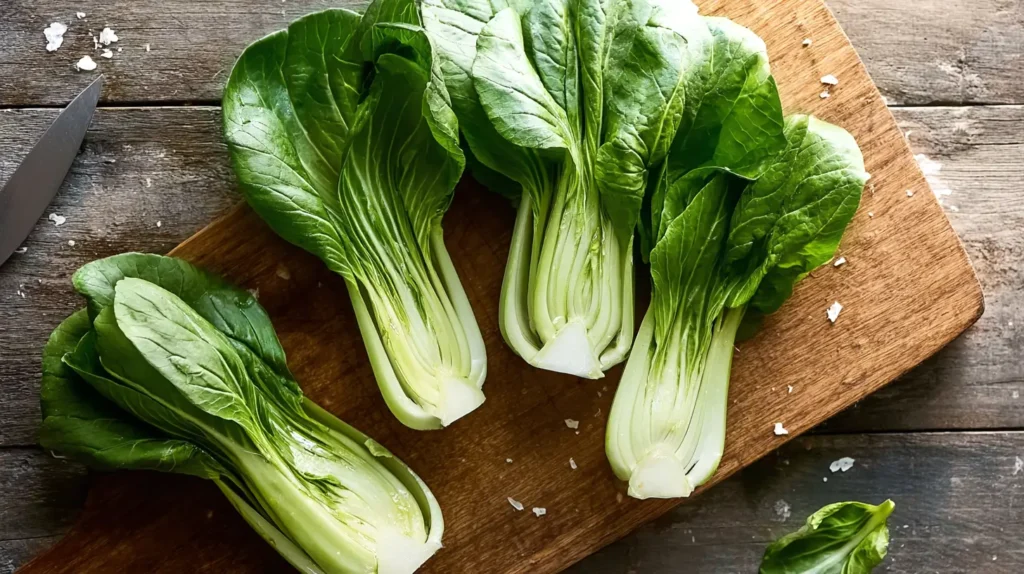
Ingredients for Braised Bok Choy
This recipe relies on straightforward ingredients that work together quietly. Each one serves a clear purpose. Nothing feels decorative. Everything earns its spot in the pan.
Ingredients
- 1½ pounds baby bok choy, halved lengthwise
- 2 tablespoons olive oil
- 1 tablespoon unsalted butter
- 4 cloves garlic, thinly sliced
- 1 tablespoon fresh ginger, minced
- 1 cup low-sodium vegetable broth
- 2 tablespoons soy sauce or tamari
- 1 teaspoon sesame oil
- ½ teaspoon kosher salt
- ¼ teaspoon black pepper
- Optional garnish: sliced scallions or sesame seeds
Baby bok choy works best here because it cooks evenly. However, full-size bok choy also works if chopped into large pieces. I’ve found that halving lengthwise keeps the stems intact while allowing flavor penetration.
Using both oil and butter adds balance. Oil prevents scorching. Butter adds roundness. Together, they create a gentle base for aromatics.
Garlic and ginger form the backbone of flavor. Neither should dominate. Instead, they support the broth quietly.
Low-sodium broth matters. Bok choy absorbs liquid quickly. Too much salt early on becomes hard to fix later.
Soy sauce adds umami without overwhelming the vegetable. Sesame oil finishes the dish with warmth, not grease.
Every ingredient plays a role. Nothing gets wasted. That simplicity keeps the recipe dependable.
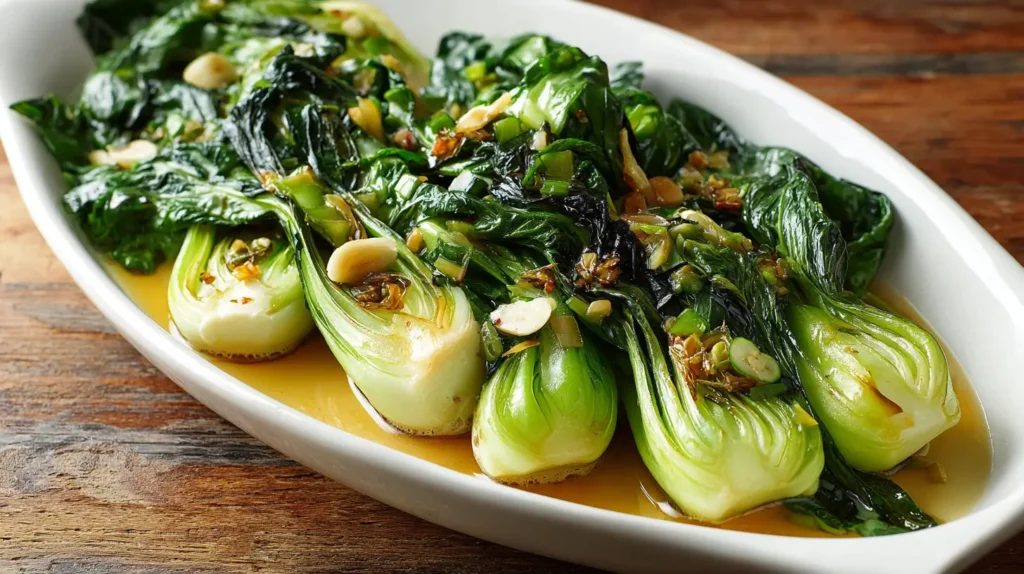
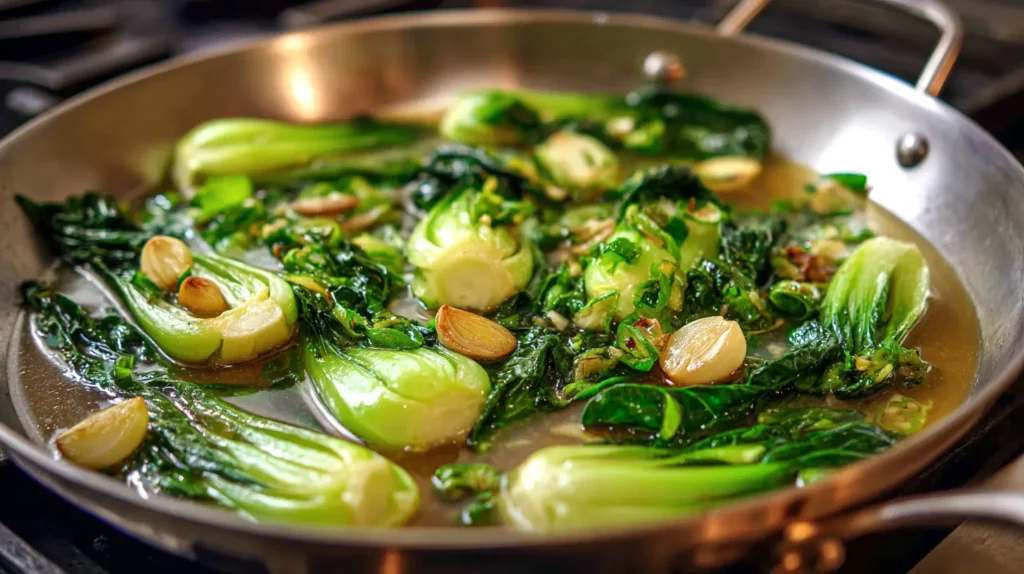
Step-by-Step Instructions for Braised Bok Choy
This method stays calm from start to finish. Each step builds gently on the last. Rushing only causes problems here, so steady pacing helps.
Instructions
- Rinse the bok choy thoroughly and pat dry with clean towels.
- Heat olive oil and butter together in a wide skillet over medium heat.
- Add sliced garlic and minced ginger. Cook for 30 seconds until fragrant.
- Arrange bok choy cut-side down in a single layer. Work in batches if needed.
- Cook for 2 to 3 minutes until lightly golden on the cut surface.
- Pour in vegetable broth and soy sauce carefully around the pan.
- Sprinkle salt and black pepper evenly over the bok choy.
- Reduce heat to medium-low and cover the skillet.
- Simmer for 8 to 10 minutes until stems turn tender.
- Uncover and drizzle sesame oil over the top.
- Spoon broth over the bok choy gently.
- Cook uncovered for 2 minutes to concentrate flavor.
- Taste and adjust seasoning if needed.
- Remove from heat and garnish as desired.
I’ve found that keeping the bok choy cut-side down at first matters. It encourages caramelization without burning leaves. Covering the pan traps steam, which softens stems evenly.
Uncovering near the end helps the broth reduce slightly. That step prevents a watery finish. The result tastes intentional rather than rushed.
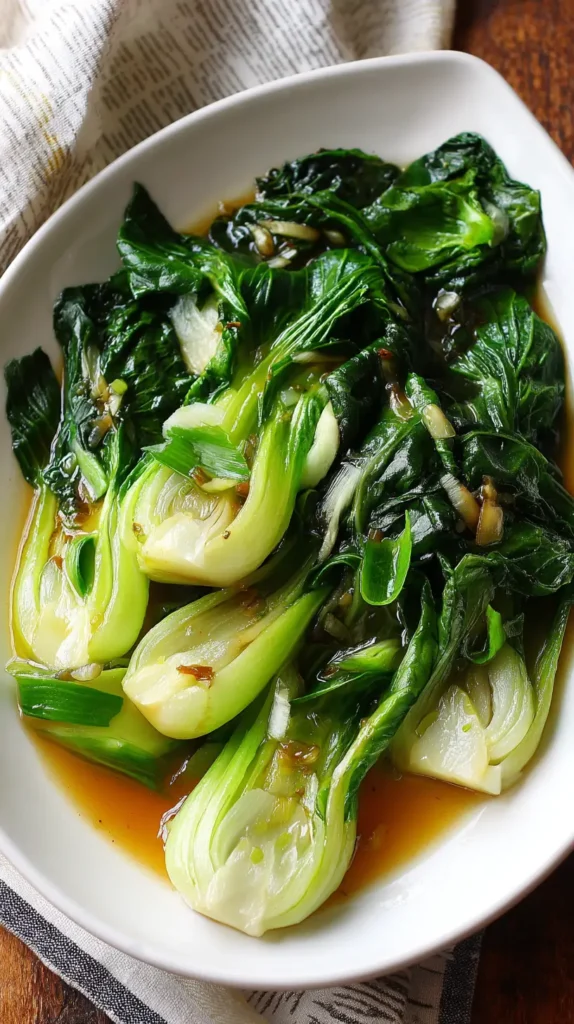
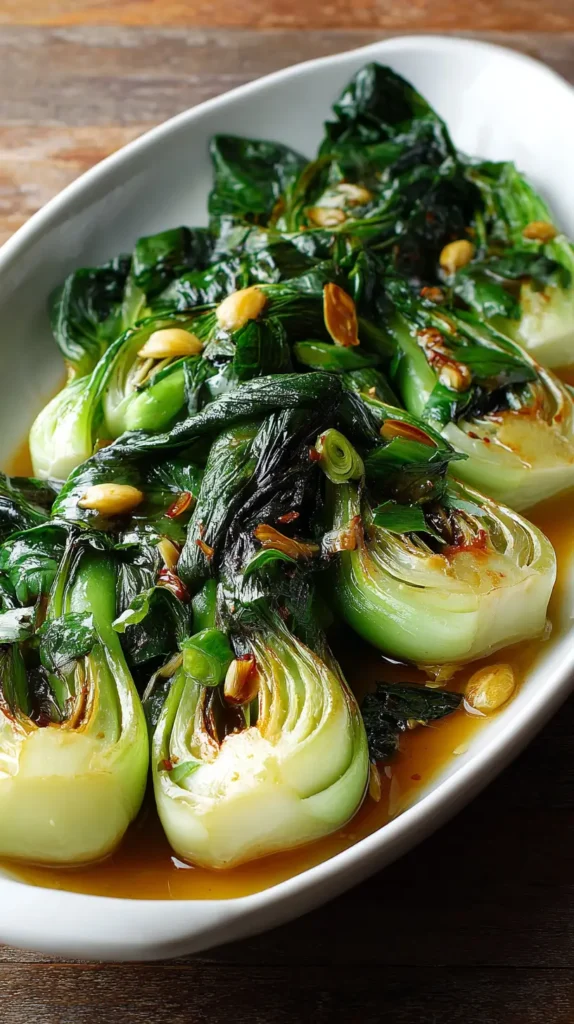
Flavor Variations That Still Respect Braised Bok Choy
Braised bok choy welcomes variation without losing its identity. The key lies in restraint. Too many changes distract from the vegetable itself. Subtle swaps work best.
For a deeper savory note, add one teaspoon of miso to the broth. Stir it in fully before adding liquid to the pan. This adds complexity without salt overload.
Mushrooms also work well here. Sliced shiitake or cremini mushrooms can sauté alongside the garlic. They release moisture that blends naturally with the broth.
For gentle heat, add a pinch of red pepper flakes. Keep the amount small. Bok choy absorbs spice quickly, and balance matters.
Citrus zest changes the tone entirely. A small amount of lemon or orange zest added at the end brightens the dish. This works well during transitional seasons.
Protein additions should stay secondary. You can quickly warm up cubed tofu or shredded chicken in the broth. Avoid overcrowding the pan. Space keeps texture intact.
Each variation respects the method. Braising stays the star. Everything else supports it quietly.
Serving Ideas for Braised Bok Choy
Braised bok choy adapts easily at the table. It behaves like a team player. I appreciate dishes that don’t demand center stage.
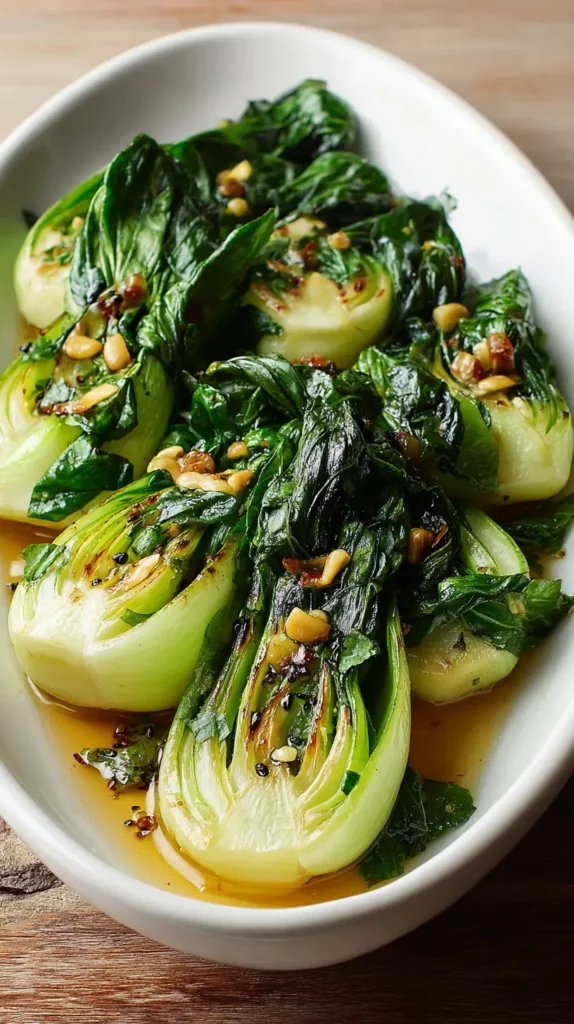
Serve it over steamed jasmine rice for a simple bowl. Spoon extra broth over the top. The rice absorbs flavor without stealing attention.
This dish also pairs well with roasted meats. Chicken thighs, pork tenderloin, or salmon work nicely. The vegetable balances richer proteins.
For vegetarian meals, pair it with noodles or dumplings. The soft texture goes well with the chewiness.
Braised bok choy also works as a base. Add a fried egg or soft tofu on top. The yolk or sauce blends with the broth naturally.
I’ve found that leftovers reheat gently on the stovetop. Add a splash of broth if needed. Avoid microwaving too aggressively.
This flexibility makes the dish practical. It adjusts to what’s already planned.
Common Mistakes to Avoid
Braised bok choy stays simple, but I’ve learned that small missteps change the outcome quickly. I don’t think this is a dish that rewards confidence as much as awareness. When something goes wrong, it usually happens early. Because of that, I pay attention from the first minute instead of trying to fix things later.
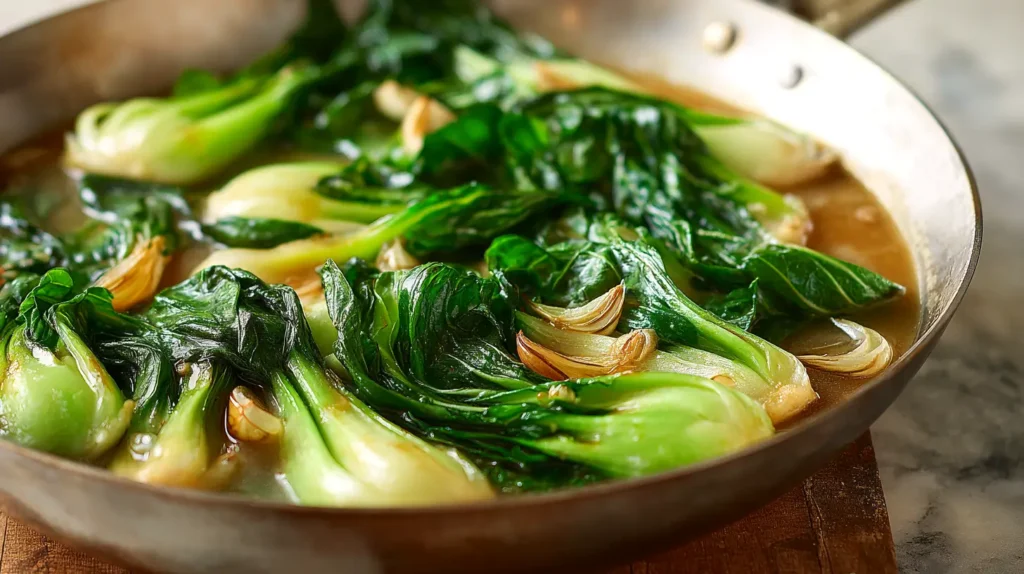
I’ve found that overcrowding the pan is the fastest way to lose control. Bok choy releases water quickly, so tight spacing causes steaming instead of browning. When that happens, the stems never develop depth. Even though working in batches feels slower, it protects texture and flavor. Space matters most before any liquid enters the pan.
Heat management comes up next. I always keep the heat moderate, even when I’m tempted to rush. High heat burns the leaves long before the stems soften. Once bitterness shows up, it stays. Patience here keeps the vegetable balanced instead of sharp.
I also don’t skip the lid during braising. Steam does real work in this dish. Covering the pan helps the stems soften evenly without drying out the leaves. Without that trapped moisture, the broth reduces too fast.
The timing of the seasoning also matters. I season lightly at first, then adjust near the end. Bok choy absorbs salt quickly, especially while braising.
Finally, I avoid cutting the bok choy too small. Larger sections hold structure. Smaller cuts collapse and lose presence.
When I watch these details, the dish stays steady. None of this takes skill. It just takes attention.
Health Benefits of Braised Bok Choy
I like when a recipe pulls double duty, and braised bok choy does exactly that. It tastes comforting, yet it quietly supports how I want to eat most days. I’ve found that vegetables cooked gently tend to be easier to enjoy and easier to digest. That alone makes this dish feel like a smart choice.
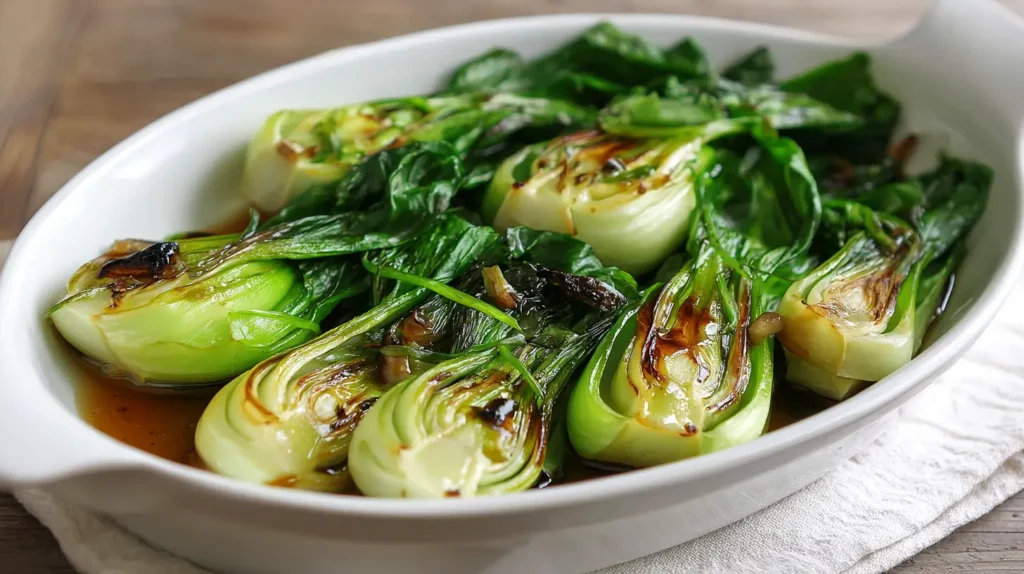
Bok choy is naturally rich in vitamins A, C, and K. Those nutrients support immune health, bone strength, and skin health. Because braising uses moisture and moderate heat, more of those nutrients stick around. Aggressive cooking methods can strip vegetables down. This one doesn’t.
I also appreciate that bok choy is low in calories but high in volume. That combination matters when meals need balance. The stems stay satisfying. The leaves soften and absorb flavor. As a result, the dish feels filling without relying on heaviness or excess fat.
Fiber plays a role here too. Bok choy supports digestion while staying gentle on the stomach. I’ve noticed that braised vegetables tend to sit better than raw ones, especially at dinner. The cooking process breaks down tough fibers, which makes everything easier to handle.
The broth adds another layer of benefit. Using a simple, savory liquid keeps hydration in the mix. When paired with aromatics like garlic and ginger, the dish supports warmth without being intense. Those ingredients bring natural anti-inflammatory properties along for the ride.
What I like best about this dish is that it makes eating vegetables easy. Braised bok choy doesn’t ask you to power through something healthy. It meets you halfway. That makes consistency easier, which matters more than perfection.
When food tastes good and supports your body, everyone wins.
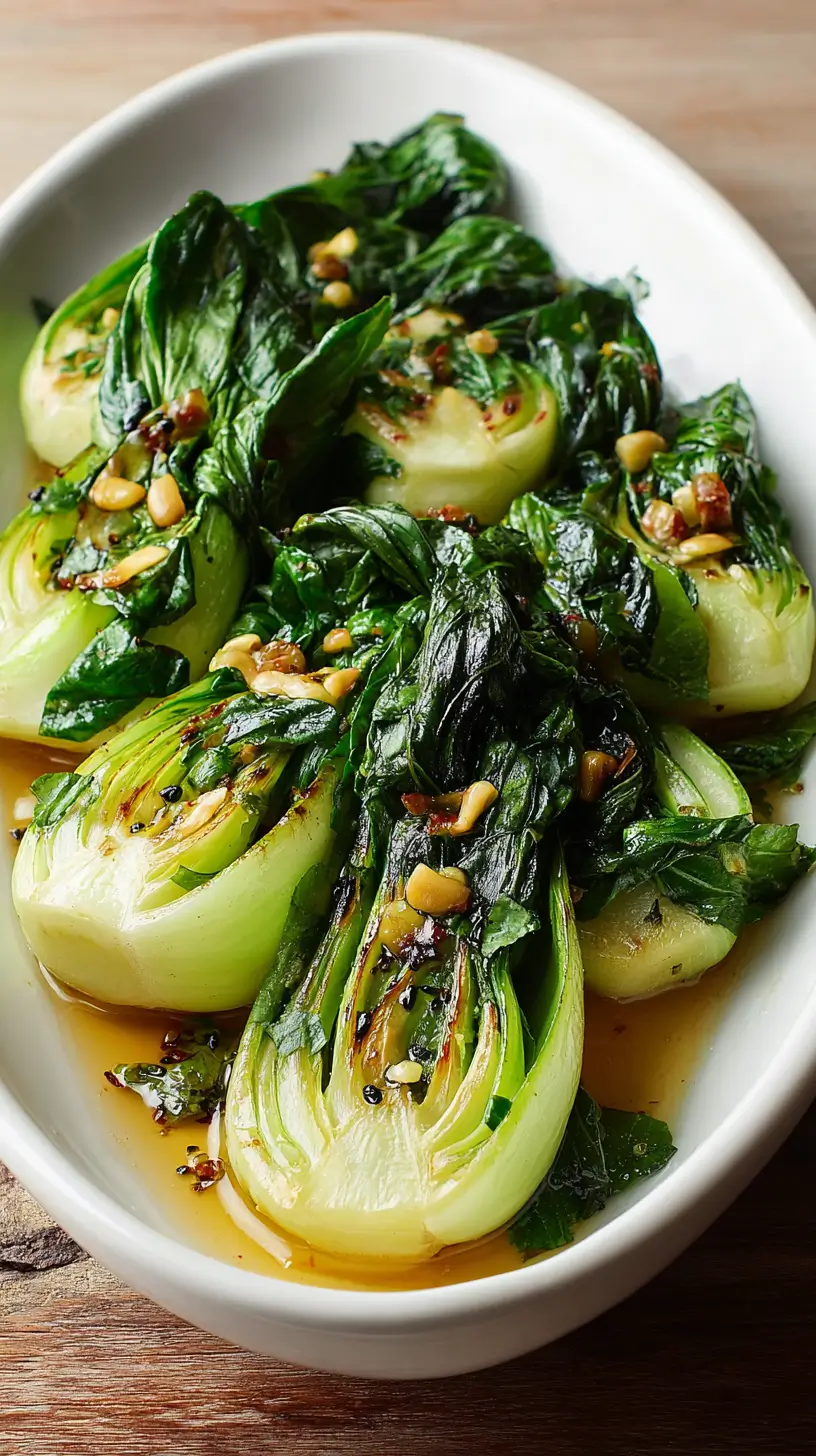
Braised Bok Choy
Ingredients
Method
- Rinse the baby bok choy thoroughly under cold water, separating the leaves to remove any grit, then pat completely dry with clean kitchen towels.
- Heat the olive oil and unsalted butter together in a wide skillet over medium heat until the butter melts and the mixture looks lightly glossy.
- Add the sliced garlic and minced ginger to the pan and cook for about 30 seconds, stirring gently, until fragrant but not browned.
- Arrange the bok choy halves cut-side down in a single layer in the skillet, working in batches if necessary to avoid crowding.
- Cook the bok choy for 2 to 3 minutes until the cut sides are lightly golden and beginning to caramelize.
- Carefully pour the vegetable broth and soy sauce around the bok choy, avoiding pouring directly over the leaves.
- Sprinkle the kosher salt and black pepper evenly over the bok choy.
- Reduce the heat to medium-low and cover the skillet with a lid.
- Simmer for 8 to 10 minutes, until the stems are fork-tender and the leaves are fully wilted.
- Remove the lid and drizzle the sesame oil evenly over the bok choy.
- Use a spoon to gently baste the bok choy with the broth in the pan.
- Continue cooking uncovered for 2 minutes to allow the broth to reduce slightly and concentrate in flavor.
- Taste and adjust seasoning if needed.
- Remove from heat and garnish with sliced scallions or sesame seeds if desired.
Tried this recipe?
Let us know how it was!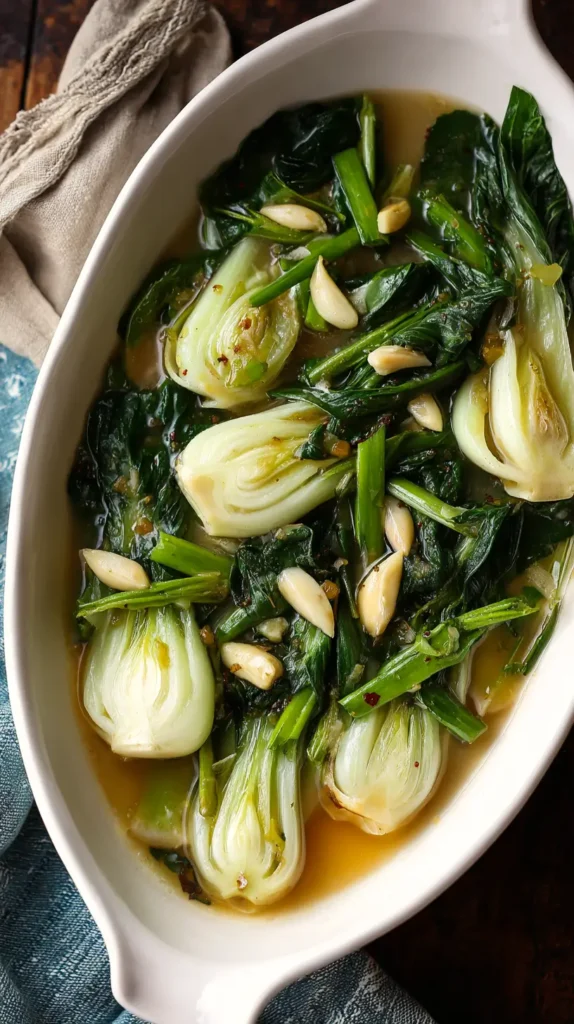
Final Thoughts
Braised bok choy has the same energy as a quiet supporting character who steals every scene. It never demands attention, yet it somehow makes the whole meal better. I’ve found that the dishes I trust most tend to behave this way. They don’t try to impress. They just show up and do their job well.
I like cooking that lets me stay relaxed instead of hyper-focused. This recipe gives me that permission. The steps flow naturally. The pan behaves. Nothing needs rescuing halfway through. That calm carries into dinner, which matters more than perfect plating.
Living in Florida means cozy cooking looks a little different. I still want warmth, just without anything too heavy. I’ve noticed that gentle braising checks that box nicely. It delivers comfort without pretending it’s winter outside. That balance works year-round here.
What I really appreciate, though, is how adaptable this dish is. Braised bok choy is good for a quiet weeknight. It also fits into a bigger spread without acting out of place. That flexibility makes it practical, not precious.
Pinterest loves bold visuals and dramatic moments, and I enjoy those too. Still, I save recipes I know I’ll actually make again. This one earns that save because it simplifies dinner instead of complicating it.
Good recipes don’t shout to be memorable. They settle in, earn trust, and quietly become part of your routine. Braised bok choy does exactly that, and I like it all the more for it.