I used to think meatball subs were foolproof. You know the kind of food you don’t overthink. The kind you assume will be fine as long as it’s hot. Then I started noticing how often they disappoint in quiet ways. Not terrible. Just… off. Too messy. Too heavy. Somehow forgettable.
That gap between expectation and reality is interesting. Everyone remembers one great version. Most attempts never get close. And no one talks about why.
I tend to notice this especially on busy days, when dinner needs to cooperate instead of impress. Living in Orlando teaches you that quickly. Heat drains patience. Schedules stack fast. Food either works with your life or becomes another thing you regret starting.
The strange part is how confident we feel going into it. Meatballs. Bread. Sauce. Cheese. Simple, right? Yet something keeps slipping. Not loudly. Just enough to turn comfort into frustration halfway through the sandwich.
Here’s where I paused the first time. If this food is so familiar, why does it feel so inconsistent? Why does one bite feel perfect, then the rest fall apart? That question stuck longer than I expected.
Most recipes rush to solutions. Add more cheese. Toast harder. Use thicker sauce. Those fixes feel logical. They rarely fix the real issue.
This isn’t about making meatball subs bigger or bolder. It’s about understanding why they behave the way they do. Once you see it, you can’t unsee it. And once you stop forcing the sandwich to perform, something shifts.
The calm version exists. It just hides behind a few assumptions most of us never question.
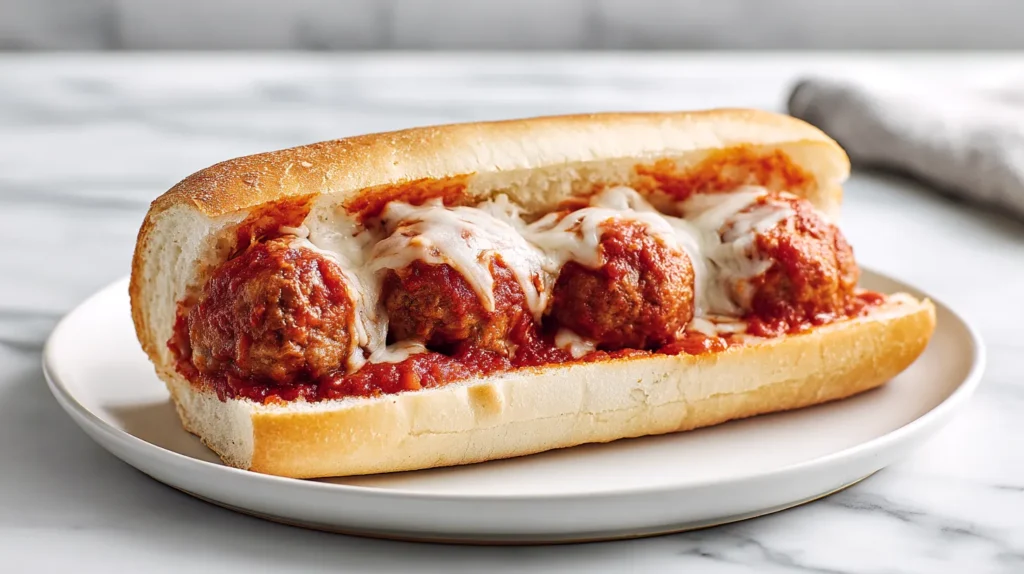
Some of the links on this page are affiliate links. That means if you click and make a purchase, I may earn a small commission at no extra cost to you. If you’re curious about the fine print, you can check out my full disclosure.
Why Meatball Subs Deserve More Respect Than They Get
Meatball subs get treated like a backup plan. The thing you make when you don’t want to think too hard. I’ve found that this assumption is exactly why so many of them disappoint. Not because they’re complicated, but because they’re underestimated.
Most people think bold flavors can cover sloppy execution. That’s the trap. Strong sauce and melted cheese don’t hide mistakes here. They spotlight them. Every shortcut shows up by the second bite.
Here’s the part that usually surprises people.
This sandwich remembers everything.
I tend to notice that when someone says they don’t really like meatball subs, they’re reacting to texture fatigue.
One bite feels too soft.
Another feels too heavy.
Eventually, everything starts to blur together.
None of that points to flavor.
The real problem is structure, and structure rarely gets the credit it deserves.
Pause for a second, because this matters more than seasoning ever will.
Respecting this sandwich means understanding that each component has a job. Meatballs bring substance. Sauce brings cohesion. Bread brings containment. When one oversteps, the whole thing feels messy instead of comforting.
Common assumptions that quietly cause problems:
- Bigger meatballs equal better value
- More sauce means more flavor
- Softer bread feels more indulgent
Each one sounds reasonable. Each one causes imbalance.
Here’s the reframe that changes how you approach it. Meatball subs aren’t casual food. They’re coordinated food. When everything pulls its weight instead of competing, the sandwich feels calmer. Lighter. More intentional.
If your past attempts have felt chaotic, keep reading. The issue probably wasn’t effort or ingredients. It was respect. And once you give this sandwich that, it stops fighting back.
There’s one specific place people lose control first. It’s not where you think. of it. Just enough to let things become what they’re meant to be. Which brings us to the meatballs themselves. Because if they’re off, nothing downstream can save you.
The Meatballs Matter More Than the Sandwich
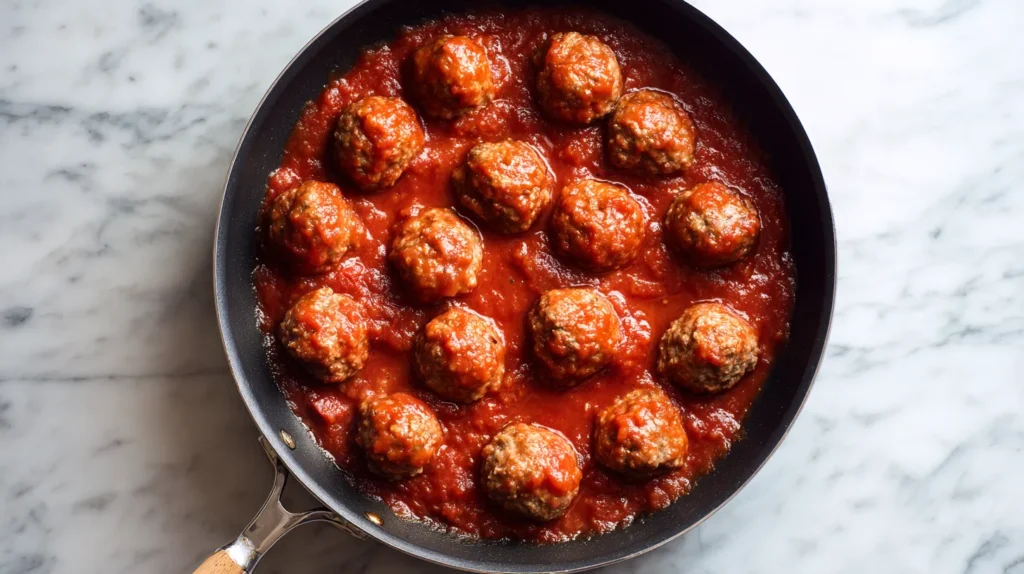
Let’s get this out of the way. You can’t fix bad meatballs with bread. I’ve tried. It doesn’t work. The meatballs are the foundation, whether the sandwich gets credit or not. And this is where most people rush without realizing it.
I’ve found that texture starts before seasoning ever enters the picture. The way the meat is handled matters more than what goes into it. Overmixing is the fastest way to ruin the whole thing. And people do it constantly, thinking they’re helping.
Here’s what actually makes a difference:
- Gentle mixing until just combined
- Breadcrumbs that hydrate properly
- Eggs that bind without turning rubbery
- Fat content that stays balanced
None of that sounds exciting. Yet every bite depends on it.
I tend to notice that recipes promise “juicy” meatballs without explaining how. The secret isn’t moisture overload. It’s restraint. When you stop compressing the mixture like it owes you money, it relaxes. That softness carries through cooking and into the sandwich.
There’s also the size conversation. Bigger isn’t better here. Smaller meatballs heat evenly, soak up sauce properly, and sit better inside the bread. Oversized ones create gaps. Gaps lead to slipping. Slipping leads to frustration. This escalates quickly.
And here’s the reframe moment. Meatballs don’t need to be perfect spheres. Slight irregularity gives them character and surface area. That surface grabs sauce. Sauce equals flavor memory. That’s not dramatic. It’s physics.
Once the meatballs are right, the rest of the meatball sub process becomes calmer. Less fixing. Less compensating. More letting things happen. Which is exactly how the sauce wants to be treated, too.
Sauce Isn’t a Background Player Here
Sauce gets treated like scenery in meatball subs, and that’s where things quietly unravel. I’ve found that people assume sauce just needs to exist. Warm. Red. Generous. Done. Yet this sandwich notices how the sauce behaves more than how it tastes.
Most mistakes start with speed. Sauce rushed on high heat tastes sharp and thin, even when seasoned well. Slowing it down doesn’t make it fancy. It makes it stable. That stability matters once bread enters the picture.
Here’s a quick contrast worth sitting with.
More sauce doesn’t mean more comfort. It means more movement.
I tend to notice that soggy subs usually aren’t drowning. They’re slipping. Sauce that’s too loose slides straight into the bread before the meatballs can anchor it. That’s not a volume issue. It’s a texture issue.
What works better feels almost boring:
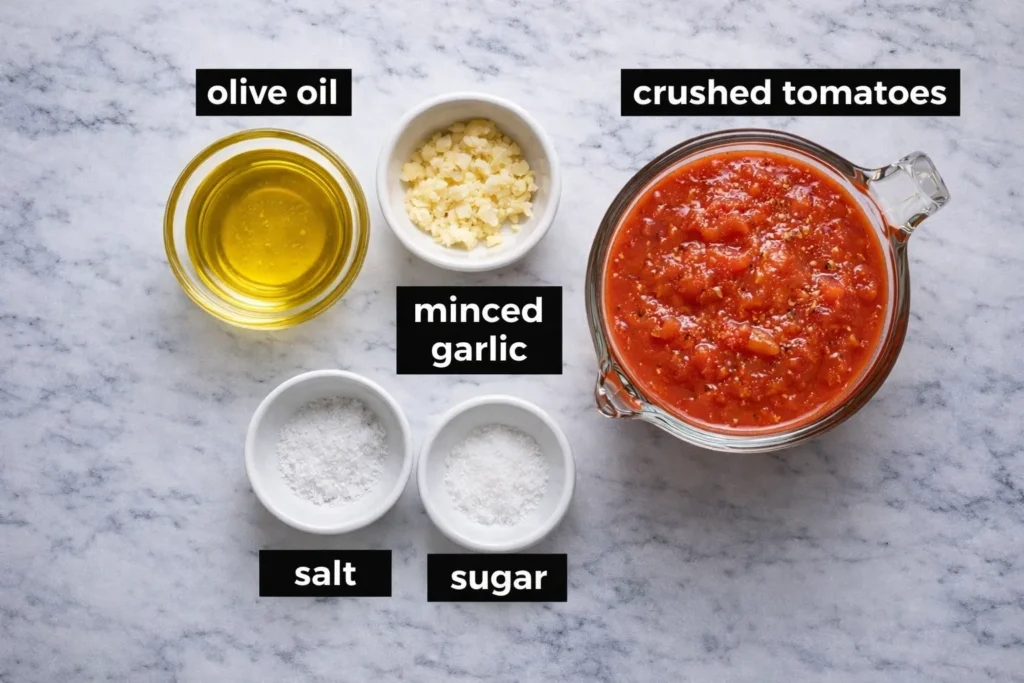
- Crushed tomatoes over purée for body
- Gentle simmering instead of boiling
- Salt added early, acid adjusted late
That order keeps flavors round instead of sharp. It also thickens naturally, without tricks.
Pause for a second, because this is where people overcorrect.
Sugar isn’t the fix for harsh sauce. Time is. A few extra minutes on low heat soften edges that sugar can’t. Once you taste that difference, it’s hard to ignore.
Here’s the reframe that changes how you cook this. Sauce in meatball subs isn’t there to soak the bread. It’s there to coat the meatballs. When the meatballs carry the sauce into the sandwich, everything stays where it belongs.
I’ve found that finishing the meatballs in the sauce matters more than spooning extra on top.
Simmering lets them absorb flavor gradually.
That added weight changes how they sit in the bread.
Suddenly, sliding isn’t an issue anymore.
If your subs always taste right but fall apart anyway, keep reading. The next section explains why the order fixes what sauce alone never will.
Bread Choices Make Or Break Meatball Subs
Bread feels obvious until it isn’t. I’ve found that people choose rolls based on size, not behavior. A meatball sub roll has a job. It needs to hold moisture without collapsing. It needs chew without toughness. And it needs enough structure to stay intact until the last bite.
Soft rolls sound appealing. They betray you quickly.
Here’s what actually works:
- Hoagie rolls with a tight crumb
- Italian rolls with some chew
- Bread that toasts without turning brittle
I tend to notice that lightly toasting the inside of the bread changes everything. It creates a barrier. Not a wall. Just enough resistance to slow absorption. That single step extends the life of the sandwich by minutes, which matters more than you think.
Another assumption worth reframing? Bigger bread isn’t better. Oversized rolls throw off the ratio. You want meatballs nestled, not lost. When the bread overwhelms the filling, the sandwich eats dry. No amount of sauce fixes that.
And yes, slicing technique matters. A hinge cut keeps everything contained. Full separation invites disaster. This is not the time for chaos.
Once bread, sauce, and meatballs are aligned, meatball subs stop feeling messy and start feeling intentional. Which brings us to cheese. The most overused ingredient in the whole operation.
Cheese Should Support, Not Steal the Show
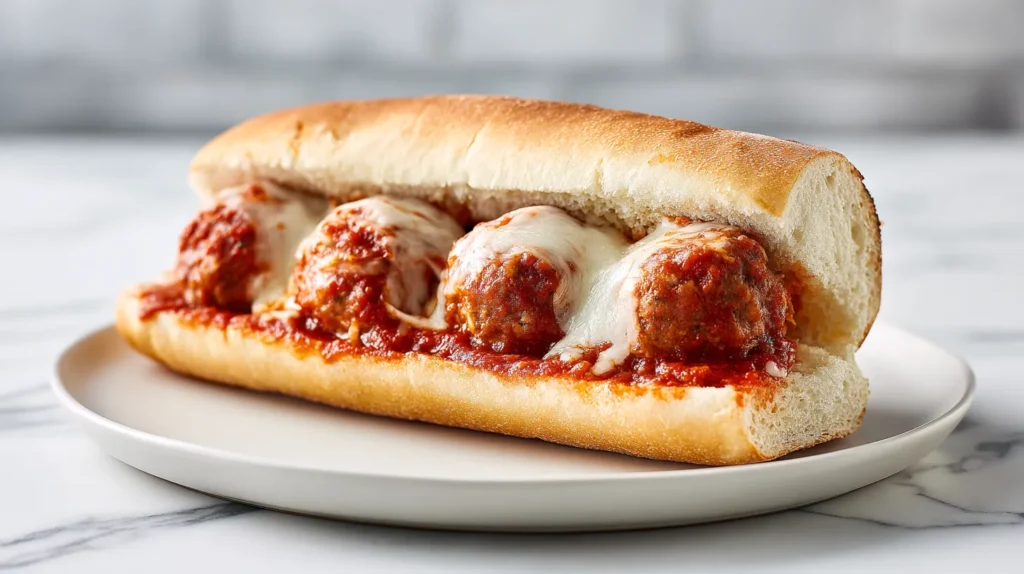
Cheese is where meatball subs either lock in or fall apart, and the difference usually comes down to choice, not quantity. I’ve found that people default to whatever melts the most, assuming melt equals success. That shortcut causes most of the disappointment.
Here’s the truth that reframes everything. The best cheese for meatball subs melts predictably, tastes neutral-to-savory, and doesn’t compete with the sauce. Stretch is optional. Stability is not.
Mozzarella works so often because it behaves. Low-moisture mozzarella melts smoothly, stays mild, and doesn’t flood the bread with excess liquid. Fresh mozzarella sounds fancy, but it releases too much moisture once heated. That’s how soggy bottoms happen.
Provolone is another strong option, especially if you want more flavor without aggression. It melts evenly, adds a slightly sharper edge, and still lets the meatballs lead. Mild provolone keeps things balanced. Sharp provolone pushes forward more, which some people love, but it can crowd the sauce.
Parmesan plays a different role. It shouldn’t replace a melting cheese, but it adds depth. A light sprinkle mixed in or finished on top brings saltiness and umami without changing texture. Think accent, not base.
Cheeses that cause trouble more often than they help:
- Cheddar melts unevenly and overpowers the sauce
- Monterey Jack turns oily under heat
- Fontina melts well but can dominate the flavor
I tend to notice that blending cheeses works best when one melts and one seasons. Mozzarella plus a little provolone. Mozzarella plus Parmesan. Simple, intentional combinations.
Here’s the pause worth remembering. Cheese shouldn’t announce itself before the meatball does. When it supports instead of competes, the whole sandwich tastes calmer, cleaner, and far more satisfying.
The Right Order Keeps Everything Calm
Cooking meatball subs isn’t hard, but the order quietly decides whether the process feels smooth or frantic. I’ve found that when people say this sandwich stressed them out, they usually skipped ahead without realizing it. One rushed step tends to snowball.
Here’s the reframe worth sitting with. Order isn’t about being precise. It’s about protecting texture. When things happen out of sequence, moisture moves where it shouldn’t, heat works against you, and suddenly you’re fixing instead of finishing.
A quick pause, because this part matters.
Meatballs need their own moment before they meet the sauce. Browning first builds flavor and structure. Dropping them straight into sauce sounds efficient, but it robs them of that outer grip. Without it, they soften too fast and fall apart later.
The calm flow looks like this:
- Brown the meatballs gently until they hold their shape
- Finish them in the sauce so they absorb flavor without breaking
- Toast the bread lightly to create a moisture buffer
- Assemble once everything settles, not while steaming
I tend to notice that skipping the rest window causes sliding. Hot meatballs plus hot sauce plus soft bread equals movement. Letting components cool slightly gives the sandwich time to behave.
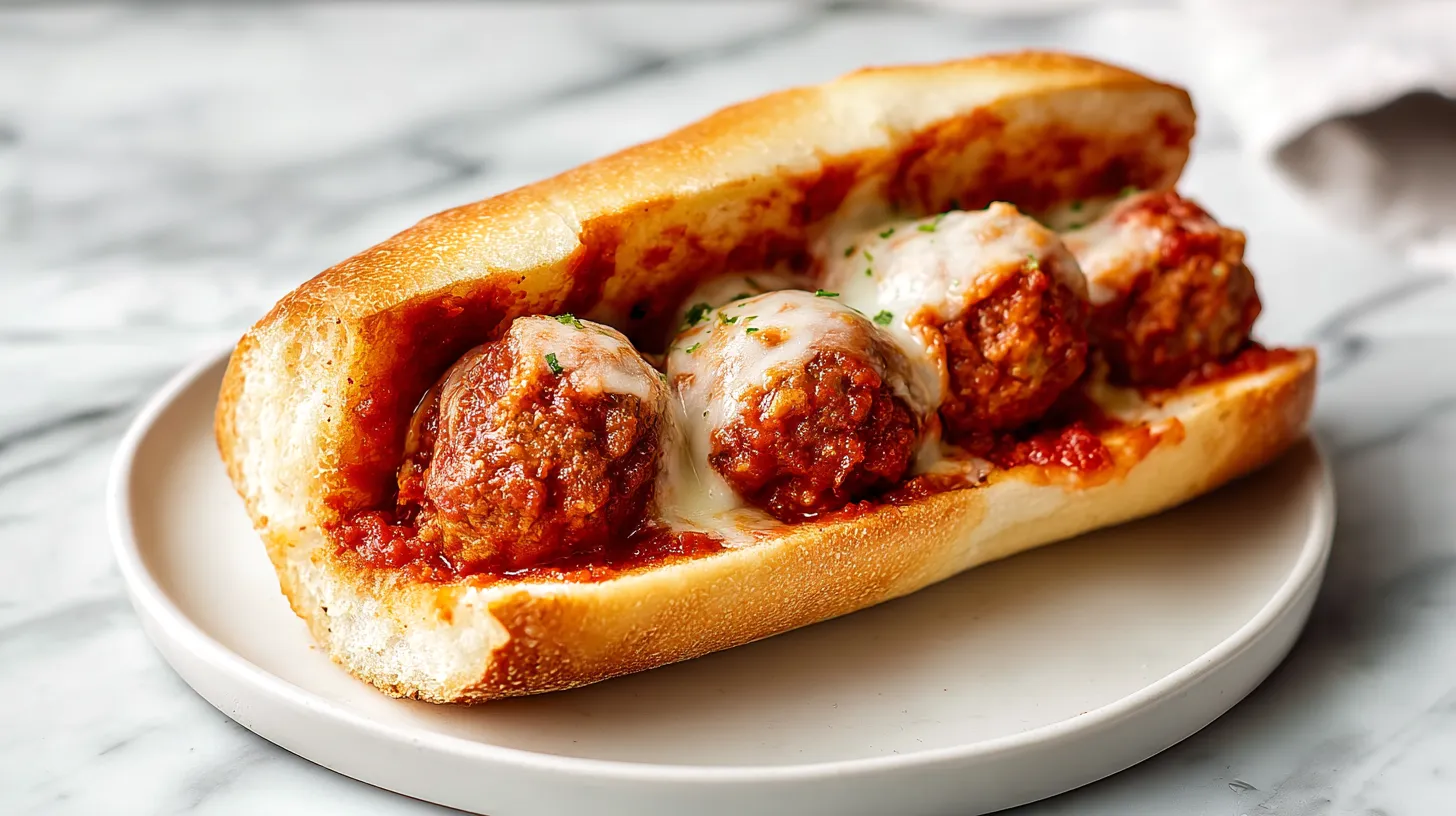
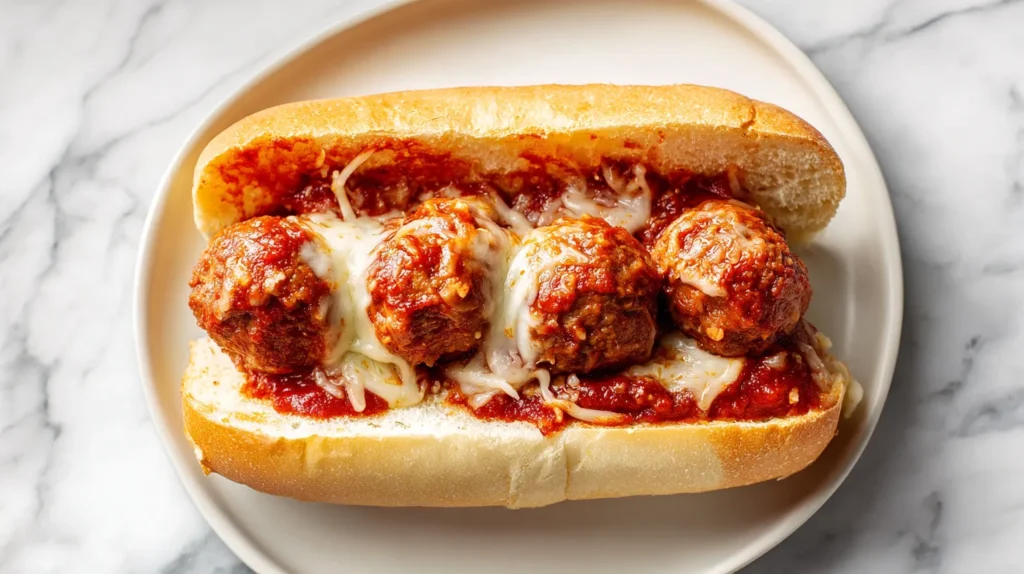
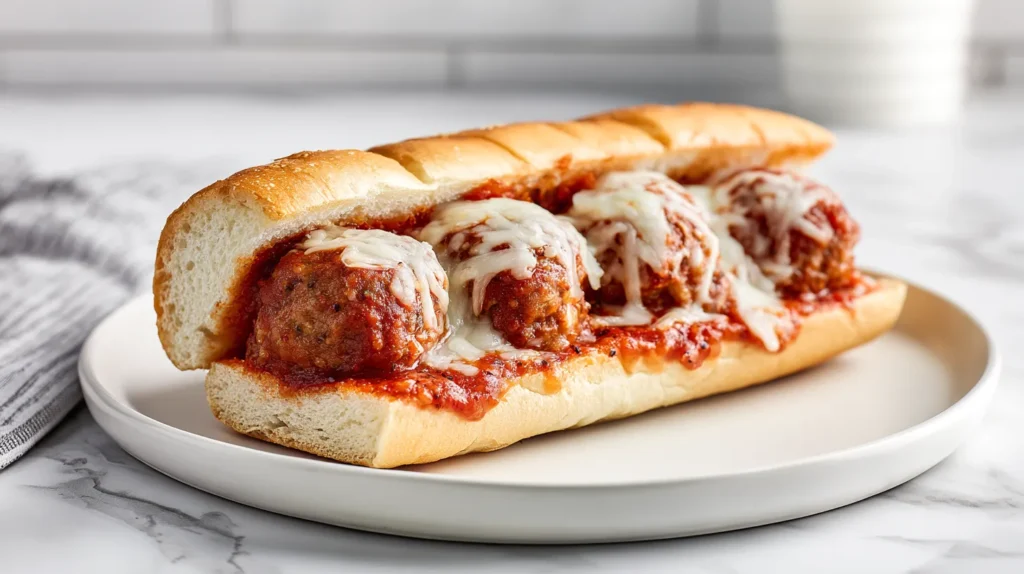
Portioning also shows up here more than people expect. Three to four meatballs usually land just right. Fewer feels skimpy. More overwhelms the bread and pushes the sauce where it doesn’t belong. Balance keeps each bite intact.
Here’s the surprising part. Moving slower actually saves time. When the order works, nothing needs fixing. No scooping sauce back in. No rebuilding collapsed rolls. Meatball subs reward patience in minutes, not hours.
Once the flow feels calm, everything else falls into place. And that’s when cooking stops feeling rushed and starts feeling intentional.
The Best Ever Meatball Subs Recipe
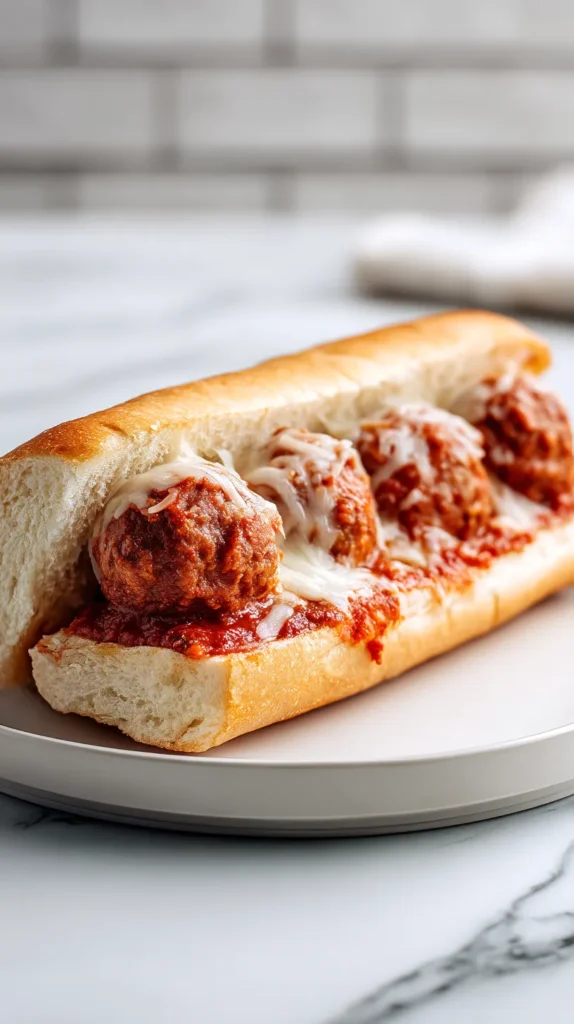
This is the version I come back to because it stays balanced and behaves all the way through.
Ingredients
- 1 pound ground beef
- 1/2 pound ground pork
- 3/4 cup breadcrumbs
- 1/2 cup milk
- 1 egg
- 1/2 cup grated Parmesan
- 3 cloves garlic, minced
- 1 teaspoon salt
- 1/2 teaspoon pepper
- 1 teaspoon dried oregano
- 1/2 teaspoon dried basil
- 2 tablespoons olive oil
For the sauce
- 2 tablespoons olive oil
- 3 cloves garlic, minced
- 1 28-ounce can crushed tomatoes
- 1/2 teaspoon salt
- 1/2 teaspoon sugar
For assembly
- Hoagie rolls
- Shredded mozzarella
Steps
- Start by soaking the breadcrumbs in milk until fully absorbed
- Add the meats, egg, cheese, garlic, and seasoning, mixing gently
- Shape small meatballs, stopping as soon as they hold together
- Brown the meatballs in olive oil until they form a crust
- Transfer them to the sauce and simmer for 20 minutes
- Lightly toast the rolls to create structure
- Assemble the meatballs, sauce, and cheese with intention
- Finish by melting the cheese gently
Serving suggestions
- Pair with a simple green salad
- Roasted potatoes balance the richness well
- Pickled peppers add contrast and bite
FAQs
- Can these be made ahead? Yes, the meatballs reheat best when kept in sauce
- Can you freeze them? Absolutely, freezing works best before assembly
Everything works better when the components settle before coming together.
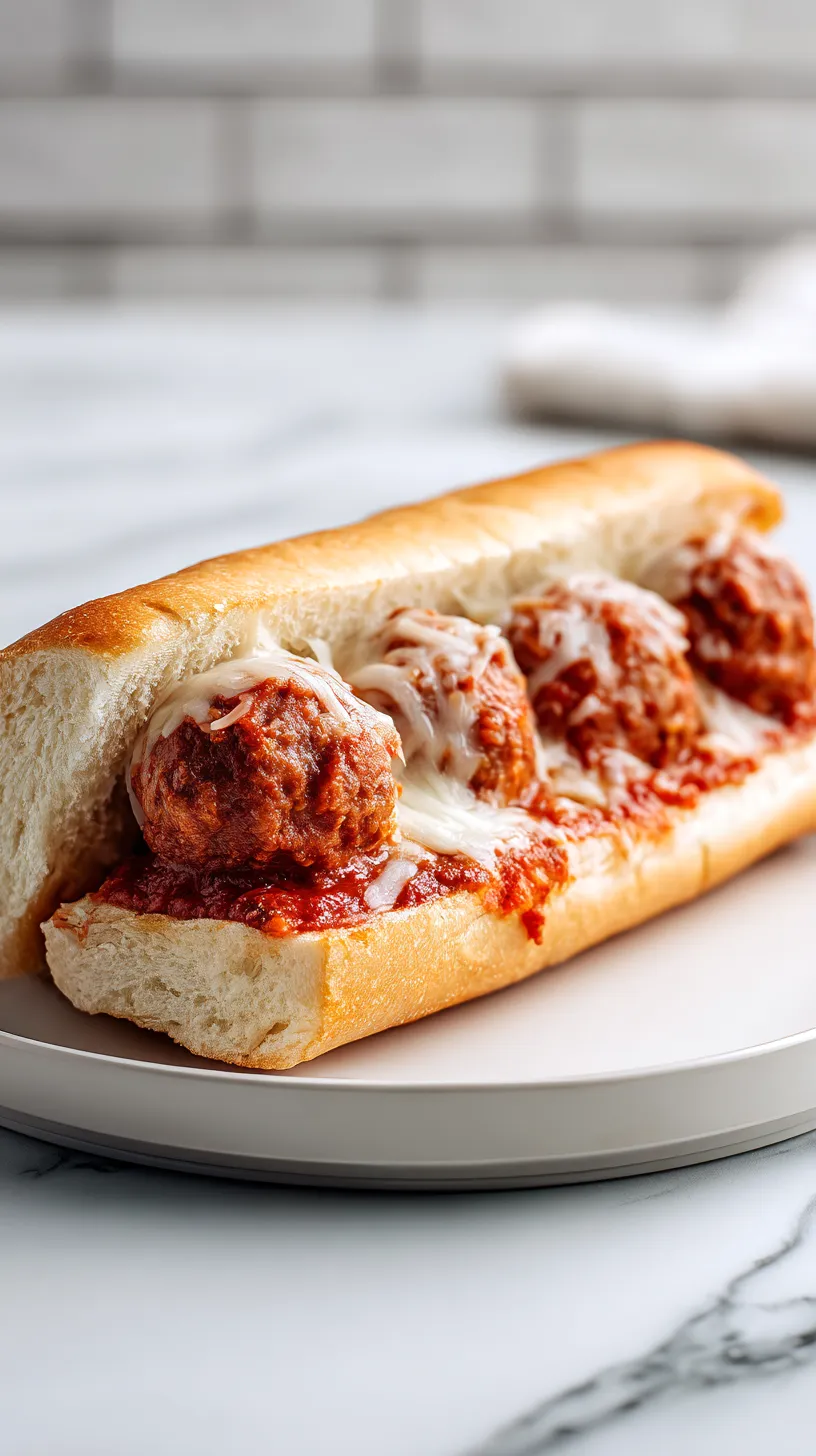
Meatball Subs
Ingredients
Method
- Combine the breadcrumbs and milk in a bowl and let them soak until fully absorbed.
- Add the ground beef, ground pork, egg, grated Parmesan, minced garlic, salt, pepper, dried oregano, dried basil, and breadcrumb mixture, then mix gently until just combined.
- Form the mixture into small meatballs without packing them tightly.
- Heat olive oil in a skillet over medium heat and brown the meatballs until they develop a crust and hold their shape.
- Add the meatballs to the sauce and simmer for 20 minutes.
- Lightly toast the hoagie rolls to create structure.
- Assemble the meatballs in the rolls, spooning sauce over them and adding shredded mozzarella.
- Melt the cheese gently until just softened and cohesive.
Tried this recipe?
Let us know how it was!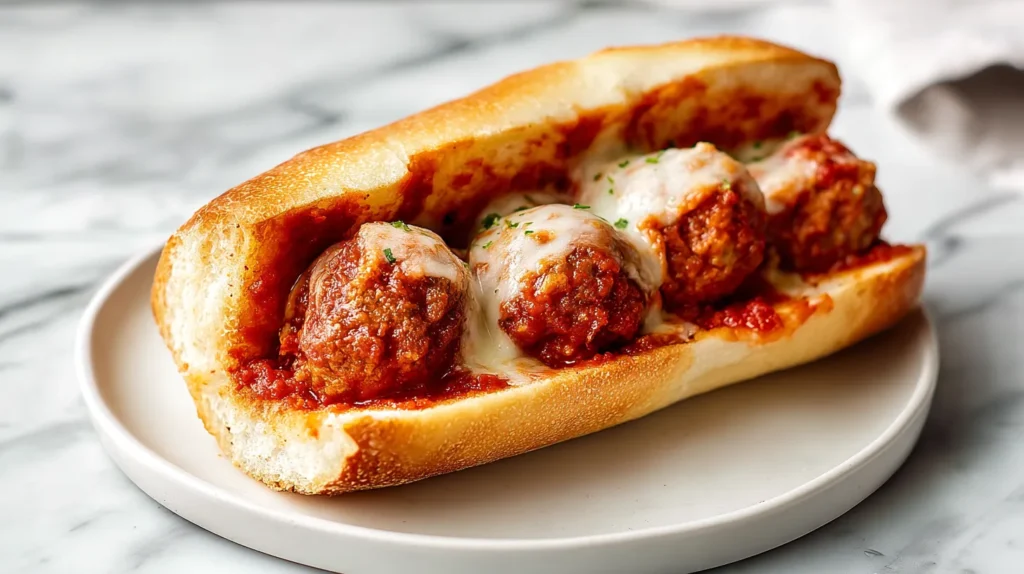
Last Ideas and Thoughts
I keep coming back to meatball subs because they don’t ask for hype. They show up steady, familiar, and quietly confident. I tend to notice that the foods we return to aren’t the loud ones. They’re the ones that fit into real days without friction.
Some meals demand planning, timing, and a certain headspace. This one doesn’t. It waits until you’re ready. It works whether the day felt long or rushed or oddly quiet. That reliability matters more than novelty most nights.
Living in Orlando has taught me to respect food that cooperates with heat, schedules, and low patience thresholds. Standing over a stove too long isn’t charming here. A sandwich that understands that earns its place fast.
Pinterest is full of dramatic pulls, towering stacks, and blink-and-you-miss-it trends. I scroll past most of them. What sticks are recipes that behave the same way every time, even when life doesn’t. This one does.
I’ve found that once you stop trying to make meatball subs impressive, they settle into something better. They become dependable without feeling dull. Comforting without being heavy. Familiar without feeling stuck.
That shift feels small, but it changes how you cook. You stop chasing reactions and start trusting the process. You build meals that fit your life instead of interrupting it.
And when a sandwich disappears without commentary, without notes, without leftovers lingering, that’s not an accident. That’s quiet success.