I have a soft spot for foods that look fancy but behave casually. That’s where cabbage dumplings shine. They sound like effort, yet they’re deeply practical. You chop, mix, fold, and cook. Then dinner suddenly looks impressive. I’ve found that cabbage dumplings hit that rare middle ground between cozy and clever. They work on busy nights and slower weekends. They also stretch humble ingredients into something craveable, which always matters to me.
This recipe leans comforting, not fussy. The flavors stay balanced and clean. The texture stays tender with crisp edges. Each step builds confidence instead of stress. I keep the process steady, clear, and forgiving. You don’t need special tools or secret skills. You just need cabbage, patience, and a pan.
I live in Florida, where heavy meals can feel like too much. However, these dumplings stay light enough for warm evenings. The cabbage keeps everything fresh. The cooking method stays flexible. You can pan-fry, steam, or boil without drama.
Throughout this post, I walk through the entire process. I explain why each step matters. I also share small choices that improve texture and flavor. Nothing here wastes time. Everything here earns its place. If dumplings have ever felt intimidating, this approach softens that edge. By the end, cabbage dumplings become less of a project and more of a habit.
Some of the links on this page are affiliate links, which means that if you click on them and buy something, I might get a small commission. But don’t worry; it never costs you more. You can peek at my full disclosure if you’re curious about the fine print.
Why Cabbage Dumplings Work So Well Every Time
Cabbage dumplings succeed because cabbage does quiet, reliable work. It softens gently while holding structure. It absorbs seasoning without overpowering the filling. Because of that, cabbage dumplings stay balanced instead of heavy. The vegetable also stretches protein, which helps budgets and portions.
Unlike watery vegetables, cabbage releases moisture slowly. Therefore, the filling stays juicy, not soggy. That texture matters when pan-frying or steaming. Each bite stays tender with clean edges. The wrapper cooks evenly instead of tearing.
Another reason cabbage dumplings behave well is flexibility. You can swap proteins easily. You can also adjust seasoning without breaking the structure. As a result, the base recipe adapts to taste and pantry limits.
Cabbage also brings subtle sweetness. That sweetness pairs well with soy sauce, garlic, and ginger. However, it never tastes sugary. Instead, it rounds sharp flavors.
Here’s why cabbage works better than expected:
- It softens without collapsing.
- It balances salt and umami.
- It keeps fillings moist.
- It reheats cleanly.
Because cabbage cooks evenly, beginners get better results faster. That confidence matters. Cooking should reward effort, not punish it.
Cabbage dumplings also freeze well. Therefore, one batch stretches across meals. You cook once and eat twice. That rhythm fits real schedules.
When you want dumplings that behave kindly, cabbage earns trust. It stays consistent, adaptable, and forgiving.
Ingredients For Homemade Cabbage Dumplings
Good dumplings start with measured ingredients. Precision keeps texture right and seasoning balanced. These cabbage dumplings use simple grocery items. Nothing here feels rare or expensive.
For the filling:
- 3 cups finely chopped green cabbage
- 8 ounces ground pork or ground chicken
- 2 green onions, finely sliced
- 1 tablespoon fresh ginger, grated
- 2 cloves garlic, minced
- 1 tablespoon soy sauce
- 1 teaspoon sesame oil
- 1 teaspoon rice vinegar
- ½ teaspoon salt
- ¼ teaspoon black pepper
For assembling:
- 30 round dumpling wrappers
- Small bowl of water for sealing
Pan-frying option:
- 2 tablespoons neutral oil
- ⅓ cup water for steaming
For dipping sauce:
- 3 tablespoons soy sauce
- 1 tablespoon rice vinegar
- 1 teaspoon sesame oil
- ½ teaspoon sugar
- Optional chili crisp, to taste
Each ingredient has purpose. The cabbage brings texture. The protein adds body. Ginger and garlic provide warmth. Sesame oil adds depth without heaviness.
If you prefer plant-based, swap protein with 8 ounces finely chopped mushrooms. However, squeeze moisture first. That step matters.
Cabbage dumplings improve when ingredients stay finely chopped. Smaller pieces bind better. They also cook evenly.
Measure carefully, especially salt. Cabbage releases moisture. Too much salt overwhelms quickly.
This list stays reliable across batches. Once memorized, prep moves faster. Familiarity builds confidence, which always improves cooking.
How To Prepare The Cabbage Filling Correctly
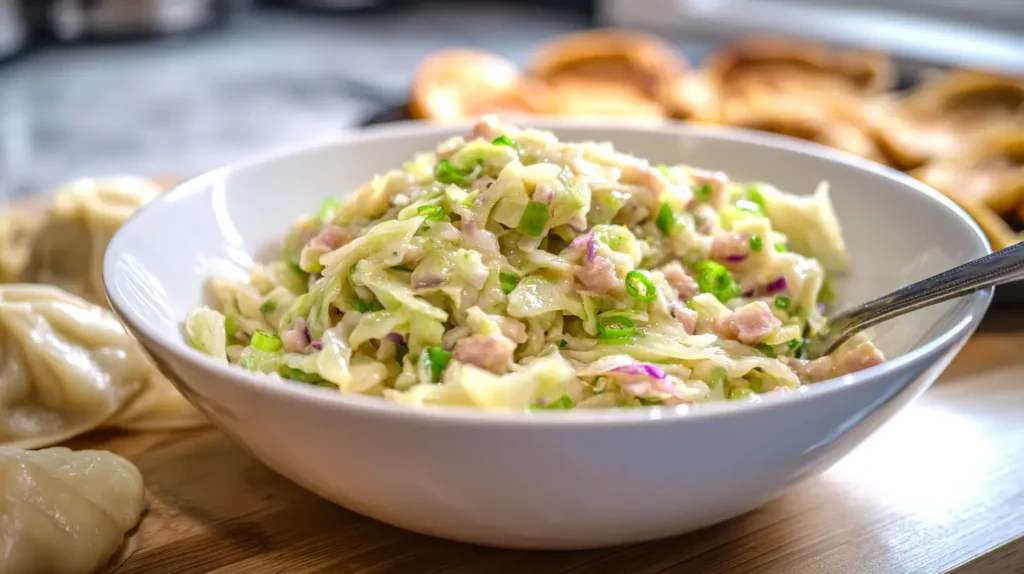
The filling determines dumpling success. Because of that, preparation matters. Start by finely chopping cabbage. Smaller pieces integrate better. Then place cabbage in a bowl. Sprinkle with salt. Toss gently. Let it sit for 10 minutes.
After resting, squeeze cabbage firmly. This step removes excess moisture. Therefore, the filling stays cohesive. Transfer cabbage to a clean bowl.
Add ground pork or chicken. Then add green onions, ginger, and garlic. Stir gently with a spoon. Avoid overmixing. Overworked filling turns dense.
Next, add soy sauce, sesame oil, and rice vinegar. Sprinkle in black pepper. Mix until just combined. The texture should look moist but not wet.
I’ve found that mixing by hand works best. However, use a light touch. Gentle mixing keeps filling tender.
At this stage, test seasoning. Cook a small spoonful in a pan. Taste carefully. Adjust salt if needed. This step prevents disappointment later.
Once seasoned, cover the bowl. Refrigerate for 15 minutes. Chilling firms the mixture. As a result, wrapping becomes easier.
Cabbage dumplings rely on balance. Moisture control keeps wrappers intact. Proper mixing keeps the texture soft. Small steps create reliable results.
Avoid shortcuts here. Filling prep sets the tone. When done well, assembly feels smooth instead of messy.
Wrapping Cabbage Dumplings Without Stress
Wrapping intimidates many cooks. However, cabbage dumplings reward patience, not perfection. Start by laying wrappers on a clean surface. Keep them covered with a damp towel.
Place one wrapper in your palm. Add 1 tablespoon filling to the center. Avoid overfilling. Too much filling causes tearing.
Dip a finger in water. Moisten the wrapper edge halfway around. Fold wrapper in half. Press center together first. Then create small pleats toward one side.
Seal edges firmly. Air pockets cause splitting. Therefore, press gently but confidently.
If pleating feels tricky, keep it simple. Fold and press flat. Shape matters less than sealing.
Place finished dumplings on a parchment-lined tray. Keep space between them. Crowding causes sticking.
Here are quick wrapping tips:
- Keep wrappers covered.
- Use consistent filling amounts.
- Seal tightly.
- Work slowly.
Cabbage dumplings improve with repetition. The first few feel awkward. Then rhythm appears. That rhythm brings calm.
If wrappers tear, patch with water. Small fixes save time.
Wrapping becomes meditative. Hands move. Thoughts slow. The process rewards attention.
Cooking Methods For Perfect Cabbage Dumplings
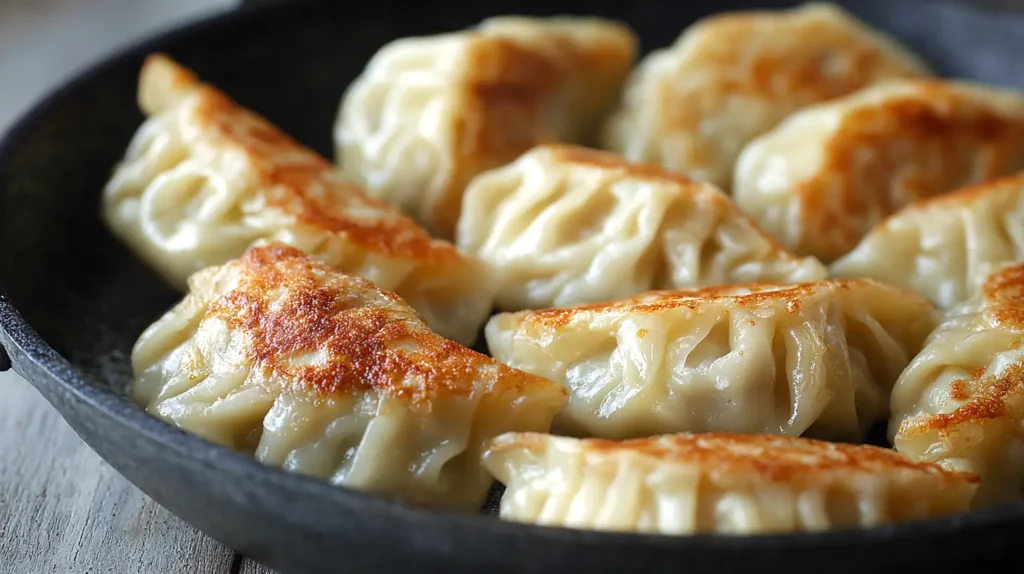
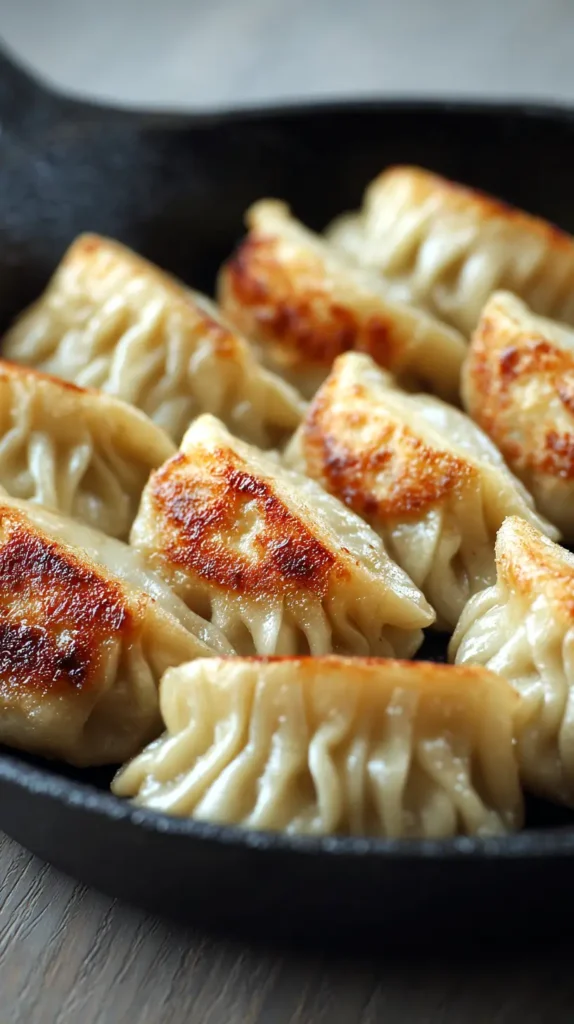
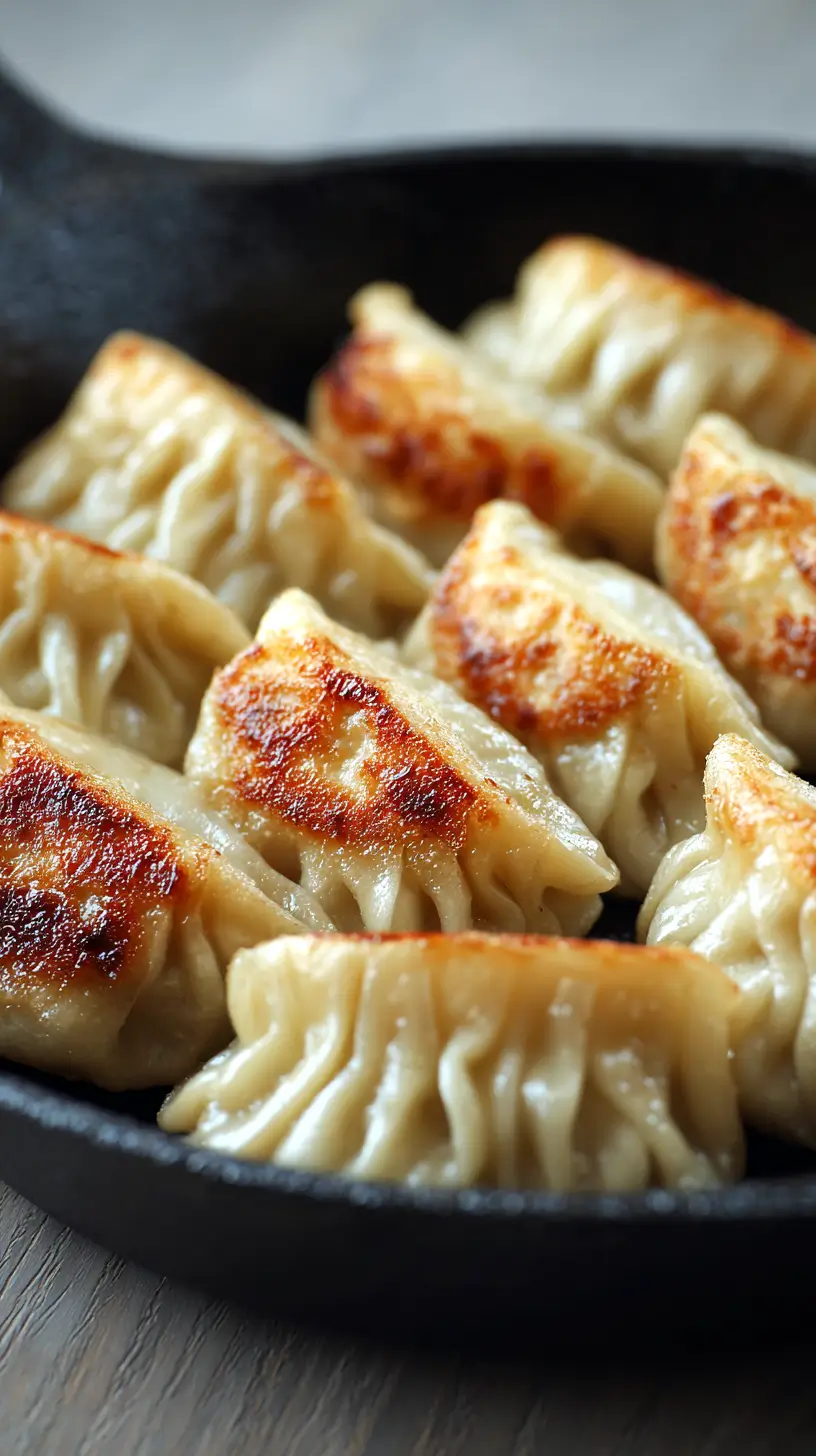
Cabbage dumplings cook well using several methods. Pan-frying remains my favorite. It creates crisp bottoms and tender tops.
Heat a skillet over medium heat. Add neutral oil. Place dumplings flat-side down. Cook until bottoms turn golden, about 3 minutes.
Next, carefully add water. Cover immediately. Steam for 5 minutes. The water cooks filling thoroughly.
Remove lid. Let remaining water evaporate. Crisp bottoms again for 1 minute. Remove dumplings gently.
For steaming only, place dumplings in a lined steamer. Steam for 8 minutes. They stay tender without crispness.
For boiling, add dumplings to salted water. Stir gently. Cook until they float, about 4 minutes. Drain carefully.
Each method offers different texture. Pan-fried gives contrast. Steamed stays soft. Boiled works for soups.
Regardless of method, avoid overcrowding. Space allows even cooking.
Cabbage dumplings finish when wrappers turn translucent. The filling should reach 165°F internally.
Choose a method based on mood. Flexibility keeps this recipe practical.
Simple Dipping Sauce That Completes Cabbage Dumplings
Dipping sauce matters. It adds brightness and contrast. This sauce stays balanced and quick.
In a small bowl, combine soy sauce, rice vinegar, sesame oil, and sugar. Stir until sugar dissolves. Add chili crisp if desired.
Taste and adjust. Add vinegar for sharpness. Add sugar for balance.
This sauce complements cabbage dumplings without overpowering them. It stays savory with a slight tang.
Serve sauce alongside hot dumplings. Dip lightly. Overdipping masks flavor.
For variation, add grated garlic. Or add sliced scallions.
Sauce should enhance, not dominate. Keep it simple.
CABBAGE DUMPLINGS WITH WRAPPERS
Ingredients
Method
- Place the chopped cabbage in a bowl and sprinkle with the salt.
- Let the cabbage rest for 10 minutes to release moisture.
- Squeeze the cabbage firmly to remove excess liquid, then transfer to a clean bowl.
- Add the ground pork or chicken, green onions, ginger, garlic, soy sauce, sesame oil, rice vinegar, and black pepper.
- Mix gently until just combined, avoiding overmixing.
- Cover the filling and refrigerate for 15 minutes.
- Place one dumpling wrapper in your palm.
- Add 1 tablespoon of filling to the center of the wrapper.
- Lightly moisten the edges of the wrapper with water.
- Fold the wrapper in half and pleat or press firmly to seal.
- Repeat until all filling is used.
- Heat the oil in a large skillet over medium heat.
- Arrange dumplings flat-side down in the pan without overcrowding.
- Cook for 3 minutes until the bottoms are golden brown.
- Carefully add the water to the pan and immediately cover.
- Steam for 5 minutes until the filling is cooked through.
- Remove the lid and cook 1 additional minute to crisp the bottoms.
- Transfer dumplings to a serving plate and serve warm.
Tried this recipe?
Let us know how it was!The Unexpected Power Of Serving Cabbage Dumplings In Broth
Most people stop at crispy plates, yet cabbage dumplings shine in broth. This approach turns them into a complete bowl meal. I’ve found that serving cabbage dumplings this way changes how people pace the meal. Instead of quick dipping, each bite becomes slower and more intentional.
Start with a light broth, not something heavy or cloudy. Chicken or vegetable broth works best here. Heat 4 cups broth gently with 1 teaspoon soy sauce and ½ teaspoon sesame oil. Add thinly sliced ginger if you like warmth. Keep the broth clean and subtle.
Cook the cabbage dumplings separately first. Pan-fry or steam them fully. Then slide them into the hot broth right before serving. This timing matters. The wrappers absorb flavor without turning soggy.
Because cabbage releases sweetness, the broth tastes fuller without extra salt. That balance surprises people. The dumplings stay intact, yet softer around the edges. Each spoonful feels comforting but not heavy.
I like serving this style in wide bowls. The dumplings sit partially submerged, which keeps texture interesting. Add sliced green onions on top for contrast.
This method also stretches servings. A small portion feels generous when paired with broth. Therefore, it works well for lighter dinners.
Cabbage dumplings in broth feel thoughtful, even quiet. The meal slows everyone down. Sometimes, that’s exactly what dinner needs.
How Ingredient Temperature Changes Cabbage Dumplings Completely
Temperature rarely gets attention, yet it changes cabbage dumplings dramatically. I’ve found that cold ingredients produce tighter fillings. Meanwhile, room-temperature ingredients blend more smoothly.
Start with chilled protein, straight from the fridge. Keep cabbage cold after squeezing moisture. This contrast helps fat stay firm while mixing. As a result, the filling holds shape better.
However, let wrappers rest at room temperature. Cold wrappers crack easily. Soft wrappers fold without resistance. That small adjustment prevents tearing.
When filling stays cool, seasoning distributes evenly. Warm fillings smear instead of binding. Therefore, mix quickly and return the bowl to the fridge.
Cooking temperature matters too. A hot pan seals bottoms fast. That seal locks moisture inside. Lower heat later cooks filling gently.
Even resting time counts. Let cooked cabbage dumplings sit for two minutes before serving. Steam redistributes moisture. Texture improves noticeably.
This approach sounds technical, yet it feels simple in practice. You notice fewer blowouts. You notice cleaner folds.
Temperature control turns cabbage dumplings from unpredictable to reliable. Once you notice the difference, it’s hard to ignore. Small shifts create big improvements.
When Cabbage Becomes The Wrapper For Dumplings
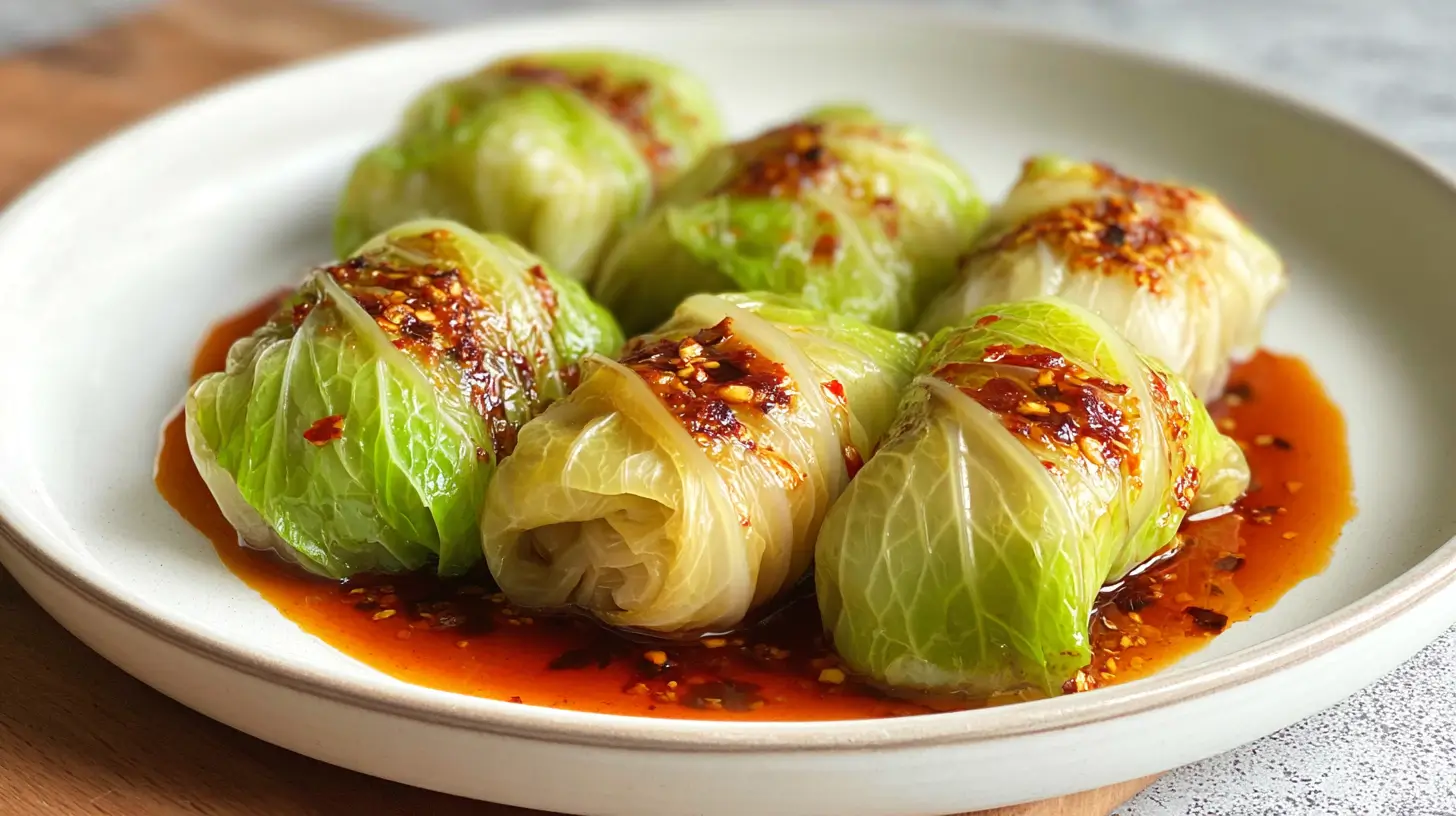
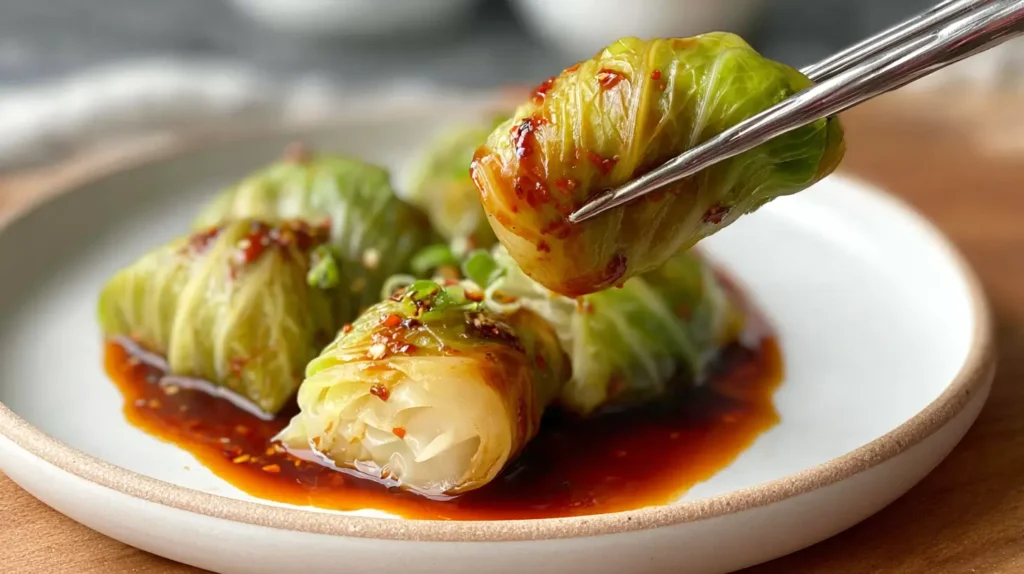
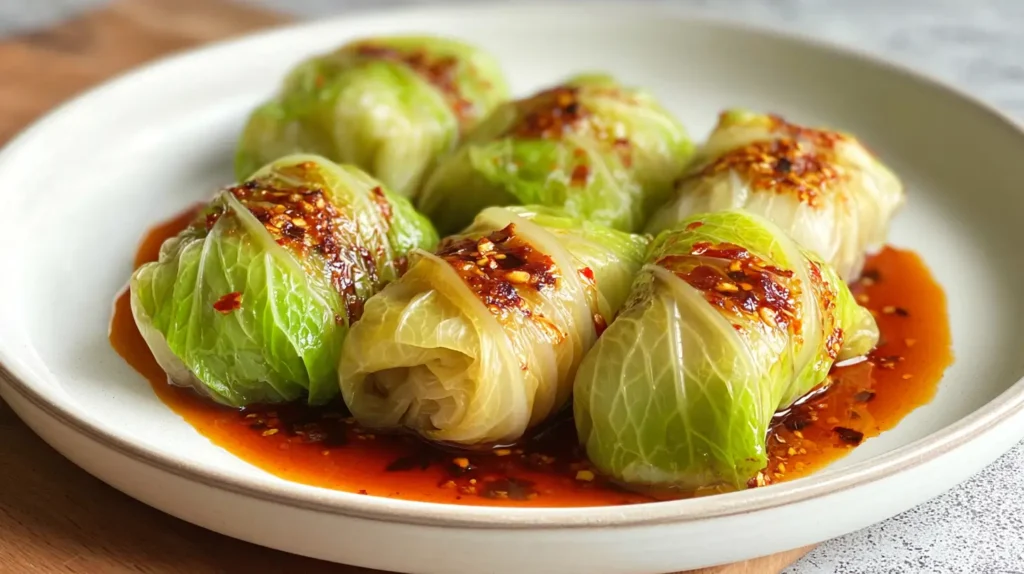
This is the moment cabbage dumplings take a sharp left turn, in the best way. Instead of dough, the cabbage itself becomes the wrapper. That shift changes everything. The dish suddenly feels lighter, fresher, and a little clever, like it knows something you don’t yet.
I’ve found this version works especially well when I want structure without heaviness. Whole cabbage leaves soften beautifully when blanched. Once pliable, they wrap filling easily and hold shape without fuss. There’s something deeply satisfying about using the vegetable as both vessel and flavor.
To make this work, leaf prep matters. Large outer cabbage leaves behave best. After a quick blanch, the color brightens and the texture relaxes. Trimming the thick rib creates a flat surface, which makes rolling easier. That one step prevents uneven cooking later.
Instead of stuffing generously, keep the filling modest. The cabbage should fold snugly, not strain. Once rolled, the leaf seals itself naturally. No toothpicks. No tricks. Just a quiet, confident wrap.
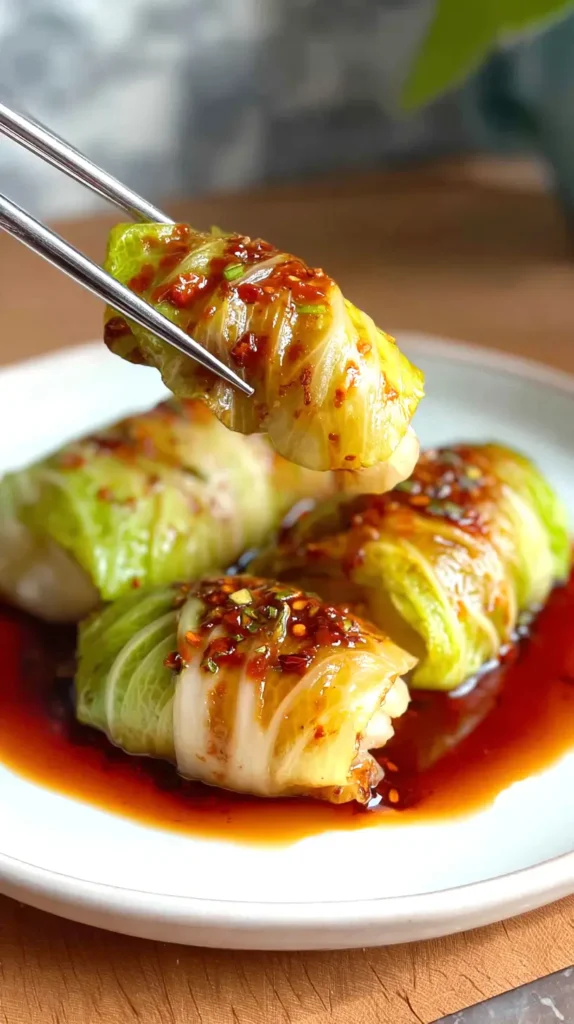
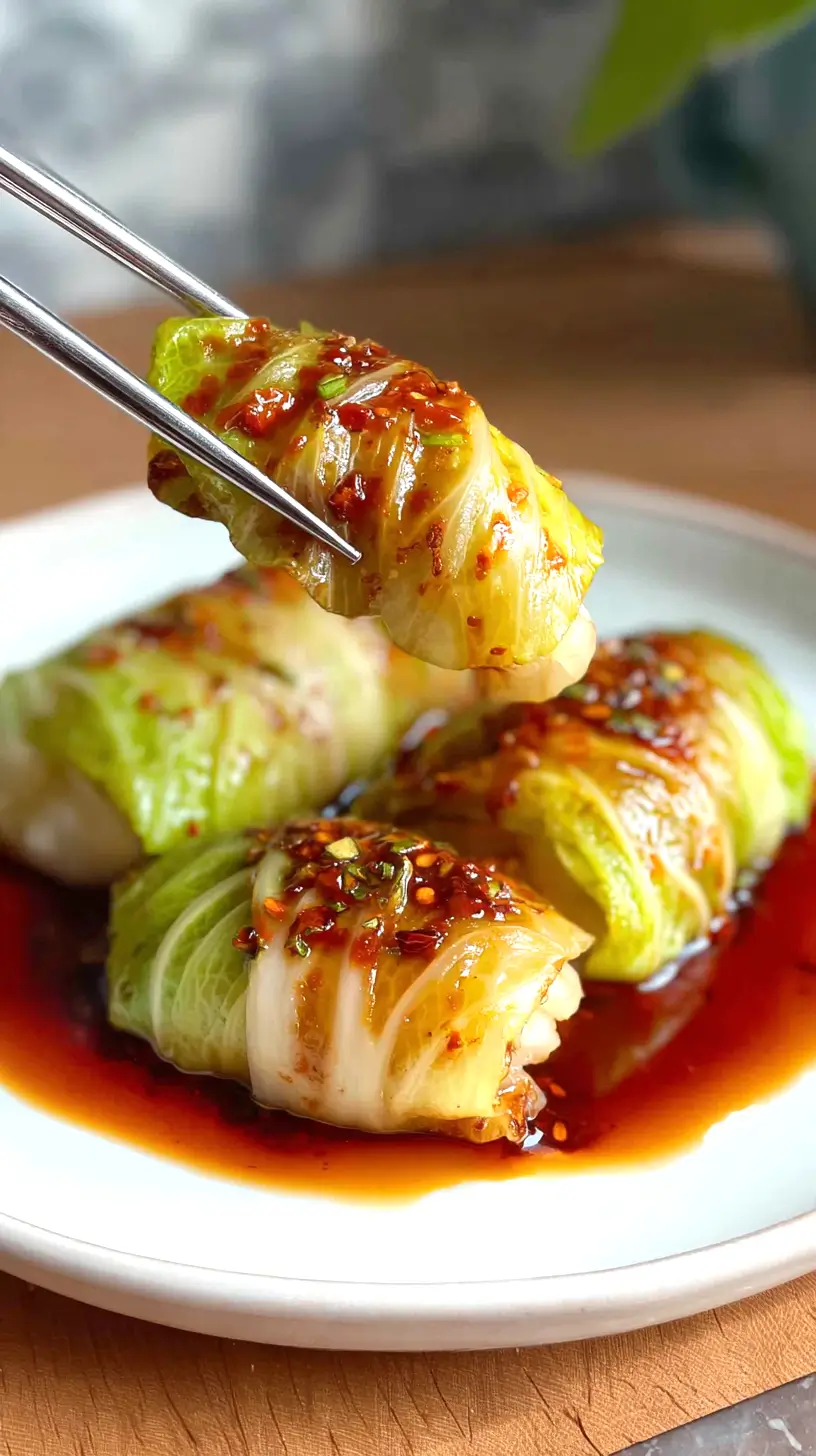
Cooking stays gentle here. Steam or shallow simmering works best. As the cabbage heats, it turns silky while protecting the filling inside. Because there’s no dough barrier, flavors show up clearly. Ginger tastes brighter. Sesame oil feels softer. Everything reads clean.
I like serving this style with broth spooned over the top. It feels intentional, almost spa-like, without trying too hard. Living in Florida, I appreciate meals that comfort without lingering heaviness. This version nails that balance.
These cabbage dumplings feel modern, grounded, and a little unexpected. They don’t compete with the wrapped version. They simply offer another mood.
One Small Ingredient Swap That Reinvents Cabbage Dumplings
Sometimes a recipe doesn’t need reinvention, just a nudge. For cabbage dumplings, that nudge can be napa cabbage instead of green cabbage. I’ve found this swap changes texture without altering technique.
Napa cabbage holds more water initially. However, once squeezed, it becomes silkier. The filling tastes lighter, almost delicate. The dumplings stay tender even after reheating.
Use the same amount, three cups finely chopped. Salt and rest the cabbage longer, about 15 minutes. Then squeeze firmly. That extra time matters.
Because napa cabbage cooks faster, the filling stays juicy. You don’t need longer cooking. Everything else remains identical.
Flavor shifts subtly. Napa cabbage leans sweeter and less grassy. Therefore, ginger and garlic stand out more clearly. The balance feels refined.
Wrappers also behave differently. Napa-based fillings press flatter. Pleats stay cleaner. Dumplings look more uniform.
This swap works especially well for steamed cabbage dumplings. The texture feels almost plush.
Changing the cabbage type keeps the recipe fresh without confusion. It’s a quiet upgrade that feels intentional. That kind of tweak keeps recipes interesting long term.
Storage, Freezing, And Reheating Tips
Cabbage dumplings store well when handled properly. Refrigerate cooked dumplings up to three days. Store in airtight containers.
For freezing, freeze uncooked dumplings first. Arrange on a tray. Freeze until solid. Then transfer to bags.
Cook frozen dumplings directly. Do not thaw. Add extra steaming time.
Reheat cooked dumplings in a skillet with oil. Avoid microwaving when possible. Skillets restore texture.
Proper storage protects texture and flavor. Planning ahead saves time later.
CABBAGE LEAF DUMPLINGS WITHOUT WRAPPERS
Ingredients
Method
- Place the chopped cabbage in a bowl and sprinkle with the salt.
- Let the cabbage rest for 10 minutes to release moisture.
- Squeeze the cabbage firmly to remove excess liquid, then transfer to a clean bowl.
- Add the ground pork or chicken, green onions, ginger, garlic, soy sauce, sesame oil, rice vinegar, and black pepper.
- Mix gently until just combined.
- Cover the filling and refrigerate for 15 minutes.
- Bring a large pot of salted water to a boil.
- Blanch the whole cabbage leaves for 2 minutes until pliable.
- Transfer the leaves to a towel and trim the thick center rib.
- Place 2 tablespoons of filling near the base of each leaf.
- Fold in the sides and roll tightly into compact bundles.
- Place the cabbage-leaf dumplings seam-side down in a shallow pan.
- Add the broth to the pan and cover.
- Simmer gently for 10 minutes until the filling reaches 165°F.
- Serve warm with broth spooned over the dumplings.
Tried this recipe?
Let us know how it was!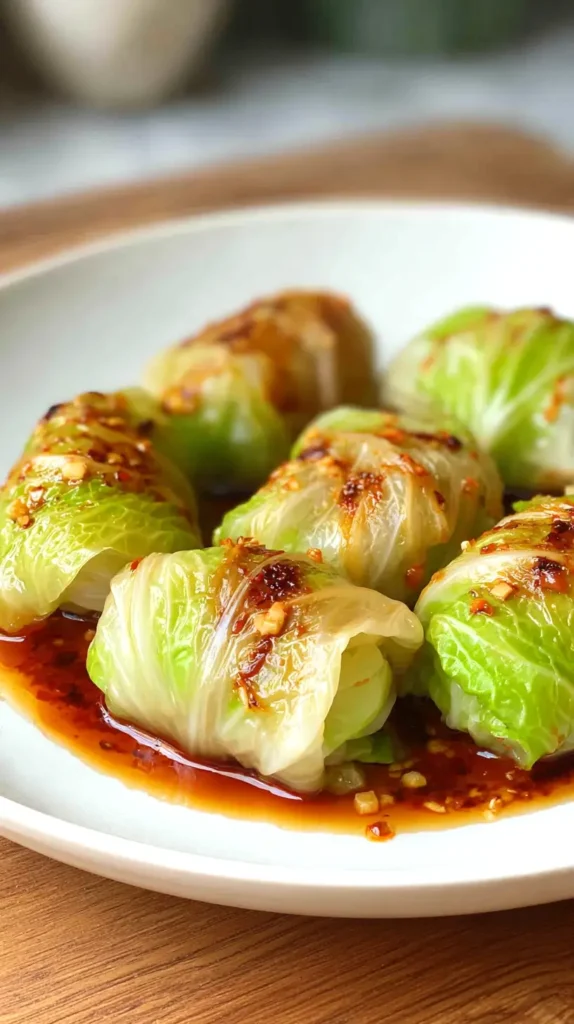
Last Few Thoughts
There’s something grounding about cooking foods that require hands-on attention. Cabbage dumplings ask for presence without pressure. I appreciate that balance. The steps encourage patience. The results reward effort.
I’ve found that recipes like this build confidence. Each fold feels small, yet meaningful. Each batch improves slightly. That progress matters.
Living in Florida, lighter meals work better most evenings. Cabbage dumplings fit that rhythm beautifully. They satisfy without weighing things down.
This recipe stays flexible. It adapts to schedules, tastes, and seasons. It also photographs well, which never hurts when sharing on Pinterest.
Most importantly, cabbage dumplings invite return. They become familiar instead of intimidating. That comfort keeps them in rotation.
Cooking should support life, not complicate it. This recipe does exactly that.