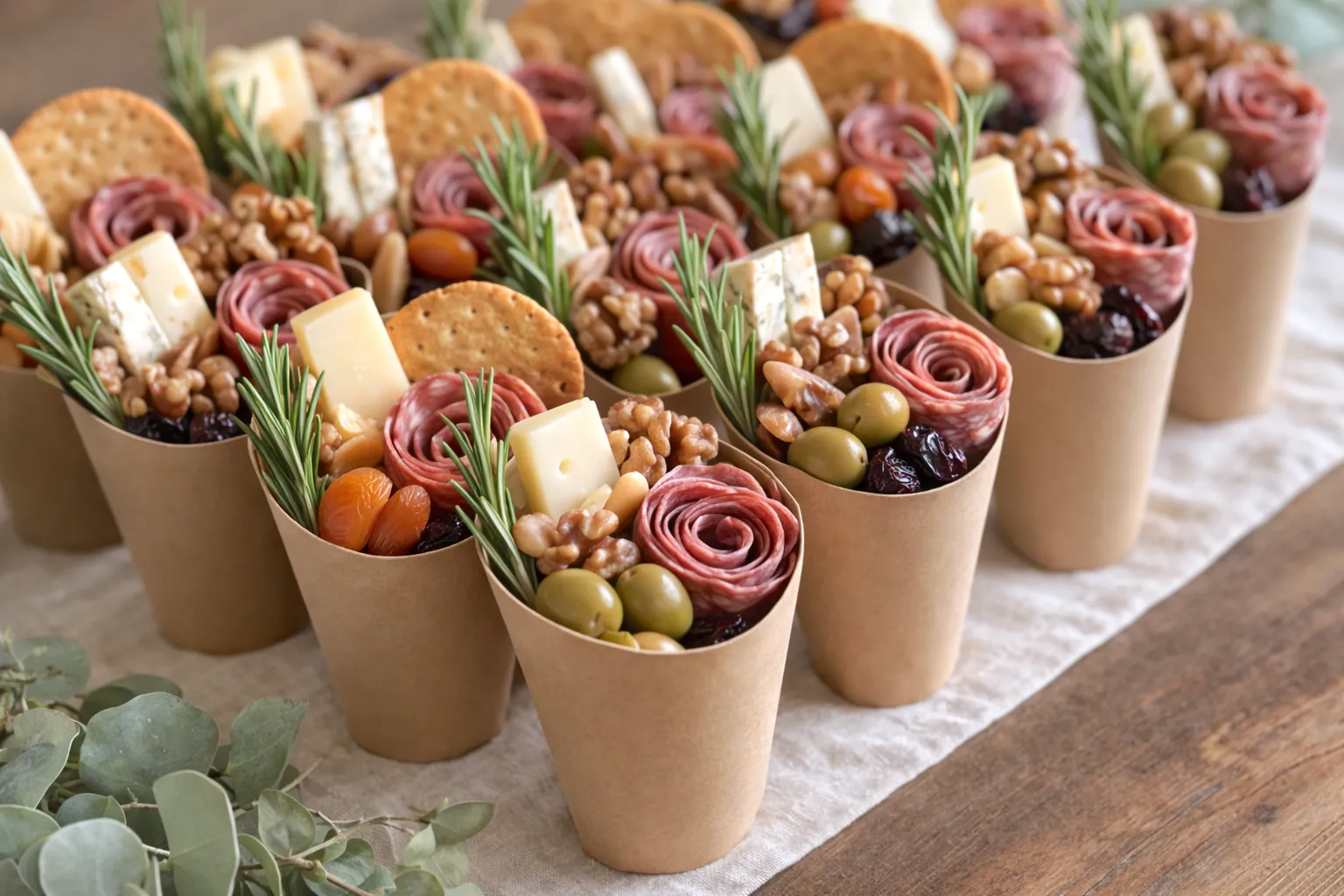
I love how individual charcuterie cups have quietly become the most competent person at the party. Showing up polished, calm, and completely unbothered by chaos is kind of their thing. There’s no need for a platter escort or a long explanation. Somehow, they just exist and make everything look more pulled together. I’ve found that people relax faster when food feels personal and contained, and these cups do exactly that. With one glance, they communicate, This is yours, without a single label or awkward hover moment. At the same time, the setup still feels festive and social, which is a tricky balance to pull off.
What I really enjoy about individual charcuterie cups is how they remove friction. Nobody wonders where to stand. Nobody debates how much cheese is polite. Instead, guests grab a cup and instantly settle in. That small shift changes the energy of a gathering more than people realize. Also, they photograph beautifully, which matters even if you pretend it doesn’t. I tend to notice that people snap pictures before they even take a bite. That’s always a good sign.
Living in Orlando means food often competes with heat, humidity, and outdoor spaces. Single-serving charcuterie cups handle that gracefully. They don’t melt into each other as fast, and they move easily from kitchen to patio. I’ve also noticed they work across ages, moods, and dress codes. They feel equally right at a backyard get-together or a dressed-up shower. Mostly, though, I like that they look intentional without feeling stiff. They’re confident food, and I admire that.
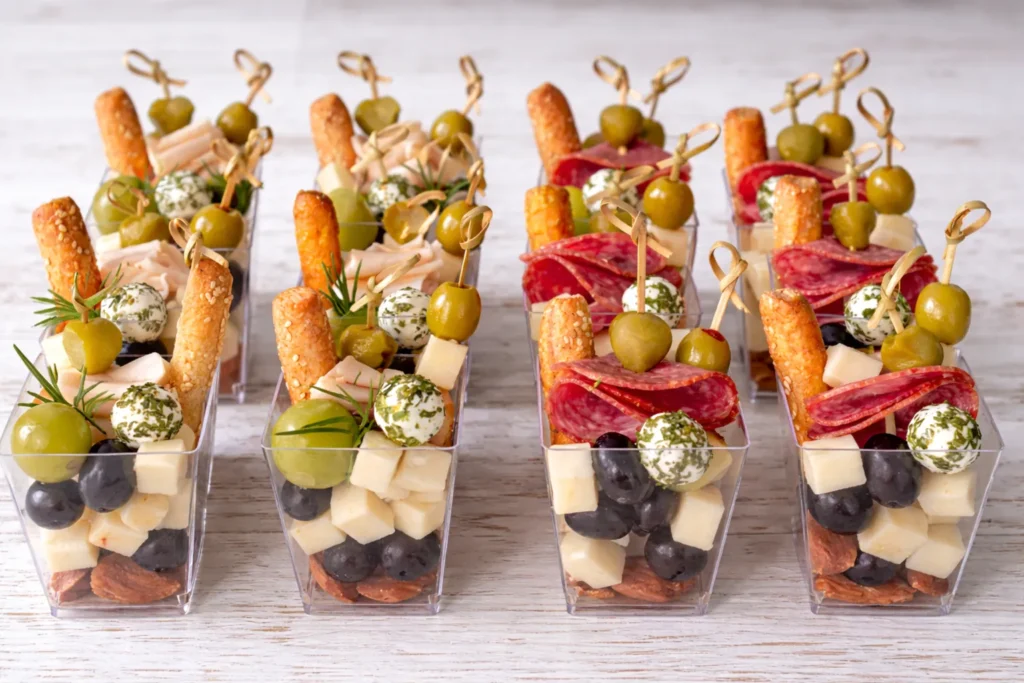
Some of the links on this page are affiliate links, which means that if you click on them and buy something, I might get a small commission. But don’t worry; it never costs you more. You can peek at my full disclosure if you’re curious about the fine print.
The Building Blocks That Work
When I think about individual charcuterie cups, I start with structure before specifics. A cup should feel balanced without feeling crowded. That balance comes from choosing a few reliable categories and sticking to them. I’ve found that four to six items per cup keeps things visually pleasing and easy to eat. Anything more starts to feel like a scavenger hunt.
Here’s a foundation that rarely misses:
- One soft or semi-soft cheese
- One cured meat or savory protein
- One crunchy element
- One fresh or juicy contrast
- One small sweet bite
Because individual charcuterie cups are vertical, placement matters. I tend to anchor heavier items near the bottom, then layer lighter textures upward. That keeps everything stable and visually appealing. Also, contrast matters more than quantity here. A sharp cheese next to a mild cracker creates interest without clutter.
Meanwhile, variety across cups matters less than variety within each cup. People appreciate consistency more than surprise in this format. For that reason, I usually repeat the same elements across all cups rather than customizing each one. That approach keeps prep calmer and presentation cleaner.
Still, you can subtly shift flavors by rotating one ingredient. For example, swapping grapes for apple slices changes the vibe without rewriting the whole plan. Individual charcuterie cups reward restraint, which feels refreshing. They don’t need to prove anything. They just need to work.
The Best Cheese Choices for Individual Charcuterie Cups
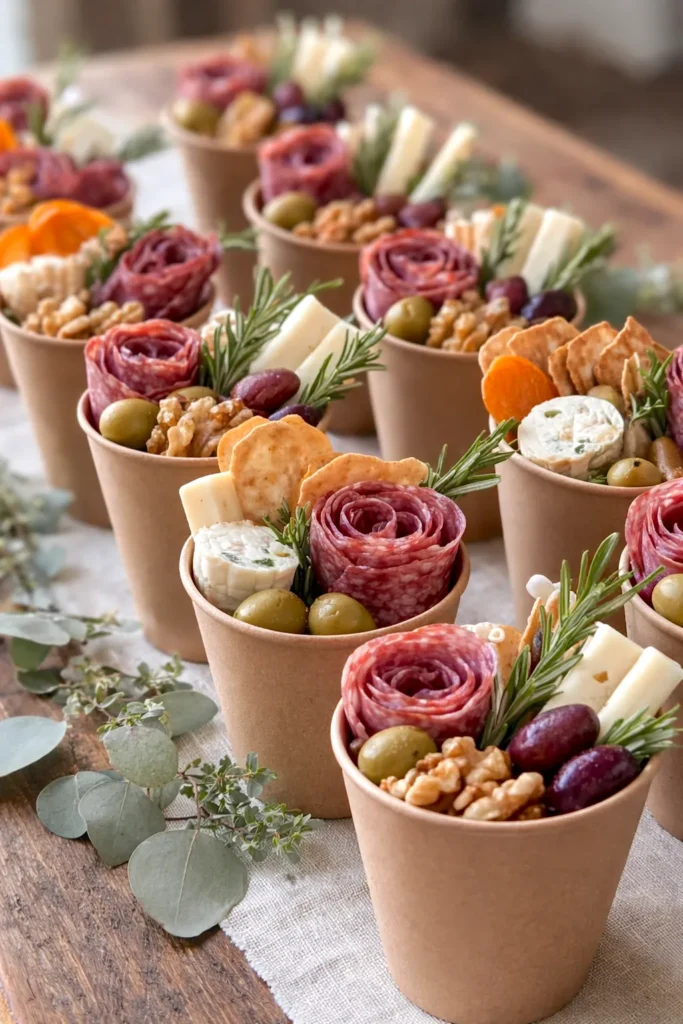
Cheese selection can make or break individual charcuterie cups, mostly because not all cheese plays well in small spaces. I’ve found that cheeses with clean cuts and steady structure perform best here. Soft cheeses are lovely, but they need boundaries. Otherwise, they slump and steal attention.
Reliable options include:
- Cubed cheddar or Colby Jack
- Folded slices of gouda or provolone
- Mini mozzarella balls
- Brie cut into tidy wedges
Because cups are handled individually, I tend to avoid crumbly cheeses. They scatter and look messy fast. Instead, I lean toward cheeses that hold their shape while still tasting generous. That combination keeps the cup looking intentional even after it’s been carried around.
Temperature matters too. Cheese that’s too cold feels stiff, while cheese that’s too warm loses definition. I’ve found letting cheese sit briefly before assembly helps everything cooperate. Also, smaller cuts work better than you think. Big chunks overpower the cup and crowd out other textures.
When using brie or similar styles, I keep portions modest and place them toward the top. That placement keeps the cup clean and inviting. Individual charcuterie cups shine when cheese supports the experience rather than dominating it. Think supporting actor, not lead.
Designing Individual Charcuterie Cups By Bite Size, Not Ingredients
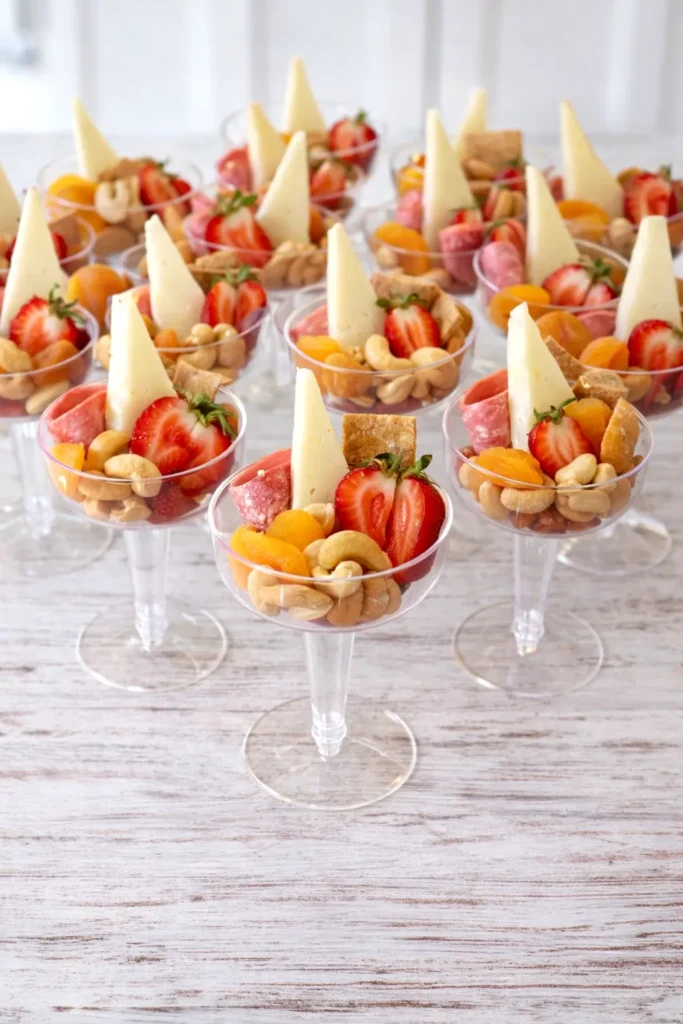
One mistake I see with individual charcuterie cups is thinking in ingredients instead of bites. People choose cheese, meat, fruit, then stop. However, guests don’t eat categories. They eat mouthfuls (and they notice when those mouthfuls feel awkward). When each bite fits comfortably, the cup works better right away!
Start by deciding how big one bite should be. That size becomes your quiet rule (the one that keeps everything in check). Every item should follow it without effort. Cheese cubes stay small. Meat folds once, not twice. Fruit slices shrink slightly. Suddenly, nothing feels strange to grab or reposition.
Because individual charcuterie cups limit space, oversized items create friction fast. Guests pause. They adjust food. That pause interrupts the flow. Smaller bites remove that moment completely. Eating becomes smooth and automatic (which is exactly what you want).
This approach also controls pacing in a subtle way. When bites feel balanced, people take their time. They don’t rush through oversized chunks. Instead, they move naturally from bite to bite. That rhythm keeps the cup interesting without adding more food or clutter.
Another benefit shows up during prep. Planning by bite size simplifies decisions. You count bites instead of pieces (which is oddly satisfying). Each cup gets the same number of bites, even if ingredients change. That consistency keeps portions fair and predictable!
Visually, bite-sized design looks polished. Items sit neatly without forcing space. Nothing spills over the rim. Cups look intentional, not crowded. That calm appearance signals quality right away.
This idea also works well for mixed crowds. Kids, adults, and older guests all manage the same bites easily. No one struggles. No one asks questions. That ease matters more than fancy ingredients.
When individual charcuterie cups respect bite size, they become effortless to eat. Guests don’t think about the food. They stay present, snack comfortably, and enjoy the moment as it unfolds!
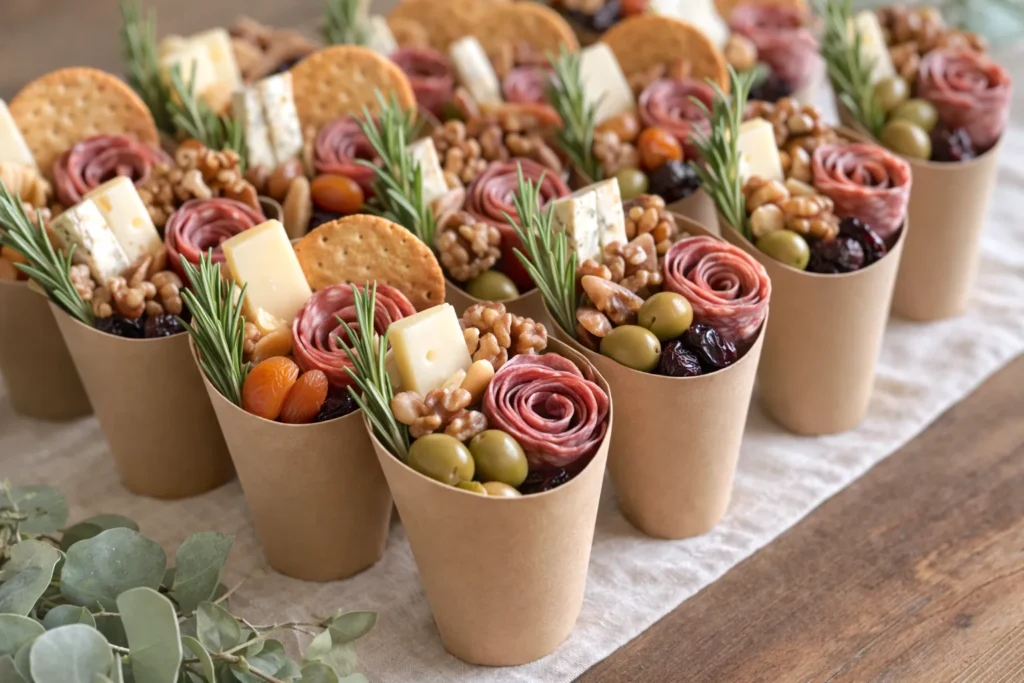
Meats And Savory Elements With Shape
Savory elements give individual charcuterie cups their backbone. They add richness and contrast, but they also need to behave visually. I tend to choose meats that can be folded, rolled, or layered without fuss. That shape adds height and movement without mess.
Strong performers include:
I’ve noticed that thinner cuts work better than thick ones. They bend easily and look elegant without effort. Meanwhile, cured meats bring salt and depth, which balances sweeter elements nicely. That balance keeps each bite interesting.
If meat isn’t the direction, savory swaps still matter. Marinated olives, seasoned nuts, or even small cheese crisps work beautifully. The key is density. Savory items should feel substantial without overwhelming the cup.
Meat placement matters more than people think in individual charcuterie cups (and yes, I notice this every time). I like sliding meats along the side so they naturally frame everything else instead of sitting in a heap. That setup makes each piece easy to grab without digging. When things stay visible, people don’t hesitate. A cup with breathing room always looks more confident than one that’s trying too hard.
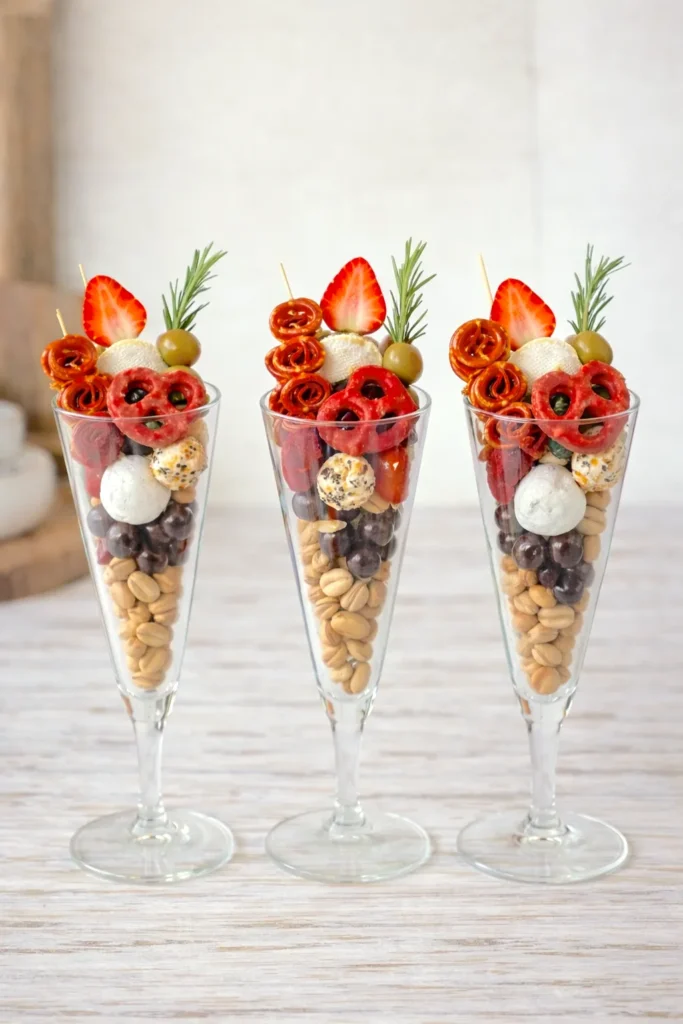
The One-Cup Flavor Path That Makes Everything Make Sense
Here’s a fresh way to think about individual charcuterie cups that changes how people eat them. Instead of random bites, design each cup around a clear flavor path from first bite to last. That means every ingredient earns its spot in a specific order. The goal is progression, not variety chaos. When someone reaches in, the cup guides them without instructions.
Start with a mild, neutral bite at the top. That first taste sets expectations and eases people in. Next, layer something savory with depth but not punchy intensity. After that, add contrast with crunch or freshness to reset the mouth. Toward the bottom, place the boldest flavor in the cup. That final bite should linger slightly and feel intentional.
Because individual charcuterie cups are vertical, gravity helps enforce the order. Guests naturally eat from top to bottom, even if they don’t realize it. That pattern gives you control without being bossy. I’ve found this approach makes cups feel more complete and satisfying with fewer ingredients.
This structure also simplifies planning. You choose ingredients based on role, not trend. Neutral, savory, fresh, bold, and finish. Suddenly, decision fatigue disappears. The cup stops being a pile and starts acting like a composed experience.
Another benefit shows up visually. When flavors have purpose, placement looks calmer. Nothing fights for attention. The cup reads clean and confident at a glance. Guests may not name why it works, but they notice.
Most importantly, this idea scales. You can swap ingredients endlessly while keeping the same flavor path. That flexibility keeps individual charcuterie cups interesting without reinventing the wheel every time.
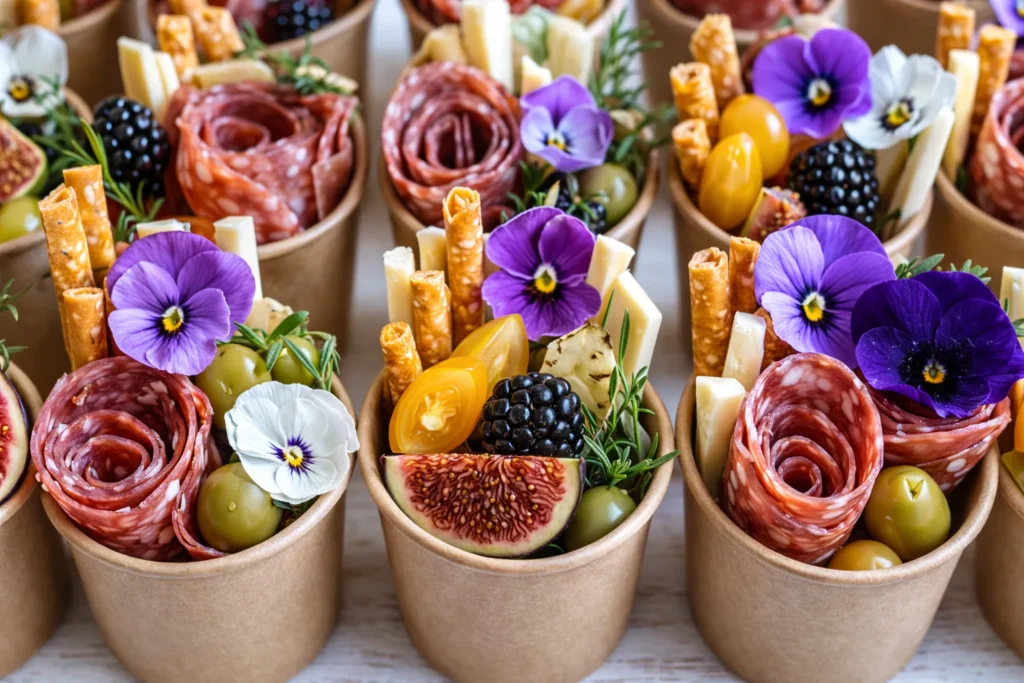
Crunchy Bits That Wake Up Your Individual Charcuterie Cups
Crunch matters more than people admit. Individual charcuterie cups rely on texture to keep bites interesting from top to bottom. Without crunch, everything blurs together too quickly. I’ve found one or two crisp elements make the entire cup feel more dynamic.
Some dependable crunchy additions include:
- Crackers broken into clean pieces
- Pretzel sticks or twists
- Breadsticks cut to fit
- Toasted nuts
Because space is limited, I choose crunch that stacks or stands rather than spreads. Long, narrow shapes work especially well. They add height while keeping the cup tidy. Also, neutral flavors tend to shine here. Crunch should support, not compete.
I avoid anything overly crumbly or greasy. Those textures travel and disrupt the rest of the cup. Instead, I look for dry, crisp options that stay contained. That choice keeps hands clean and cups attractive.
Positioning matters too. Crunchy elements often look best rising above the rim. That placement adds visual interest and signals texture immediately. Individual charcuterie cups benefit from clear cues. When guests can see crunch, they anticipate it. That anticipation makes the first bite better.
Fresh And Juicy For Balance
Fresh elements bring relief and brightness to individual charcuterie cups. They cut through richness and reset the palate between bites. Without something fresh, the cup can feel heavy fast. I tend to notice guests appreciate that contrast more than they articulate.
Reliable fresh options include:
- Grapes or berries
- Apple or pear slices
- Cherry tomatoes
- Cucumber rounds
Because cups are small, I keep portions controlled. Too much fruit overwhelms the savory balance. Instead, I aim for a few well-placed pieces that add color and moisture. That restraint keeps the cup composed.
I also pay attention to moisture levels. Very juicy fruits can leak and soften nearby items. For that reason, I pat the produce dry before assembly. That small step keeps everything crisp longer.
Fresh items need a little backup in individual charcuterie cups (because juicy things love chaos). I keep them tucked next to sturdier pieces so nothing slides around or leaks everywhere. That small choice saves the rest of the cup from getting soggy fast. When fresh pieces sit with intention instead of floating, the whole cup looks calmer. And when it looks calm, people trust it before they even take a bite.
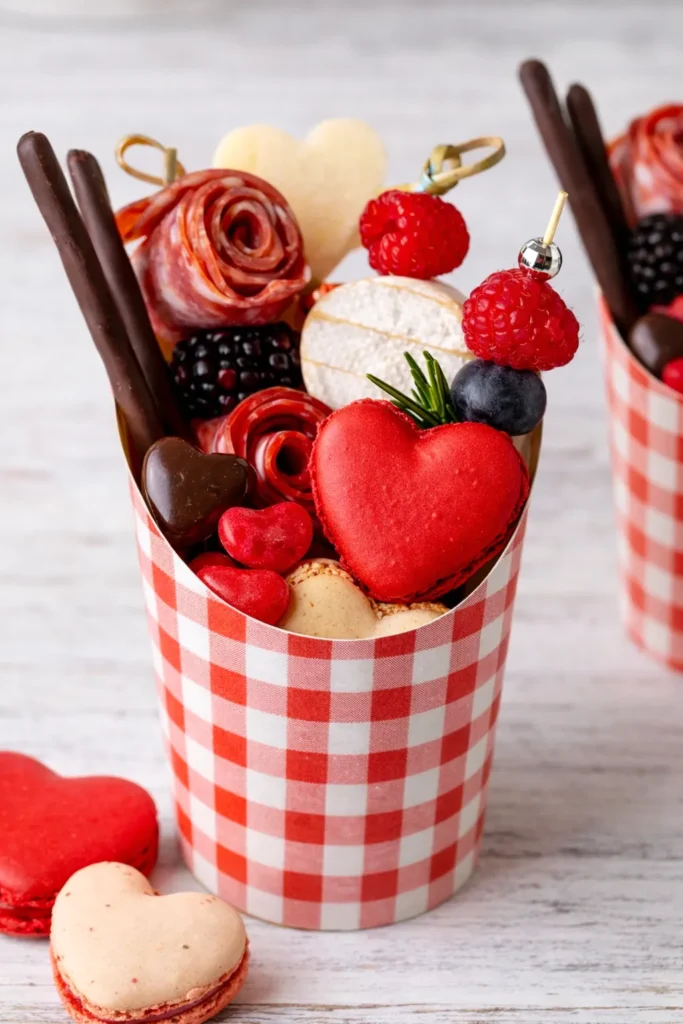
Sweet Touches Without Going Full Dessert
A sweet note finishes individual charcuterie cups beautifully, but subtlety matters. These cups aren’t dessert trays, so sweetness should feel restrained. I’ve found one small sweet element adds charm without changing the category.
Good options include:
- Chocolate-covered nuts
- Dried fruit pieces
- Honey sticks
- Mini cookies or wafers
Because space is tight, I avoid bulky sweets. Instead, I choose items that tuck neatly into gaps. That placement keeps the cup cohesive rather than divided. Also, sweetness works best when it contrasts with savory elements nearby.
I tend to place sweet bites near the top or center. That position keeps them visible without dominating. Guests often save that bite for last, which creates a natural ending.
Individual charcuterie cups benefit from that intentional arc. Savory leads, fresh balances, and sweet finishes. That sequence feels complete without effort. When sweetness stays subtle, the entire cup feels thoughtful rather than heavy-handed.
Design Details That Make Cups Look Intentional
Design separates good individual charcuterie cups from great ones. Small details signal care even when the assembly is simple. I’ve found consistency matters more than complexity here. Matching cups, repeated patterns, and clean spacing create confidence.
A few design tricks I rely on:
- Keep color balanced across cups
- Repeat shapes and textures
- Avoid overcrowding the rim
- Let one element rise above the rest
Clear cups showcase layers beautifully, but opaque cups can work too. The key is proportion. Everything should look reachable and stable. That visual calm invites people in.
I also think about how cups are held. Items that poke too high can feel awkward. Meanwhile, items packed too tightly feel inaccessible. Individual charcuterie cups work best when they’re easy to carry and easy to eat.
Small touches like tied twine, mini skewers, or paper liners can add personality. However, I use them sparingly. Too many extras distract from the food. Design should support the experience, not compete with it.
Last Few Thoughts
I keep coming back to individual charcuterie cups because they respect everyone’s space. They don’t demand attention, yet they quietly elevate a gathering. I’ve found that food feels more welcoming when it feels personal and contained. These cups manage that balance without any grand gestures. They simply work.
There’s also something satisfying about assembling something small and complete. Each cup stands on its own, yet still belongs to a group. That dynamic mirrors good gatherings in general. Everyone has their place, and nobody competes.
Living in Orlando has taught me to value food that adapts easily. Individual charcuterie cups move from indoors to outdoors without stress. They hold up in warm weather and busy spaces. That practicality keeps hosts calmer, which always improves the vibe.
I also appreciate how endlessly adaptable they are. You can change flavors, colors, and themes without changing the structure. That flexibility makes them a Pinterest favorite for good reason. They photograph well, travel well, and age well over an event.
Mostly, though, I like how they quietly say, “I thought about this.” Not in a loud way. Just enough to be noticed. And honestly, that’s my favorite kind of hosting energy.