
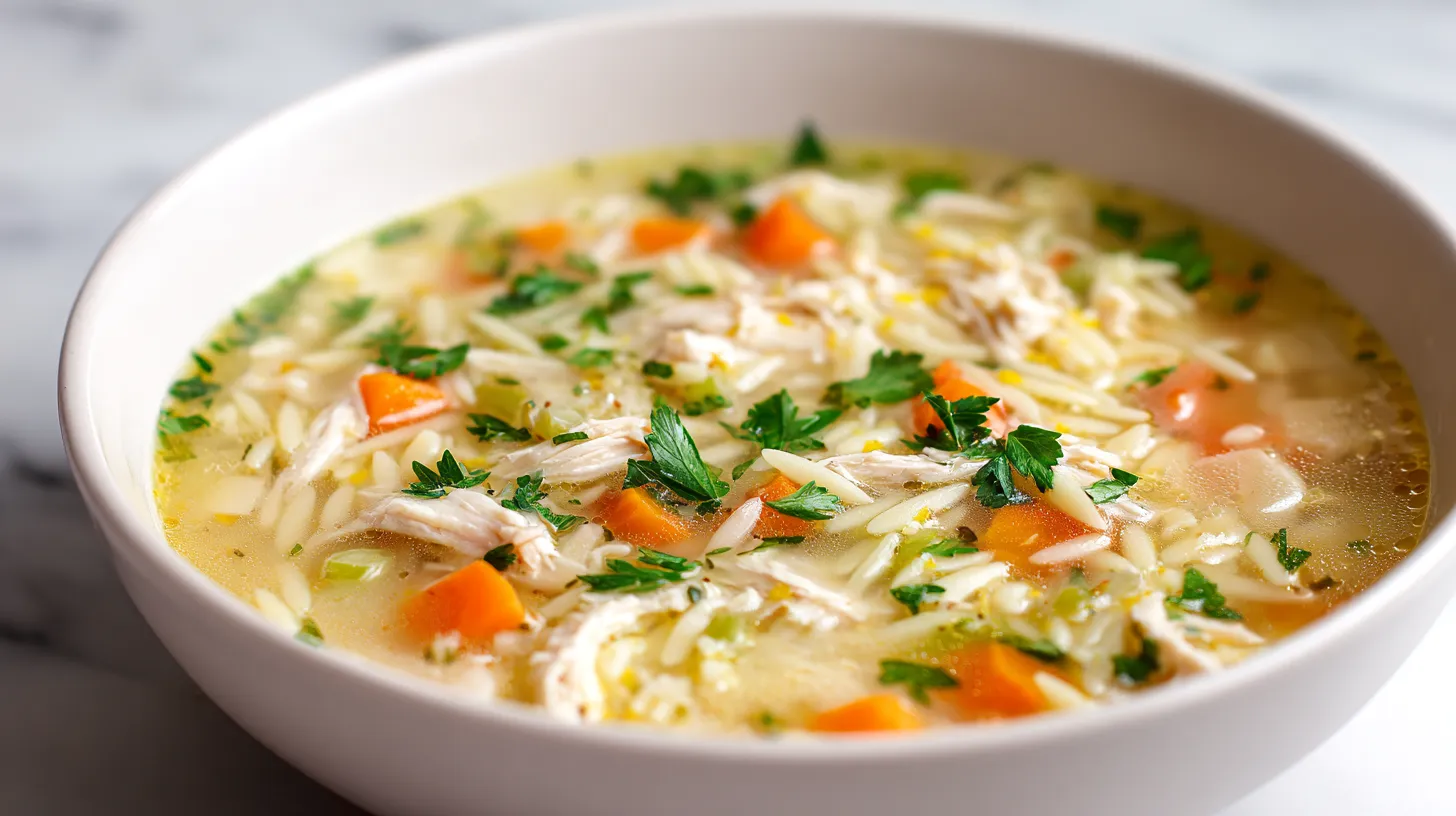
I love a soup that knows exactly what it’s trying to be, and lemon chicken orzo soup is that girl. It’s cozy, bright, and just dramatic enough to feel special without being annoying. I’ve found that lemon instantly wakes up chicken soup, while orzo keeps things comforting instead of thin. Together, they hit that rare middle ground between light and satisfying. That balance matters, especially when dinner needs to feel intentional but not complicated.
I tend to notice which recipes quietly earn a permanent spot on the dinner list. This one doesn’t beg for attention. It just works. The flavors stay clean, the texture holds up, and nothing feels overdone. It’s the kind of soup you make once, then suddenly crave again two weeks later. You don’t even question it. You just grab a lemon and move on with your life.
I’m not chasing novelty here, because dinner doesn’t need a personality crisis. Instead, I want something dependable that still tastes bright and current. Lemon chicken orzo soup hits that balance without trying too hard (which I appreciate). The flavor stays clear and focused, not fussy or precious. Better yet, it reheats beautifully, which matters more than most people admit. Leftovers also scale well, so making a bigger pot actually feels smart.
Living in Orlando means soup season is more about mood than temperature. Even so, I make this year-round because it fits how I actually eat. Some recipes earn trust fast. This one does it quietly, confidently, and without any drama.
Some of the links on this page are affiliate links, which means I may earn a small commission if you purchase through them. It never costs you extra. You can always peek at my full disclosure if you’d like the details.
What Makes Lemon Chicken Orzo Soup So Addictive
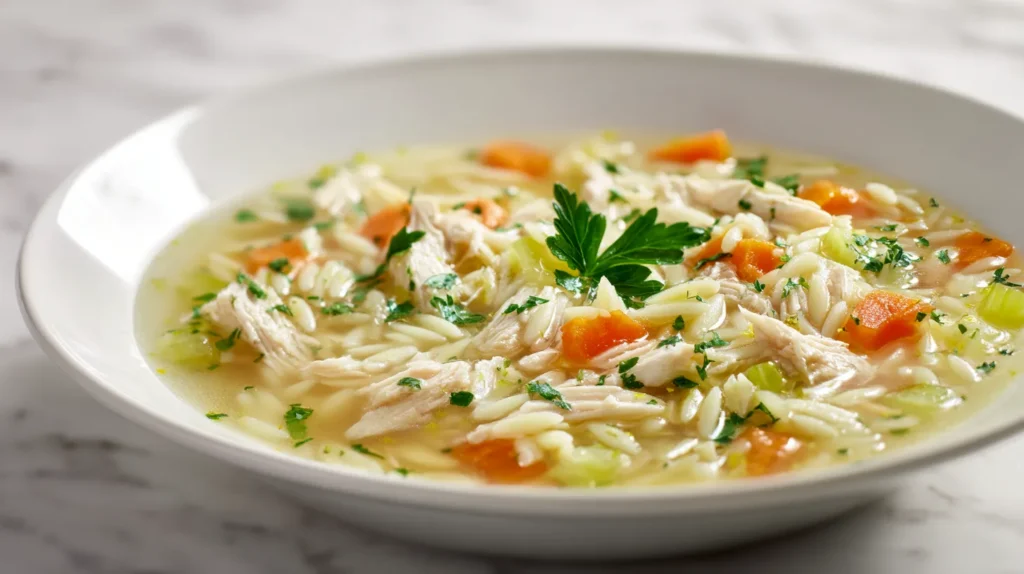
This soup works because nothing is competing for attention. Chicken brings depth without heaviness, while orzo adds body without crossing into stew territory. Lemon keeps everything bright and focused, instead of flat. I’ve found that acid does more for chicken soup than extra salt ever could. It sharpens flavors and keeps each bite interesting.
The broth matters here. A good-quality chicken broth sets the tone immediately. You don’t need fancy techniques, but you do need something flavorful. Orzo absorbs just enough liquid to thicken the soup naturally, which means no cream and no tricks. That texture feels intentional, not accidental.
I also appreciate how flexible lemon chicken orzo soup can be. It adapts easily based on what’s in the fridge. It doesn’t punish you for small swaps. That’s a recipe worth keeping.
What I always notice is how clean it tastes, even after sitting overnight. The lemon stays present without turning bitter. The orzo stays tender instead of mushy. The chicken stays soft and juicy. That consistency builds trust.
This soup feels thoughtful without being showy. It’s comforting but not sleepy. It’s familiar but not boring. Those combinations are rare, and they’re usually what separate one-time recipes from forever ones.
Ingredients That Matter More Than You Think
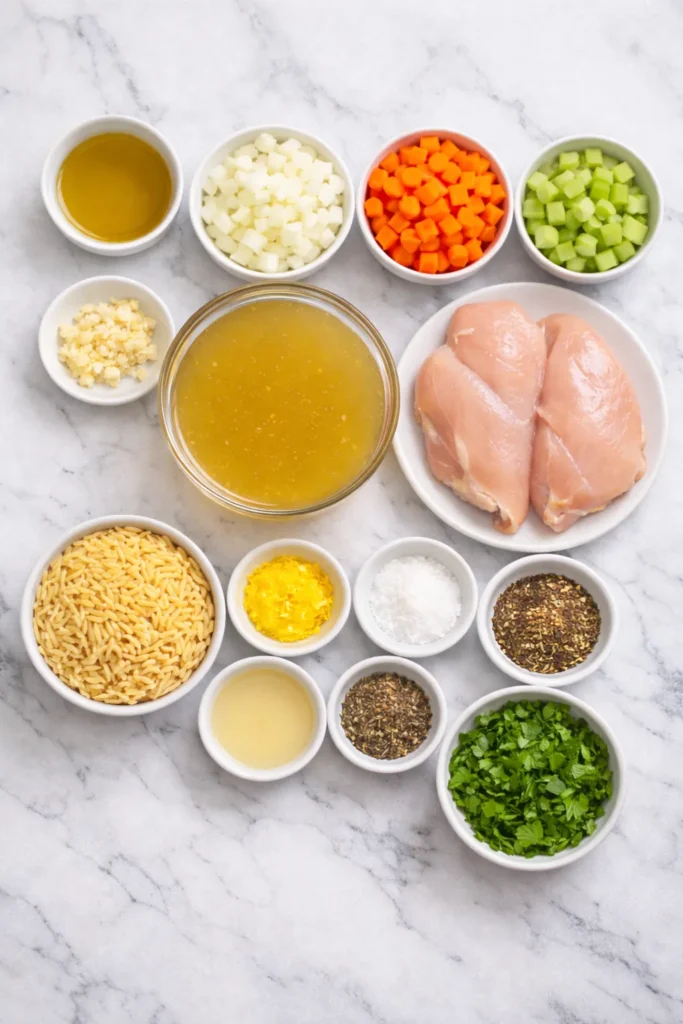
Every ingredient in lemon chicken orzo soup earns its place. Nothing hides. That’s why quality matters, even when the list stays short. Here’s what I use and why each one counts.
Ingredients:
- 1 tablespoon olive oil
- 1 medium yellow onion, diced
- 2 carrots, diced
- 2 celery stalks, diced
- 3 cloves garlic, minced
- 8 cups chicken broth
- 1 pound boneless skinless chicken breasts
- 1 cup dry orzo pasta
- Zest of 1 lemon
- Juice of 1 to 2 lemons, to taste
- 1 teaspoon salt
- ½ teaspoon black pepper
- 1 teaspoon dried oregano
- ¼ teaspoon crushed red pepper flakes (optional)
- ¼ cup fresh parsley, chopped
I tend to notice that fresh lemon makes a massive difference here. Bottled juice flattens the flavor fast. The zest adds depth without extra acidity, which keeps the soup balanced. Orzo matters too. Larger pasta throws off the texture and timing.
Chicken breasts work best for a clean, light result. Thighs taste great, but they change the vibe. That’s not wrong, just different. Fresh herbs at the end keep everything bright. Dried herbs alone won’t get you there.

How I Make Lemon Chicken Orzo Soup
I make this soup in one pot, and I protect the calm energy at all costs. Chaos ruins good food faster than missing ingredients (and I refuse to cook stressed). I start by warming olive oil over medium heat, then add onion, carrots, and celery. Instead of rushing, I let them soften slowly, stirring just enough to keep things moving. They don’t need hovering. They need patience.
Once everything smells right, I add garlic and give it a brief moment. Then the chicken broth goes in, and the pot comes to a gentle boil. I add the chicken breasts whole, because fewer steps keep my brain happy. After that, I lower the heat and let the soup simmer quietly. The chicken cooks through in about twelve minutes, and I don’t poke it constantly. I’ve found restraint matters here.
While the soup simmers, I pull the chicken out and shred it by hand. That texture feels better every time. Meanwhile, I add the orzo and stir more often, because pasta sticks when you least expect it. Once the orzo turns tender but not swollen, the chicken goes back in.
Now comes the moment I care about most. Lemon zest and juice go in near the end, never earlier. Heat dulls brightness fast, and I want that pop. Salt, pepper, oregano, and red pepper flakes follow, but gently. I taste, pause, then taste again (this step deserves attention).
Right before serving, I stir in fresh parsley and stop cooking. Lemon chicken orzo soup works best when it stays simple, steady, and confident. That’s the kind of recipe I trust.
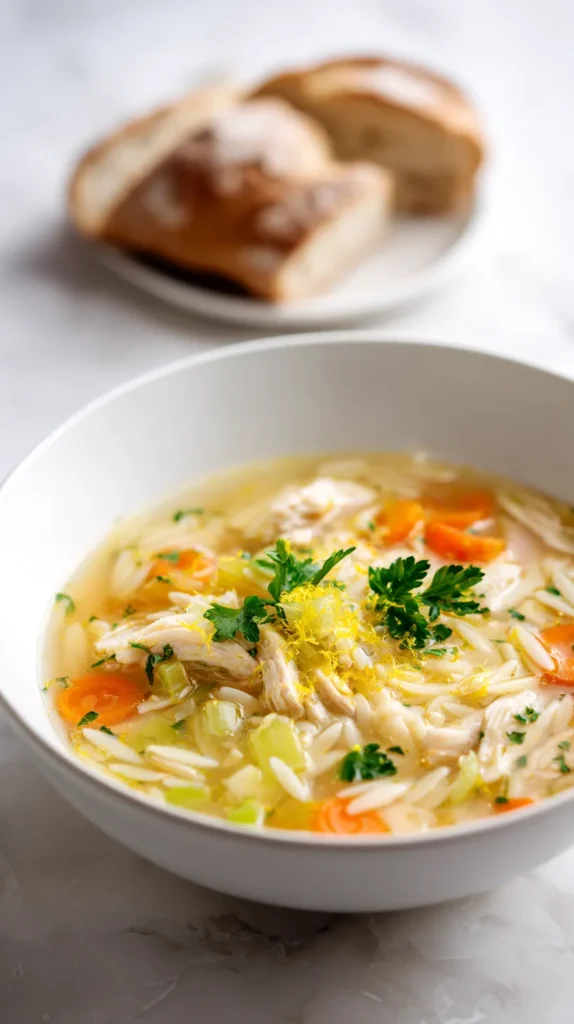

Lemon Chicken Orzo Soup Tips I Use
Some tips sound helpful but don’t change much, and I skip those entirely. However, these habits genuinely make lemon chicken orzo soup better every single time. I’ve found that small choices matter more than extra steps. This soup responds well to restraint, timing, and a little patience (which I don’t always have). Still, when I slow down just slightly, the payoff shows up in the bowl.
First, lemon deserves respect. I always add lemon juice gradually, because brightness can turn sharp fast. Once it’s too much, there’s no graceful recovery. Orzo also needs watching. I tend to notice it goes from perfect to bloated in minutes, so I stop cooking early. Chicken texture matters too. I shred it by hand instead of chopping, since that keeps bites tender and natural.
A few things I consistently stick to:
- Season lightly at the start, then adjust near the end.
- Use broth you actually like the taste of.
- Stir orzo often so it doesn’t cling or clump.
- Let the soup rest briefly before serving.
That short rest matters more than it sounds. The flavors settle, the broth relaxes, and everything tastes more intentional. Meanwhile, the soup will thicken as it sits, which is normal. If reheating later, I add a splash of broth or water to loosen it. That small fix brings it right back.
I’ve learned that lemon chicken orzo soup rewards calm cooking, not heavy hands. Over-seasoning dulls the brightness, while overcooking muddies the texture. Instead, I keep things simple and trust the process. As a result, the soup tastes clean, balanced, and dependable.
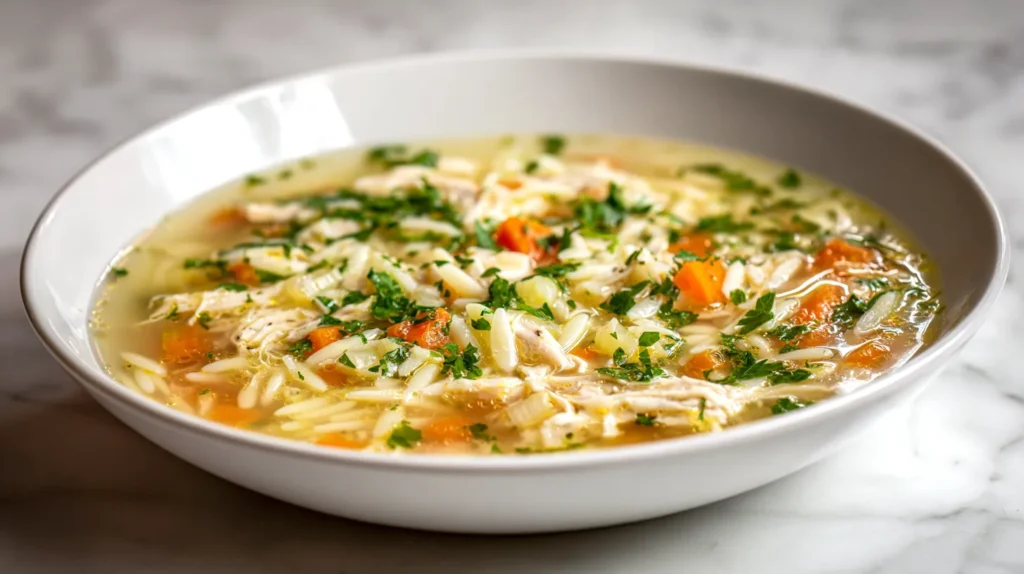
Easy Variations That Respect the Soup
I like recipes that let you play a little without losing their identity, and lemon chicken orzo soup allows that sweet spot. It’s flexible, but it’s not chaotic. I’ve found that small, thoughtful tweaks work better than big swings here (this soup notices everything). When changes stay supportive, the bowl still tastes grounded and intentional.
Greens are the easiest add-on, and timing matters more than quantity. I’ll toss in spinach or kale right at the end, then immediately stop cooking. Any longer and things get murky, fast. Herbs also shift the mood. Swapping parsley for dill adds a sharper edge and a more confident herbal note. Both are good, although the vibe absolutely changes (choose your adventure).
Sometimes I want a slightly richer finish, especially if I’m feeding other people. In that case, a small pat of butter stirred in at the end adds depth without heaviness. I tend to notice this works best when the lemon already tastes balanced. Heat tweaks stay subtle too. A tiny bump in red pepper flakes warms things up without stealing the spotlight.
A few variations I actually stick with:
- Add spinach or kale only at the very end.
- Swap parsley for dill, but never both (trust me).
- Stir in a small pat of butter for quiet richness.
- Increase red pepper flakes slowly, not boldly.
What I always avoid are cream, cheese, or heavy thickeners. They blur the brightness and soften the lemon’s punch. Lemon chicken orzo soup shines because it stays clear, focused, and confident. Let it stay itself!

How I Serve Lemon Chicken Orzo Soup
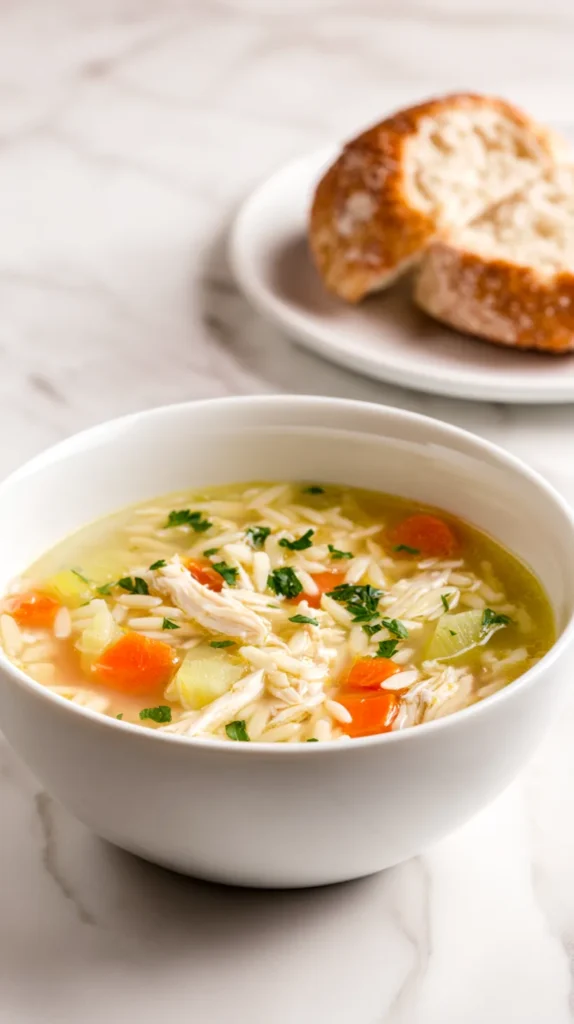
This soup doesn’t need much help, and honestly, that’s part of the charm. I tend to serve lemon chicken orzo soup simply, because overdoing sides muddies the moment. A warm, crusty bread usually shows up, because broth deserves something absorbent nearby. Crackers work too, especially when I want zero effort (no shame). Either way, the goal stays the same. Let the soup lead.
If I want a little balance, I’ll add a small side salad. Nothing dramatic. Think mixed greens, lemon vinaigrette, and very few extras. Heavy toppings distract fast, and I avoid that. I’ve found that simple sides support the meal instead of competing for attention. That matters more than variety.
Sometimes I skip sides entirely, especially when the portion runs generous. In those moments, the soup stands on its own just fine. I’ve noticed lemon chicken orzo soup feels complete without extra noise. It fills the bowl and the plan. That’s a win.
Here’s how I usually approach serving:
- Crusty bread for dipping and scooping (always a good idea).
- Simple crackers when time feels tight.
- A light green salad if I want contrast.
- No heavy sides that steal focus.
Occasionally, I’ll finish bowls with extra lemon wedges on the table. That lets everyone adjust brightness without fuss. Fresh herbs nearby help too, especially if someone wants a pop of green. I keep toppings optional, not required.
Overall, I serve this soup with restraint and confidence. It doesn’t need layers, tricks, or a supporting cast. It just needs room to shine! When dinner stays uncomplicated, everything tastes more intentional. That’s the energy I aim for, especially on busy nights.
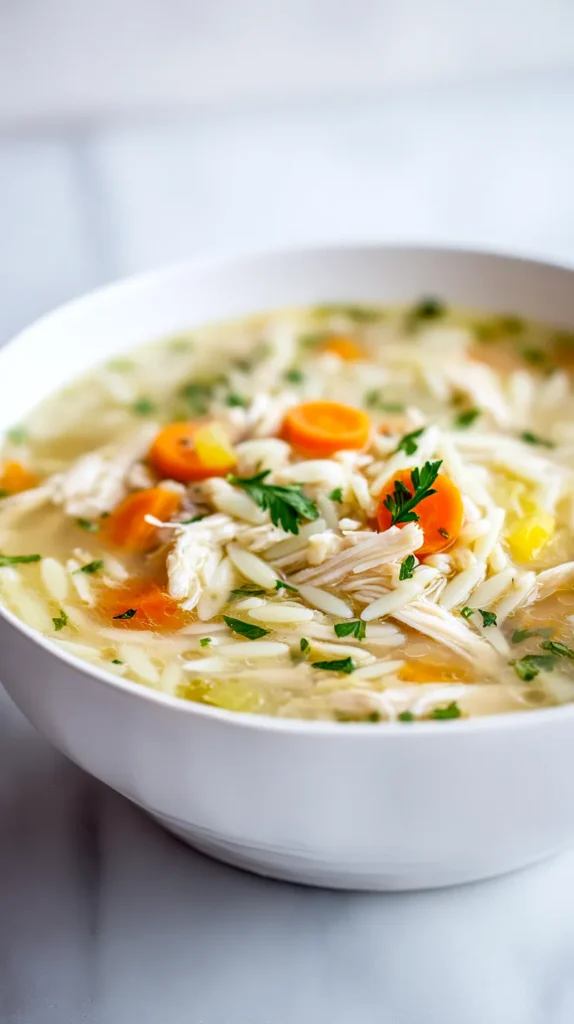

Lemon Chicken Orzo Soup
Ingredients
Method
- Heat the olive oil in a large pot over medium heat.
- Add the diced onion, carrots, and celery to the pot.
- Cook, stirring occasionally, until the vegetables soften.
- Add the minced garlic and cook briefly until fragrant.
- Pour in the chicken broth and bring the soup to a gentle boil.
- Add the chicken breasts whole to the pot.
- Reduce the heat and simmer until the chicken is fully cooked, about 12 minutes.
- Remove the chicken from the pot and shred it by hand.
- Add the dry orzo pasta to the simmering broth.
- Cook the orzo until just tender, stirring occasionally.
- Return the shredded chicken to the pot.
- Add the lemon zest, lemon juice, salt, black pepper, oregano, and red pepper flakes if using.
- Stir well and taste, adjusting seasoning as needed.
- Remove the pot from the heat and stir in the chopped parsley just before serving.
Tried this recipe?
Let us know how it was!
Last Thoughts
I trust recipes that fit into real life without demanding extra energy. I’ve found that lemon chicken orzo soup does exactly that. It stays balanced, familiar, and steady without trying to impress anyone. That matters to me more than novelty or clever twists.
What keeps me coming back is how practical this soup stays. It works on busy nights and slower ones. It reheats well, which removes stress the next day. I tend to notice which meals still sound good when plans shift, and this one usually does. That reliability counts.
Living in Orlando changes how comfort food fits into daily life. Cold weather rarely drives dinner choices here. Mood does. Even so, this soup still earns a place at the table year-round. It suits evenings that need calm and weekends that stay relaxed. That flexibility makes it useful.
I also appreciate recipes that don’t require constant adjusting. This one holds together without fuss. I can make it as written and trust the result. That confidence matters, especially when time feels short.
I’ve saved this recipe on Pinterest more than once, and that says something. I don’t save things I won’t remake. Some recipes rotate out quietly. Others stay because they work. This one stays because it fits how I actually cook and eat. When something feels dependable without becoming boring, I keep it close.