I hit that moment again.
The one where I open the fridge, stare at vegetables, and think, “We need something cozy but not heavy.” That’s when I usually make Mediterranean vegetable soup.
Because here’s the thing.
Mediterranean vegetable soup sounds responsible. It sounds grown-up. It sounds like something you’d order at a café with linen napkins and strong opinions about olive oil.
But it also sounds… a little boring.
And that’s where the tension lives.
I want dinner that tastes like sunshine and herbs and someone who owns multiple cutting boards. Yet I also want something that doesn’t require a personality change or a three-hour prep session.
Living in Orlando means I crave bright, fresh flavors even when it’s technically soup season. Our winters are polite. They don’t commit. So I’ve found that anything Mediterranean hits that sweet spot between warm and breezy.
Still, I didn’t want just vegetables floating around in broth pretending to be exciting.
What I wanted was depth.
Color had to show up, too.
Most importantly, I needed something that makes you pause mid-bite and think, “Oh. That’s good.”
And somewhere between zucchini and cannellini beans, this recipe stopped being just soup.
It became that reliable, make-it-again, text-your-friend-about-it kind of dinner.
But I’m getting ahead of myself.
Because the real shift happens before the pot even hits the stove.
And it’s probably not what you think.
A few links on this page are affiliate links, so if you click and buy, I might earn a small commission. It never costs you more, and it helps support the site. You can read my full disclosure if you’re into the fine print.
Why Mediterranean Vegetable Soup Is Interesting
Let’s clear something up.
Vegetable soup has a reputation.
It’s the “I’m trying to be good” meal.
And sometimes that means thin broth and under-seasoned carrots.
However, Mediterranean vegetable soup plays a different game.
First, it leans hard into flavor. We’re talking garlic, oregano, basil, thyme, and a good glug of olive oil. Not shy herbs. Not timid seasoning.
Second, it embraces texture.
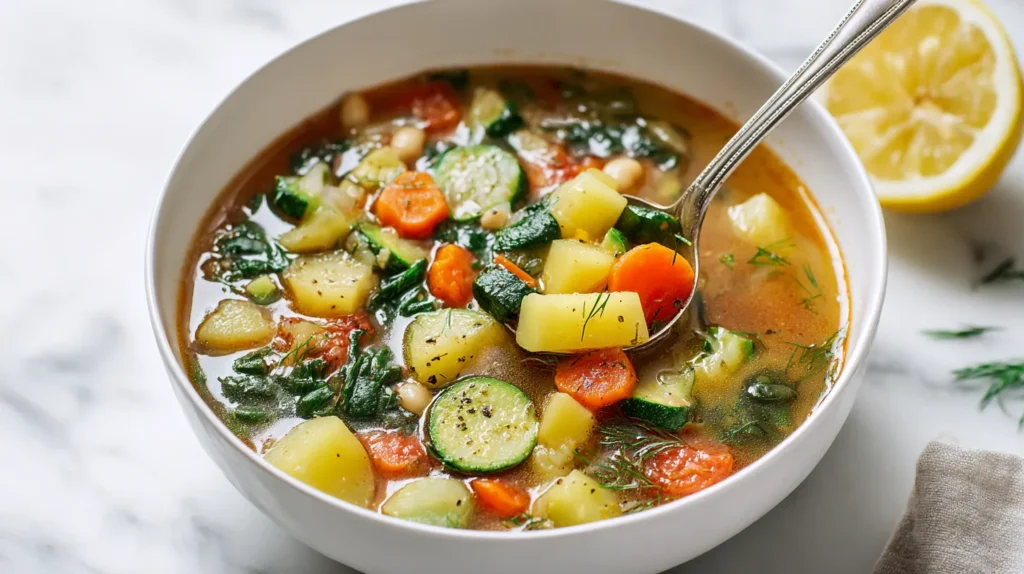
You don’t get mush. You get tender zucchini, soft potatoes, creamy beans, and just enough bite from carrots. That contrast matters.
Here’s what makes it different:
- Olive oil isn’t optional. It builds the base.
- Tomatoes add brightness, not heaviness.
- Beans make it satisfying without cream.
- Herbs show up boldly, not politely.
And here’s the surprise.
It’s filling without being thick.
I tend to notice that many people assume vegetable soup needs pasta to be hearty. It doesn’t. The beans and potatoes carry that weight beautifully.
There’s also something about the word Mediterranean that shifts expectations. Suddenly we picture sunny coastlines and ceramic bowls instead of sad diet meals.
See the contrast?
Same vegetables. Different attitude.
And attitude changes everything.
The Ingredients That Make It Worth It
Before we talk steps, let’s talk about what goes into this pot. Because ingredients decide whether this tastes layered or flat.
I keep it simple but intentional.
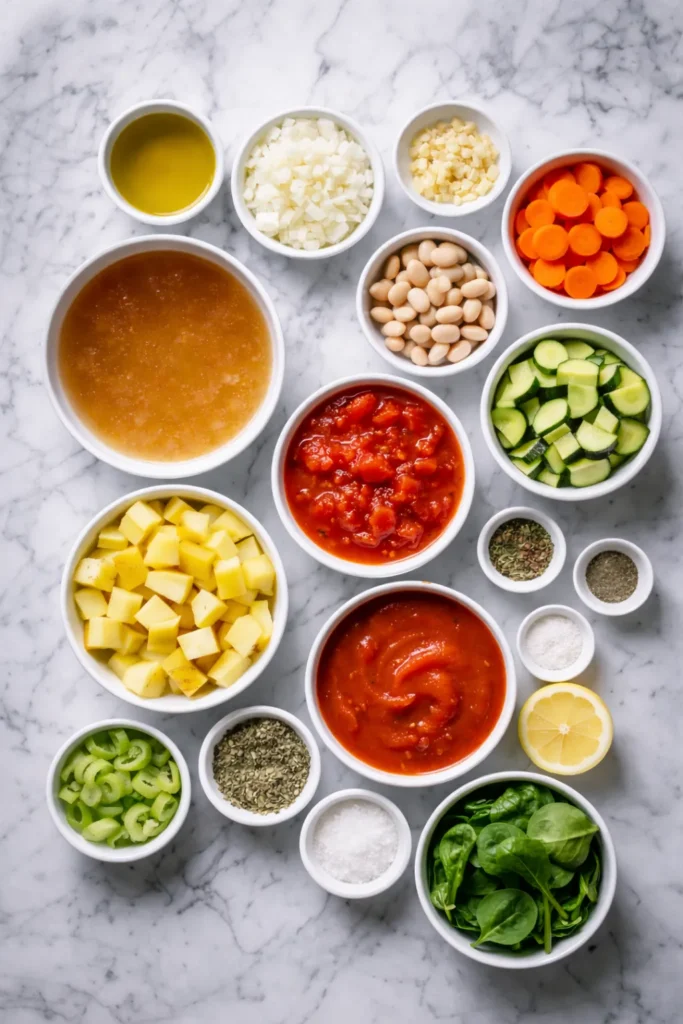
Here’s what you’ll need:
- 2 tablespoons olive oil
- 1 medium yellow onion, diced
- 3 cloves garlic, minced
- 2 carrots, sliced
- 2 celery stalks, sliced
- 1 zucchini, chopped
- 1 medium potato, diced
- 1 can diced tomatoes, 14.5 ounces
- 1 can tomato sauce, 8 ounces
- 1 can cannellini beans, drained and rinsed
- 4 cups vegetable broth
- 1 teaspoon dried oregano
- 1 teaspoon dried basil
- ½ teaspoon dried thyme
- ½ teaspoon salt
- ¼ teaspoon black pepper
- 1 cup fresh spinach
- Juice of half a lemon
Notice what’s not there.
No cream.
Not a trace of flour.
Zero mystery thickener.
That’s intentional.
I’ve found that Mediterranean vegetable soup shines when ingredients stay clear and recognizable. Nothing hides.
Also, don’t skip the lemon. That squeeze at the end wakes everything up.
And yes, canned tomatoes work perfectly. We’re not auditioning for a cooking show.
Keep reading, though. The order you use these matters more than you think.
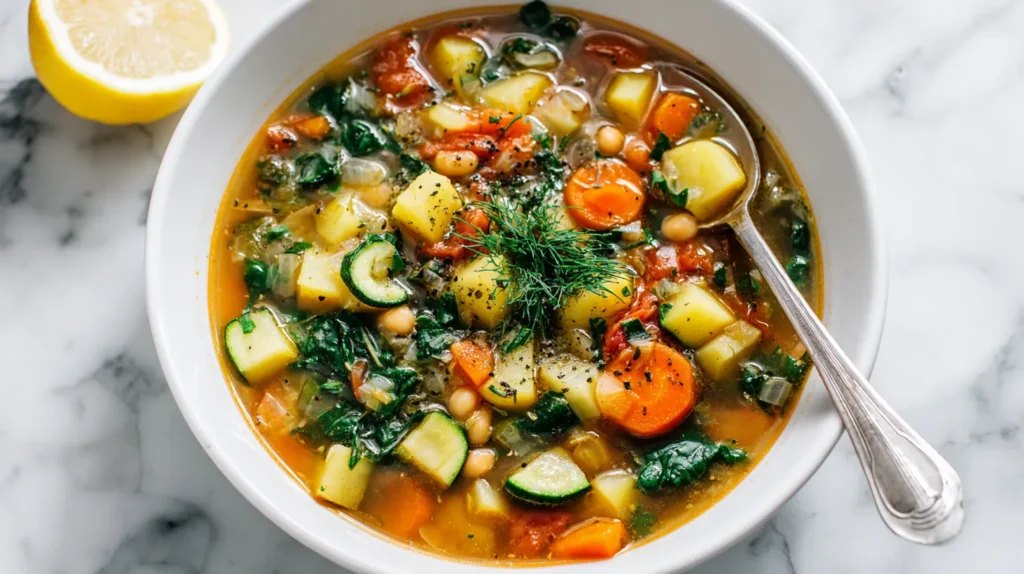
Choosing The Exact Ingredients That Make Mediterranean Vegetable Soup Better
Let’s talk specifics.
Because not all ingredients behave the same, even when they look identical on paper.
I’ve found that Mediterranean vegetable soup shifts dramatically depending on tiny choices most people overlook. The type of tomato alone changes everything.
For canned tomatoes, I choose diced over crushed. Diced keeps texture. Crushed turns it softer and slightly sweeter. That’s not wrong, but it’s different.
Olive oil matters more than people think. I use a good extra virgin olive oil, not the dusty bottle hiding in the back of the pantry. Since this soup leans on olive oil for richness, flavor shows up clearly.
Now let’s talk beans.
Cannellini beans stay creamy without falling apart. Great Northern beans work, but they’re firmer. Chickpeas add bite instead of softness. Each one creates a different personality.
That’s the part most recipes don’t say out loud.
Potatoes should be waxy, not starchy. Yukon Gold holds its shape. Russets break down and cloud the broth. I choose structure here.
Zucchini should feel firm when pressed. Soft zucchini turns mushy fast. Texture matters more than volume.
Even broth makes a difference. Low sodium gives you control. Full sodium locks you into someone else’s salt decision.
And here’s the reframe.
Mediterranean vegetable soup isn’t about adding more. It’s about choosing well. Fewer ingredients, selected carefully, create more depth than a crowded pot ever will.
Precision beats excess every time.
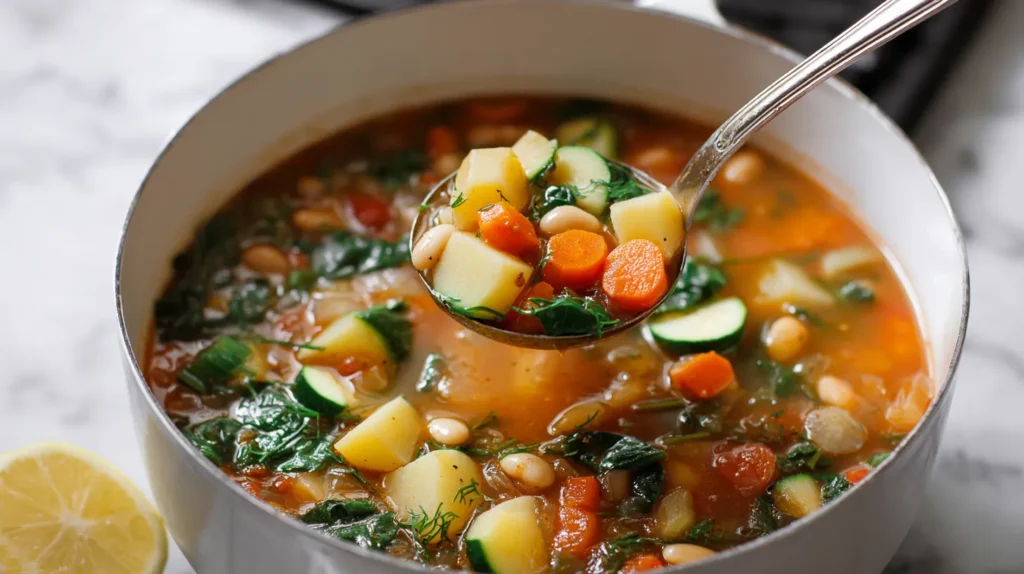
The Process That Builds Flavor
Here’s where people rush.
They toss everything into the pot at once and hope for magic. That’s not how this works. Mediterranean vegetable soup rewards order. It rewards attention.
I start with olive oil in a large pot over medium heat. Not low. Not blazing. Medium gives control. Then I add the onion and let it soften for about five minutes. I stir occasionally, but I don’t babysit it.
Next comes garlic. One minute. Maybe ninety seconds. No longer. Burnt garlic ruins the mood instantly, and there’s no rescuing that bitterness.
After that, carrots and celery go in. They need about five minutes to soften slightly. This is where depth builds. Not dramatic depth. Quiet depth.
Now pause.
If the pot smells good right here, you’re on track. If it doesn’t, you rushed. That’s the truth.
Then I add zucchini and diced potato. I stir and let them mingle for two minutes. They don’t need to cook through yet. They just need heat.
Next, I pour in diced tomatoes, tomato sauce, and vegetable broth. The color shifts immediately. It looks alive.
I bring it to a gentle boil, then reduce the heat and let it simmer for twenty minutes. However, I don’t disappear.
A quick stir here and there keeps things moving.
Near the end, I taste.
If salt is missing, I fix it.
Beans go in during the last five minutes. They’re already cooked. They’re just joining the party.
Finally, I stir in spinach and fresh lemon juice. Two minutes is enough.
And here’s the quiet twist.
Mediterranean vegetable soup tastes better after sitting off heat for ten minutes. Flavors settle. Edges soften. Everything aligns.
Patience wins every time.
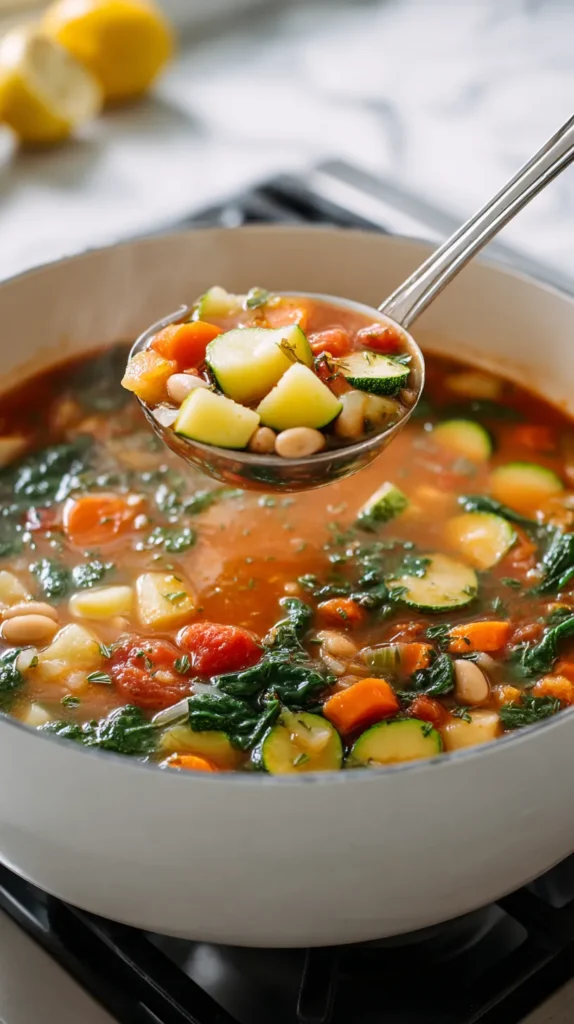
The Tiny Adjustments That Change Everything
Here’s where you get to personalize without ruining anything.
Mediterranean vegetable soup is flexible, but not chaotic.
If you want more protein, add:
- Chickpeas instead of cannellini beans
- White beans plus lentils
- Grilled chicken on top
If you crave more body, try:
Want more brightness? Add extra lemon or fresh parsley.
However, don’t overload it. This isn’t a refrigerator clean-out situation. Too many vegetables fight for attention.
I tend to notice that restraint makes the biggest impact.
Also, use good olive oil at the end. A small drizzle on top adds richness without heaviness.
And here’s a surprise.
A sprinkle of grated Parmesan transforms it. Not traditional for everyone, but delicious.
Small shifts. Big difference.
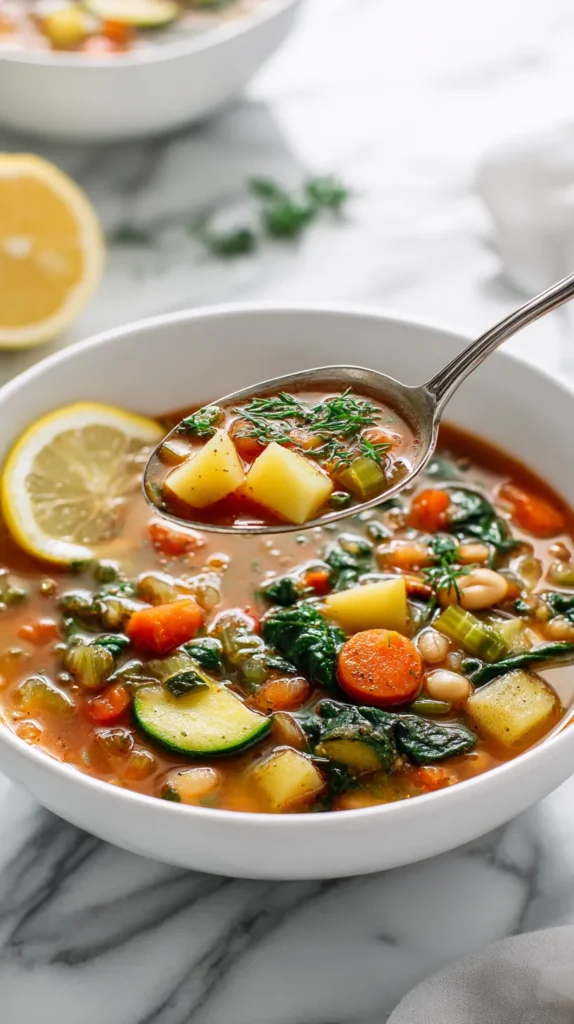
Common Questions About Mediterranean Vegetable Soup
Let’s talk through the things you’re quietly wondering while pretending you already decided to make it.
Because I know how this goes.
You like the idea of Mediterranean vegetable soup. The color pulls you in. Even the word Mediterranean sounds promising. But your brain still has questions. Fair.
Pause. Reset. Let’s walk through them.
Is it healthy?
Yes, and not in a smug way. It’s loaded with vegetables, beans, and olive oil. You get fiber, plant protein, and balanced carbs. However, it doesn’t taste like a punishment bowl. That’s the difference.
Is it gluten free?
It is, as written. Just skip adding pasta or use a gluten-free option if you want that texture. The base Mediterranean vegetable soup stays naturally gluten free.
Can you freeze it?
Absolutely. Let it cool completely first. Then freeze in airtight containers for up to three months. I’ve found that leaving a little room at the top prevents cracking.
Does it taste better the next day?
Yes. The flavors deepen overnight. The herbs settle in. The broth thickens slightly. It’s subtle but noticeable.
Can you make it in a slow cooker?
You can. Sauté onions, garlic, carrots, and celery first for flavor. Then cook everything on low for six hours. Spinach and lemon still go in at the end.
What if I hate zucchini?
Skip it. Add green beans or chopped bell peppers instead. The soup adapts.
Is it spicy?
Not by default. Add red pepper flakes if you want heat. Keep it mild if you don’t.
And here’s the quiet truth.
Most hesitation fades after the first spoonful.
That’s when Mediterranean vegetable soup stops being theoretical and starts being dinner.
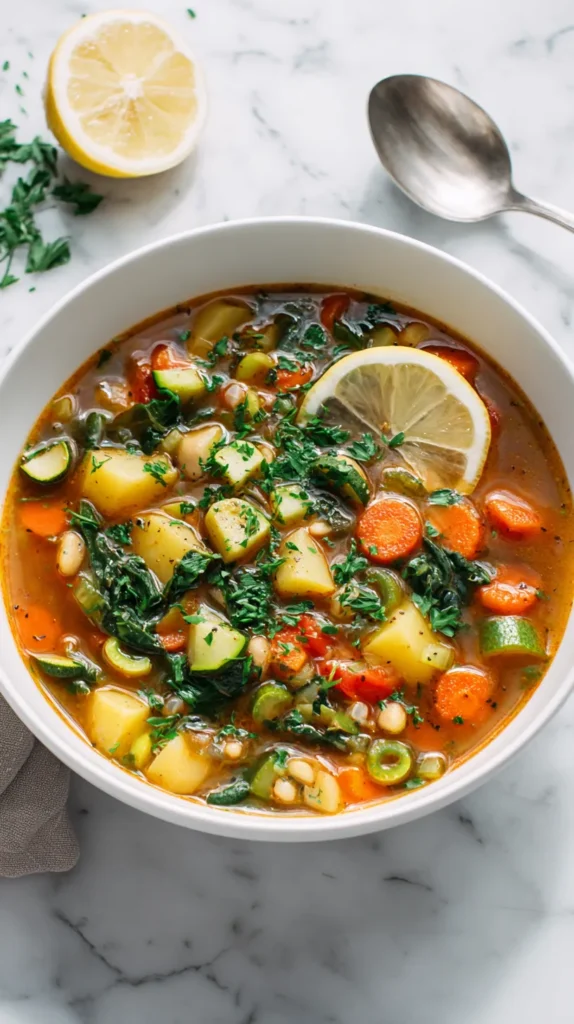
Serving Mediterranean Vegetable Soup Without Making It Fussy
Let’s not turn dinner into a performance.
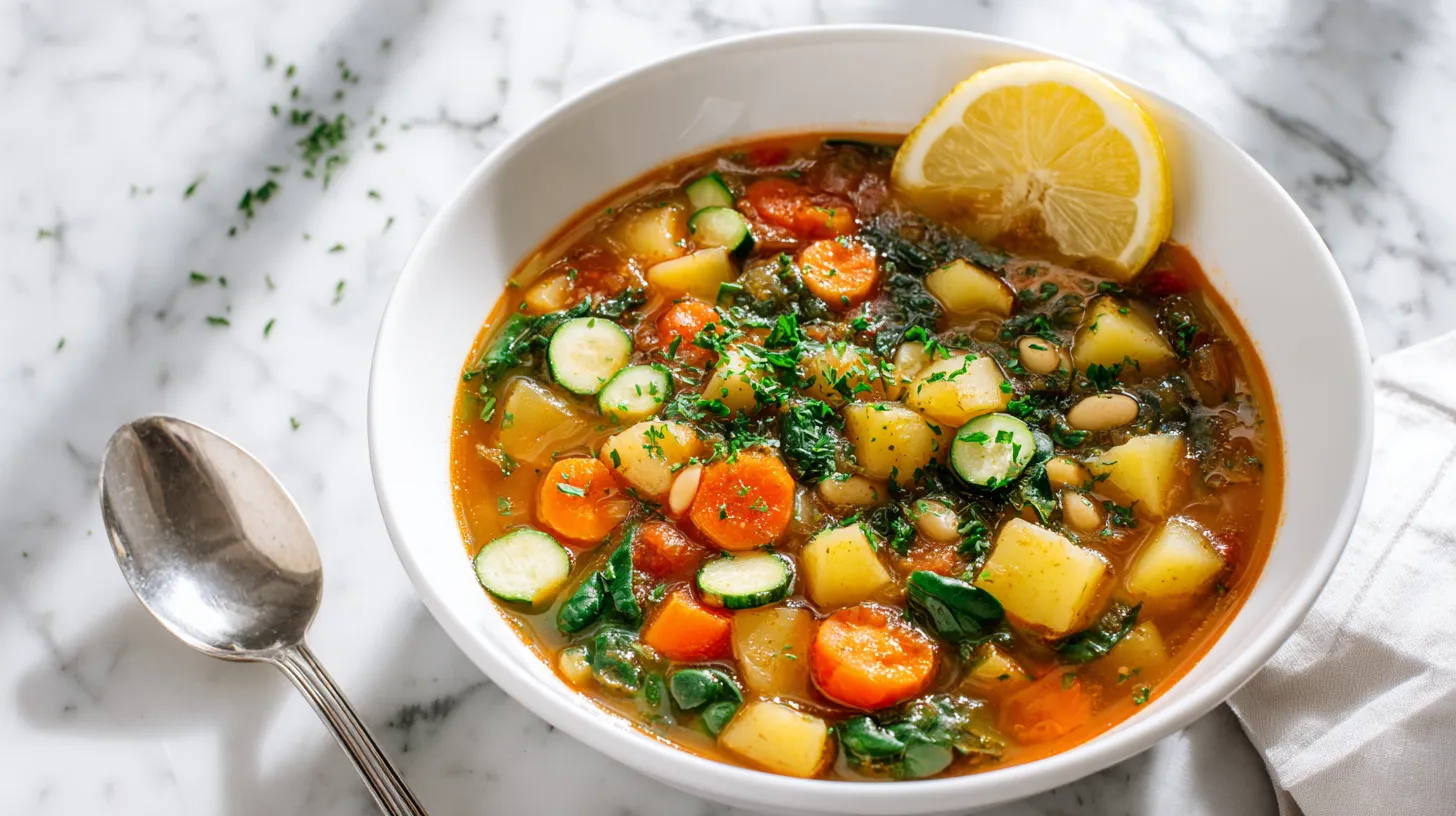
I’ve found that Mediterranean vegetable soup already does enough on its own. It shows up colorful, layered, and confident. It doesn’t need applause.
When I serve it in wide bowls, everything spreads out instead of stacking awkwardly. That small shift makes it look thoughtful without trying too hard.
Sometimes I add crusty bread and stop there.
That’s a complete meal!
However, if I want to nudge things slightly upward without making it fussy, I’ll add one simple extra. Nothing dramatic. Just enough contrast.
Here’s what I reach for:
- Toasted sourdough brushed with olive oil
- A simple Greek salad with cucumber and feta
- Lemon wedges for squeezing at the table
- Fresh basil or parsley scattered right before serving
Notice what I’m not doing. I’m not making three more sides. I’m not adding a second course.
I tend to notice people assume soup needs backup. It doesn’t. Mediterranean vegetable soup can absolutely hold its own.
And here’s something I didn’t expect at first.
It’s even better the next day. The broth deepens. The herbs settle in. Everything tastes more blended and calm.
So yes, I portion it for lunch sometimes. I reheat it gently. I add a fresh squeeze of lemon at the end.
Still, I try not to rush serving. I ladle slowly. I let the steam rise.
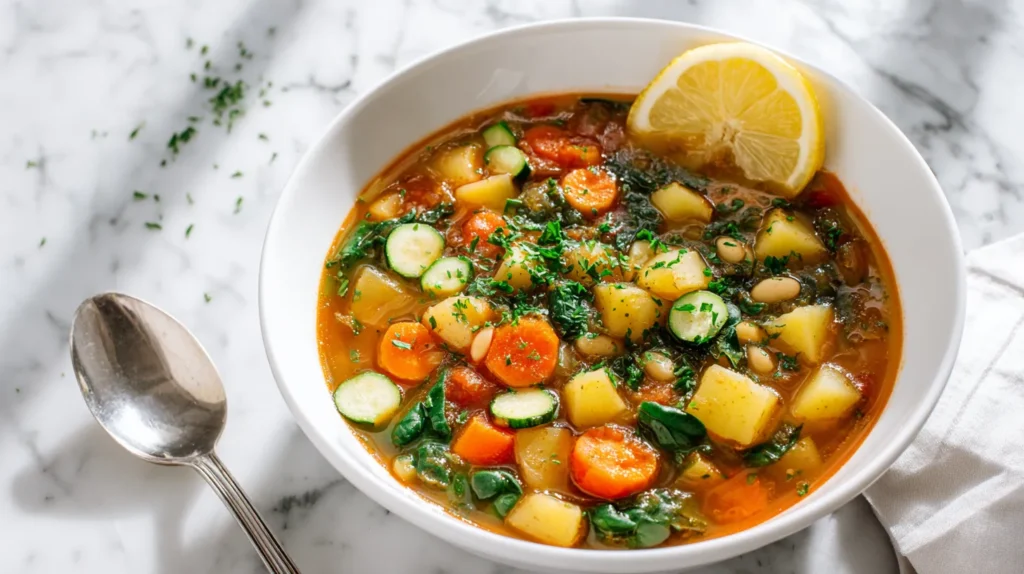
Serving Mediterranean Vegetable Soup Without Making It Fussy
Let’s not turn dinner into a performance.
I’ve found that Mediterranean vegetable soup already does enough on its own. It shows up colorful, layered, and confident. It doesn’t need applause.
When I serve it in wide bowls, everything spreads out instead of stacking awkwardly. That small shift makes it look thoughtful without trying too hard. Presentation matters, but only a little.
Sometimes I add crusty bread and stop there.
That’s a complete meal.
However, if I want to nudge things slightly upward without making it fussy, I’ll add one simple extra. Nothing dramatic. Just enough contrast to keep it interesting.
Here’s what I reach for:
- Toasted sourdough brushed with olive oil
- A simple Greek salad with cucumber and feta
- Lemon wedges for squeezing at the table
- Fresh basil or parsley scattered right before serving
Notice what I’m not doing. I’m not making three more sides. I’m not adding a second course.
I tend to notice people assume soup needs backup. It doesn’t. Mediterranean vegetable soup can absolutely hold its own without extra fanfare.
And here’s something I didn’t expect at first.
It’s even better the next day. The broth deepens. The herbs settle in. Everything tastes more cohesive, like it figured itself out overnight.
So yes, I portion it for lunch sometimes. I reheat it gently. I add a fresh squeeze of lemon at the end to wake it up again.
Still, I try not to rush serving. I ladle slowly and let the steam rise before that first spoonful gets my full attention.
Or if you want to preserve the pause:
Still, I try not to rush serving. I ladle slowly and let the steam rise.
That first spoonful gets my full attention.
Those tiny pauses turn an ordinary dinner into something that feels intentional, even on a random Tuesday.
The Biggest Mistakes People Make With Mediterranean Vegetable Soup
Let’s talk about where this goes sideways.
Because Mediterranean vegetable soup is simple, which tricks people into thinking details don’t matter. They do.
The biggest mistake? Throwing everything in at once.
Layering builds flavor. Dumping builds blandness. When onions and garlic don’t get their moment in olive oil, the base never develops. You can’t fix that later with extra salt.
Another issue is overcooking zucchini.
Zucchini cooks fast. It does not need twenty-five minutes of simmering. Add it too early and it turns soft and watery. That dulls the broth.
Skipping acid at the end is another common misstep.
Lemon juice seems optional. It isn’t. Mediterranean vegetable soup relies on brightness to balance tomatoes and beans. Without it, the soup tastes flat.
Here’s a surprising one.
Using high heat the whole time ruins texture. A rolling boil breaks down potatoes and beans too quickly. Gentle simmering protects structure.
And then there’s under-seasoning.
Salt needs layering. Add a little early. Taste near the end. Adjust carefully. If you wait until the final minute, it won’t distribute evenly.
I’ve found that many people try to “fix” soup after it’s done. The real fix happens during cooking.
Small decisions compound.
Most vegetable soup fails in the last two minutes. That’s when people skip lemon, forget to taste, or rush serving.
Mediterranean vegetable soup doesn’t require skill. It requires attention.
That’s the difference.
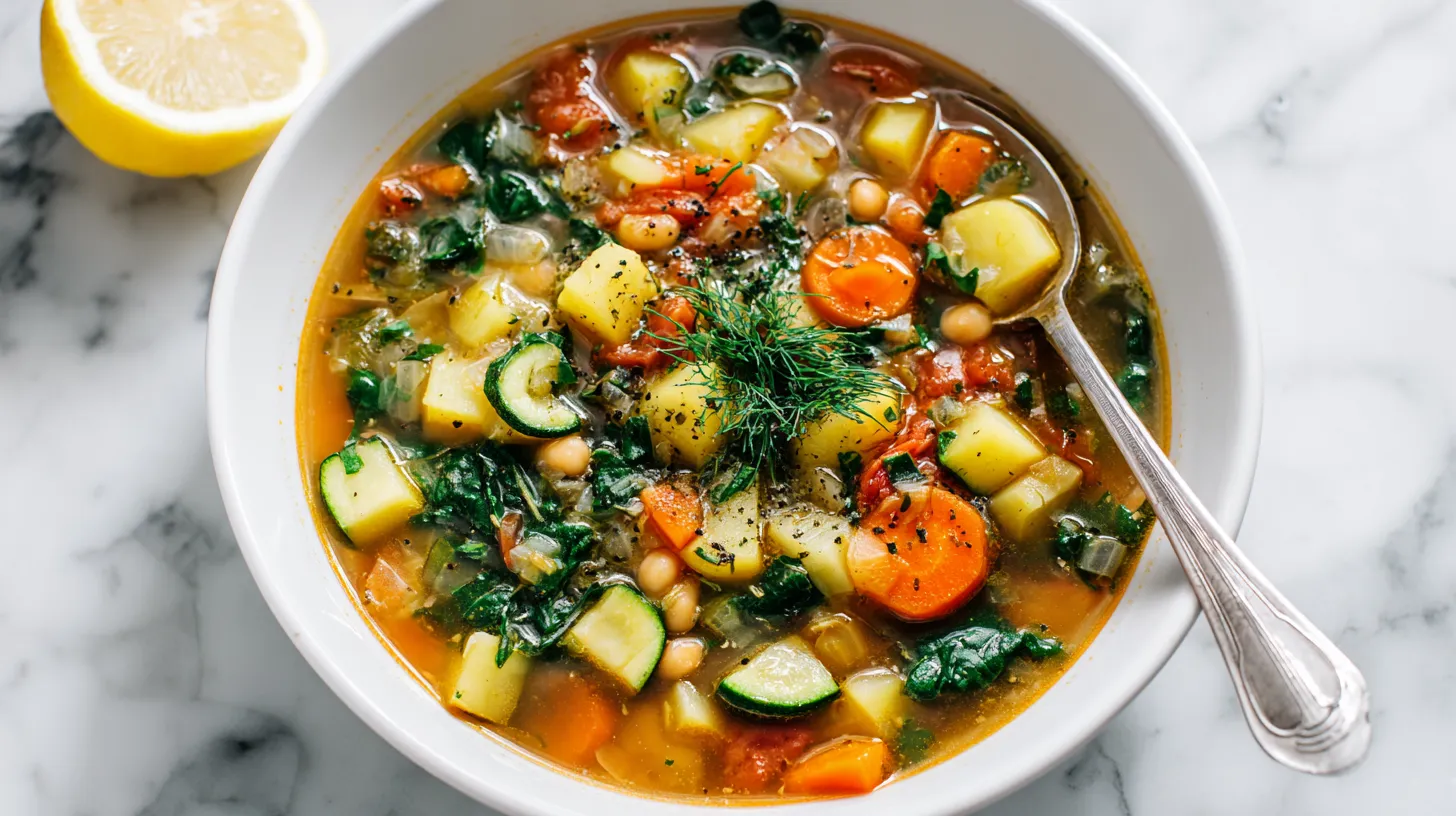
Mediterranean Vegetable Soup
Ingredients
Method
- Heat the olive oil in a large pot over medium heat.
- Add the diced onion and cook for 5 minutes, stirring occasionally, until softened.
- Add the minced garlic and cook for 1 minute.
- Stir in the sliced carrots and sliced celery and cook for 5 minutes.
- Add the chopped zucchini and diced potato and cook for 2 minutes, stirring gently.
- Pour in the diced tomatoes, tomato sauce, and vegetable broth.
- Bring the mixture to a gentle boil.
- Reduce the heat and simmer for 20 minutes, stirring occasionally.
- Taste near the end of simmering and adjust salt if needed.
- Add the drained and rinsed cannellini beans during the last 5 minutes of cooking.
- Stir in the fresh spinach and lemon juice.
- Cook for 2 minutes, then remove from heat.
- Let the soup rest for 10 minutes before serving.
Tried this recipe?
Let us know how it was!Why This One Stays in Rotation
There’s something about Mediterranean vegetable soup that keeps pulling me back.
It isn’t flashy. It isn’t trendy. Yet it shows up every time.
I love that it feels both comforting and light. That balance matters, especially in Orlando where soup season behaves like it has commitment issues. One week it’s cool enough for sweaters. The next week it’s eighty degrees again.
That’s why this works here. It’s warm without being heavy.
Also, it photographs beautifully, which I can’t pretend doesn’t matter when I’m thinking about Pinterest. The colors look intentional. The herbs pop. It looks like effort, even when it wasn’t dramatic effort.
But beyond photos and recipes, it gives me something steadier.
I’ve found that making Mediterranean vegetable soup feels grounding in a way takeout never does. Chopping vegetables slows me down. Letting the pot simmer gives me space to breathe. Nothing complicated happens, yet something shifts.
And maybe that’s why it sticks.
Not because it’s impressive.
Not because it’s dramatic.
Instead, it quietly proves that simple can still be layered. Simple can still feel thoughtful. Simple can still taste like you meant to make it.
That’s the kind of dinner I’ll circle back to without hesitation.
Turns out, simple was the power move all along.