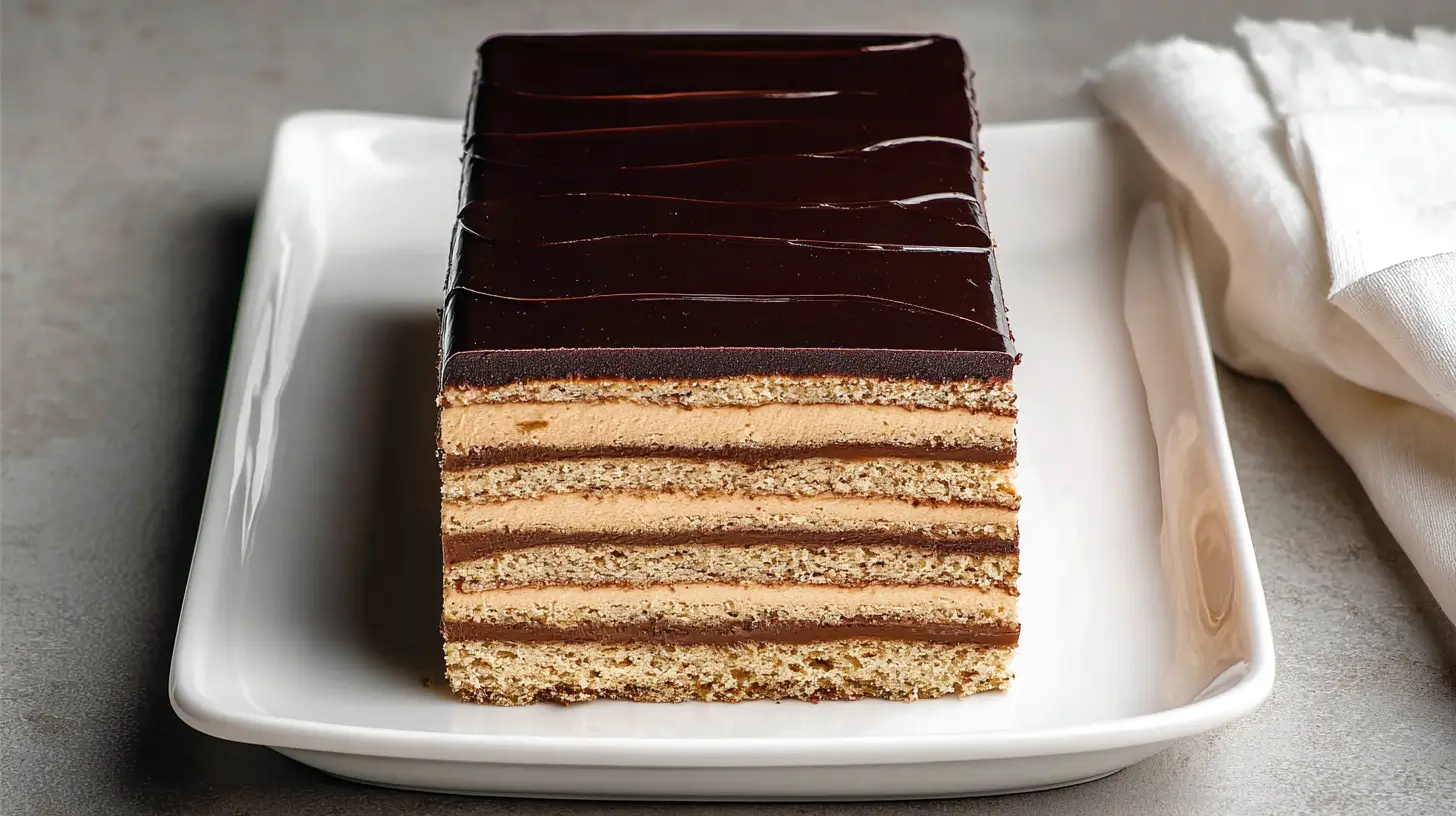
I’ve been deep in my classic European dessert era lately, which explains my sudden obsession with opera cake. It has layers, drama, and just enough chocolate to make me commit. Although it looks fancy, I’ve found that it is very doable at home. The trick is staying organized and not rushing the layers. That is where most people panic. However, once you break it down, each step feels calm and controlled. This is not a dessert that surprises you. It behaves if you follow the plan. I like desserts that behave.
Because I live in Florida, I also love desserts that chill well. Heat and buttercream are not best friends. This cake holds up nicely in the fridge, which makes it perfect for warm kitchens. I can assemble it in the morning and serve it later without stress. That matters when the air feels thick and the AC works overtime.
This post walks you through every single step. Nothing is vague. Nothing is assumed. You will get exact measurements and clear instructions. You will not need to guess. I’ve found that clear instructions remove most baking anxiety. So, that is what I’m giving you here.
The tone stays relaxed. The pace stays steady. The goal is confidence, not chaos. If you can make brownies, you can make this. You just stack more layers and act sophisticated about it.
Grab your mixing bowls. Clear your counter. Put on something dramatic in the background. We are making a dessert that looks expensive but costs less than therapy. And yes, it will absolutely be worth the effort.
Some of the links on this page are affiliate links, which means that if you click on them and buy something, I might get a small commission. But don’t worry; it never costs you more. You can peek at my full disclosure if you’re curious about the fine print.
Why Opera Cake Looks Intimidating But Isn’t
Opera cake gets a reputation for being dramatic. However, most of that comes from how it looks, not how it works. It is simply layers stacked with intention. Once you understand the structure, everything clicks. I’ve found that fear disappears when the plan is clear.
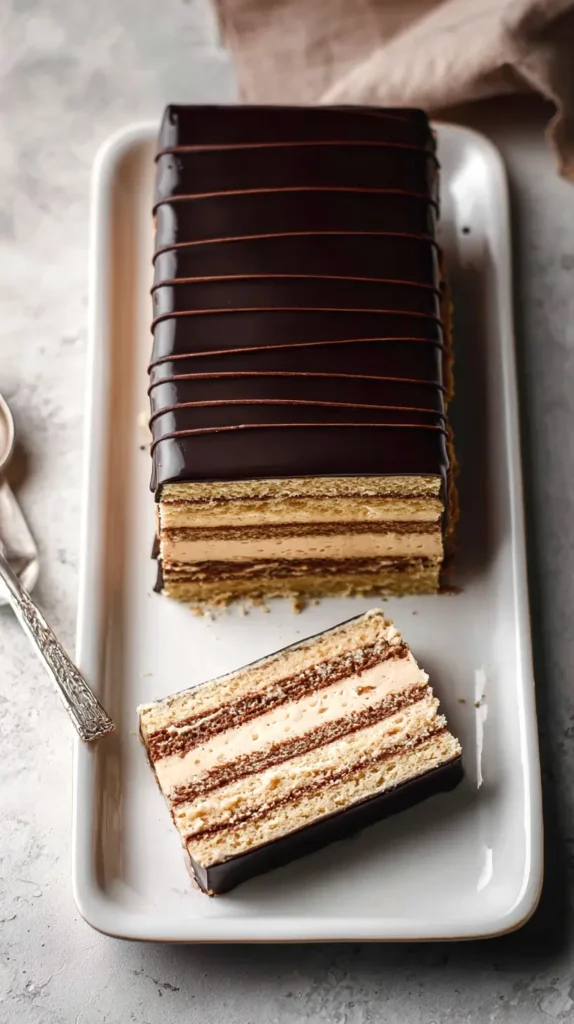
This cake has five main components. Each one is simple on its own. The almond sponge is light and flexible. The coffee syrup adds moisture. The ganache brings depth. The buttercream adds balance. The glaze finishes the top. None of these are hard. They just show up together.
Because opera cake uses thin layers, mistakes hide easily. That is a gift. If a layer looks uneven, the next one covers it. If the edges look messy, trimming fixes it. So, perfection is not required. Patience is.
Here is what helps most:
- Read the full recipe first so nothing surprises you.
- Measure everything before you start.
- Use parchment so nothing sticks.
- Chill between layers so they set cleanly.
- Work in a calm order, not a rushed one.
Although it looks fancy, this cake is not fragile. It holds together well. It slices clean. Plus, it travels better than you expect. That makes it ideal for parties, showers, or any event where you want applause.
Because the flavors are balanced, it never tastes heavy. The coffee does not overpower. The chocolate does not dominate. Everything stays in its lane.
I’ve found that opera cake impresses without being loud. It whispers luxury. That is my favorite kind of dessert energy.
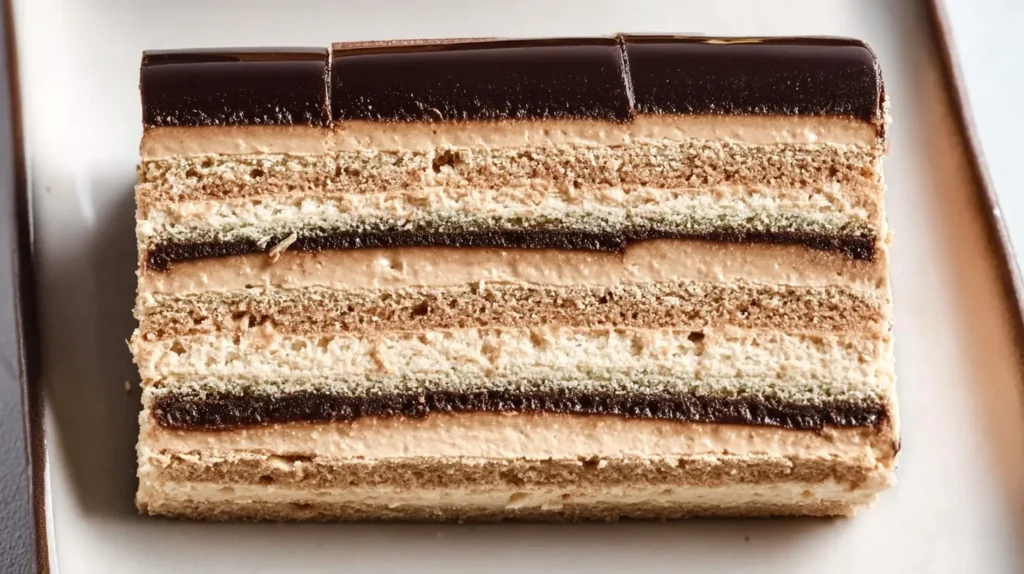
Make It Tea-Party Fancy Without Being Fussy
Opera cake already has serious leading-lady energy. However, I like giving it a supporting role in something more playful. Instead of serving it as a formal plated dessert, I treat it like the crown jewel of a tea spread. Small slices. Delicate placement. Zero stress. Maximum charm. It becomes less “restaurant finale” and more “oh, this just happens to be here.”
The trick is slicing it thin and tall. Not wide and heavy. That way each piece shows off the layers without overwhelming the plate. Think refined, not aggressive. A narrow slice beside a teacup looks intentional. A big slab looks like you lost control. Presentation matters, even when nobody admits it.
I also love pairing opera cake with tiny, not-sweet things. Little finger sandwiches. Plain shortbread. Fresh berries. That contrast makes the coffee and chocolate pop. It keeps the table from tipping into sugar chaos. Balance always wins.
Another move I swear by is chilling the cake until it is fully firm, then cutting with a hot knife. Clean lines. Sharp edges. No smearing. The layers stay crisp, and the glaze behaves. That alone makes it look bakery-level without bakery effort.
If you really want to lean into the moment, serve it on mismatched plates. Nothing precious. Nothing stiff. Just charming. It makes the whole thing feel relaxed, not performative.
Opera cake does not need to dominate the table. It shines more when it casually exists among other pretty things. That quiet confidence is very appealing. And honestly, that is the exact energy I want from my desserts.
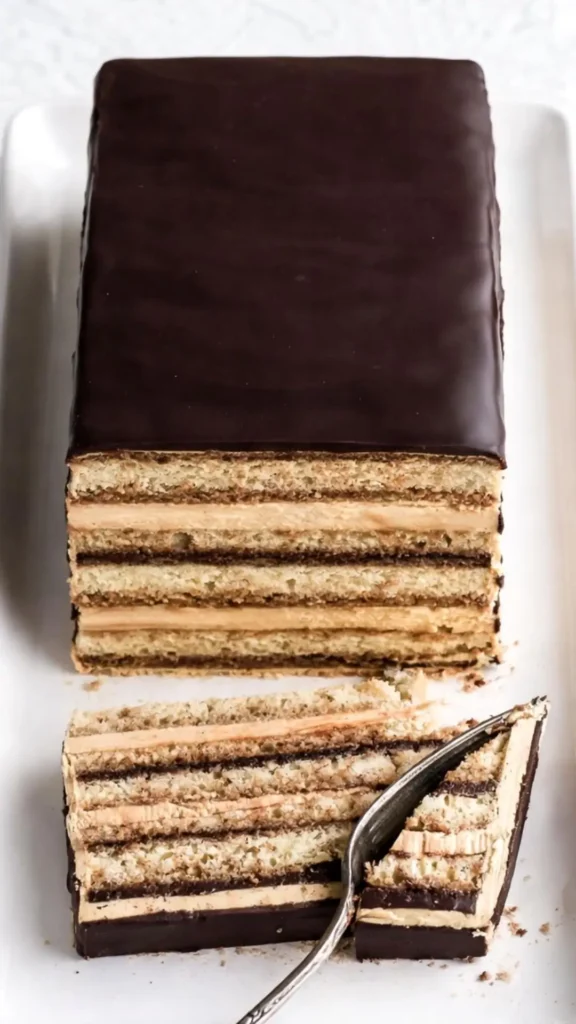
The Almond Sponge Layer
This almond sponge is called joconde. It is thin, flexible, and light. It rolls without cracking and cuts without tearing. That matters for clean layers. The texture stays soft even after chilling.
Here are the exact ingredients:
- 1 cup almond flour
- 1 cup powdered sugar
- 3 large eggs, room temperature
- 3 large egg whites
- 2 tablespoons granulated sugar
- 1/2 cup all-purpose flour
- 2 tablespoons unsalted butter, melted and cooled
Preheat your oven to 425°F. Line a 10×15-inch jelly roll pan with parchment paper. Spray lightly with nonstick spray.
In a large bowl, whisk almond flour and powdered sugar. Add the three whole eggs. Beat until thick and pale, about three minutes.
In another bowl, beat egg whites until foamy. Slowly add granulated sugar. Beat until stiff peaks form.
Fold the egg whites into the almond mixture gently. Then sift flour over the batter and fold again. Finally, drizzle in melted butter and fold just until combined.
Spread the batter evenly in the pan. Use an offset spatula for a smooth surface. Bake for 7 to 9 minutes. The cake should spring back lightly when touched.
Remove from the oven. Slide onto a cooling rack. Let it cool completely. Then peel off the parchment.
Because opera cake uses two sponge layers, you will cut this sheet in half later. So, keep it flat and protected.
This sponge holds moisture well. That is why it works so nicely with the coffee syrup. The texture stays soft without turning soggy.
Coffee Syrup That Makes Opera Cake Worth It
This syrup is where the magic happens. It adds moisture and flavor without heaviness. The coffee taste stays smooth and balanced. It does not shout. It supports.
Here are the exact ingredients:
- 1 cup water
- 1/2 cup granulated sugar
- 1 tablespoon instant espresso powder
- 1 teaspoon vanilla extract
In a small saucepan, combine water and sugar. Bring to a boil over medium heat. Stir until sugar dissolves. Remove from heat.
Whisk in espresso powder until fully dissolved. Add vanilla. Stir again.
Let the syrup cool to room temperature before using. Do not pour it hot on the cake. That will cause uneven soaking.
Because opera cake uses thin sponge layers, you want even moisture. Use a pastry brush. Dab, do not flood.
I’ve found that brushing in two light passes works best. First pass soaks in. Second pass evens it out. That keeps the texture perfect.
If you dislike strong coffee, reduce the espresso slightly. However, do not skip it. The flavor balance depends on it.
This syrup also keeps the cake fresh longer. That matters if you assemble the day before. The layers stay tender and clean.
Once cooled, cover and set aside. You will use it during assembly.
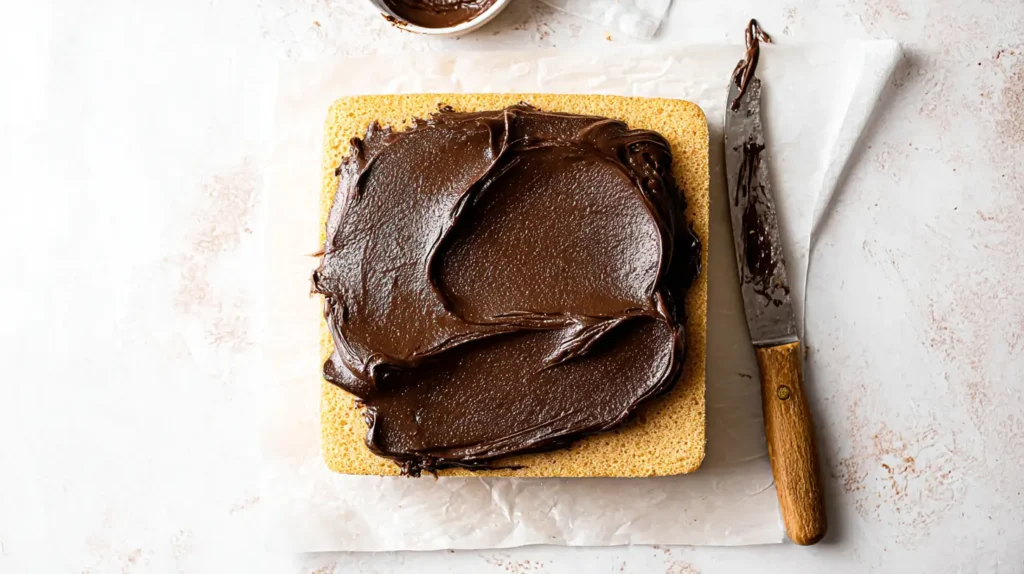
Chocolate Ganache Layer For Opera Cake
This ganache adds richness without heaviness. It slices clean and sets firm. That makes layering easy. It also balances the sweetness.
Here are the exact ingredients:
- 1 cup heavy cream
- 8 ounces semi-sweet chocolate, finely chopped
- 1 tablespoon unsalted butter
Place chopped chocolate in a heatproof bowl.
Heat the cream in a small saucepan until it just begins to steam. Do not boil. Pour the hot cream over the chocolate. Let sit for two minutes.
Stir gently from the center outward until smooth. Add butter and stir until glossy.
Let the ganache cool until thick but spreadable. This takes about 20 minutes at room temperature.
Because opera cake uses thin layers, you want a soft spread, not a drip. If it gets too firm, warm slightly in the microwave for five seconds.
Use an offset spatula for clean edges. Spread evenly. Keep the layer thin and smooth.
I’ve found that chilling the cake for 15 minutes after this layer helps everything stay sharp.
Set aside while you prepare the buttercream.
Coffee Buttercream That Balances Opera Cake
This buttercream is smooth, light, and stable. It does not crust. It does not melt easily. That matters for layered cakes.
Here are the exact ingredients:
- 1 cup unsalted butter, room temperature
- 3 cups powdered sugar
- 1 tablespoon instant espresso powder
- 2 tablespoons hot water
- 1 teaspoon vanilla extract
- 2 tablespoons heavy cream
Dissolve espresso powder in hot water. Let cool.
In a large bowl, beat butter until smooth. Add powdered sugar one cup at a time. Beat well after each addition.
Add espresso mixture and vanilla. Beat until combined. Add cream and beat until fluffy.
The texture should be smooth and spreadable. If too thick, add one teaspoon of cream. If too thin, add one tablespoon of powdered sugar.
Because opera cake layers are thin, you want control. A soft buttercream helps.
Set aside at room temperature. Do not refrigerate before use.
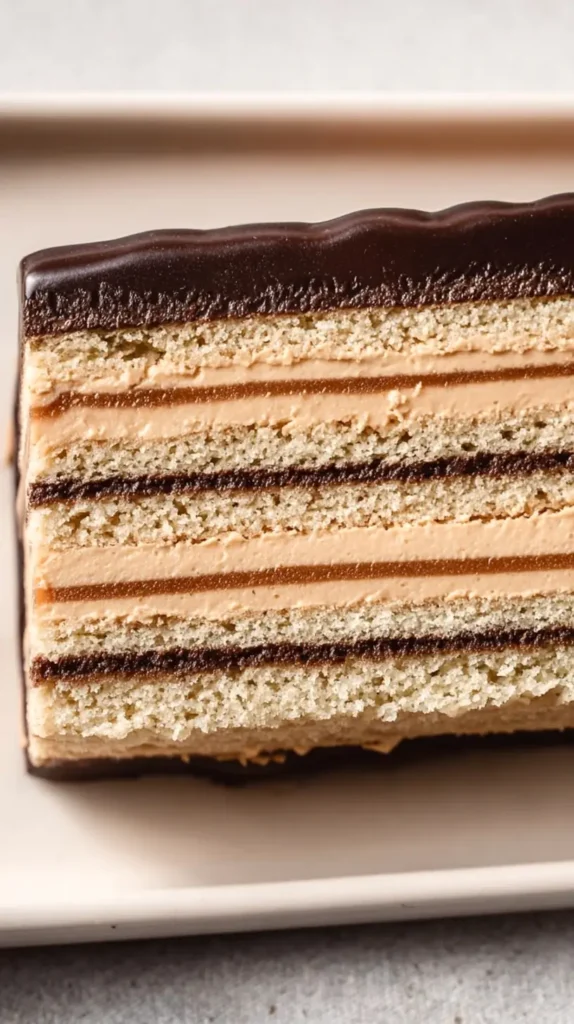
How To Assemble Opera Cake Without Stress
Assembly is where people panic. However, this is just stacking. The order matters. The pressure does not.
Here is the exact assembly order:
- Place one sponge layer on a flat surface.
- Brush generously with coffee syrup.
- Spread half the buttercream evenly.
- Chill for 10 minutes.
- Spread all the ganache evenly.
- Place second sponge layer on top.
- Brush with remaining coffee syrup.
- Spread remaining buttercream evenly.
- Chill for 20 minutes.
Use a ruler if you want straight edges. Use a sharp knife to trim sides.
Because opera cake is rectangular, clean edges matter visually. Trim gently. Wipe the knife between cuts.
Chilling between layers helps everything set. Do not skip this. It prevents sliding.
I’ve found that patience here saves stress later. Let gravity and cold do the work.
Once assembled, keep chilled while you prepare the glaze.
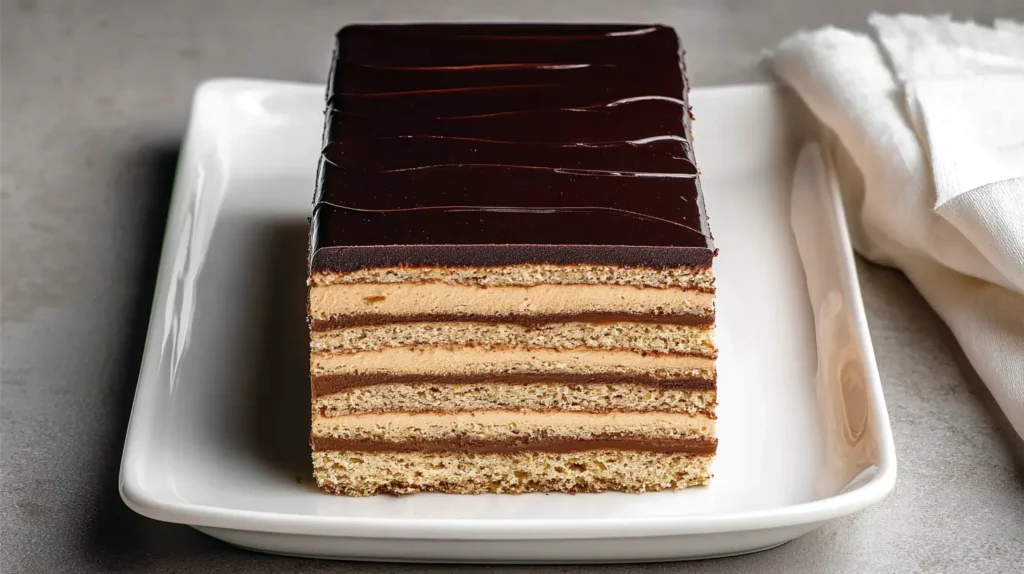
Chocolate Glaze That Finishes Opera Cake Cleanly
This glaze gives the cake its signature look. It should be thin, shiny, and smooth. It sets quickly, so work efficiently.
Here are the exact ingredients:
- 1/2 cup heavy cream
- 4 ounces semi-sweet chocolate, finely chopped
- 1 tablespoon corn syrup
- 1 tablespoon unsalted butter
Place chocolate in a bowl.
Heat cream in a saucepan until steaming. Pour over chocolate. Let sit two minutes.
Stir until smooth. Add corn syrup and butter. Stir until glossy.
Let the glaze cool slightly. It should still pour but not be hot.
Pour over the chilled cake. Use an offset spatula to spread evenly. Work quickly.
Tap the pan gently to release air bubbles.
Chill for 30 minutes until set.
Because opera cake is all about clean lines, wipe edges if needed.
At this point, the cake is complete. You can decorate with chocolate lettering if you like. However, it looks beautiful as is.
How To Slice And Serve Opera Cake
Slicing matters with this cake. Clean cuts show the layers. That is the payoff.
Use a long, sharp knife. Dip in hot water. Wipe dry. Slice straight down. Do not saw.
Wipe the knife between each cut. That keeps edges sharp.
Serve chilled or slightly cool. Both work.
Because opera cake is rich, small slices satisfy. That is a bonus.
Store leftovers covered in the fridge for up to three days. The texture holds well.
I’ve found that flavors deepen overnight. So, next day slices taste even better.
This cake travels well in a chilled container. That makes it party-friendly.
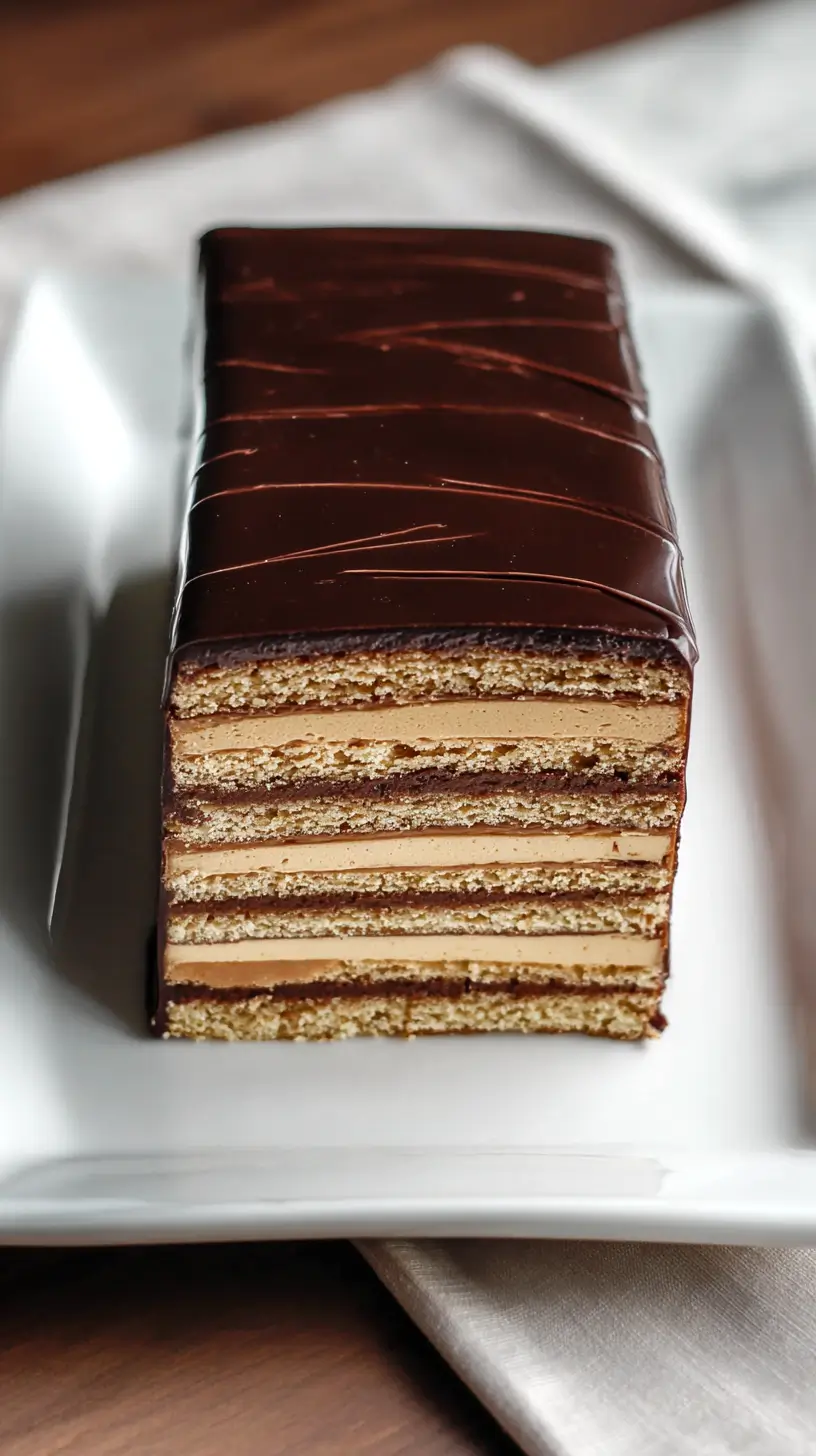
Opera Cake Recipe
Ingredients
Method
- Preheat the oven to 425°F and line a 10×15 inch jelly roll pan with parchment paper.
- In a large bowl, beat the eggs, powdered sugar, and almond flour until thick and pale.
- Add the all-purpose flour and mix until just combined.
- In a separate bowl, beat the egg whites until foamy, then slowly add the granulated sugar and beat to stiff peaks.
- Gently fold the egg whites into the almond mixture in two additions.
- Drizzle in the melted butter and fold until just incorporated.
- Spread the batter evenly into the prepared pan and bake for 10 to 12 minutes until lightly golden and set.
- Remove from the oven and let cool completely before handling.
- In a small saucepan, combine the water and sugar and bring to a boil.
- Remove from heat and stir in the espresso powder until dissolved.
- Set aside to cool.
- In a heatproof bowl, whisk the egg yolks and set aside.
- In a saucepan, combine the sugar, water, and espresso powder and cook over medium heat until it reaches 240°F.
- Slowly pour the hot syrup into the egg yolks while whisking constantly.
- Continue whisking until the mixture is thick and cooled to room temperature.
- Add the softened butter a little at a time and beat until smooth and creamy.
- Set the buttercream aside.
- Place the chopped chocolate in a heatproof bowl.
- Heat the heavy cream until just simmering, then pour over the chocolate.
- Let sit for one minute, then stir until smooth and glossy.
- Allow the ganache to cool slightly so it thickens but remains spreadable.
- Cut the cooled sponge into three equal rectangles.
- Place the first layer on a serving board or pan and brush generously with coffee syrup.
- Spread half of the coffee buttercream evenly over the sponge.
- Top with the second sponge layer and brush again with coffee syrup.
- Spread the chocolate ganache evenly over this layer.
- Place the final sponge layer on top and brush with remaining coffee syrup.
- Spread the remaining coffee buttercream evenly over the top.
- Refrigerate the cake for at least 1 hour to set.
- Place the chopped chocolate for the glaze in a bowl.
- Heat the heavy cream until just simmering, then pour over the chocolate.
- Stir until smooth and add the oil or butter for shine.
- Let the glaze cool slightly, then pour over the chilled cake and spread evenly.
- Refrigerate for another 1 to 2 hours until fully set before slicing.
Tried this recipe?
Let us know how it was!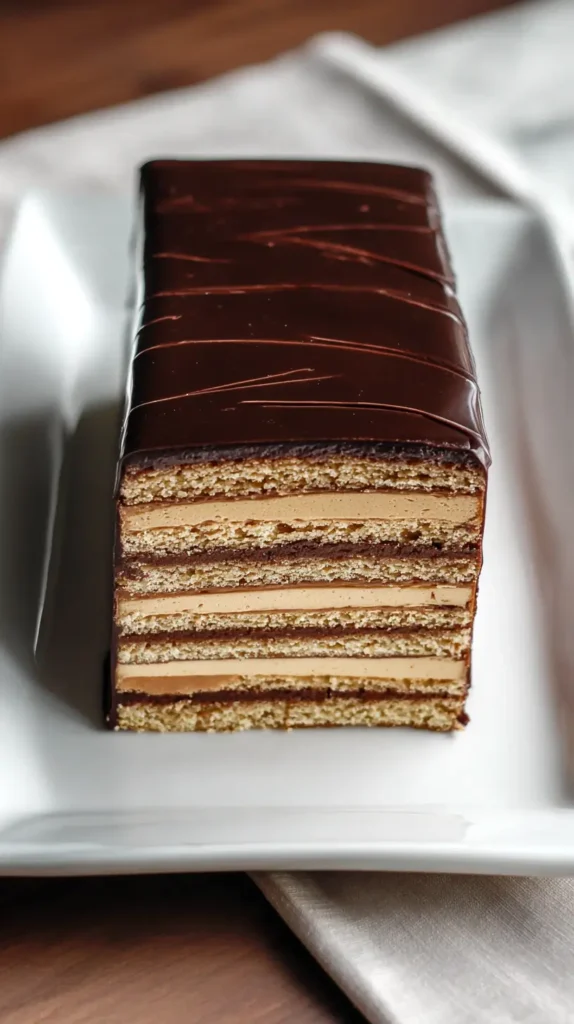
Final Thoughts
There is something very satisfying about making opera cake from scratch. It looks serious. It tastes refined. Yet, the process stays approachable. I like desserts that give a big return for organized effort.
I also love that this cake does not rush you. Each step has a reason. Each layer has a job. That makes the whole process calm. And in a Florida kitchen, calm is valuable. Heat already brings enough drama.
This is the kind of dessert that gets noticed. People ask questions. People assume you worked all day. You can smile and say it was just layers and patience.
I’ve found that baking like this builds confidence. It reminds you that complicated does not mean impossible. It just means planned.
If you share this on Pinterest, expect saves. The look alone does the marketing. The taste seals the deal.
Opera cake may sound fancy. However, now you know it is just structure, balance, and timing. You can handle that.
And when you pull out that first clean slice, you will understand why this dessert has such a loyal following. It earns its reputation without being exhausting. That is my favorite kind of impressive.