Pineapple upside down cake has a way of grabbing attention without trying. The glossy fruit, the caramel edges, and that dramatic flip do all the work. I’ve found that this dessert fits just as easily on a Tuesday night table as it does at a party. Nothing about it feels high-maintenance, yet it always looks planned. That combination is rare and worth holding onto.
This is the kind of recipe that earns trust quickly. The ingredients are simple. The steps make sense. The result looks like you tried harder than you did. Because of that, it has become one of those desserts I keep in my mental back pocket. When I need something reliable, I reach for this.
Living in Florida makes pineapple a constant in my kitchen. It is everywhere, it is affordable, and it tastes better here. Bright, sunny desserts just make sense when warm weather never really leaves. That alone makes pineapple upside down cake feel like a natural choice for my table.
This post is for real life. It is for busy days, casual dinners, and last-minute plans. I will walk you through every step, give exact measurements, and share the small details that actually matter. Nothing fancy. Nothing fussy. Just solid baking that works.
If flipping the cake makes you nervous, we will handle that. If you wonder whether fresh or canned pineapple works better, we’ll discuss it. And if you want a dessert that gets compliments without stress, you are in exactly the right place.
Let’s make pineapple upside down cake the easy, confident way.
Some of the links on this page are affiliate links, which means that if you click on them and buy something, I might get a small commission. But don’t worry; it never costs you more. You can peek at my full disclosure if you’re curious about the fine print.
Ingredients You Need For Pineapple Upside Down Cake Success
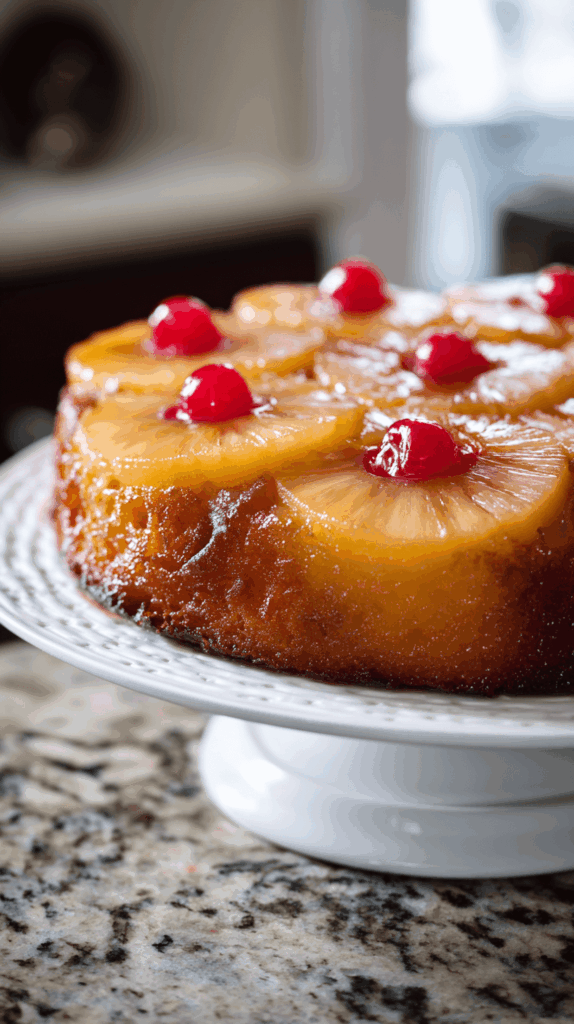
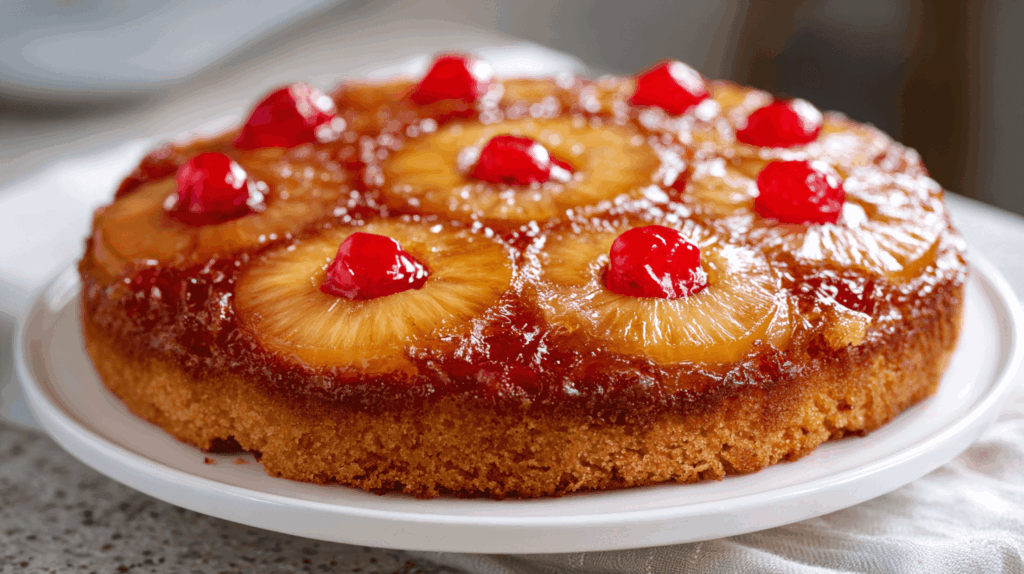
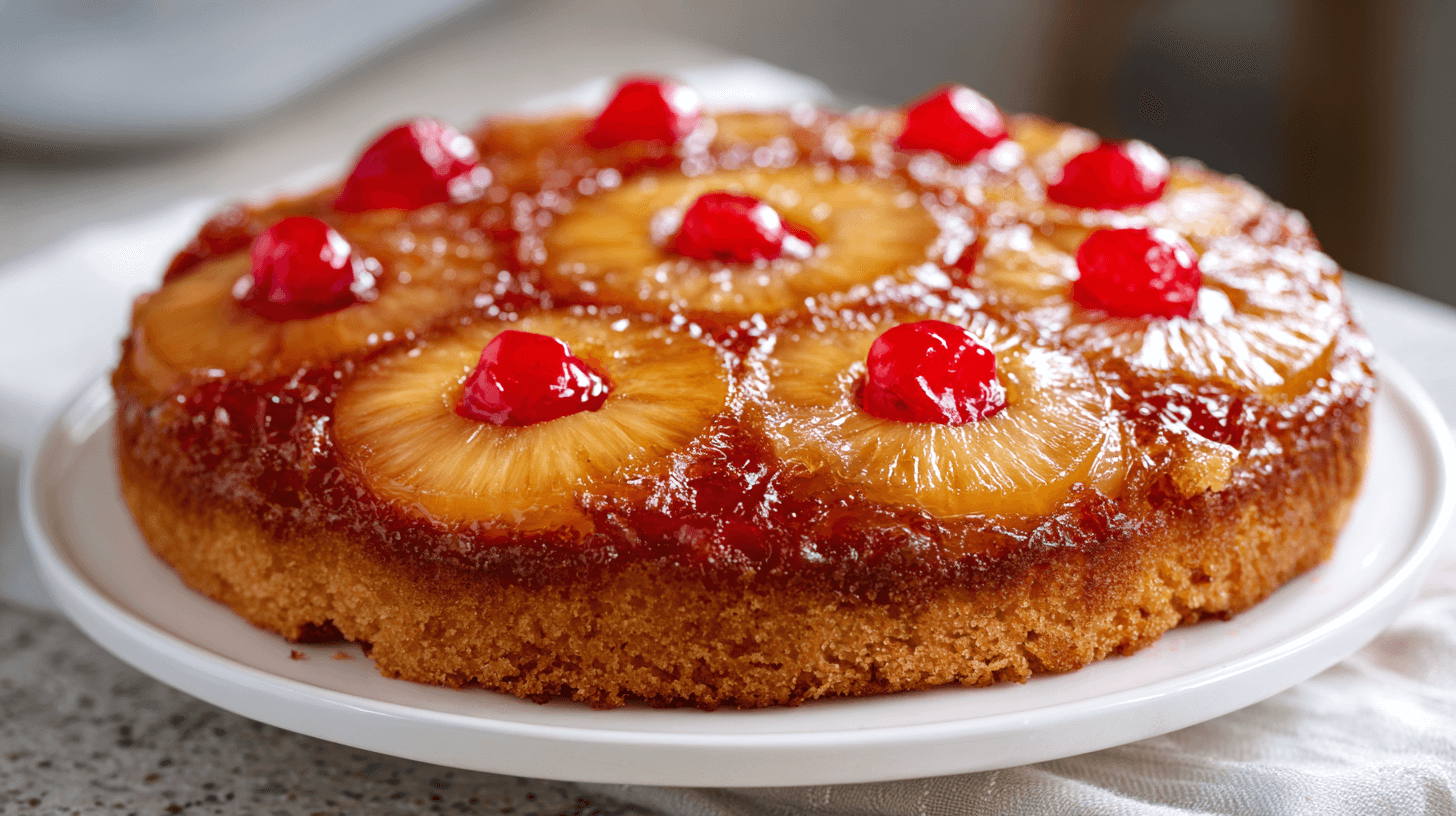
The first thing you notice with pineapple upside down cake is the contrast. The top is glossy and caramelized, with that deep brown sugar flavor that borders on toffee. It is sticky in the best way, not messy, just rich. Each pineapple ring stays tender but not soft, so you still get a little bite instead of mush. That texture matters more than people think.
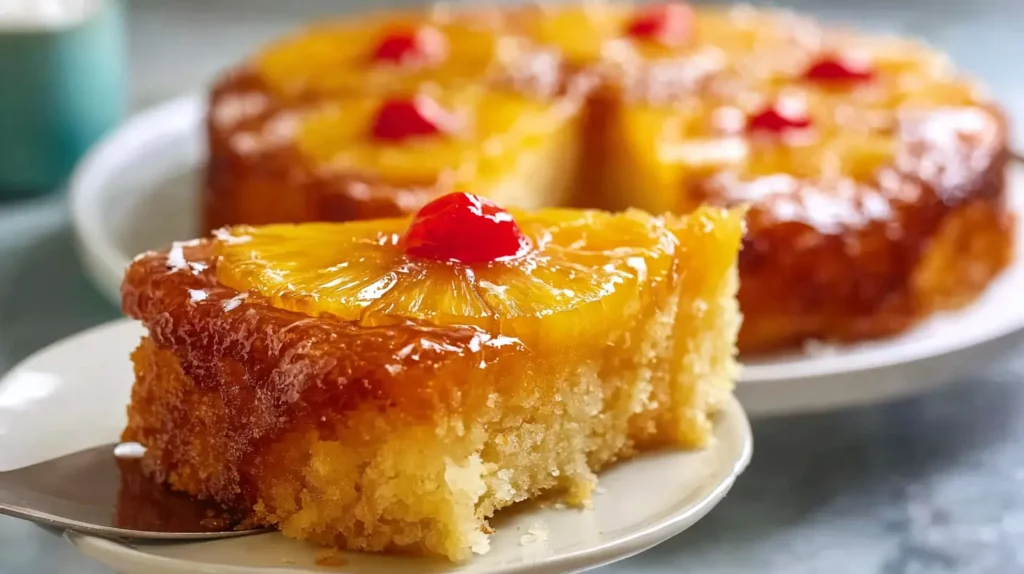
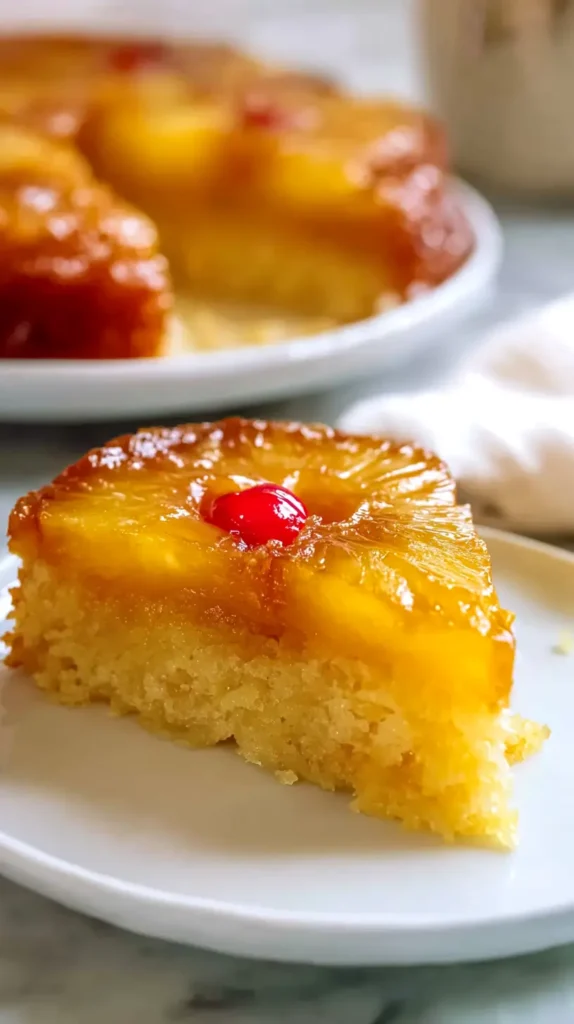
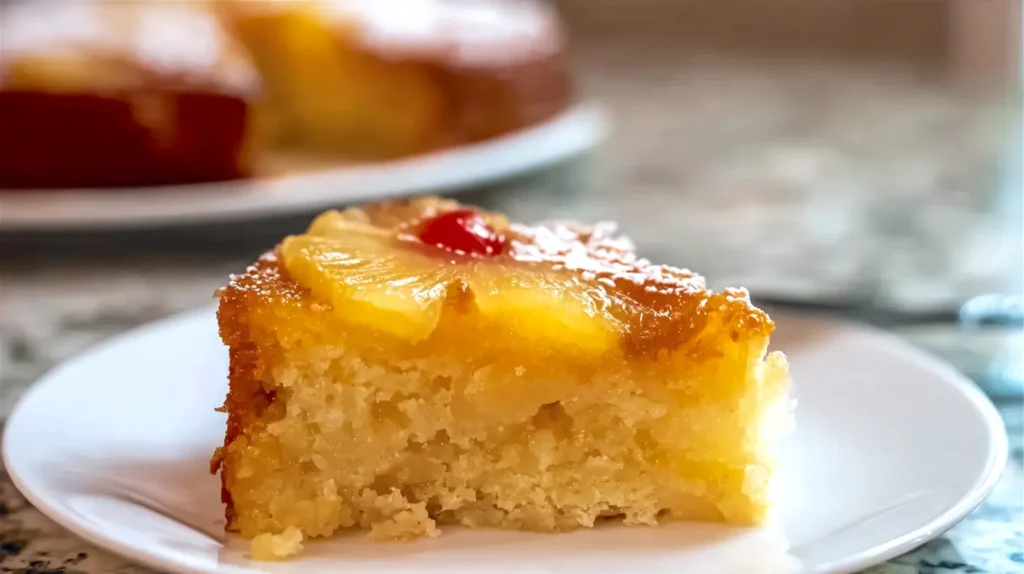
Underneath, the cake itself is light and buttery with a soft crumb. It is not dense. It is not dry. This dessert lands right in that middle space where it feels substantial but still easy to eat. The pineapple juice in the batter adds a subtle tang that keeps the sweetness in check, which is why this cake never feels cloying.
The flavor balance is what makes it addictive. The brown sugar brings warmth. The pineapple brings brightness. The vanilla rounds everything out. Nothing fights for attention. Everything plays well together.
Then there are the edges. Those slightly darker, caramel-heavy corners are always the first to disappear. They have more chew, more depth, and more of that brown sugar bite. People always go for those pieces, whether they admit it or not.
When the cake is warm, the topping is almost syrupy. When it cools, it sets into a glossy layer that still stays soft. Both versions work. It just depends on the mood.
Overall, pineapple upside down cake tastes nostalgic without being boring. It is sweet, bright, buttery, and balanced. Every bite gives you something a little different, which is exactly why you keep going back for another forkful.
Ingredients
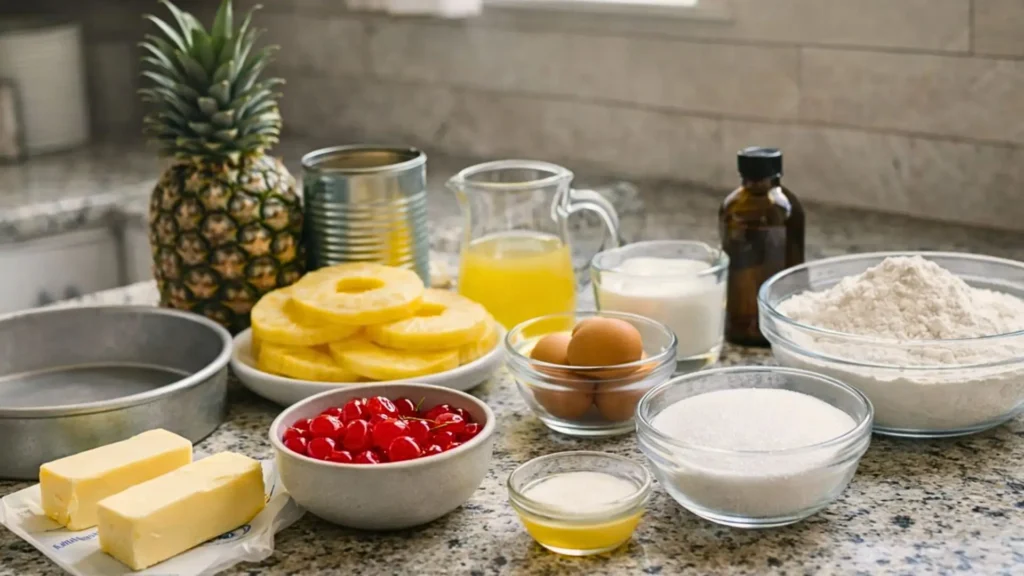
Every good pineapple upside down cake starts with simple ingredients that behave. There is no hunting for specialty items or surprise grocery trips. Everything here should be easy to find.
For the topping
- 1/2 cup unsalted butter, melted
- 1 cup packed brown sugar
- 7 pineapple rings, canned or fresh
- 7 maraschino cherries, stems removed
For the cake batter
- 1 1/2 cups all-purpose flour
- 1 1/2 teaspoons baking powder
- 1/4 teaspoon salt
- 1/2 cup unsalted butter, softened
- 1 cup granulated sugar
- 2 large eggs, room temperature
- 1 teaspoon vanilla extract
- 1/2 cup pineapple juice
- 1/4 cup whole milk
Canned pineapple works beautifully here and saves time. Fresh pineapple also works if you have it. However, canned gives consistent thickness and moisture, which helps the bake.
Whole milk adds richness to the batter. If 2 percent is what you have, use it. The texture still turns out well.
Softened butter is non-negotiable. Cold butter will not blend properly. Melted butter will change the structure. Let it sit out until it presses easily with a finger.
Measure flour by spooning it into the cup and leveling it off. Scooping packs it down and throws off the balance. Because pineapple upside down cake relies on proper ratios, accuracy matters.
Before you start mixing, line everything up on the counter. That small step keeps the process smooth and calm. And calm baking always goes better.
Setting Up The Pan
The pan does more than hold the cake. It creates the top, the pattern, and the release. Giving it attention up front saves stress later.
Use a 9-inch round metal cake pan. Metal conducts heat evenly and helps the edges set. Glass can overcook the sides before the center finishes.
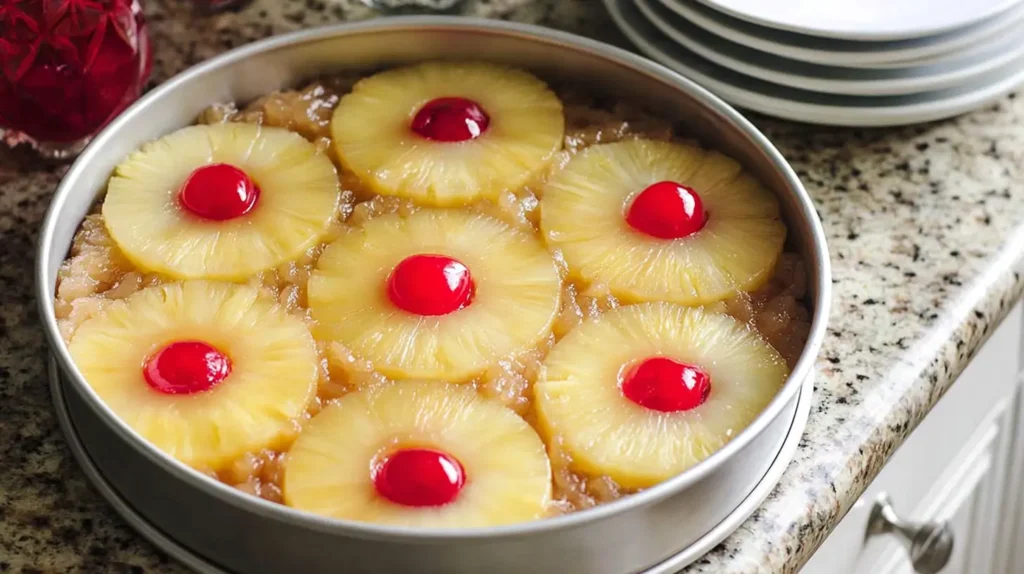
Pour the melted butter into the pan and tilt it to coat the bottom. Sprinkle the brown sugar evenly over the butter. Use the back of a spoon to smooth it into a flat layer.
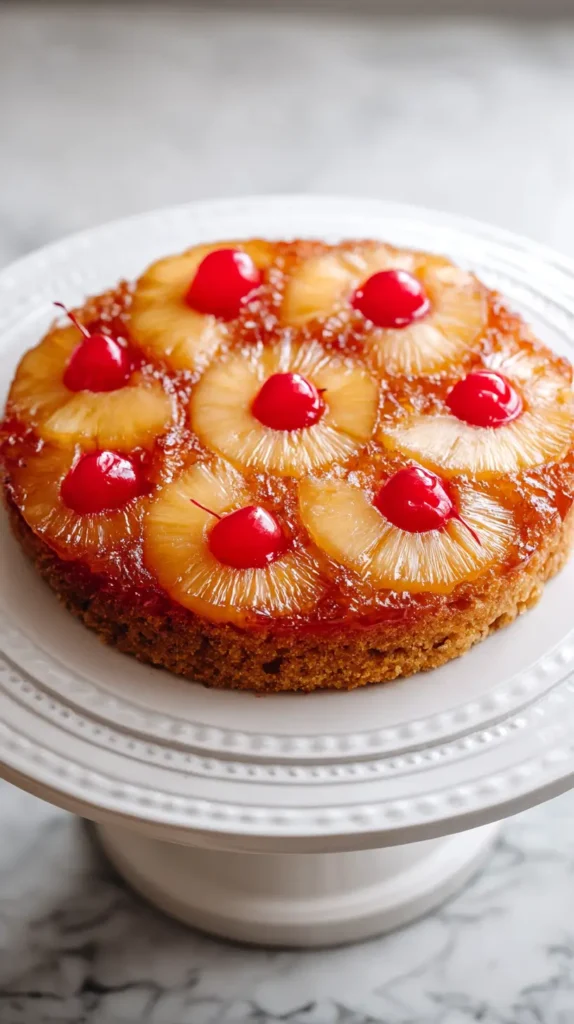
Arrange the pineapple rings over the sugar. Place one in the center and the rest around it. Drop a cherry into each ring. Gently press the fruit into the sugar so it stays in place.
Neat placement pays off later. The pattern becomes the top of the cake, so this is where the visual payoff starts.
If using fresh pineapple, slice it about 1/2 inch thick and remove the core. Pat the slices dry. Extra moisture can make the topping loose.
When using canned pineapple, drain it very well. Save the juice for the batter. That juice adds flavor and keeps the cake tender.
Once the fruit is arranged, set the pan aside. The foundation is ready.
Step-By-Step Simple Instructions
Start by preheating the oven to 350 degrees Fahrenheit. Place the rack in the center position.
In a medium bowl, whisk together the flour, baking powder, and salt. Set that aside.
In a large bowl, beat the softened butter and granulated sugar until light and fluffy. This takes about two minutes. Add the eggs one at a time, beating well after each addition. Stir in the vanilla extract.
Mix in half of the dry ingredients until just combined. Pour in the pineapple juice and milk. Blend gently. Add the remaining dry ingredients and stir until smooth.
Avoid overmixing. Stop as soon as the batter looks even.
Spoon the batter over the pineapple layer in the pan. Spread it carefully with a spatula so the fruit stays in place. Tap the pan lightly on the counter to release air bubbles.
Bake for 40 to 45 minutes. The top should be golden, and a toothpick inserted in the center should come out clean.
Remove the pan from the oven and let it rest for five minutes. Run a knife around the edges.
Place a serving plate over the pan. Hold both firmly and flip them together. Lift the pan slowly. If any fruit sticks, simply place it back.
Allow the pineapple upside down cake to cool slightly before slicing. The topping sets as it cools.
Why Pineapple Upside Down Cake Always Gets Attention
Some desserts whisper. Pineapple upside down cake announces itself. The shine, the color, and the pattern do the talking.
People notice it the second it hits the table. Compliments follow quickly. Cameras often come out. That reaction never gets old.
Part of the appeal is the flip. Even when nobody sees it happen, the result carries that energy. It looks intentional and confident.
The contrast works beautifully. Sweet topping meets soft cake with just enough tang. Nothing competes. Everything balances.
I’ve found that pineapple upside down cake fits almost any setting. It works for casual dinners, potlucks, holidays, and neighbor drop-ins. That kind of range is rare.
Because it is not trendy, it also feels timeless. No one gets tired of it. No one questions it.
It does not rely on gimmicks or decorations. It relies on structure and flavor. That is why it keeps earning its place.
Smart Tips That Make Pineapple Upside Down Cake Better
Small details protect the final result. These are the ones that matter most:
- Use room temperature eggs so the batter blends smoothly
- Make sure the butter is soft, not cold or melted
- Drain the pineapple thoroughly to avoid a loose topping
- Wait five minutes before flipping so the sugar releases
- Use a plate with a lip to catch the syrup
- Clean the knife between slices for neat edges
Store leftovers covered at room temperature for one day. Refrigerate after that.
Warm slices briefly before serving. Ten seconds is enough.
If the top browns too quickly, tent with foil.
Avoid margarine. Butter gives better structure.
Each of these tips seems small. Together, they protect the cake.
Variations On Pineapple Upside Down Cake That Still Work
I love a flexible recipe, but I also respect structure. Pineapple upside down cake has a specific balance that works, so I’ve found that gentle tweaks give better results than dramatic overhauls. Small changes keep the texture right and the bake predictable, which is always the goal in my kitchen.
When I want more color, I swap the cherries for raspberries. The contrast looks great, and the slight tartness cuts the sweetness in a really nice way. On days when I want a richer flavor, coconut milk replaces regular milk easily. That change adds depth without throwing off the crumb.
Shredded coconut is another favorite. I fold in 1/2 cup at the very end so it stays evenly distributed. It adds texture without making the cake heavy, which is key. Crushed pineapple can also go into the batter, although I always reduce the juice by two tablespoons so the cake doesn’t get too soft.
For a warmer note, I sometimes add one tablespoon of rum to the pineapple juice. It doesn’t make the cake boozy, but it does add a subtle richness that works beautifully with brown sugar. Dark brown sugar is another easy swap when I want a deeper caramel flavor in the topping.
When presentation matters, I bake mini versions in muffin tins. They take about 20 minutes and flip cleanly, which makes them great for gatherings. A cast iron skillet also works well if I want a rustic look with crisp edges.
What I don’t do is change everything at once. I’ve learned that pineapple upside down cake rewards restraint. One thoughtful tweak keeps it interesting. Too many changes make it unpredictable. And honestly, predictable desserts are underrated.
How To Store And Serve Pineapple Upside Down Cake
I treat pineapple upside down cake like a low-maintenance friend. It does not need special handling, but it does appreciate a little care. When it is freshly baked, I let it cool completely before covering it. After that, I loosely tent it with foil or wrap and keep it at room temperature for the first day. That keeps the texture right without drying it out.
Once that first day passes, I move it to the fridge. The cake holds well for up to three days, although it rarely lasts that long in my house. Before serving, I always let slices come back to room temperature. The crumb softens, and the flavor opens up more. Cold cake works, but warm cake works better.
On days when I want it extra cozy, I warm individual slices in the microwave for about ten seconds. That is enough to loosen the topping without melting everything. Short bursts are key here. Longer time makes the edges rubbery, which is never the goal.
I usually serve it plain because the topping already brings plenty of sweetness. When I do add something, it is either whipped cream or vanilla ice cream. Both work without competing.
A few practical things I always keep in mind:
- I use a container with a tight seal because the syrup can travel
- I slice with a sharp knife and wipe it between cuts for clean edges
- I keep side dishes simple so the cake stays the focus
If the top ever loses its shine, a light brush of pineapple juice brings it right back. That tiny step makes it look freshly baked again, which is always a nice touch.
Pineapple Upside Down Cake
Ingredients
Method
- Preheat the oven to 350°F.
- Lightly grease a 9-inch round metal cake pan.
- Pour the melted butter into the bottom of the pan.
- Sprinkle the brown sugar evenly over the melted butter.
- Place the pineapple rings on top of the sugar mixture in a single layer.
- Place one maraschino cherry in the center of each pineapple ring.
- Set the pan aside.
- Whisk the flour, baking powder, and salt together in a medium bowl.
- Set the dry mixture aside.
- Beat the softened butter and granulated sugar together until light and fluffy.
- Add the eggs one at a time, mixing well after each addition.
- Stir in the vanilla extract.
- Add half of the dry ingredients to the butter mixture and mix just until combined.
- Pour in the milk and pineapple juice and mix gently.
- Add the remaining dry ingredients and mix until just incorporated.
- Do not overmix the batter.
- Spoon the batter evenly over the pineapple layer in the pan.
- Use a spatula to gently spread the batter to the edges.
- Place the pan in the preheated oven.
- Bake for 40 to 45 minutes, until a toothpick inserted in the center comes out clean.
- Remove the cake from the oven.
- Let the cake cool in the pan for 10 minutes.
- Run a knife around the edges of the pan to loosen the cake.
- Place a serving plate upside down over the pan.
- Carefully flip the pan and plate together to release the cake.
- Lift the pan away slowly.
- Allow the cake to cool slightly before slicing.
- Serve warm or at room temperature.
Tried this recipe?
Let us know how it was!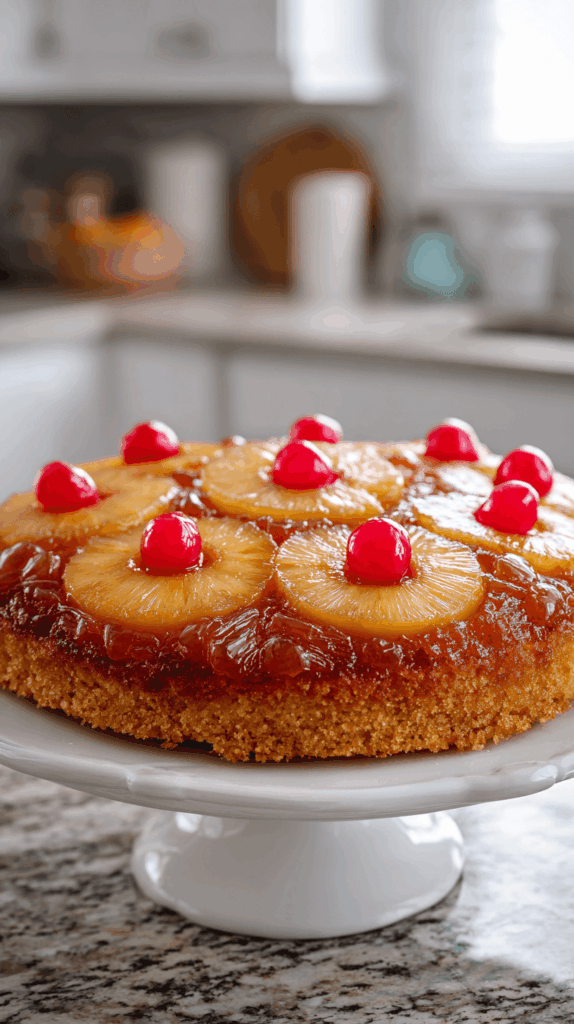
Final Thoughts On Pineapple Upside Down Cake
Pineapple upside down cake is dependable in a way that few desserts are. It does not chase trends or require special tools. It just works.
I appreciate recipes that behave. I also appreciate desserts that look good without stress. This one checks both boxes.
Living in Florida makes pineapple an easy choice. It is everywhere, it is affordable, and it fits the climate. That makes this cake feel even more natural in my kitchen.
The flip never stops being satisfying. The shine never stops being pretty. Reactions stay positive every single time.
This is the kind of dessert I save. This is the kind I share. It is also the kind I pin on Pinterest for later because I know I will come back to it.
If you have hesitated to try it, consider this your nudge. It is easier than it looks. It is more reliable than most.
And honestly, having a dessert in your back pocket that always delivers is a small luxury worth keeping.