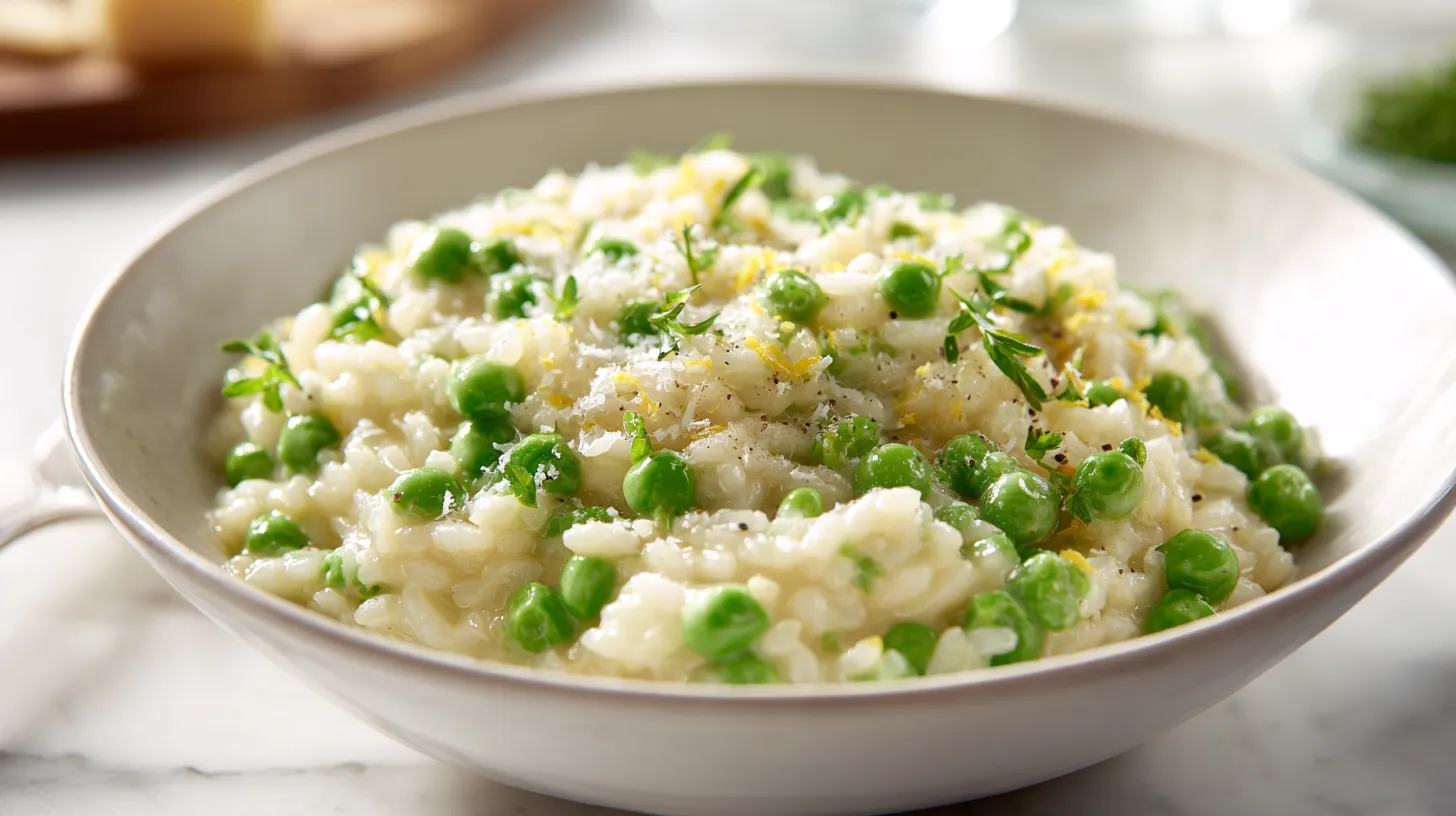
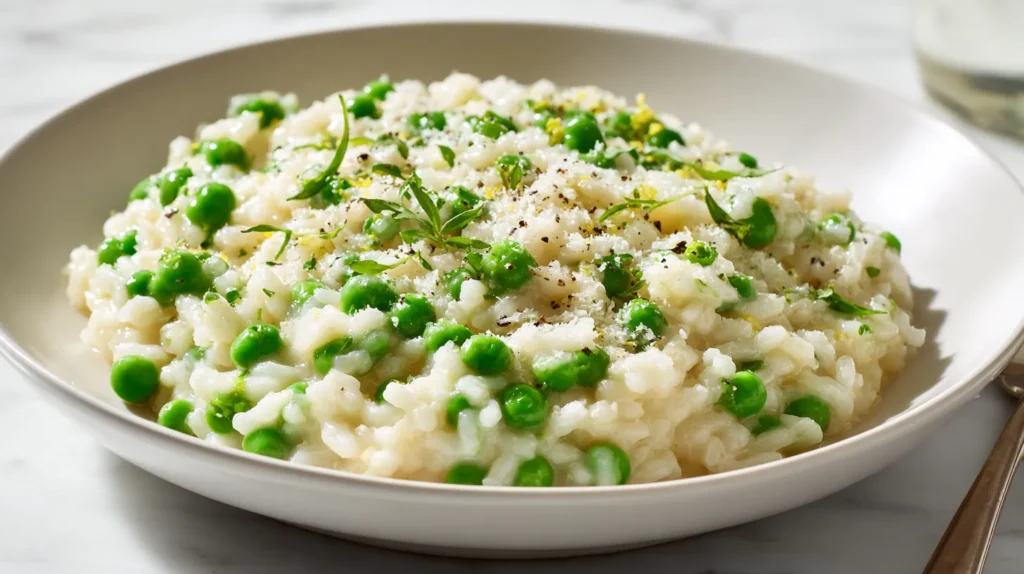
I want dinner that looks impressive but behaves itself. Spring pea risotto does exactly that, and it knows it. This is the kind of bowl that makes a random Tuesday look intentional. Plus, it tastes like spring showed up early with good manners.
I’ve found risotto gets a reputation for being needy. In reality, it just wants steady attention and decent broth. That’s not high maintenance. That’s a relationship with boundaries.
Also, peas make everything brighter without turning dinner into a lecture. I tend to notice people either under-season risotto or drown it in cheese. This version stays balanced and bold, without going overboard. It’s creamy, yes, yet it still tastes fresh. Even better, it handles add-ons like a champ, so you can keep it simple or dress it up.
I live in Orlando, where spring goes from breezy to sweaty fast. Because of that, I crave cozy meals that don’t weigh me down, and this recipe hits that sweet middle spot. You’ll get the full ingredients, exact measurements, and the whole process. I’ll also share smart tips, easy swaps, and serving ideas. Then, I’ll answer the real questions people ask, not fake ones. If you can stir and taste, you can make this. If you can’t stir, you can still make it (just don’t wander off for twenty minutes, because rice gets petty).
Some of the links on this page are affiliate links, which means I may earn a small commission if you purchase through them. It never costs you extra. You can always peek at my full disclosure if you’d like the details.
Why This Spring Pea Risotto Works Every Time
Risotto rewards consistency, not perfection, which is why spring pea risotto fits real life so well. You add broth, stir, and let the rice do its thing. Meanwhile, you stay in charge of texture and seasoning, and that’s honestly empowering in a low-key way. I’ve found the biggest mistake is rushing the liquid. Instead, add broth in steady waves and keep stirring. That motion pulls starch from the rice, so you get creaminess without adding cream.
Also, you don’t need to stir like you’re punishing the pot. Gentle, frequent stirring works great. If you stir every few seconds, your arm will file a complaint. On the other hand, if you never stir, the rice sticks, and then you’re scraping like it’s your new hobby. So, aim for attentive, not frantic.
Peas go in late, which keeps them bright. As a result, the dish tastes fresh instead of flat. I tend to notice spring recipes can get too lemony, like they’re trying to prove a point. This one uses lemon as a supporting detail, not the whole personality. Likewise, the cheese adds depth without making it taste like a melted dairy blanket.
If you want a dinner that can be casual or fancy depending on your mood, this is it. Serve it in bowls for cozy nights. Spoon it onto plates with roasted chicken for a “look at me” moment. Either way, it delivers, and it does it without drama.
- Creamy texture comes from rice starch, not heavy cream
- Peas stay sweet because they cook at the end
- Lemon brightens without overpowering
- Parmesan adds savoriness, yet you can control the richness
Spring Pea Risotto Ingredients And Exact Measurements
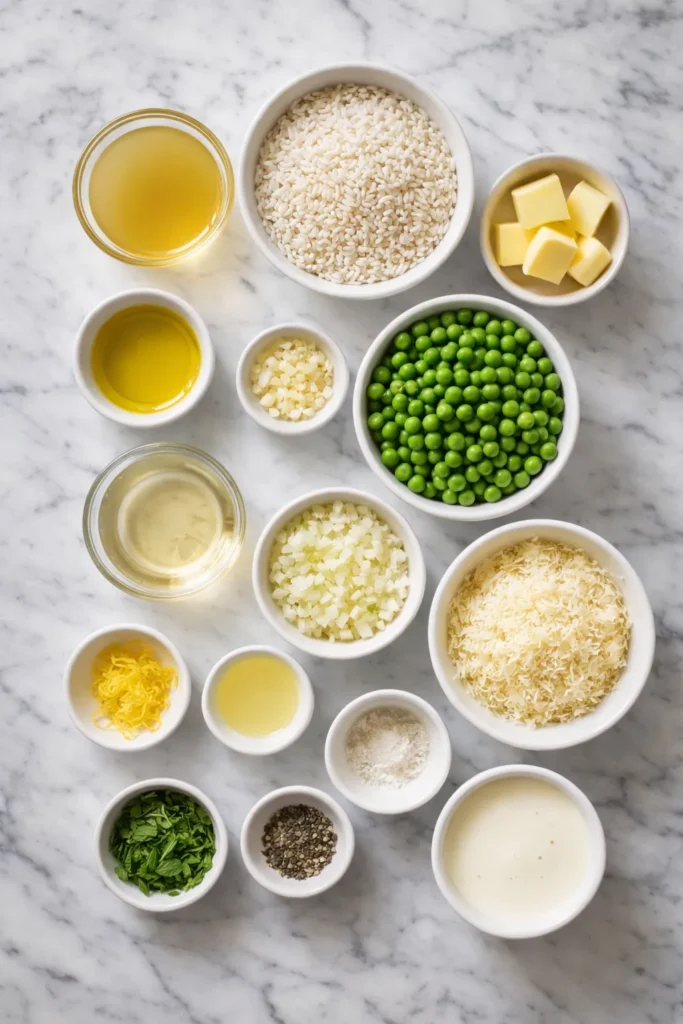
Let’s keep this simple and specific, because vague ingredient lists annoy me. This spring pea risotto uses pantry basics plus a few fresh items that actually matter. Arborio rice is the main character here, and yes, you need it. I’ve found that long-grain rice doesn’t give the same creamy texture, even if you stir with passion and hope. So, do yourself a favor and use Arborio.
Broth matters too. Since risotto absorbs liquid, the broth flavor becomes the flavor. Therefore, use a broth you’d happily sip. If you only have salted broth, just go lighter with added salt until the end. Also, peas can be frozen or fresh, which is convenient. Frozen peas work beautifully, and I tend to use them often because life moves fast.
Here’s what you need:
- 1 1/2 cups Arborio rice
- 5 to 6 cups chicken broth or vegetable broth, kept warm
- 2 tablespoons olive oil
- 2 tablespoons unsalted butter, divided
- 1 small yellow onion, finely diced
- 3 cloves garlic, minced
- 1 cup dry white wine (or 1 cup broth if skipping wine)
- 2 cups peas (fresh or frozen)
- 1/2 cup freshly grated Parmesan cheese, plus more for serving
- 1 teaspoon lemon zest
- 1 to 2 tablespoons lemon juice (to taste)
- 1/2 teaspoon kosher salt, then adjust at the end
- 1/4 teaspoon black pepper, plus more as needed
- Optional: 2 tablespoons chopped fresh mint or basil
- Optional: 1/3 cup heavy cream (only if you want extra richness)
Risotto with peas in spring is exactly the point. Also, warm broth is not optional. Cold broth slows cooking and messes with texture. So, keep it warm in a small pot or kettle while you cook. That one choice makes the whole process smoother.
Step-By-Step Process For Creamy Risotto
This is where people get nervous, so I’m going to keep it calm and clear. Start by warming your broth in a saucepan over low heat. Meanwhile, set a wide pot or deep skillet on medium heat. Add the olive oil and 1 tablespoon butter. Once it melts, add the onion and cook for 4 to 5 minutes, stirring often, until soft and glossy.
Next, add the garlic and cook for 30 seconds. Then, stir in the Arborio rice and cook for 1 to 2 minutes. You want the rice coated and lightly toasted, not browned. After that, pour in the wine and stir. Let it simmer until mostly absorbed, which usually takes 2 to 3 minutes.
Now the steady part begins. Add 1/2 cup warm broth and stir until it’s mostly absorbed. Repeat with another 1/2 cup broth. Keep going, adding broth in 1/2 cup additions, stirring frequently, and waiting until each addition absorbs before adding more. This takes about 18 to 22 minutes total, and yes, you’ll be near the stove.
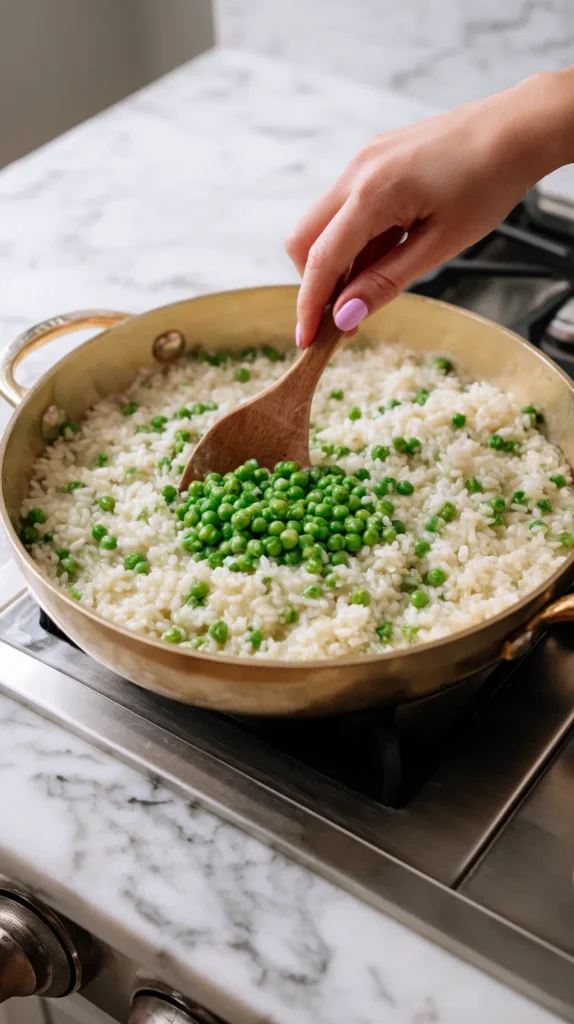
When the rice is tender but still has a slight bite, stir in the peas. Cook for 2 to 3 minutes until the peas heat through. Then, turn off the heat. Add the remaining 1 tablespoon butter, Parmesan, lemon zest, and 1 tablespoon lemon juice. Stir until glossy and creamy. Taste, then adjust salt, pepper, and lemon juice. If it thickens too much, add a splash of broth and stir again.
- Warm broth + steady additions = creamy texture
- Stir often, yet don’t whip it aggressively
- Stop when rice is tender with a small bite
- Finish off the heat for the smoothest texture
Tips I Swear By So It Doesn’t Turn Gummy
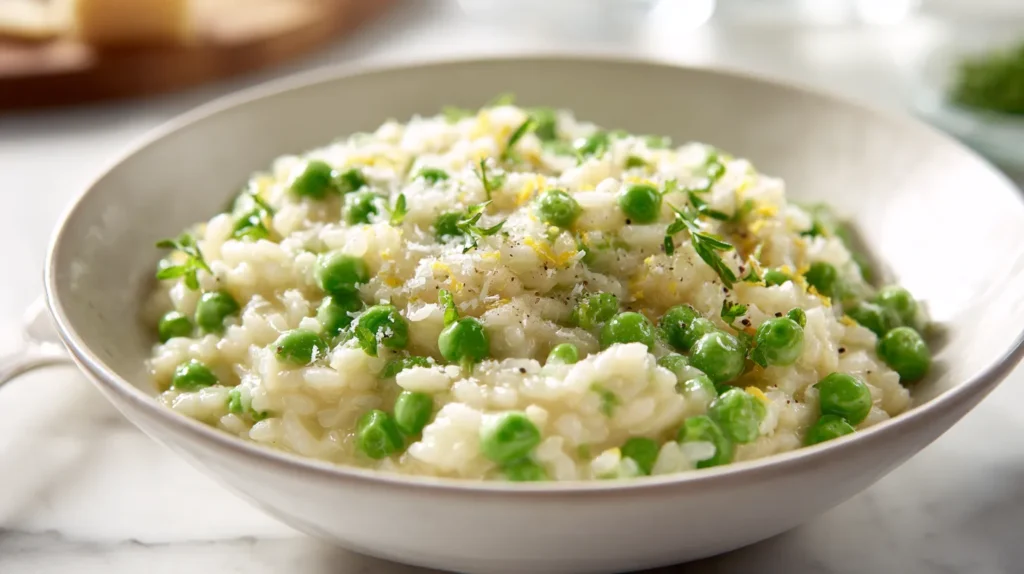
I’ve found the difference between dreamy risotto and gummy risotto is mostly timing. First, don’t overcook the rice. You want tender grains with a little bite. If it’s totally soft, it can turn pasty as it sits. Also, don’t dump in all the broth at once. That turns risotto into sad soup rice, and nobody wants that.
Use a wide pot, not a tall skinny one. A wider surface helps liquid absorb evenly. Meanwhile, keep the broth warm the whole time. Cold broth lowers the pot temperature and slows cooking, which messes with rhythm. I tend to use a ladle and treat each addition like a small step, not a rush.
Grate your Parmesan fresh if you can. Pre-shredded cheese often has anti-caking stuff that affects melting. Therefore, you get less silky texture. Also, add cheese off heat. High heat can make cheese clump, and then you’re staring at stringy bits like, “Why are you doing this to me?”
If you use frozen peas, add them straight from frozen. Don’t thaw them into mush. Likewise, don’t cook peas for long. They just need heat. Finally, taste at the end. Broth salt levels vary a lot, so guessing early can backfire.
Here are my quick fixes if something goes sideways:
- Too thick: stir in warm broth, a splash at a time
- Too thin: simmer 1 to 2 minutes longer, stirring often
- Bland: add salt, lemon juice, or more Parmesan
- Too rich: add lemon juice and fresh herbs to brighten
Easy Add-Ons And Swaps That Still Taste Like Spring
This is where you can make spring pea risotto match your mood. If you want extra protein, add shredded rotisserie chicken or sautéed shrimp. Either one works, and neither requires extra drama. If you want vegetarian, use vegetable broth and add mushrooms for depth. I’ve found mushrooms add that savory flavor that people miss when meat isn’t present.
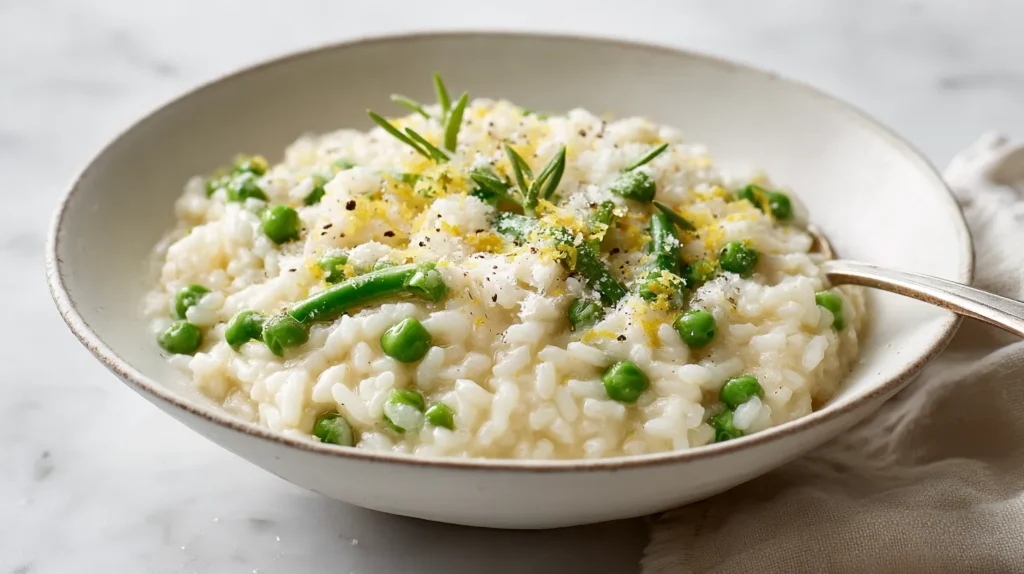
For extra greens, stir in baby spinach at the end. It wilts fast, so it won’t take over. You can also add asparagus tips, yet cook them separately first. Otherwise, they can get stringy in the risotto pot. Likewise, fresh herbs change the whole vibe. Mint makes it bright and a little fancy. Basil makes it cozy and familiar.
If you don’t use wine, that’s fine. Swap with broth plus 1 teaspoon extra lemon juice at the end. Wine adds acidity, so you want that brightness somehow. Also, if you can’t do Parmesan, try Pecorino Romano. It’s saltier, so use less at first. For dairy-free, skip the cheese and butter, then finish with olive oil, lemon, and herbs. It won’t be classic, yet it will still taste good.
Pea risotto tastes best in spring when you keep it bright.
- Add shrimp for a quick “restaurant” upgrade
- Stir in spinach at the end for extra green
- Use mint or basil for a fresh finish
- Swap wine with broth plus extra lemon
Serving Suggestions That Make It Look Like You Tried
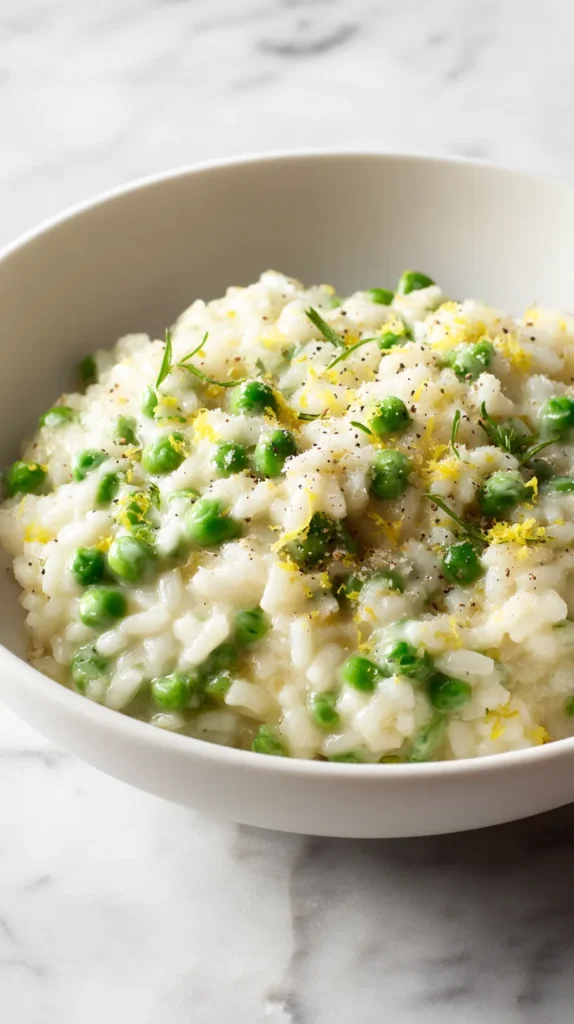
Risotto already looks a little fancy, which is convenient. So, serving spring pea risotto can be simple and still look intentional. I like shallow bowls because the creamy texture spreads nicely. Then, I top it with extra Parmesan, black pepper, and a little lemon zest. That’s the easiest glow-up.
If you want a full meal, pair it with roasted chicken thighs or salmon. Both work because they’re rich enough to match risotto, yet not overpowering. For vegetarian sides, try a crisp green salad with a sharp vinaigrette. The crunch balances the creaminess. Also, roasted asparagus or broccolini works well, and it keeps the plate feeling springy.
For entertaining, serve smaller portions as a first course. People always act impressed, which is funny because you mostly stirred and tasted. If you want it extra pretty, add pea shoots or microgreens on top. However, don’t add a pile of greens like it’s trying to be a salad. Keep it simple.
If you’re feeding kids, serve it with grilled chicken strips or simple meatballs. Also, you can mash a few peas into the risotto for a smoother texture. Some kids prefer that. I’ve found that a little extra Parmesan helps too, because cheese makes negotiations easier.
- Finish with lemon zest and black pepper
- Pair with salmon, chicken, or a crisp salad
- Serve smaller portions as a starter
- Add herbs right before serving for freshness
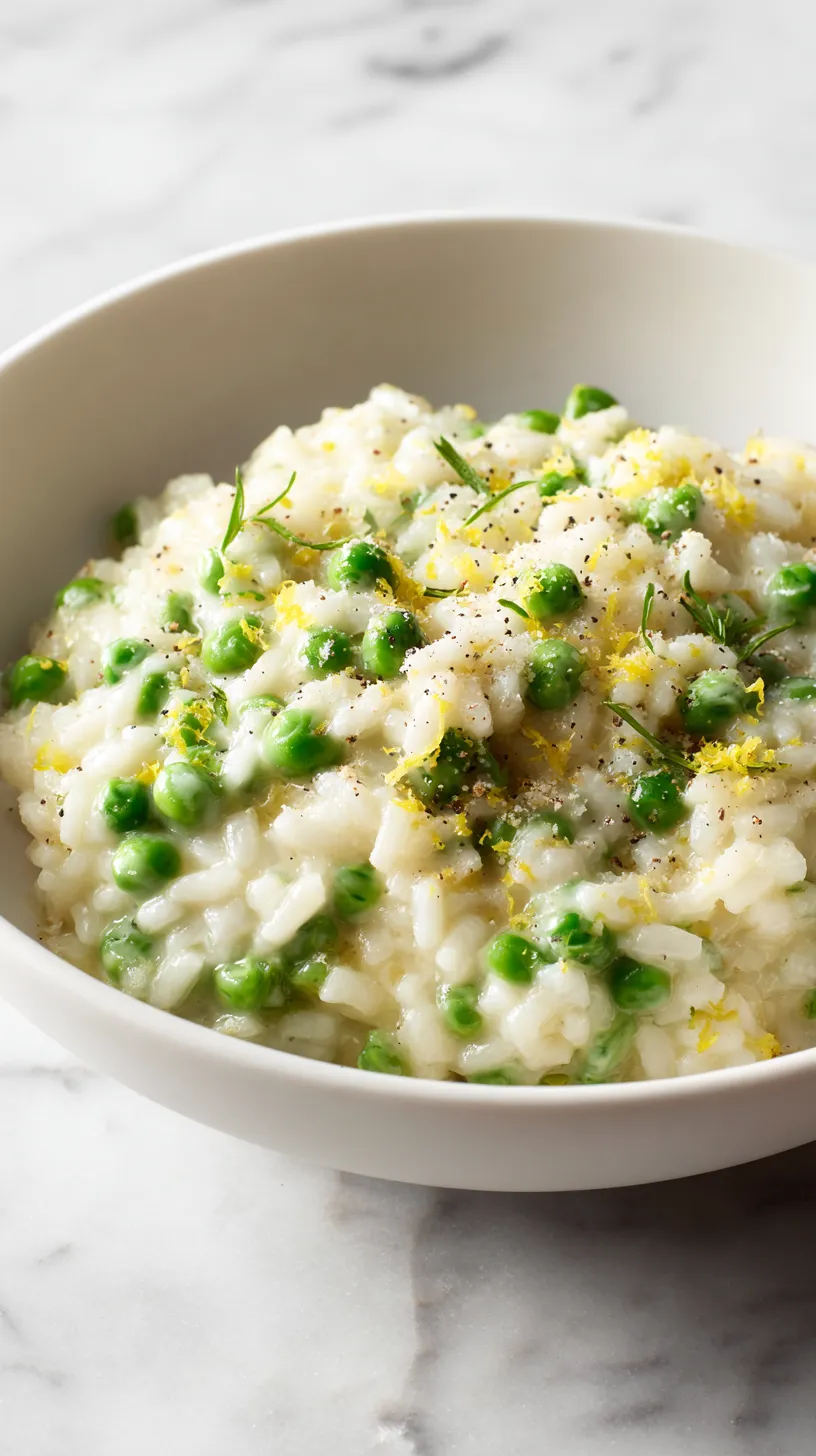
Spring Pea Risotto
Ingredients
Method
- Warm the broth in a saucepan over low heat and keep it warm throughout cooking.
- Heat a wide skillet or pot over medium heat and add the olive oil and 1 tablespoon of butter.
- Add the diced onion and cook for 4 to 5 minutes, stirring often, until soft and translucent.
- Add the minced garlic and cook for 30 seconds, stirring constantly.
- Stir in the Arborio rice and cook for 1 to 2 minutes until the grains are coated and lightly toasted.
- Pour in the white wine and stir until mostly absorbed, about 2 to 3 minutes.
- Add 1/2 cup of warm broth and stir until the liquid is mostly absorbed.
- Continue adding broth 1/2 cup at a time, stirring frequently and allowing each addition to absorb before adding more, for 18 to 22 minutes total.
- When the rice is tender with a slight bite, stir in the peas and cook for 2 to 3 minutes until heated through.
- Turn off the heat and add the remaining 1 tablespoon of butter, the Parmesan cheese, the lemon zest, and 1 tablespoon of lemon juice.
- Stir until the risotto is creamy and glossy.
- Add the chopped herbs or heavy cream if using and stir to combine.
- Taste and adjust salt, pepper, and lemon juice as needed.
- Add a splash of warm broth if the risotto thickens too much before serving.
Tried this recipe?
Let us know how it was!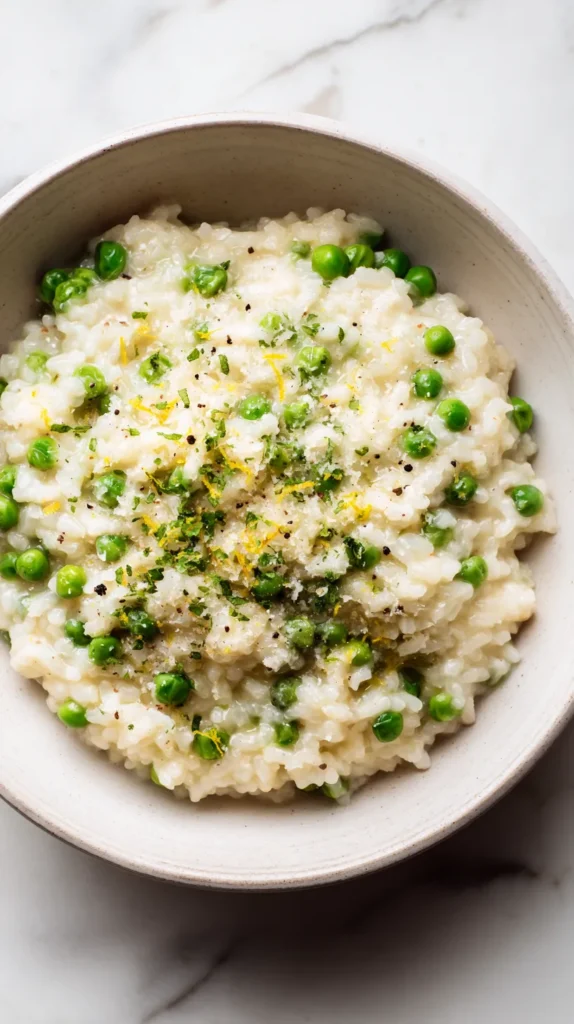
FAQs About Spring Pea Risotto
Can I make this ahead of time?
You can, but risotto always shines when it’s fresh. If you do make it ahead, store it airtight and reheat gently with warm broth. Stir as it warms so the creaminess comes back instead of turning stiff.
Can I use brown rice instead of Arborio?
I wouldn’t recommend it here. Brown rice cooks differently and won’t give you that classic creamy texture. Arborio rice releases starch as it cooks, which is what makes risotto behave like risotto.
Do I have to use wine?
Nope. Wine adds brightness, but broth works just fine. If you skip wine, add a little extra lemon juice at the end to balance the richness.
What kind of peas work best?
Fresh peas are lovely when they’re in season. Frozen peas work beautifully and save time. I tend to use frozen most often because they’re reliable and still taste bright.
How do I know when the risotto is done?
Taste it. The rice should be tender with a slight bite in the center. The texture should be creamy and spoonable, not soupy or stiff.
Why did my risotto turn gluey?
This usually happens from overcooking or over-stirring. Adding cheese while the pot is still very hot can also thicken things too fast.
Can I freeze leftovers?
You can, but the texture will soften. If you freeze it, reheat gently with broth and stir often to loosen it back up.
How do I keep it from sticking to the pot?
Stir regularly, keep the heat at medium, and use a wide pot. Don’t wander off for too long. Rice notices.
Spring pea risotto works best when the peas stay bright and the rice stays creamy.
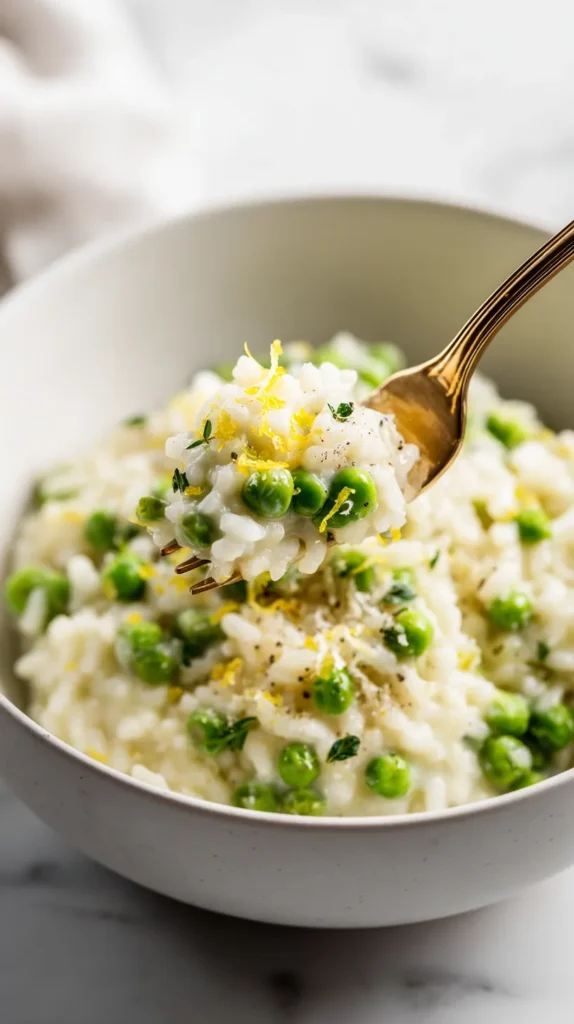
Spring Pea Risotto
Here’s the full recipe in one place, with everything spelled out.
Spring Pea Risotto
Serves: 4
Prep time: 10 minutes
Cook time: 25 minutes
Total time: 35 minutes
Ingredients
- 1 1/2 cups Arborio rice
- 5 to 6 cups chicken broth or vegetable broth, kept warm
- 2 tablespoons olive oil
- 2 tablespoons unsalted butter, divided
- 1 small yellow onion, finely diced
- 3 cloves garlic, minced
- 1 cup dry white wine (or 1 cup broth)
- 2 cups peas (fresh or frozen)
- 1/2 cup freshly grated Parmesan cheese, plus more for serving
- 1 teaspoon lemon zest
- 1 to 2 tablespoons lemon juice (to taste)
- 1/2 teaspoon kosher salt, then adjust
- 1/4 teaspoon black pepper, then adjust
- Optional: 2 tablespoons chopped fresh mint or basil
- Optional: 1/3 cup heavy cream
Instructions
- Warm broth in a saucepan over low heat.
- Heat a wide pot over medium heat. Add olive oil and 1 tablespoon butter.
- Cook onion 4 to 5 minutes, stirring often, until soft.
- Add garlic and cook 30 seconds, stirring.
- Stir in rice and cook 1 to 2 minutes to lightly toast.
- Pour in wine and stir until mostly absorbed, about 2 to 3 minutes.
- Add 1/2 cup warm broth and stir until mostly absorbed.
- Repeat broth additions, 1/2 cup at a time, stirring often, 18 to 22 minutes.
- When rice is tender with slight bite, stir in peas for 2 to 3 minutes.
- Turn off heat. Add remaining butter, Parmesan, lemon zest, and 1 tablespoon lemon juice.
- Stir until creamy and glossy. Add herbs or cream if using.
- Taste and adjust salt, pepper, and lemon juice. Add broth if too thick.
Last Few Thoughts
I love a recipe that makes me look more organized than I am. Spring pea risotto does that, and it does it quietly, which I respect. It’s the kind of dinner that works for a calm night and a chaotic one. You can serve it in a bowl and call it cozy. You can plate it nicely and call it impressive. Either way, you’re still just stirring rice and pretending you’re on a cooking show.
I’ve found the best part is how flexible it is. Some nights I want herbs and lemon. Other nights I want extra cheese and zero conversation. This dish handles both moods without making me commit to a whole new plan. That’s my kind of recipe.
I live in Orlando, so spring evenings can swing from breezy to sticky fast. Because of that, I like meals that taste bright but still satisfy. This one hits that balance, and it doesn’t make me regret dessert later. Also, it reheats well with a splash of broth, which saves dinner the next day.
If you’re pinning meal ideas, this belongs on Pinterest. It photographs well, it sounds fancy, and it’s actually doable. That combination is rare and beautiful. Now go make it, then act casually impressed with yourself.