Cauliflower garlic soup sounds plain on paper, and that is why people keep underestimating it. I get it. The name does not scream excitement, drama, or “drop everything and grab a spoon.” Still, this soup has that sneaky thing I love. It starts humble, then turns rich, cozy, and weirdly elegant.
Most soup recipes either go full health lecture or full restaurant cosplay. I want neither. I want something that tastes lovely, looks a little chic, and does not require a tiny pile of specialty ingredients. This one lands right in that sweet spot. It feels comforting, but it still has a little polish.
Because I live in Orlando, I know soup weather can be a bit of a diva. One day says “light cardigan.” The next day says “absolutely not.” Even so, I keep coming back to soups like this because they work for chilly nights, rainy evenings, and those dinner moods when I want something warm without making a huge production.
What I like most is the contrast. Cauliflower sounds mild. Garlic sounds bold. Blend them together, roast them first, and suddenly the whole thing tastes deeper than it should. Then the toppings come in, and now we’re having a moment.
Also, this is the kind of recipe that lets you look far more put-together than you may be. I love that for us. A bowl of creamy soup with crusty bread on the side can cover a lot of chaos. And this version has a few little turns that make it better than the flat, watery bowls people worry about. That part matters more than it seems.
A few links on this page are affiliate links, so if you click and buy, I might earn a small commission. It never costs you more, and it helps support the site. You can read my full disclosure if you’re into the fine print.
Why Cauliflower Garlic Soup Earns Its Spot
Some recipes win because they are flashy. Others win because they are useful. Cauliflower garlic soup does both, which feels a little rude to other soups. It comes together from basic ingredients, yet it tastes like you planned dinner with your whole life together. I adore that kind of kitchen trick.
The first surprise is the texture. People hear cauliflower and assume thin, sad, or aggressively healthy. I do not blame them. Cauliflower has suffered through a lot of boring branding. Here, though, it turns silky once you roast and blend it. You get body without loading the pot with flour or heaps of cream.
Then there is the garlic. Raw garlic can be sharp and bossy. Roasted garlic goes in the complete opposite direction. It turns mellow, deep, and slightly sweet. That change matters. It gives cauliflower garlic soup a fuller flavor without making the whole bowl taste harsh.
Another thing I’ve found is that this soup works for several dinner moods. It can be lunch with toast. It can be dinner with salad and sandwiches. And it can even be the first course when you want the table to look a little prettier. Same pot, different personality.
Better yet, it gives you room to play. Add cream if you want more richness. Keep it lighter if that suits the day. Top it with chives, bacon, croutons, or cheese. Or leave it simple and let the roasted flavor carry the whole thing. It can handle either path.
That is why I keep circling back to it. It is easy, but it does not taste lazy. It is cozy, but not heavy. And once you make it the right way, you stop thinking of it as “just cauliflower soup.” That old assumption disappears fast.

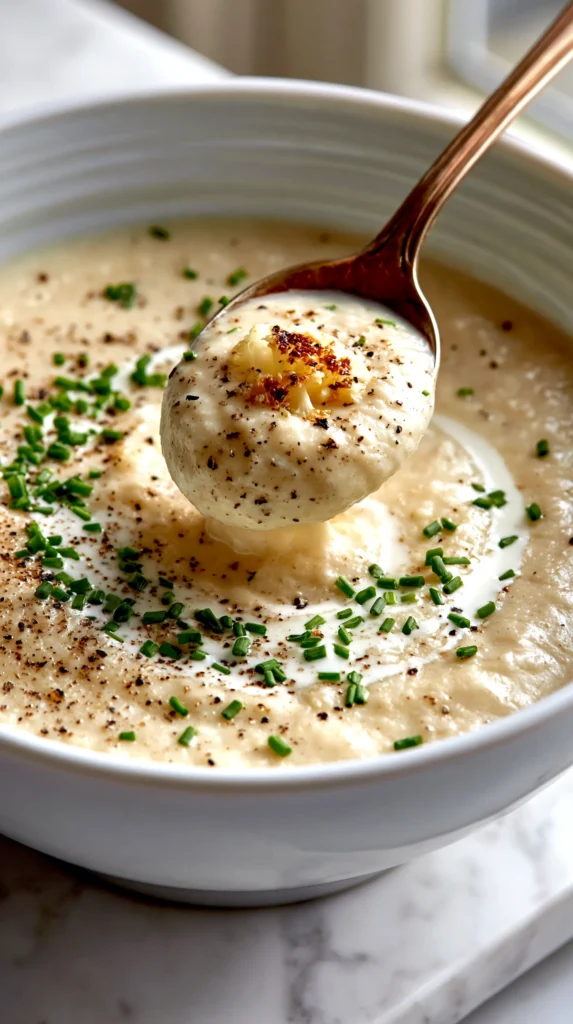
What You Need For Cauliflower Garlic Soup
This is where the recipe starts looking almost too simple. That usually makes people suspicious. I understand. Simple can read bland if the method is weak. Luckily, the ingredient list here works because each item has a job. Nothing just hangs around for decoration.
I like to keep cauliflower garlic soup built around pantry basics and a few fresh staples. That keeps the whole thing realistic. No mystery powders. No ingredients hiding at the back of a specialty market. Just good, solid things that roast, simmer, and blend beautifully.
Here is what I use:
- 1 large head cauliflower, cut into florets, about 8 cups
- 1 whole head garlic
- 1 medium yellow onion, diced
- 2 tablespoons olive oil, plus 1 extra teaspoon for the garlic
- 2 tablespoons butter
- 4 cups chicken broth or vegetable broth
- 1 teaspoon kosher salt, plus more to taste
- 1/2 teaspoon black pepper
- 1/2 teaspoon dried thyme
- 1/4 teaspoon smoked paprika
- 1/2 cup heavy cream
- 2 tablespoons grated Parmesan, optional
- 1 tablespoon lemon juice
That last little bit of lemon matters more than people think. It does not make the soup lemony. Instead, it wakes everything up. Rich soup can drift into sleepy territory without a touch of brightness.
You can also tweak the broth based on your goal. Chicken broth gives a deeper savoriness. Vegetable broth keeps things lighter and fully meat-free. Both work. I tend to notice that cauliflower garlic soup loves a broth with good flavor, so use one you already like.
As for cream, you do not need a huge amount. That is the nice part. The cauliflower creates the body. The cream just smooths the edges. Which means you still get a creamy bowl without turning dinner into a dairy event.


The Roast-First Move Changes The Whole Pot
If you skip the roasting, the soup will still be fine. Fine is not the goal. I want the version that makes someone look up from the bowl and go, “Wait, why is this so good?” Roasting is what gets you there.
Cauliflower needs color. Garlic needs time. Those two things change everything. When the cauliflower picks up golden edges, it loses that steamed-vegetable energy people worry about. It gets nuttier and deeper. Meanwhile, the garlic softens into something rich and spreadable instead of sharp.
This is also the point where the house starts smelling wildly promising. Not subtle. Not delicate. Promising. That matters because soup can look underwhelming during the early stages. A sheet pan full of caramelizing cauliflower fixes morale fast.
I spread the florets out well and do not crowd the pan. That part seems fussy, but it really is not. Crowding traps steam, and steam gives you softness without flavor. You want space so the edges roast instead of surrender.
The garlic gets its own tiny treatment. I slice the top off the head, drizzle it with oil, wrap it in foil, and roast it beside the cauliflower. Later, the cloves squeeze right out. It is deeply satisfying. It also saves you from mincing a pile of sticky garlic.
Here is the assumption I love breaking: creamy soup does not start in the pot. It starts on the pan. Once the vegetables roast well, the soup tastes layered before the broth even enters the scene. That is a huge difference.
So yes, this step adds a little time. No, I would not skip it. A rushed cauliflower garlic soup tastes polite. A roasted one tastes like you knew what you were doing all along.

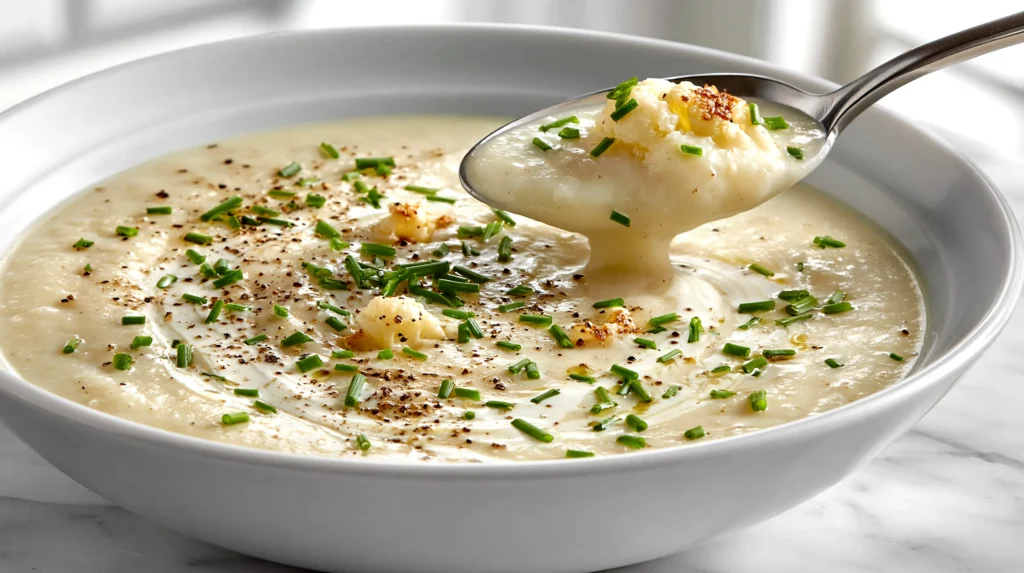
How I Make Cauliflower Garlic Soup Without A Fussy Production
Once the vegetables roast, the rest moves quickly. That is the best part. The soup tastes like a longer project than it really is. I love recipes with that kind of timing. They give “effort,” while quietly protecting my evening.
I make cauliflower garlic soup in this order:
- Heat the oven to 425°F.
- Spread the cauliflower on a large baking sheet.
- Toss it with 2 tablespoons olive oil, salt, pepper, thyme, and smoked paprika.
- Cut the top off the garlic head.
- Drizzle the garlic with 1 teaspoon oil, wrap it in foil, and place it on the pan.
- Roast the cauliflower for 30 to 35 minutes.
- Roast the garlic for 35 to 40 minutes.
- Stir the cauliflower once halfway through for even browning.
While that happens, start the base:
- Melt the butter in a large pot over medium heat.
- Add the diced onion and cook 6 to 8 minutes.
- Stir often until the onion turns soft and lightly golden.
- Pour in the broth and bring it to a gentle simmer.
Now finish the soup:
- Add the roasted cauliflower to the pot.
- Squeeze in the roasted garlic cloves.
- Simmer everything for 10 minutes.
- Blend until smooth with an immersion blender.
- Stir in the cream, Parmesan, and lemon juice.
- Taste, then add more salt or pepper if needed.
- Warm it gently for 2 more minutes.
- Serve hot with toppings you like.
That is it. No flour roux. No complicated layering. And no weird detour. The only thing I would say is this: blend thoroughly. Give it an extra minute. Cauliflower garlic soup goes from good to gorgeous when the texture turns fully velvety.

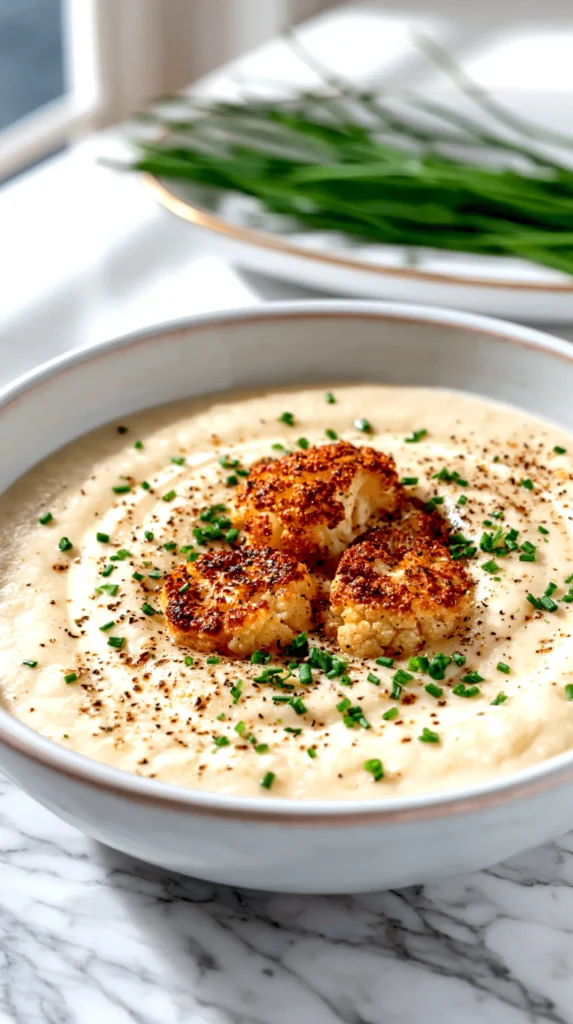
Small Tweaks That Fix Bland, Thin, Or Heavy Soup
Soup can go sideways in a few very predictable ways. It gets bland. It gets too thick. Or it gets too thin. Or it turns rich in that flat, sleepy way that makes every spoonful taste the same. The good news is that all of those problems are fixable.
If the flavor tastes dull, start with salt. I know that sounds obvious. It is still true. Roasted vegetables need enough seasoning to show up fully. Then check acidity. A small squeeze of lemon can sharpen the whole pot without making it tart. That tiny move often does more than extra cream.
When the soup seems too thick, add broth in small splashes. Do not dump. A creamy soup can loosen quickly, and then you spend ten annoyed minutes trying to build it back. I add a little, stir, then reassess. That method saves the texture.
If it turns too thin, simmer it uncovered for a few extra minutes. Blending longer can help too. Cauliflower has natural body, so it usually tightens up once it emulsifies well. Parmesan can also nudge it richer without making things too heavy.
For a deeper flavor, try one extra pinch of thyme or smoked paprika. Not both in wild amounts. This is still cauliflower garlic soup, not a spice cabinet stunt. The goal is warmth and depth, not confusion.
Here is the other quiet fix: do not skip the onion. Some people want to. I would not. Onion gives the base more roundness, and that keeps the cauliflower from tasting too plain. It is one of those background moves that holds the whole thing together.
Also, cream should support the soup, not take over. I’ve found that too much dairy mutes the roasted flavor. A smaller amount keeps the bowl lush while letting the cauliflower and garlic stay in charge.

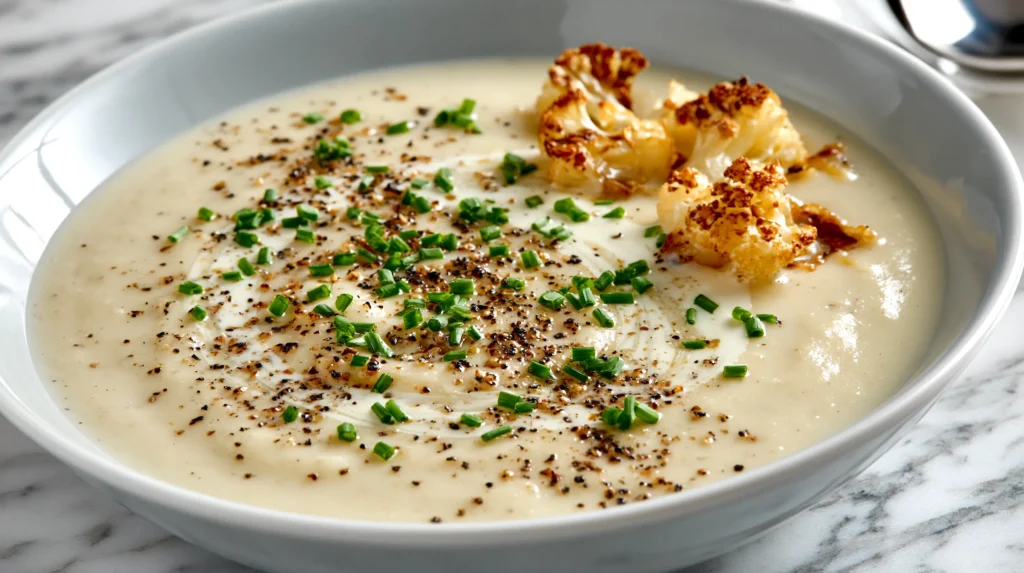
What To Serve With It So Dinner Feels Done
A good soup needs the right sidekick. Not because the soup is lacking. Because dinner feels more complete when texture joins the party. Cauliflower garlic soup is creamy and smooth, so I like serving it with something crisp, crunchy, cheesy, or very toasty. That contrast matters.
You can keep the sides simple or make the whole meal look a little dressed up. Both directions work. I lean toward easy, but I still want the plate to have a little charm. Soup nights deserve that.
Here are my favorite serving ideas:
- Thick slices of sourdough, toasted and buttered
- Grilled cheese with sharp cheddar
- A crisp green salad with lemony dressing
- Homemade croutons with black pepper
- Bacon bits and chopped chives on top
- Extra Parmesan with a drizzle of olive oil
- Roasted chickpeas for crunch
- A turkey sandwich if you want a heartier dinner
- Ham and Swiss sliders for a cozy dinner-table combo
- A simple Caesar salad for a restaurant-ish moment
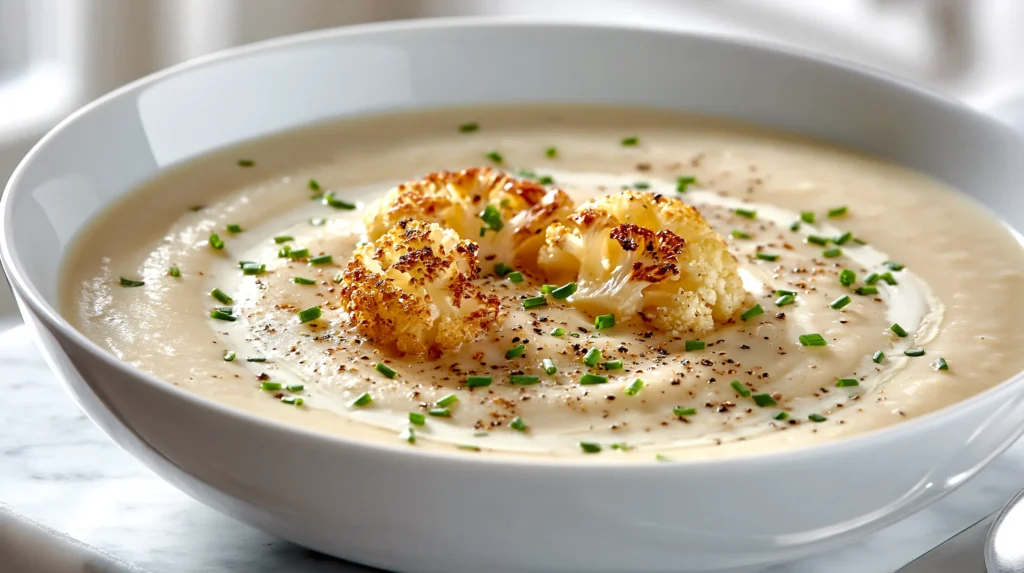
Toppings matter too, maybe more than people admit. A swirl of cream looks pretty, yes, but it also softens the finish. Chives add freshness. Croutons fix the texture issue in one crunchy move. Parmesan gives a salty edge. Even cracked black pepper can wake up the bowl.
This is where cauliflower garlic soup becomes more than just soup. Pair it with great bread and suddenly dinner looks thoughtful. Add a salad and now it feels balanced. Put it in smaller bowls before a bigger meal, and now it looks a bit fancy.
That is the sneaky charm of it. One pot can shift roles depending on what sits beside it. I always appreciate a recipe that can act casual or polished without changing its whole personality.

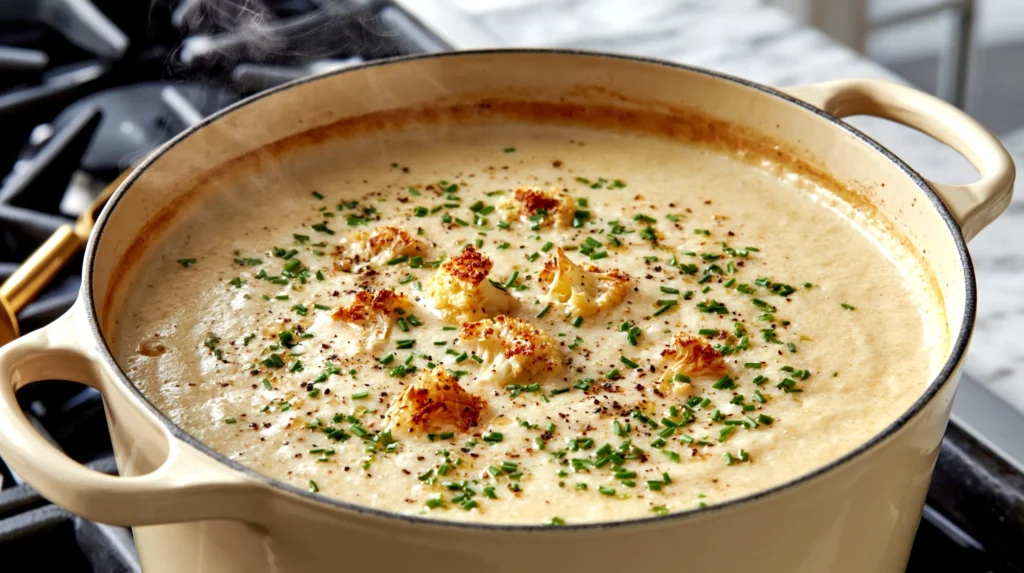
Cauliflower Garlic Soup Storage, Reheating, And Freezer Notes
Leftover soup can be a blessing or a disappointment. There is rarely an in-between. Thankfully, cauliflower garlic soup reheats well when you handle it gently. That matters because some creamy soups split, thicken too much, or turn a little gluey the next day. This one behaves better than most.
I let the soup cool slightly before storing it. Then I move it into airtight containers. A big container works, but smaller portions make weekday lunches easier. That is one of those tiny decisions that makes future you less annoyed.
Here is how I handle leftovers:
- Refrigerate the soup for up to 4 days.
- Store toppings separately so they stay crisp.
- Reheat on the stove over medium-low heat.
- Stir often so the bottom does not catch.
- Add a splash of broth or milk if it thickens.
- Warm only until hot, not boiling.
- Freeze in airtight containers for up to 2 months.
- Leave a little space at the top for expansion.
- Thaw overnight in the refrigerator before reheating.
Boiling is where people get into trouble. Creamy soups can turn grainy when they get too aggressive on the stove. Low and steady works better. If the texture seems off after chilling, do not panic. Usually, it just needs stirring and a small splash of liquid.
I’ve found that cauliflower garlic soup freezes best without extra toppings mixed in. Add bacon, herbs, or cheese later, right before serving. That way nothing turns soggy or strange.
One more thing: taste it again after reheating. Cold storage can mute seasoning. A pinch of salt or a small squeeze of lemon often brings the whole thing back to life. That little check makes leftovers taste intentional instead of forgotten.
Questions People Always Have About This Soup
A recipe like this sounds easy, and it is. Even so, a few questions always show up. Usually, they appear right after someone worries they are about to ruin dinner. You are not. Most issues have a very simple fix.
Can I use frozen cauliflower?
Yes, you can. Roast it straight from frozen, but expect a little extra moisture. Give it more time on the pan so it picks up color. That roasted edge still matters.
Can I make cauliflower garlic soup dairy-free?
Absolutely. Use olive oil instead of butter and skip the cream. Then add a little extra broth, or use unsweetened plain oat cream. The soup still turns smooth because the cauliflower does most of the work.
Do I need an immersion blender?
No. A regular blender works too. Just blend in batches and do not overfill it. Hot soup builds steam fast, and nobody needs that kind of kitchen chaos.
Why does my soup taste flat?
Usually, it needs more salt or a little acid. Start small. Add salt, then try a squeeze of lemon. Roasted soups often need that brightness at the end.
Can I make it ahead for guests?
Yes, and I kind of recommend it. The flavor settles nicely. Reheat it gently, then freshen it with toppings right before serving.
What protein goes well with it?
Grilled chicken, crispy bacon, turkey sandwiches, or even white beans work well. Cauliflower garlic soup plays nicely with savory add-ons without losing its whole identity.
So no, this is not a fragile little recipe. It is forgiving. Which, frankly, makes it even more lovable.
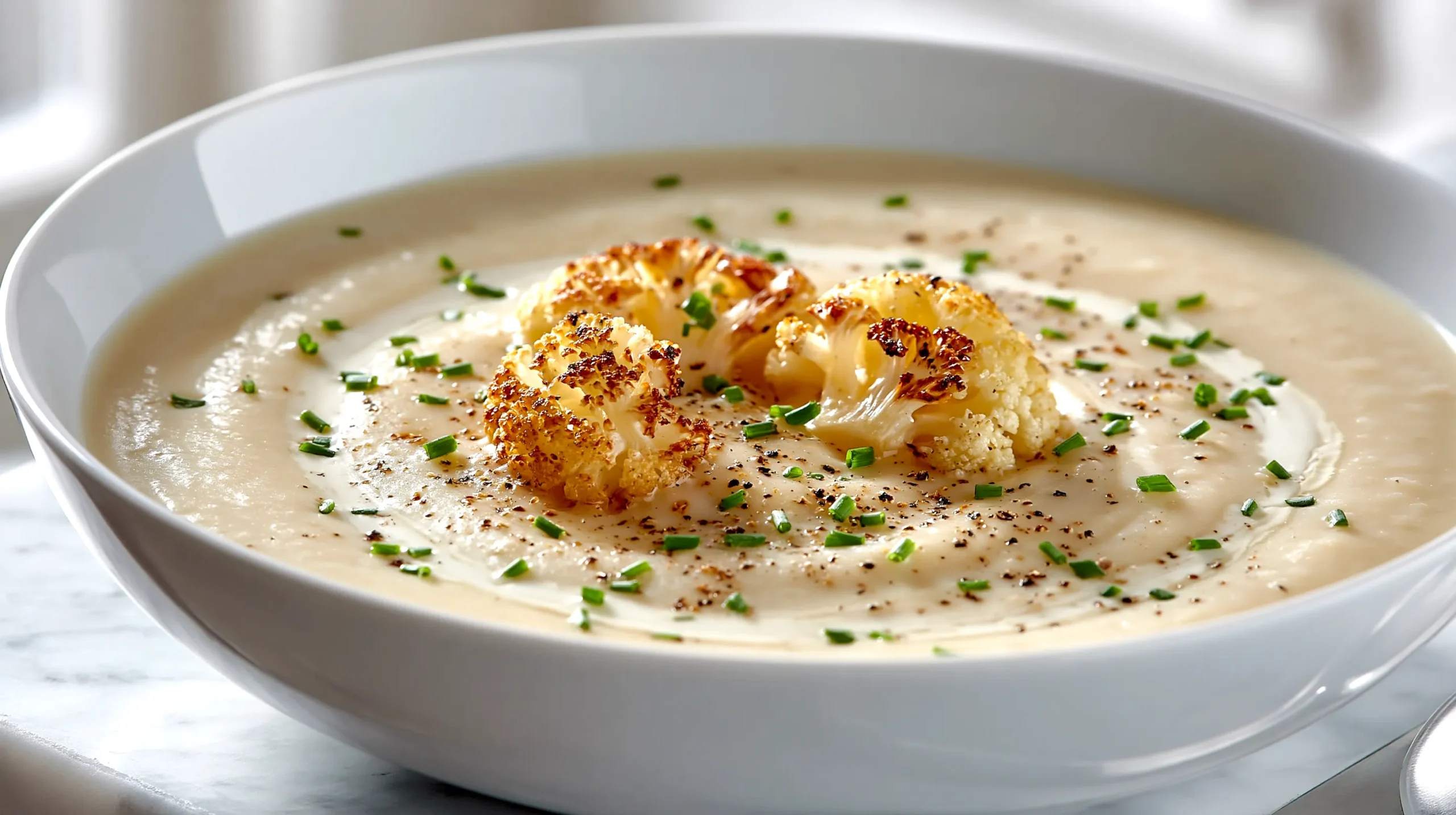
Cauliflower Garlic Soup
Ingredients
Method
- Heat the oven to 425°F.
- Spread the cauliflower on a large baking sheet.
- Toss it with 2 tablespoons olive oil, salt, pepper, thyme, and smoked paprika.
- Cut the top off the garlic head.
- Drizzle the garlic with 1 teaspoon oil.
- Wrap the garlic in foil and place it on the pan.
- Roast the cauliflower for 30 to 35 minutes.
- Roast the garlic for 35 to 40 minutes.
- Stir the cauliflower once halfway through for even browning.
- Melt the butter in a large pot over medium heat.
- Add the diced onion and cook 6 to 8 minutes.
- Stir often until the onion turns soft and lightly golden.
- Pour in the broth and bring it to a gentle simmer.
- Add the roasted cauliflower to the pot.
- Squeeze in the roasted garlic cloves.
- Simmer everything for 10 minutes.
- Blend until smooth with an immersion blender.
- Stir in the cream, Parmesan, and lemon juice.
- Taste, then add more salt or pepper if needed.
- Warm it gently for 2 more minutes.
- Serve hot with toppings you like.
Tried this recipe?
Let us know how it was!The Soup Mood That Never Lets Me Down
There is something very satisfying about a dinner that looks calm and collected, even if the day was not. That is where this recipe really gets me. Cauliflower garlic soup has that quiet confidence I always admire. It does not need flashy ingredients or a dramatic backstory. It just shows up, tastes wonderful, and somehow makes the whole evening seem more sorted.
As a mom, I really appreciate meals that can swing between cozy and a little polished. Some nights need pure comfort. Other nights need dinner to look like I planned something lovely on purpose. This soup handles both moods without making me work for it. That alone earns a standing ovation in my kitchen.
I also think it photographs beautifully, which matters more than I like to admit. A pale, creamy bowl with cracked pepper, chives, and crusty bread on the side? Very Pinterest. Very “save this for later.” And very likely to make someone assume the recipe is harder than it is. I support that misunderstanding.
What keeps me coming back, though, is the flavor. It starts soft, then the roasted garlic settles in. The cauliflower turns silky. The lemon lifts the whole thing at the end. Nothing shouts, yet nothing disappears either. That balance is harder to pull off than people think.
So yes, this is a soup recipe. But it is also a little dinner rescue, a little fridge clean-out win, and a little reminder that simple food can still have presence. And when a basic head of cauliflower turns into something this good, I call that a very smart use of an evening.