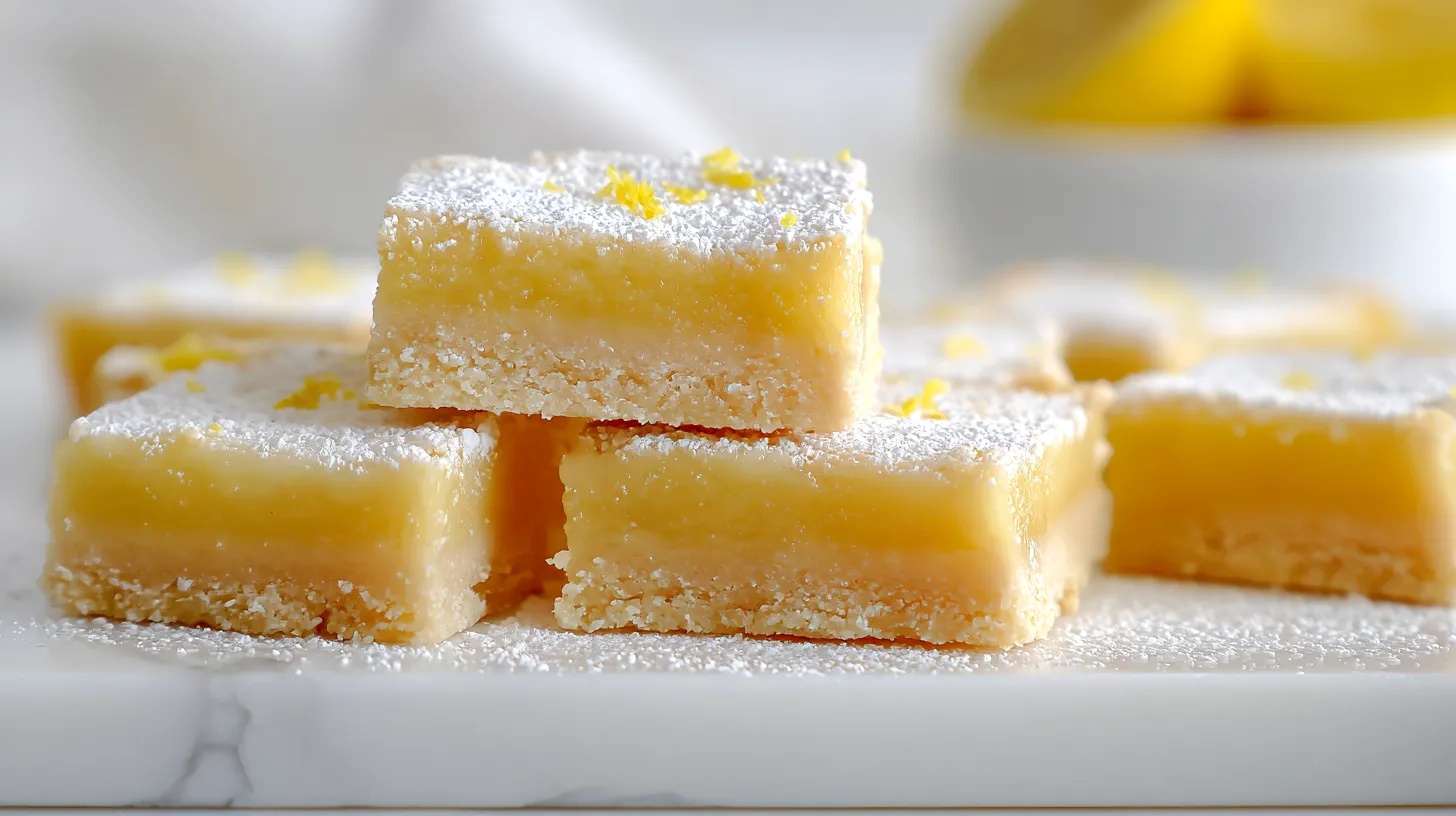
Lemon bars are one of those desserts that look sweet and harmless, then absolutely steal the table. I love that for them. They show up pale yellow and powdered, then hit with butter, brightness, and a tart little spark.
I’ve found that people expect two bad outcomes here. They either brace for a bland, sleepy square or a sour bite that attacks the mouth. Both versions miss the point. Good lemon bars should taste sunny, rich, sharp, and clean at the same time.
That balance is why I keep coming back to them. A buttery crust gives the whole thing structure. Meanwhile, the filling lands silky and bold. Powdered sugar drifts over the top like it didn’t help create a tiny dessert scene.
Living in Orlando makes me want bright desserts more often. Heavy sweets have their place, sure, but citrus fits the mood here. Bright desserts just read easier in warm weather anyway. Citrus fits the mood here, and I always notice that.
Still, lemon bars can go sideways in deeply annoying ways. Sometimes the crust turns soggy. Other times the top cracks. The filling tastes eggy. Powdered sugar melts into a patchy mess, and the pan looks tired before serving.
So yes, I’m giving this dessert the attention it deserves. Not fussy attention. Just the useful kind. Because the best batch has a very specific vibe, and one small choice changes everything.
A few links on this page are affiliate links, so if you click and buy, I might earn a small commission. It never costs you more, and it helps support the site. You can read my full disclosure if you’re into the fine print.
Why This Dessert Gets Away With So Much
I tend to notice that lemon desserts split people fast. Some want gentle citrus and soft sweetness. Others want enough tang to wake up the whole room. Lemon bars somehow flirt with both camps, which feels a little smug, yet I respect it.
The first win is texture. A good crust should stay tender, not dry. The filling should set into that smooth layer that looks delicate, though never weak. When those parts meet, the bite lands between shortbread and custard. That is a very comfortable place to be.
Most people assume sugar carries this dessert. I don’t buy that. Balance does the heavy lifting. The lemon has to keep its edge or the whole pan falls flat. A bland square with powdered sugar on top is still bland. Sugar cannot charm its way out of that.
Here’s the other thing people miss. Lemon bars look easy, so they trick people into rushing. The recipe itself isn’t hard. Those details just matter more than they first appear. Fresh juice, hot crust, clean timing, and a proper chill all matter.
If you’ve only had thick, gummy versions before, I understand the hesitation. Those bars were rude. Good lemon bars should taste bright and rich without turning heavy. They should make you reach for a second square while pretending you’re only fixing the tray.
That’s the charm of the good ones. The flavor stays lively, not loud. Plus, the whole pan looks neat while causing minor dessert chaos. I support that kind of behavior. It is polished, tart, and just dramatic enough.

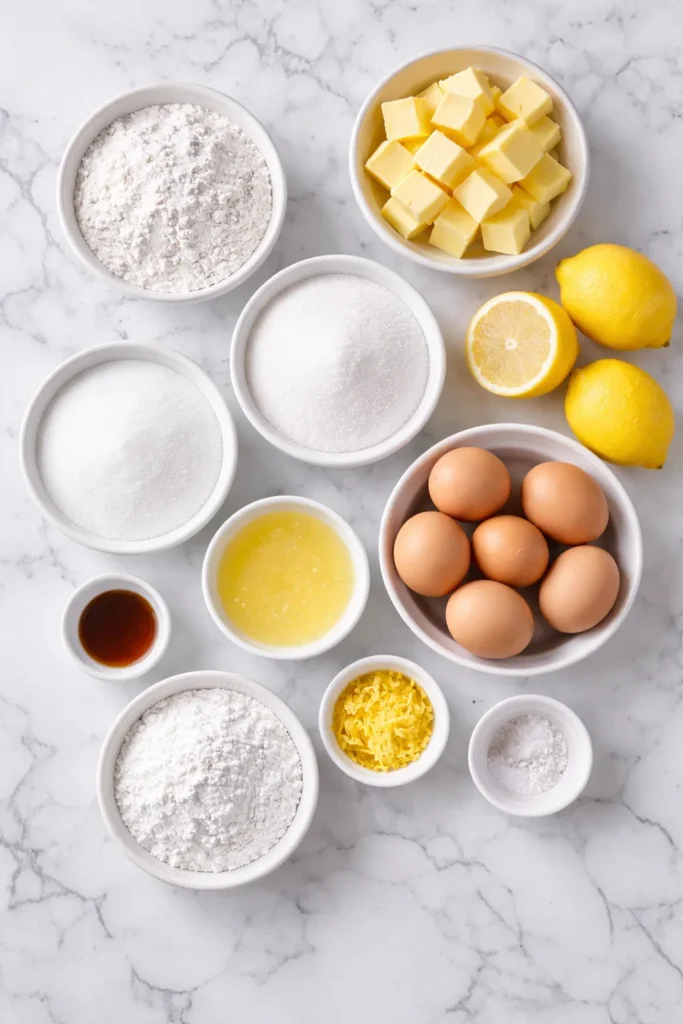
Lemon Bars Ingredients That Pull Their Weight
I’m going to say something mildly dramatic. The ingredient list looks simple, which means every single item has to show up properly. Lemon bars do not offer much cover. A tired lemon, weak butter, or stale flour gets exposed immediately.
- For the crust: 1 cup unsalted butter, softened; 1/2 cup granulated sugar; 2 cups all-purpose flour; 1/4 teaspoon salt; 1 teaspoon vanilla extract
- For the filling: 2 cups granulated sugar; 1/4 cup all-purpose flour; 6 large eggs; 1 cup fresh lemon juice; 1 tablespoon lemon zest
- For the finish: 2 to 3 tablespoons powdered sugar
That mix gives me a shortbread-style base that tastes buttery, tender, and just sweet enough. I don’t want a sugary crust. What I want is a stable, rich base that lets the filling stay bright.
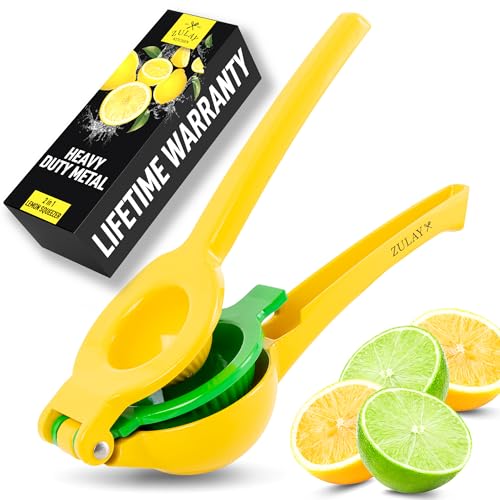
Fresh juice matters more than people want it to. Bottled juice works only in a true emergency. It tastes flatter and harsher. Fresh lemons give the filling that bright, clean pop that makes lemon bars worth the trouble.
Good butter matters here too. I like unsalted butter because it gives me more control. Cheap butter can still work, but richer butter tastes fuller. In a recipe this simple, little upgrades show.
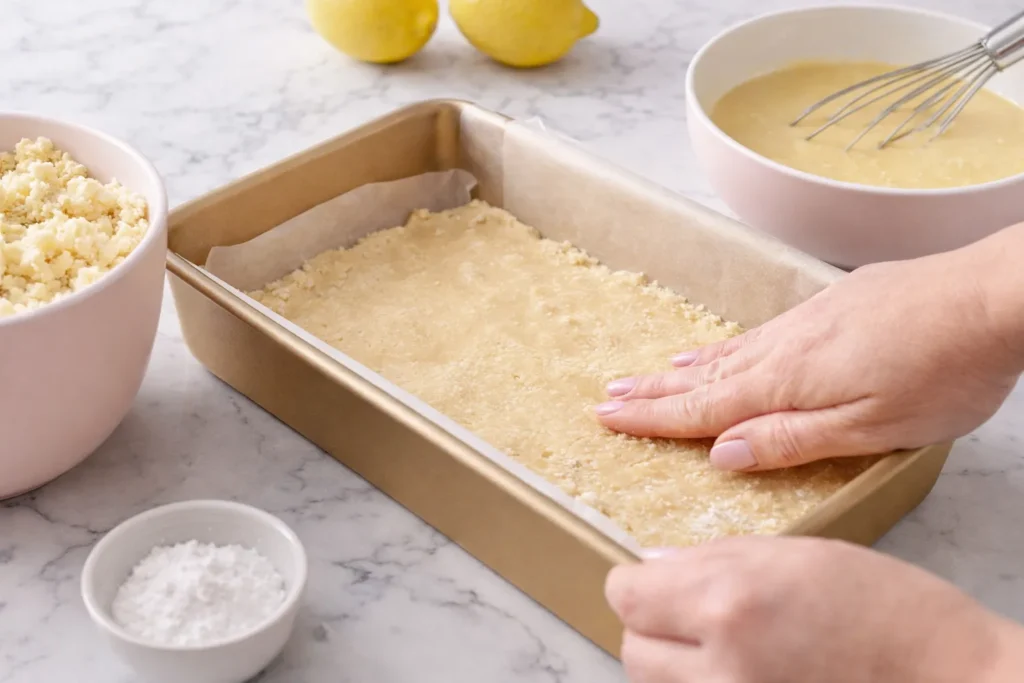
I also care about the egg size here. Use large eggs, not random leftovers from a carton situation. That choice shifts the texture. Zest the lemons before juicing them, too. That tiny move saves time and keeps your mood steadier, which I consider a kitchen win.
Good lemons should smell bright before you cut them. If they seem dull, the whole filling starts behind. That is a rude disadvantage.
The Crust Is Not Background Noise
Here’s the part people rush, and I wish they wouldn’t. The crust is not background noise. It is half the reason lemon bars work at all. A weak base ruins the bite before the filling even gets its moment.
I prefer a shortbread-style crust because it brings butter, structure, and a soft crumb without tasting dusty. Some recipes pile it on too thick, though. Then the whole dessert starts acting like a cookie with a lemon issue. That is not the goal.
Softened butter helps more than melted butter here. Melted butter sounds easier, yet it often turns the crust greasy and dense. I cream the butter with sugar first, then stir in the flour, salt, and vanilla. The dough should look soft and slightly crumbly, not whipped.
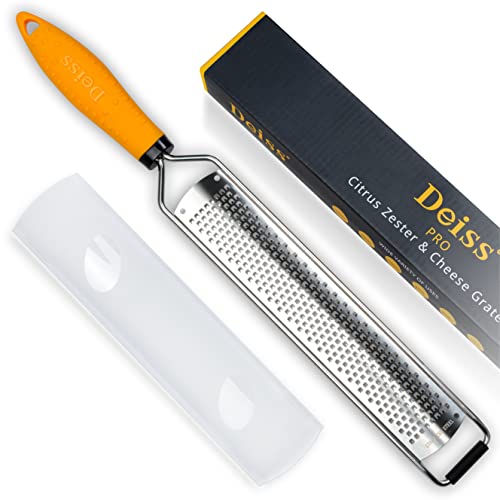
After that, I press it into a parchment-lined 9×13-inch pan. I pay extra attention to the corners because thin corners overbake first. Nobody talks about corner drama enough. It happens all the time, and it always ruins the polished look.
I also prick the dough lightly with a fork. Nothing wild. I just want to stop giant bubbles before they form. That small step keeps the crust more even, which helps the filling sit smoothly later.
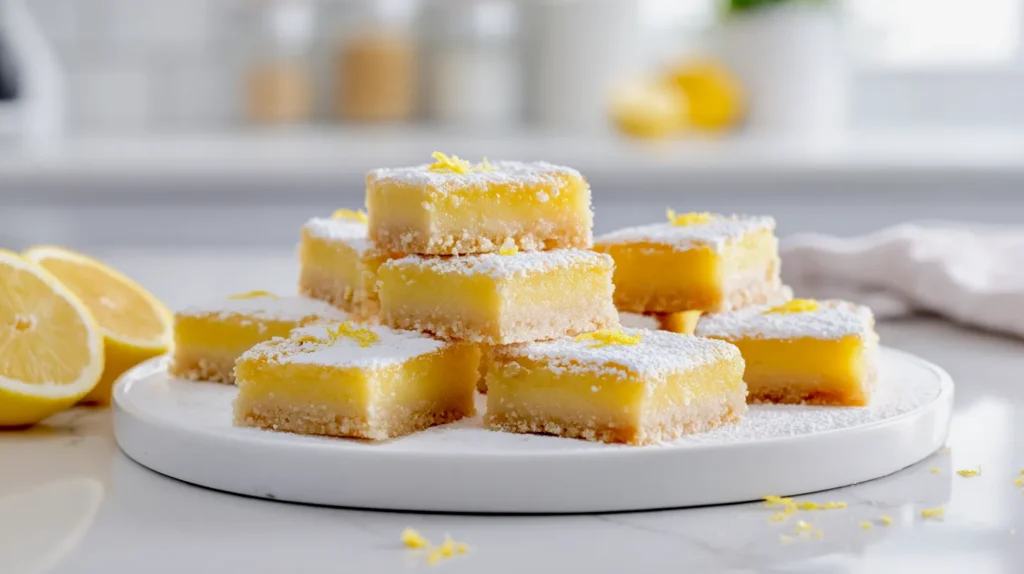
Most people focus on the lemon filling first. I get why. Still, the crust sets the tone. When the base tastes buttery, holds its shape, and bites cleanly, the whole dessert suddenly tastes more expensive. Funny how that works. And yes, that matters more than fancy garnish ever will. That visual payoff matters when the bars hit a platter.
How I Make Lemon Bars Step By Step
The method here stays simple, but the order matters. Lemon bars reward calm, tidy steps. Once the crust goes into the oven, the filling comes together quickly. Because of that, I like knowing my next move before the timer starts bossing me around.
- Heat the oven to 350°F.
- Line a 9×13-inch pan with parchment paper.
- Cream the butter and 1/2 cup sugar.
- Mix in 2 cups flour, salt, and vanilla.
- Press the dough evenly into the pan.
- Bake the crust for 18 to 22 minutes.
- Whisk 2 cups sugar with 1/4 cup flour.
- Add 6 large eggs and whisk until smooth.
- Stir in 1 cup lemon juice and the zest.
- Pour the filling over the hot crust.
- Bake 20 to 24 minutes, until the center looks set.
- Cool completely at room temperature.
- Chill at least 2 hours before slicing.
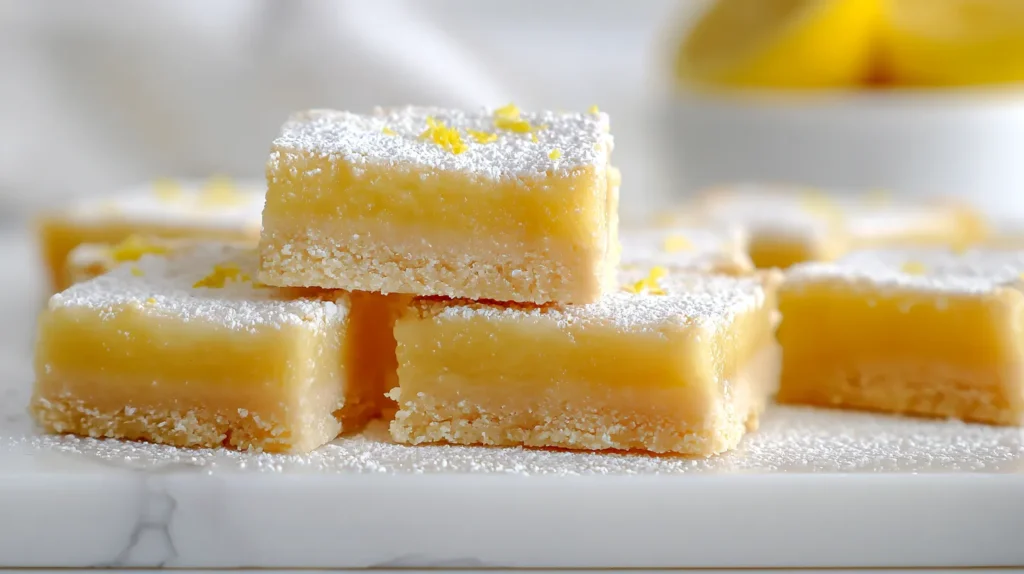
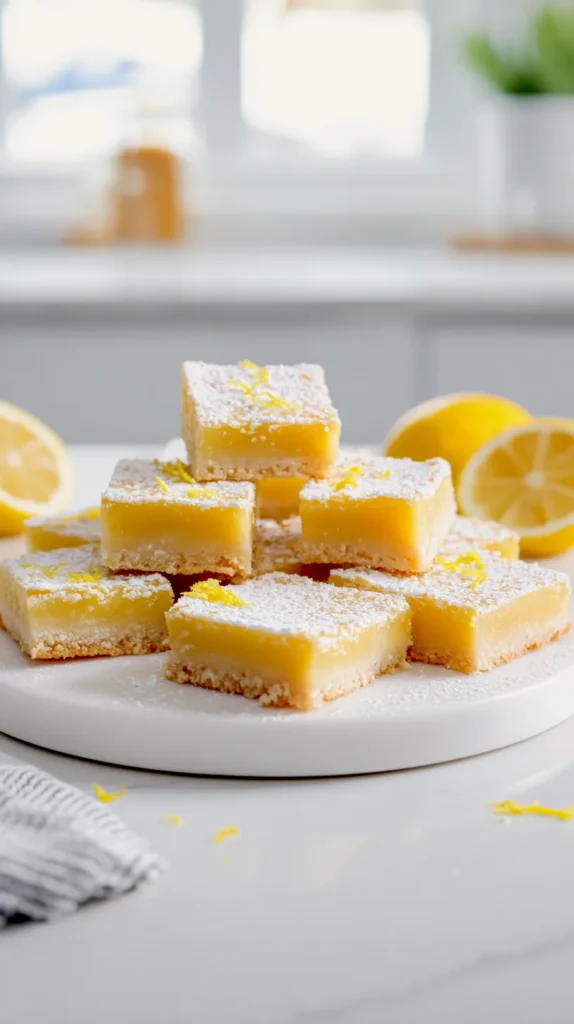
That chill time matters, even if it tries my patience. Cold bars cut more cleanly and taste brighter. Once they’re chilled, I lift them out with the parchment. Then I dust with powdered sugar and slice with a sharp knife. I wipe the blade between cuts because sticky edges can wreck the neat-square dream fast. Clean edges make the whole pan look calmer. I also cool the pan on a rack when I can. I keep the powdered sugar light. Thick dusting looks dramatic, but it can mute the bright finish.

What Trips People Up Fast
I’ve found that most lemon bar disasters come from small choices, not dramatic mistakes. That’s almost more annoying. Nobody wants to hear that. One extra minute or one lazy shortcut can change the whole pan. Annoying, but true.
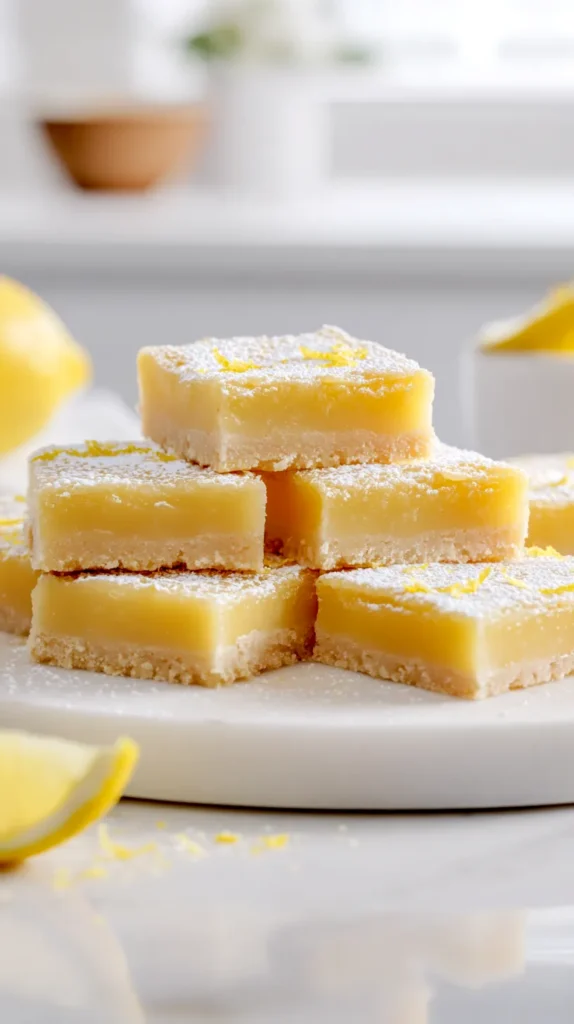
Let’s start with runny filling. If the center still looks wet after baking, the bars likely needed more time. A slight jiggle is fine. Shiny liquid movement is not. That middle should look set before the pan leaves the oven.
Now for the cracked top. Usually, that happens because the bars baked too long or the filling held too much air. I whisk until smooth, then stop. Instead, I do not beat it like cake batter. Lemon bars want a calm hand, not aggressive enthusiasm.
Soggy crust is another repeat offender. In my experience, that problem usually points to an underbaked base or a cooled crust. I pour the filling onto the hot crust because it helps the layers connect neatly. It also keeps the bite from turning muddy.
Then there’s the powdered sugar issue, which always tries to humble people. Everyone loves that snowy top until moisture dissolves it into sad little patches. If I’m serving later, I wait to dust the bars. Moisture wins that argument every time.
If the filling tastes eggy, I check two things first. Was there enough lemon juice? Did the pan stay in the oven too long? The citrus should cut through the eggs and sugar. Otherwise, the whole thing loses its bright little swagger. Plenty of tartness is why one square never stays lonely on the plate. That is why the best pans taste so clean.

Lemon Bars FAQ For Real Life Bakers
Some dessert questions show up every single time, and I get it. Lemon bars seem easy, yet they hide a few weird little traps. Here are the answers I’d want before I start zesting anything.
- Can I use bottled lemon juice? You can, but I wouldn’t choose it unless I had to. Fresh juice tastes brighter and cleaner.
- Why pour the filling onto a hot crust? That hot crust helps the layers set together better. It also lowers the soggy-bottom risk.
- How do I know when lemon bars are done? The center should look set, not wet. A slight jiggle works. Liquid movement means more oven time.
- Do they need refrigeration? Yes. Chilling improves the texture, sharpens the flavor, and makes slicing much easier.
- Can I freeze them? Absolutely. I freeze them without powdered sugar, then thaw them in the fridge overnight.
- Why did my powdered sugar disappear? Moisture from the bars dissolved it. Dust the top closer to serving time.
- Can I make them a day ahead? Yes, and I actually prefer that. The flavor settles beautifully overnight.
- Should I strain the filling? You can, especially if you want an extra-smooth top. I do it for a cleaner look.
- Can I double the recipe? Yes, but I use two pans. Deep pans throw off the bake and mess with the texture.
That’s the nice thing about knowing the little answers. The recipe stops acting mysterious. Once you understand the why, the whole pan gets much easier to trust. That makes the baking part less twitchy too. Once the mystery leaves, the fun part takes over. And that is a much nicer energy to bake with.
Serving Them Like You Meant To
I don’t think every dessert needs a costume change, but serving does matter. Lemon bars already bring plenty of personality. Still, a few thoughtful choices can make them look extra polished without turning dessert into a whole event.
First, I keep the pieces modest. Huge squares look generous, yet smaller rectangles actually eat better. These bars are rich, tart, and buttery. A smaller cut lets people say yes quickly, and that is a very useful dessert strategy.
Temperature changes the mood, too. Chilled bars taste firmer, brighter, and cleaner. Room-temperature bars taste softer and a little more buttery. Personally, I serve them cold most days. The slices look sharper, and the lemon comes through more clearly.
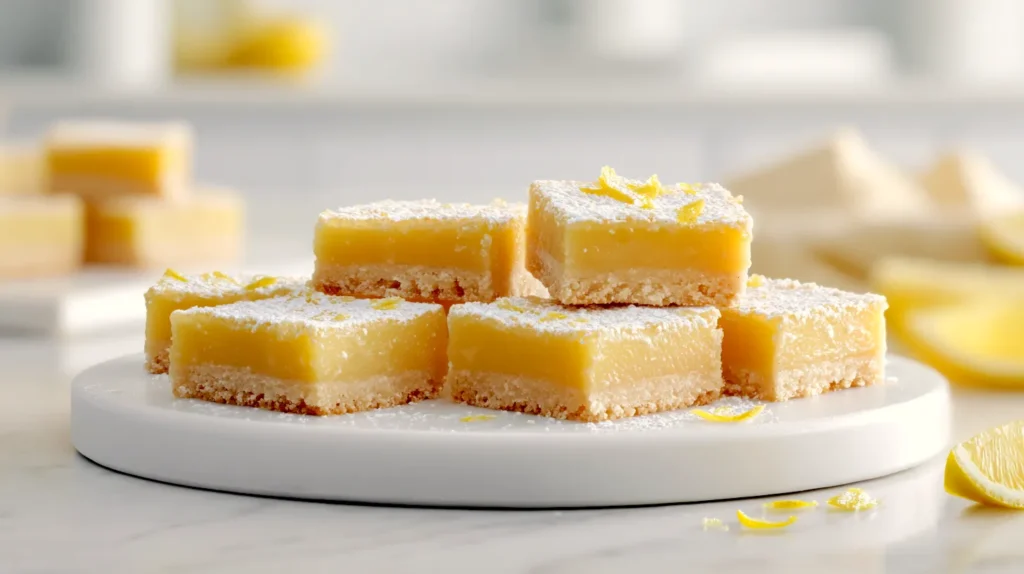
If I want the platter to look pretty, I use a white plate. Then I add a last-minute dusting of powdered sugar. That simple move does most of the visual work. Fresh berries on the side look lovely, though I don’t pile them on top. Instead, I let the lemon stay center stage.
Drinks matter more than people admit. Iced tea works beautifully. Hot tea is classic. Coffee makes the tartness stand out in a fun way. Whipped cream can work, but I use it lightly because too much softness can mute the bright bite.
That’s really the secret with serving. Keep the bars neat. Let the citrus do its job. Add just enough flourish to make the tray look cared for, then step back. Lemon bars know how to handle the rest. They usually do. That tiny polish goes a long way. Even a plain tray looks cheerful when the bars are cut well. Citrus knows how to fake effort.
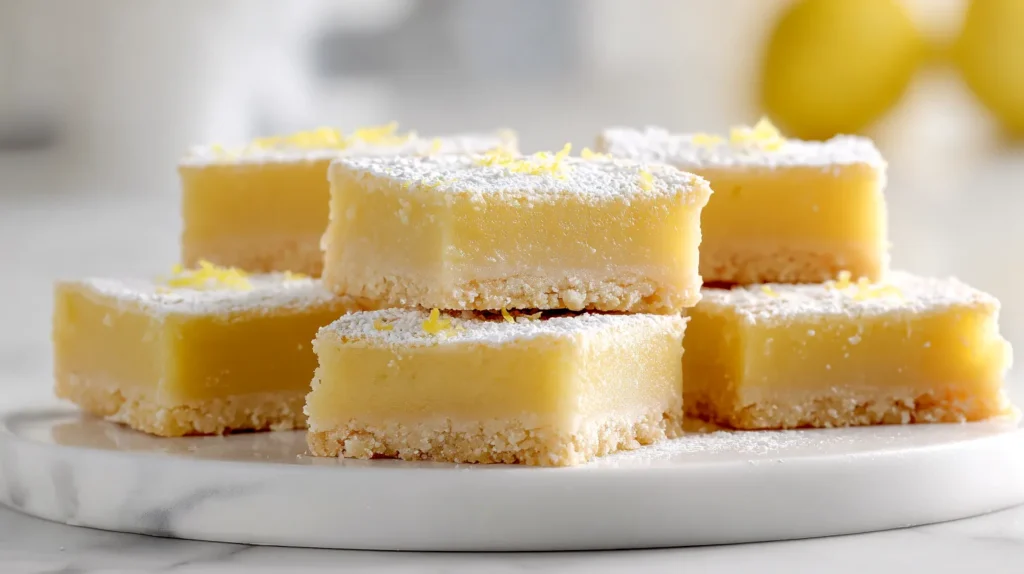
Easy Lemon Bars Twists That Still Make Sense
Once a pan of lemon bars turns out well, people get ambitious fast. I understand the urge. The texture is lovely. Meanwhile, the color is cheerful. Suddenly everyone wants to add berries, glazes, herbs, and twelve personality traits. Some twists work. Others interrupt a very good thing.
My favorite change is a partial brown sugar swap in the crust. Not a full swap. Just enough to add warmth and depth. That small move makes the base taste richer without muting the bright top layer.
- Add extra zest for a bigger citrus punch
- Use Meyer lemons for a softer, sweeter edge
- Mix in a little lime juice with the lemon juice
- Top each slice with berries after cutting
- Add a pinch of salt to the filling
- Cut the bars into tiny squares for parties
- Make slim rectangles for brunch platters
- Stack them on a cake stand if you want a polished look
Those changes make sense because they keep the spirit intact. The bars still taste like lemon bars. They get a slight attitude shift too. That can be fun when you want something familiar but not sleepy.
What I don’t love is covering them with thick glaze or frosting. That misses the point. This dessert wins because it tastes clean, tart, and buttery. Too many toppings make the whole thing heavy, and heavy is not why I came here.
Just don’t bully the lemon. It’s doing important work. A good batch already knows exactly who it is. The clean crust-and-citrus contrast is the whole appeal, and I refuse to bury that. Some things already know they’re enough. That restraint matters more than ever.
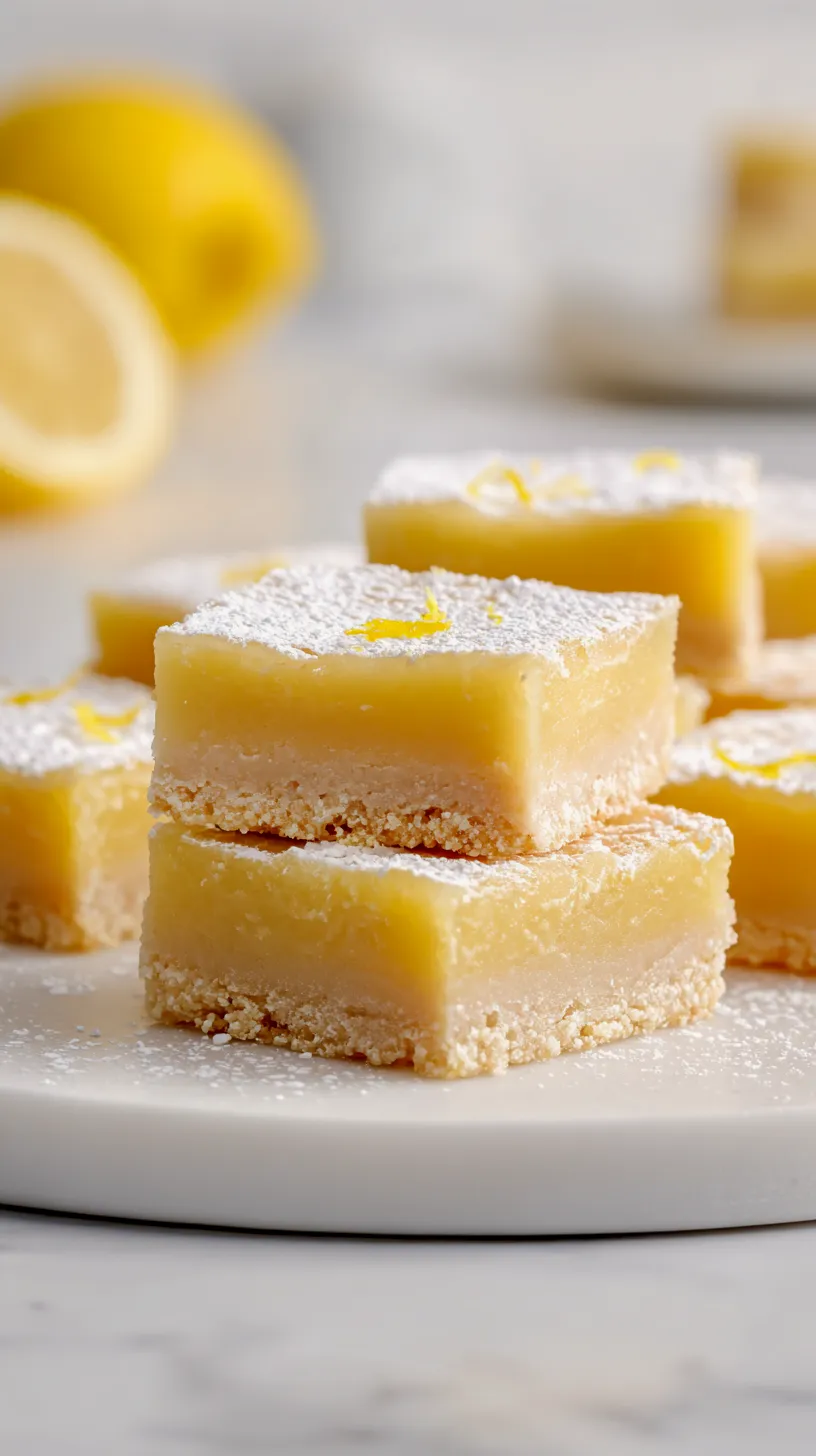
Lemon Bars
Ingredients
Method
- Preheat the oven to 350°F.
- Line a 9×13-inch pan with parchment paper.
- Cream the butter and 1/2 cup granulated sugar until smooth.
- Mix in 2 cups all-purpose flour, salt, and vanilla extract until combined.
- Press the dough evenly into the prepared pan.
- Bake the crust for 18 to 22 minutes until lightly golden.
- Whisk together 2 cups granulated sugar and 1/4 cup all-purpose flour.
- Add the eggs and whisk until smooth.
- Stir in the lemon juice and lemon zest until fully combined.
- Pour the filling over the hot crust.
- Bake for 20 to 24 minutes until the center is set.
- Cool completely at room temperature.
- Chill for at least 2 hours before slicing.
- Dust with powdered sugar before serving.
Tried this recipe?
Let us know how it was!
The Citrus Mood I’ll Happily Repeat
Some recipes are simply useful. Others stay in my head because they get the mood exactly right. Lemon bars live in that lovely middle space. They work for brunch, showers, holidays, spring weekends, or a random bright afternoon.
I like that they don’t require flashy ingredients. To me, they taste brighter than they look. Around Orlando, where the light already does the most, that kind of dessert just makes sense. It fits the weather, the mood, and my craving for something cheerful.
I also appreciate desserts that slice, stack, and store without drama. That may not sound romantic, but it is deeply practical. Pretty desserts should still know how to behave in a fridge. That opinion is staying put.
What keeps me coming back, though, is the contrast. The crust stays buttery and grounded. Meanwhile, the filling arrives sharp and silky. Then powdered sugar lands on top and acts innocent, though everybody knows these bars mean business.
I can already picture them on Pinterest boards for spring desserts or baby shower treats. That sounds exactly right. Some sweets deserve a second life before the first tray even disappears. Lemon bars absolutely have that kind of energy.
And that’s the real charm here. Lemon bars don’t need to shout. They show up bright, cool, and quietly confident. Frankly, that is a pretty excellent way to enter a room, and I admire it every time.