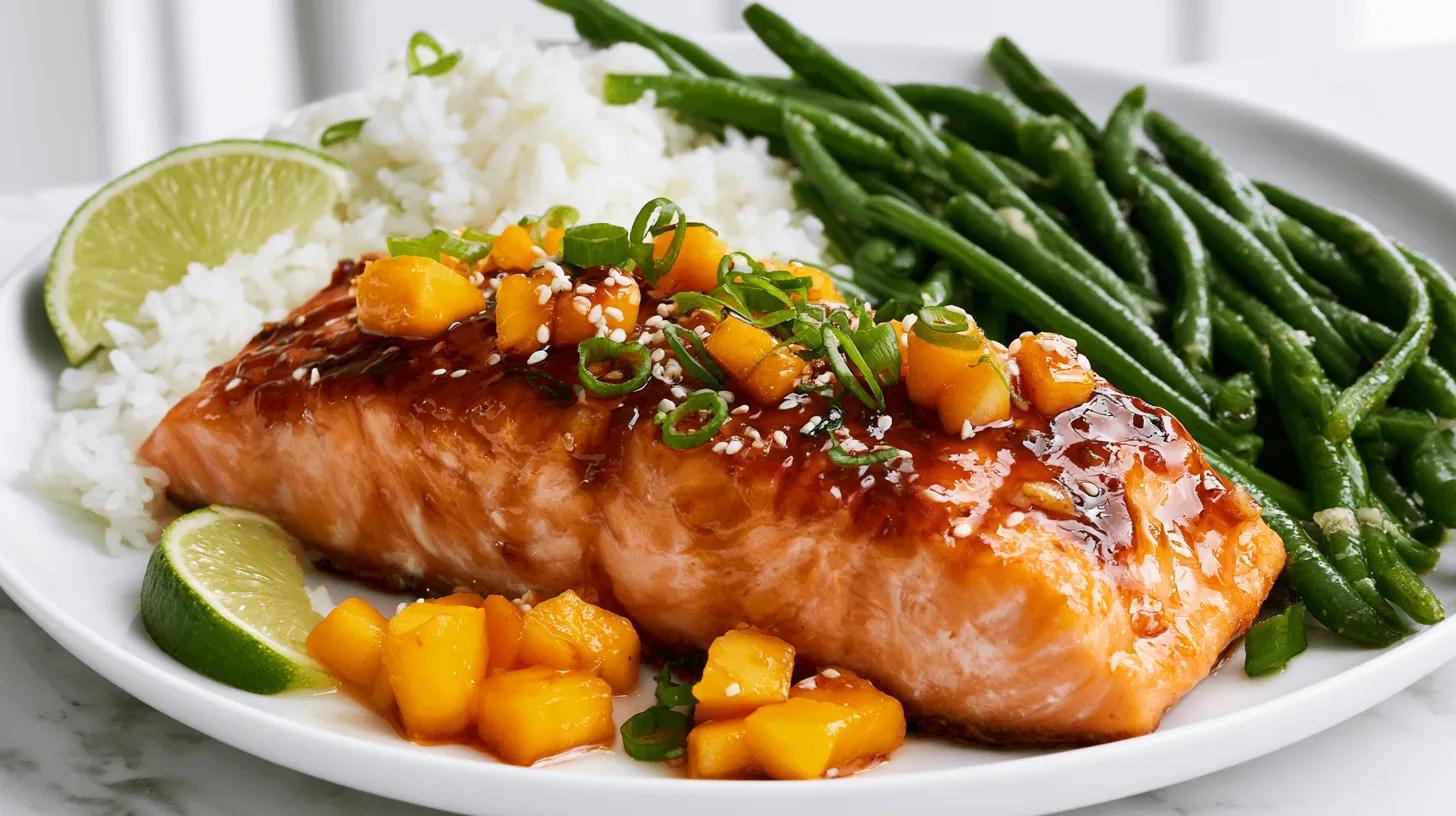
I tend to notice that mango teriyaki salmon sounds like a sunny restaurant dinner, not Tuesday food. It has that glossy, golden, “well, this got fancy fast” look. Still, it doesn’t need fancy moves, fancy pans, or a tiny culinary degree.
Some dinners arrive with too much emotional baggage. This one keeps things bright and simple. Mango adds juicy sweetness, while teriyaki brings soy sauce, garlic, ginger, and that savory little wink. The result tastes sweet, salty, fresh, and rich without tipping into dessert territory.
Living in Orlando, I’m always drawn to meals that taste sunny without heating the kitchen forever. Salmon cooks fast, mango tastes cheerful, and the whole plate looks more planned than it is. I’m not mad about that little dinner trick. Plus, it gives the table color before anyone adds a side dish.
What I love most is the contrast. The salmon turns tender, the sauce gets shiny, and the lime keeps every bite awake. Then the mango slips in with that tropical edge, which makes the whole thing taste less beige. Beige dinner has had enough chances.
I also love that this recipe lets the sauce do real work. It adds flavor, color, and that glossy finish everyone notices first. This is one of those dinners that tastes special, yet still fits a normal weeknight. And the sauce? That’s where the sneaky good part begins, because it changes the whole mood.
A few links on this page are affiliate links, so if you click and buy, I might earn a small commission. It never costs you more, and it helps support the site. You can read my full disclosure if you’re into the fine print.
Why Mango Teriyaki Salmon Works So Well
Mango teriyaki salmon works because it balances rich fish with bright fruit and savory sauce. Salmon has a buttery texture, so it can handle bold flavors without getting lost. Mango adds sweetness, but soy sauce and vinegar keep the recipe grounded. That balance matters more than people think.
I’ve found that sweet sauces can turn heavy fast. One minute dinner tastes bright, then suddenly everything tastes like syrup with a side of regret. However, mango tastes fresher when garlic, ginger, and rice vinegar join the pan. The sauce stays sweet, but it still tastes like dinner.
This recipe also works because salmon cooks quickly. That means the glaze doesn’t need a long simmer or a dramatic kitchen production. The mango softens, the sauce thickens, and the fish finishes before everyone loses patience. That’s real dinner gold, frankly.
A common assumption says fruit with fish has to taste fussy. I disagree with my whole chest. Fruit can make seafood taste lighter and brighter without turning the plate into a tropical theme party. Nobody needs a tiny umbrella unless they want one.
The trick is using mango as part of the sauce, not as a random pile on top. I like diced mango because some pieces soften and some stay bright. However, mango puree also works if you want a smoother glaze. Both versions give mango teriyaki salmon that sunny flavor without stealing the whole plate.
Another quiet win is the color. Orange mango glaze against pink salmon looks fresh before anyone grabs a fork. Even better, the color does most of the styling for you. So, yes, this dinner looks a little showy. Still, it cooks like a weeknight and plates like company food.
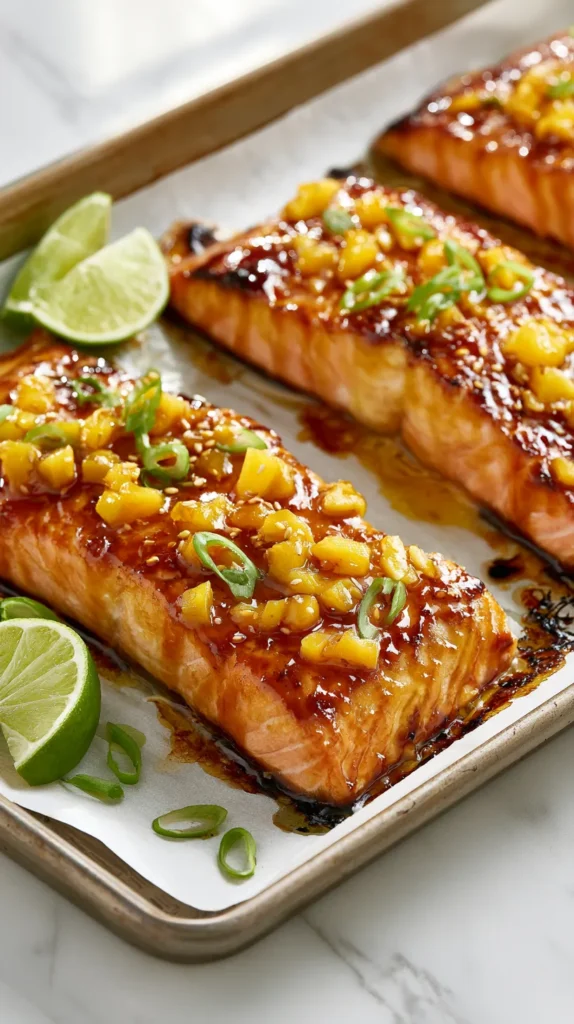
Ingredients For Mango Teriyaki Salmon That Make Sense
The ingredient list for mango teriyaki salmon stays friendly, which I deeply appreciate. Nothing here should send you wandering three stores while muttering in the produce section. Most of it is sauce basics, salmon, mango, and fresh toppings. Simple, but not sleepy.
For the salmon, I like fillets that are close in size. They cook more evenly, so nobody gets the sad overcooked corner piece. Fresh salmon tastes lovely, but thawed frozen salmon works too. Just pat it dry first, because extra moisture blocks browning.
You’ll need:
- 4 salmon fillets, about 6 ounces each
- 1 tablespoon olive oil or avocado oil
- 1/2 teaspoon kosher salt
- 1/4 teaspoon black pepper
- 1 cup diced ripe mango, fresh or thawed frozen
- 1/3 cup low-sodium soy sauce
- 1/4 cup water
- 2 tablespoons honey
- 1 tablespoon rice vinegar
- 2 teaspoons grated fresh ginger
- 2 garlic cloves, minced
- 1 teaspoon sesame oil
- 1 tablespoon cornstarch
- 2 tablespoons cold water, for the slurry
- 2 tablespoons sliced green onions
- 1 tablespoon sesame seeds, optional
- Lime wedges, for serving
Mango choice matters, but not in a dramatic way. A ripe mango should smell fruity and give slightly when pressed. However, frozen mango is a smart backup because it’s already peeled and chopped. I support convenience with both hands.
If your mango tastes very sweet, add another splash of rice vinegar. Meanwhile, if it tastes tart, add a small drizzle of honey. That little adjustment keeps the sauce balanced. It also keeps dinner from tasting like a fruit bowl wearing soy sauce.
One small note about salt deserves attention. Teriyaki flavor can get intense, especially once the glaze thickens. So, low-sodium soy sauce gives you room to adjust. Regular soy sauce works, but taste before adding extra salt.
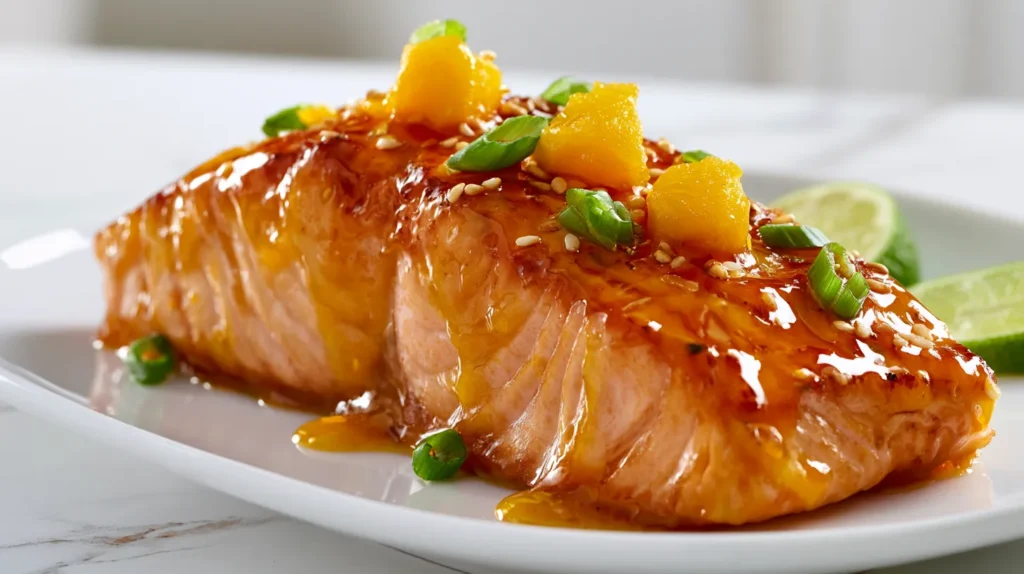
The Sauce Is Where Things Get Interesting
The sauce is where this recipe earns its little spotlight moment. Teriyaki already has that sweet-salty pull, but mango makes it brighter and rounder. Instead of tasting flat, the sauce gets a fresh fruit note that builds slowly. First comes savory flavor. Then comes sunny flavor.
I like to mash some diced mango while the sauce simmers. It thickens the glaze and gives it a more natural texture. However, I don’t blend it completely smooth every time. A few soft mango pieces make the sauce look homemade in the best way.
Here’s the tiny surprise. Mango teriyaki salmon tastes best when the mango blends into the glaze instead of taking over. That’s where the recipe gets more interesting than plain sweet salmon. The fruit adds brightness, but the garlic and ginger keep the sauce sharp.
Rice vinegar adds a clean little bite, while sesame oil gives depth. Soy sauce brings salt and umami, which keeps the mango in dinner territory. Without that savory base, the sauce can taste too soft. With it, everything lands where it should.
Cornstarch helps the glaze cling to the fish. Without it, the sauce may run across the plate and miss half the bites. With it, every forkful gets that glossy mango teriyaki flavor. That’s not fancy. It’s just practical.
Let the sauce simmer until glossy, but don’t cook it until it turns too thick. It should coat a spoon and still move easily. Thick, shiny, and spoonable is the goal. Anything past that starts getting too sticky.
Also, taste the sauce before it touches the salmon. A splash of vinegar can sharpen it. One drizzle of honey can soften it. Tiny tweaks make the whole plate better.
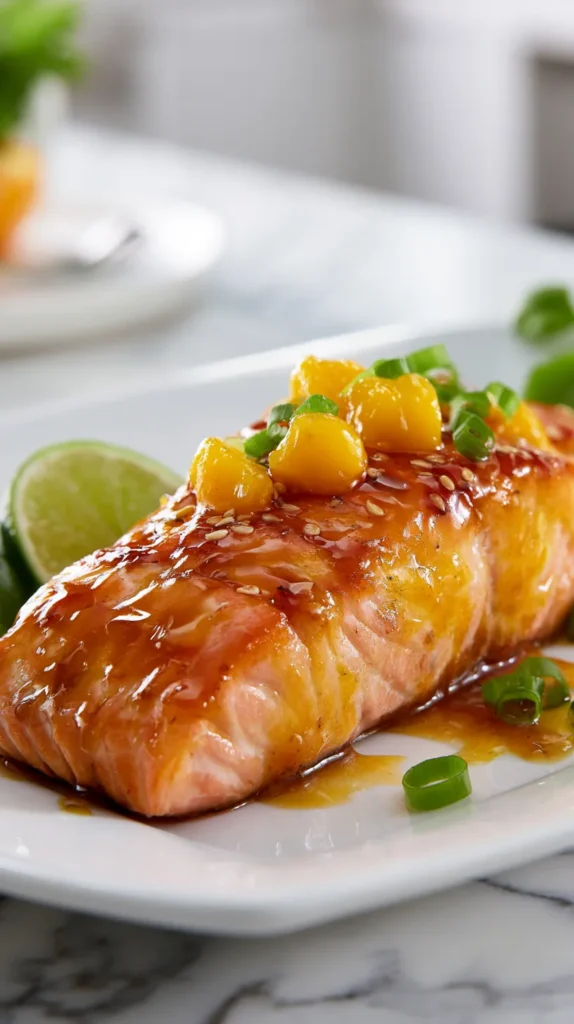
How To Make Mango Teriyaki Salmon Without Fuss
Making mango teriyaki salmon is mostly about timing. The salmon cooks fast, so I like to start the sauce first. That way, nothing sits around getting cold while I panic-chop green onions. Not that such things ever happen. Obviously.
Start with the sauce because it gives the mango time to soften. Then cook the salmon until the edges turn opaque and the center flakes easily. If you use a thermometer, aim for 125°F to 130°F for medium. For fully cooked salmon, use 145°F.
Here’s the process:
- Pat the salmon dry with paper towels.
- Season both sides with salt and pepper.
- Add mango, soy sauce, water, honey, rice vinegar, ginger, garlic, and sesame oil to a small pan.
- Simmer the sauce over medium heat for 5 to 7 minutes.
- Mash some mango pieces with a spoon while the sauce cooks.
- Stir cornstarch with cold water in a small bowl.
- Add the slurry to the sauce and stir until glossy.
- Heat oil in a large skillet over medium heat.
- Cook skin-on salmon skin-side down for 4 to 5 minutes.
- Flip and cook 2 to 4 minutes more, based on thickness.
- Spoon the mango teriyaki glaze over the salmon.
- Add green onions, sesame seeds, and fresh lime juice.
A common mistake is pouring thin sauce over the salmon too soon. Give the glaze a minute to thicken first. However, don’t walk away and reorganize a drawer. The sauce can go from glossy to too thick faster than expected.
A hot pan helps the salmon brown, but screaming-hot heat can dry it out. Medium heat gives better control. Serve it right away while the glaze looks shiny and the salmon stays tender. That’s the whole little secret.

Mango Teriyaki Salmon Tips That Save Dinner
Mango teriyaki salmon stays easy, but a few small choices make it better. The biggest one is moisture. Wet salmon won’t brown well, and watery mango can thin the glaze. So, pat the fish dry and drain thawed mango before cooking.
Another tip is making the sauce before the fish. That order gives you more control and keeps the salmon tender. However, the reverse can turn dinner into a timing circus. I have no interest in that kind of evening sport.
These tips help the recipe stay easy:
- Use low-sodium soy sauce so the glaze doesn’t get too salty.
- Cut mango into small pieces so it softens quickly.
- Add red pepper flakes for sweet heat.
- Use maple syrup instead of honey for deeper flavor.
- Try tamari instead of soy sauce for a gluten-free option.
- Line a baking sheet with parchment if you bake the salmon.
- Keep extra lime wedges nearby because lime brightens the sauce.
Now for the assumption flip. A lot of people think sauce can fix dry salmon. It helps a little, sure, but it doesn’t undo overcooking. The better move is cooking the salmon gently and letting the glaze support it. A little restraint wins here.
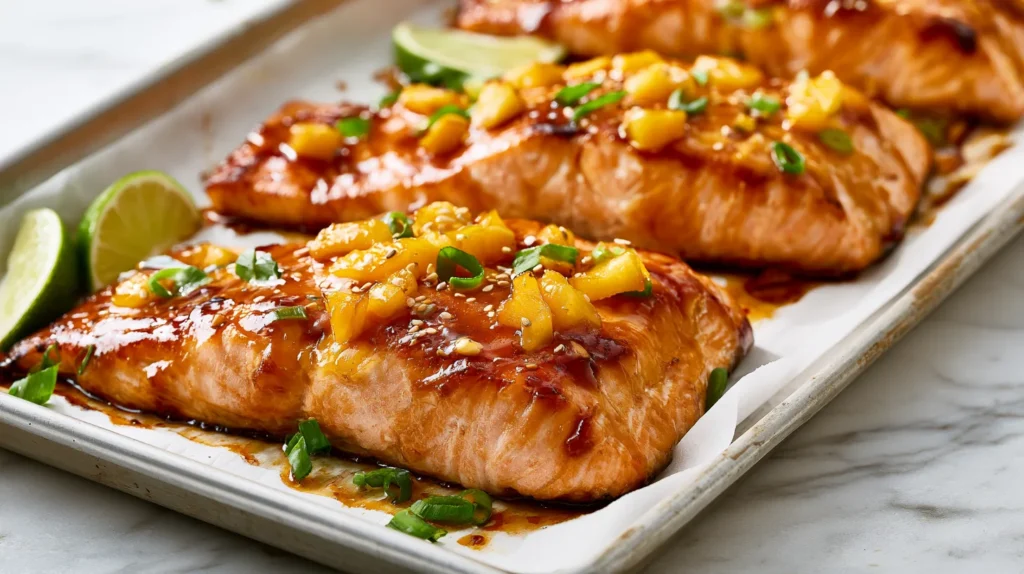
If you want to bake it, place seasoned salmon on a parchment-lined pan. Bake at 400°F for 10 to 13 minutes, depending on thickness. Meanwhile, make the sauce on the stovetop and spoon it over the cooked fish. That method helps when you want less splatter and fewer dishes.
This also makes the recipe easier for busy nights. The oven handles the fish while the sauce handles itself in one small pan. Very civilized. Extremely “I refuse extra cleanup tonight,” which is a whole mood.

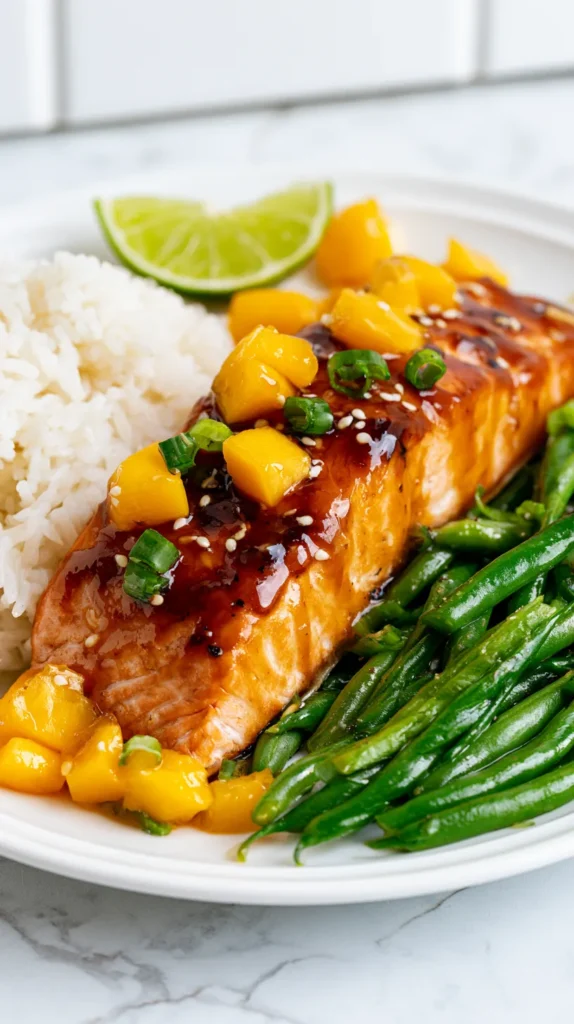
Serving Ideas That Make The Plate Pop
Serving mango teriyaki salmon can go several ways, which makes the recipe more useful. You can keep it light, make it cozy, or turn it into a colorful rice bowl. I love a dinner that gives options without becoming a choose-your-own-chaos situation.
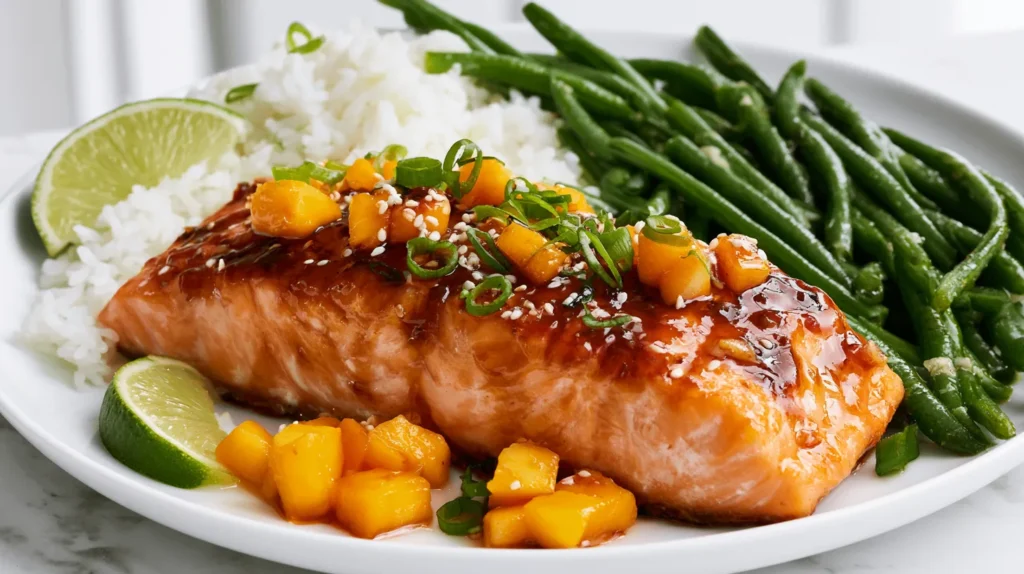
Rice is the obvious choice, and it’s obvious for a reason. The sauce sinks into it beautifully, especially with jasmine rice or coconut rice. However, brown rice gives the plate a nuttier flavor. Cauliflower rice works too, though I’d add extra lime and green onions.
Try serving it with:
- Steamed jasmine rice and cucumber slices
- Coconut rice with lime zest
- Garlic green beans
- Snap peas with sesame seeds
- A crunchy cabbage slaw
- Pineapple cucumber salsa
- Avocado slices and extra lime
- Rice noodles with scallions
- Steamed edamame with sea salt
- A simple mango cucumber salad
The biggest reframe here is that teriyaki doesn’t have to taste heavy. With mango, lime, and crisp vegetables, the whole meal tastes fresh. That contrast gives the salmon a restaurant-style finish without restaurant-level effort.
For a bowl-style dinner, start with rice, then add salmon, sauce, cucumbers, carrots, and avocado. Finish with sesame seeds and a squeeze of lime. It looks bright, it tastes balanced, and it gives “I had a plan” energy. Sometimes dinner just needs good lighting and a green onion flourish.
If you’re serving guests, add the glaze right before plating. Fresh toppings make everything look finished. Tiny effort, big visual reward. I’m very fond of that math. This is also where mango teriyaki salmon becomes flexible, not fussy. One sauce can dress bowls, plates, or leftovers. That gives you wiggle room, which every busy kitchen deserves.

The Sweet Spot Between Fancy And Weeknight
This recipe sits in that very specific dinner zone I love. It tastes like effort, but it doesn’t demand your entire evening. That matters because most of us want pretty food without turning dinner into a personality test. Pretty should not require recovery time.
Mango brings the fun, while teriyaki brings the structure. Together, they make salmon taste special but still familiar. That’s the sweet spot. New enough to be interesting, normal enough that nobody studies it suspiciously before taking a bite.
I tend to notice that weeknight salmon recipes can lean a little plain. Lemon, garlic, butter, done. Lovely, yes. Predictable, also yes. Mango teriyaki salmon gives the same fast-cooking comfort but adds color and a little sparkle. Not glitter sparkle. Dinner sparkle. Important difference.
The glaze also helps with timing. If the salmon finishes a minute before everything else, warm sauce brings back moisture and shine. However, the goal is still tender fish, not sauce camouflage. We are not hiding crimes here.
This dish also photographs well, which matters if you like saving dinner ideas on Pinterest. Orange mango glaze, pink salmon, green onions, and white rice make a bright plate. It looks fresh before anyone even takes a bite. That’s useful when dinner needs curb appeal.
A common assumption says simple food has to look simple. I reject that gently but firmly. Simple food can look gorgeous when the colors do the work. Mango, salmon, lime, and scallions already bring plenty.
That’s why this recipe works beyond one dinner. It’s easy enough for Tuesday, but pretty enough for company. Better yet, it doesn’t ask you to choose between quick and pretty. I consider that a small kitchen victory.

FAQs For This Sweet-Savory Salmon
Can frozen salmon work? Yes. Frozen salmon works well for mango teriyaki salmon when thawed first. Pat it very dry before seasoning, because extra water blocks browning. I like thawing salmon overnight in the fridge for the best texture.
Can canned mango work? Yes. Use canned mango packed in juice, not heavy syrup. Drain it well before adding it to the sauce. Mango nectar tastes sweeter, so use less honey and add extra rice vinegar.
Is this recipe gluten-free? It can be gluten-free if you use tamari instead of soy sauce. Always check labels on sauces, because brands can vary. The rest of the recipe uses naturally gluten-free ingredients.
Can I make the sauce ahead? Yes, you can make the sauce up to three days ahead. Store it in the fridge in a sealed container. Rewarm it gently and add a splash of water if it thickens too much.
What if I don’t like salmon skin? You can use skinless fillets without changing the sauce. Watch the heat because skinless salmon can cook faster. A thin spatula helps keep the fillets from breaking.
Can I make it spicy? Absolutely, and I fully support that choice. Add red pepper flakes, sriracha, or chili garlic sauce to the glaze. Start small, though, because heat builds quickly with sweet sauces.
How do I store leftovers? Store leftovers in an airtight container for up to two days. Reheat gently in a skillet or microwave at lower power. High heat can dry the salmon, and nobody invited that nonsense.
One more thing matters with leftovers. Store extra sauce separately if you can. Then you can reheat the fish gently and spoon warm glaze over the top.
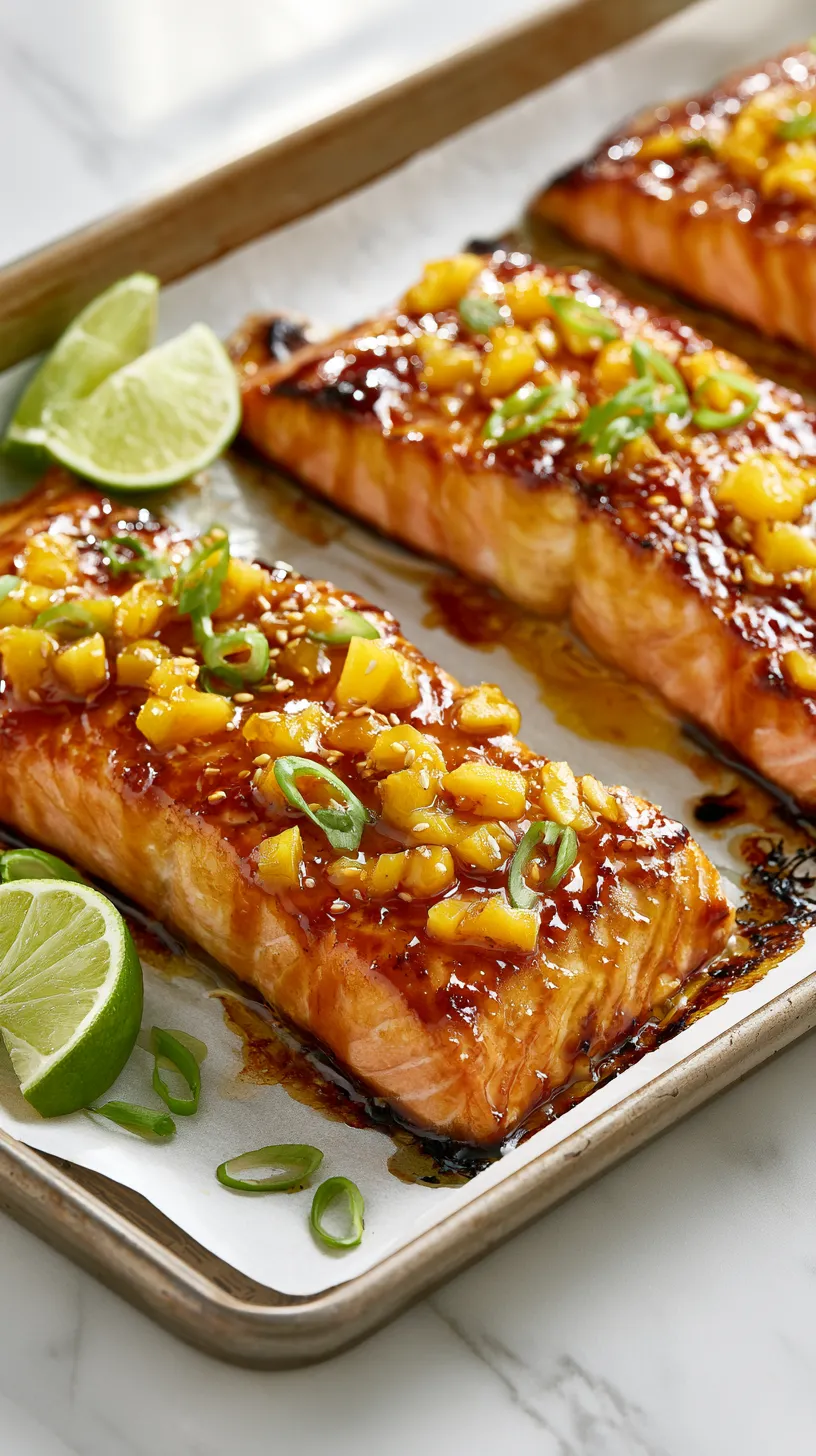
Mango Teriyaki Salmon
Ingredients
Method
- Pat the salmon dry with paper towels.
- Season both sides with salt and pepper.
- Add mango, soy sauce, water, honey, rice vinegar, ginger, garlic, and sesame oil to a small pan.
- Simmer the sauce over medium heat for 5 to 7 minutes.
- Mash some mango pieces with a spoon while the sauce cooks.
- Stir cornstarch with cold water in a small bowl.
- Add the slurry to the sauce and stir until glossy.
- Heat oil in a large skillet over medium heat.
- Cook skin-on salmon skin-side down for 4 to 5 minutes.
- Flip and cook 2 to 4 minutes more, based on thickness.
- Spoon the mango teriyaki glaze over the salmon.
- Add green onions, sesame seeds, and fresh lime juice.
Tried this recipe?
Let us know how it was!
This Is The Kind Of Dinner That Gets Remembered
I love recipes that make dinner brighter without turning the kitchen into a whole event. Mango teriyaki salmon does that in a sneaky way. It starts with regular salmon and a simple sauce. Then the plate turns glossy, colorful, and very ready for compliments.
As a mom, I always notice meals that can look special without needing six pans. This one keeps the work small but gives the plate a big personality. That’s the kind of kitchen math I’ll always take. Less mess, more pretty dinner.
There’s also something satisfying about sweet and savory recipes that don’t lean too hard either way. The mango adds sunshine, the soy sauce adds depth, and the lime keeps everything bright. It’s dinner with a little vacation mood, but nobody needs to pack a bag.
I’d save this one for the nights when plain salmon sounds too responsible. You know those nights. Dinner needs to be easy, but it also needs a little wink. Pinterest loves pretty food, of course, but real life loves food that comes together without chaos.
That’s why this recipe works for me. It’s simple, bright, saucy, and interesting enough to make a regular evening less beige. I also like that it leaves room for little tweaks. Add heat, swap rice, pile on cucumbers, or keep it classic.
Regular dinner can still have main-character energy, even on a plain old weeknight. That’s the part I keep coming back to. And really, beige dinner has had enough chances.