Rhubarb muffins always sound a little old-fashioned, which is exactly why I like them. They’re tart, sweet, soft, and just dramatic enough to keep breakfast from acting boring.
I tend to notice rhubarb gets treated like the odd cousin of spring baking. Strawberries get the parade. Blueberries get the bakery case. Rhubarb gets one polite nod, then everyone moves along. Rude, frankly.
But here’s the tiny kitchen plot twist. Rhubarb brings sharp, fresh flavor that cuts through sugar beautifully. It keeps muffins from tasting flat or overly sweet. That matters, because nobody needs a muffin pretending to be a cupcake before 9 a.m.
As a mom in Orlando, I’m always drawn to baked goods that can handle a bright morning. These muffins have that sunny, casual energy without being sticky, fussy, or fragile. They work for breakfast, brunch, snack time, or that strange hour before dinner. You know that hour. It asks for snacks with theatrical urgency. Tiny comfort, big mood.
I’ve found that the best muffin recipes have one secret. They’re simple, but they don’t taste simple. That’s the whole little wink here. These rhubarb muffins use basic pantry staples and a gentle batter. They also bring enough tart fruit to make every bite interesting. Plus, the recipe has enough structure to behave, but not enough to boss us around. And yes, there’s a crunchy top situation coming, because we are not here to live blandly.
A few links on this page are affiliate links, so if you click and buy, I might earn a small commission. It never costs you more, and it helps support the site. You can read my full disclosure if you’re into the fine print.
Why Rhubarb Muffins Deserve More Hype
Rhubarb has nerve, and I mean that in the best way. It walks into a basic muffin batter and brings tart flavor fast. However, it doesn’t need glitter, frosting, or a dramatic bakery box. It just needs enough sweetness to balance the sharp edge.
I think that’s why rhubarb muffins work so well for real life. They taste fresh without acting fancy. Plus, they make breakfast seem planned. That helps when the morning plan was “please let coffee happen first.”
The common assumption is that rhubarb needs strawberries to behave. Cute thought. Not true. Strawberries are lovely, of course, but rhubarb can carry a muffin on its own. Its tang keeps the crumb lively, especially with vanilla and brown sugar nearby.
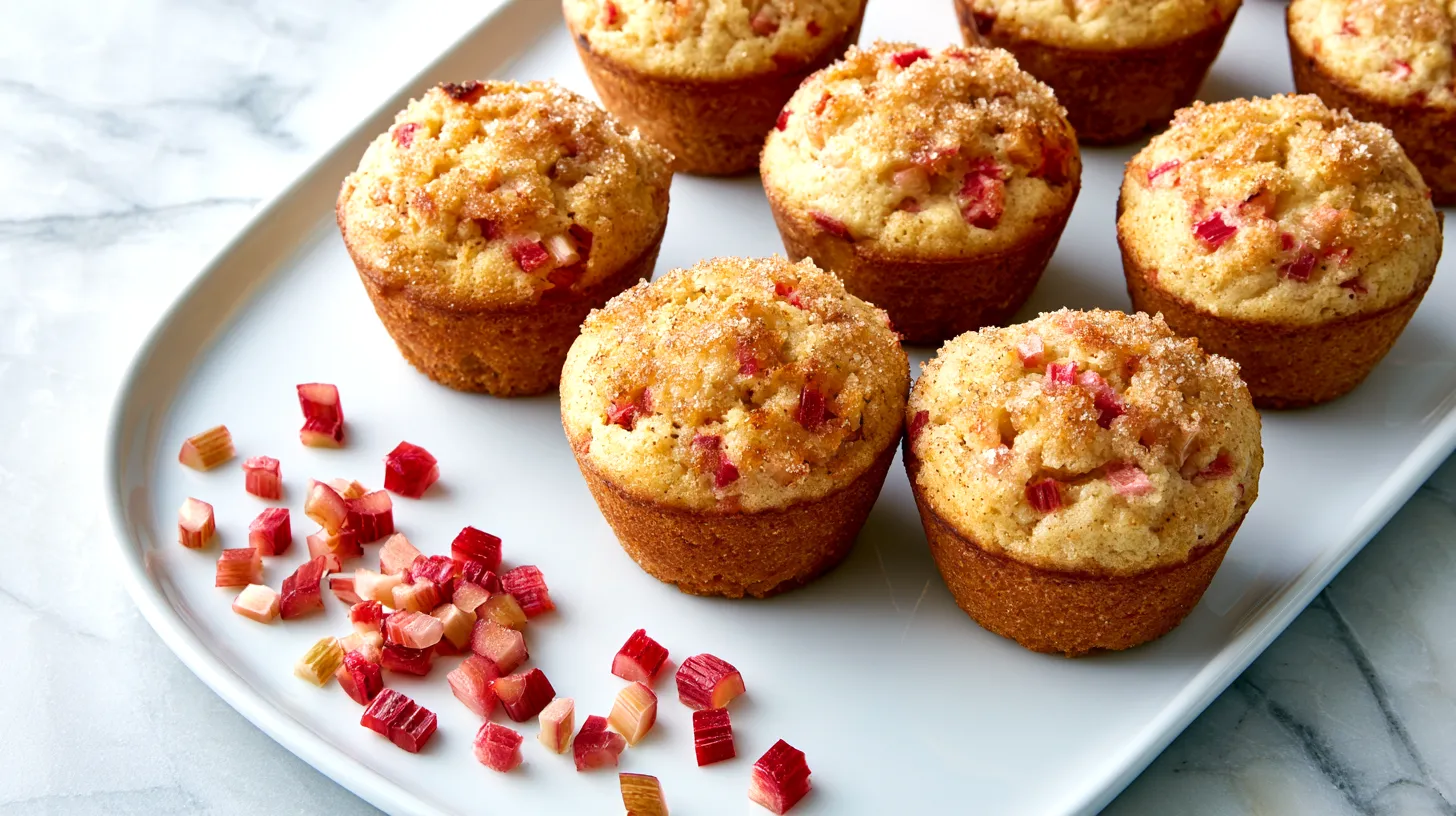
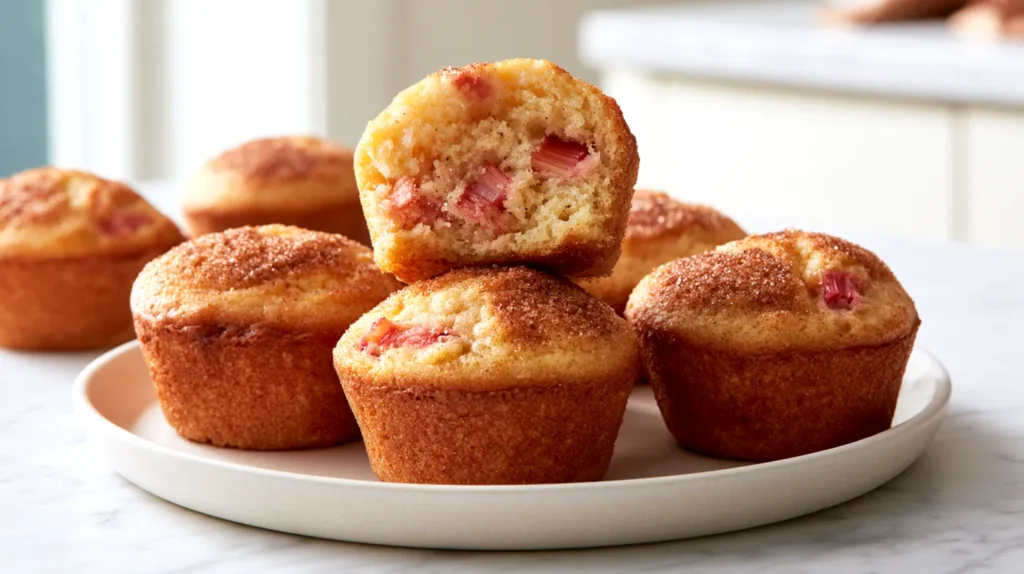
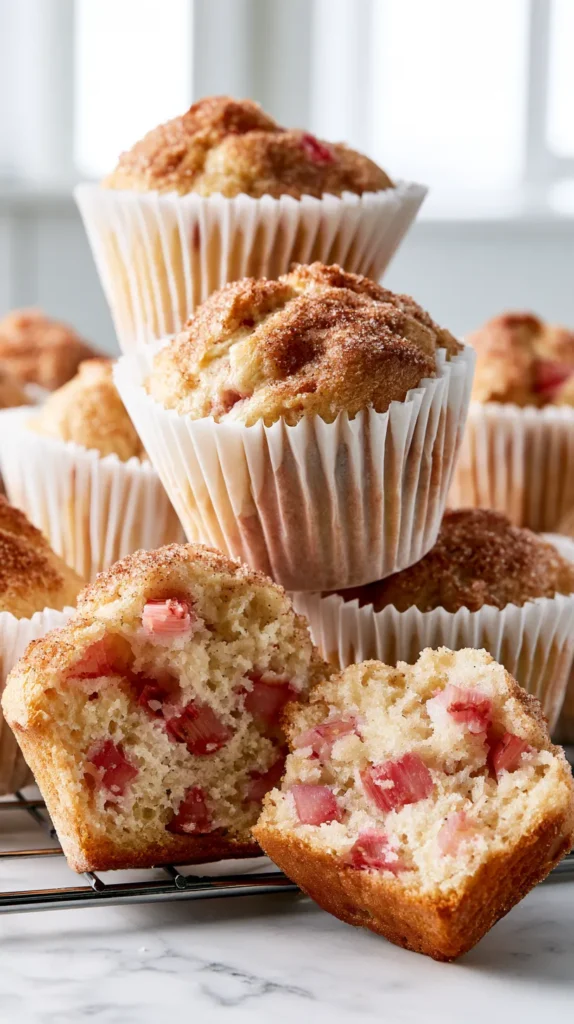
You also get texture without trying too hard. The chopped rhubarb softens in the oven, but it doesn’t disappear. So each bite has little tart pieces tucked inside the soft crumb. That contrast matters more than people admit.
Another reason I like rhubarb here? It keeps sweetness in check. A muffin should taste like a treat, not like dessert wearing a cardigan. These land in that cozy middle space. Sweet enough. Tart enough. Interesting enough.
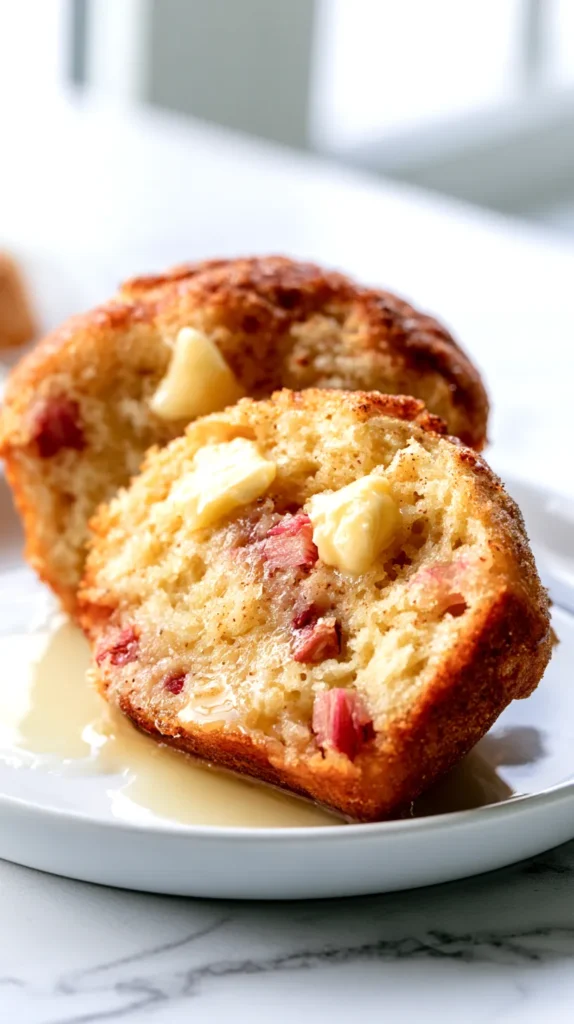
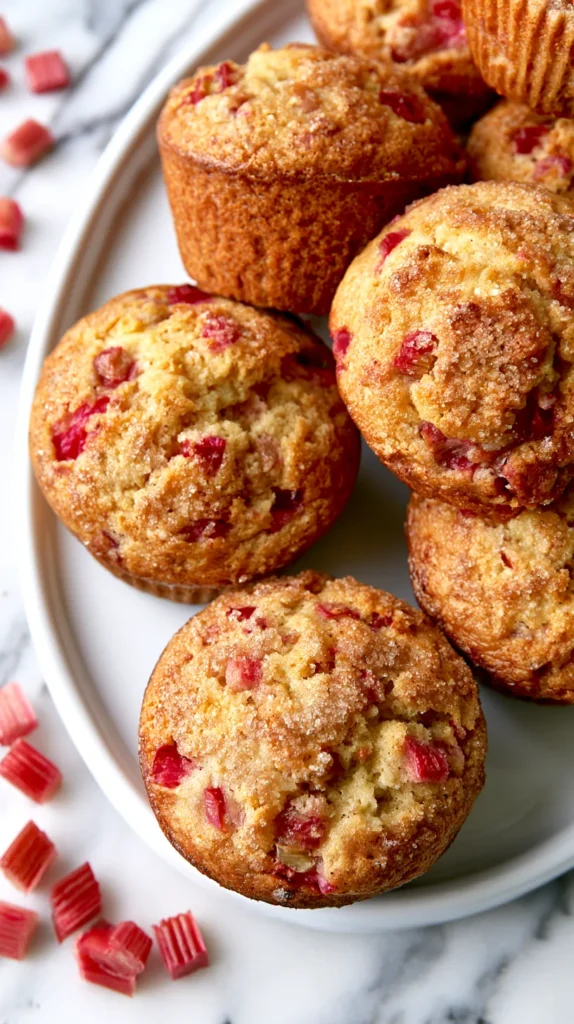
And the color helps, too. Pink and pale green rhubarb pieces make the muffins look charming first. That’s not everything, obviously. But let’s not pretend pretty muffins don’t get grabbed early. The quiet ones sometimes win breakfast. These just happen to wear pink.
Also, rhubarb makes muffins taste seasonal without needing a theme party. That’s useful when spring produce shows up and everyone panics politely. You don’t need a pie crust. A bowl, a pan, and reasonable expectations will do.

Ingredients For Bright Tender Rhubarb Muffins
The ingredient list stays friendly, which I appreciate deeply. Nobody needs a recipe that asks for three specialty flours and emotional stamina. These rhubarb muffins use simple ingredients, but each one has a job.
For the muffins and crunchy top, you’ll need:
- 2 cups all-purpose flour, spooned and leveled
- 3/4 cup granulated sugar
- 1/4 cup packed light brown sugar
- 2 teaspoons baking powder
- 1/2 teaspoon baking soda
- 1/2 teaspoon fine salt
- 1/2 teaspoon cinnamon
- 2 large eggs, at room temperature
- 1/2 cup sour cream, at room temperature
- 1/2 cup whole milk, at room temperature
- 1/2 cup neutral oil, like canola or vegetable oil
- 2 teaspoons vanilla extract
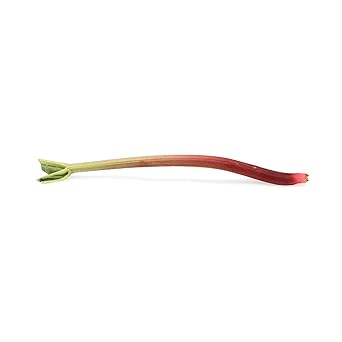
- 1 1/2 cups fresh rhubarb, diced small
- Topping: 2 tablespoons granulated sugar
- Topping: 1/4 teaspoon cinnamon
- Topping: 1 tablespoon melted butter
Fresh rhubarb works best because it keeps a clean tart bite. However, frozen rhubarb can work too. Use it straight from frozen, and pat away extra ice if needed. Don’t thaw it into a sad little puddle. That’s where trouble starts.
Small pieces matter here. Large chunks can sink, leak, or make the muffins bake unevenly. I like a small dice because it spreads flavor through every bite. That way, nobody gets one huge tart pocket and then three plain bites.
Also, measure the flour with a light hand. Spoon it into the cup, then level it off. Packed flour makes dry muffins, and dry muffins are rude. Balance, darling. We’re after balance. If your rhubarb stalks look very thin, use a little extra. Thick stalks may need a few tough strings trimmed first. Color matters less than freshness.

The Simple Mixing Process That Protects The Crumb
Muffin batter likes a light hand. That sounds fussy, but it really means one thing. Don’t stir like you’re mad. Overmixing builds gluten, which can make muffins tough. Nobody wants chewy muffins unless something has gone wildly off-script.
Start by heating the oven to 375°F. Line a 12-cup muffin pan with paper liners, or grease it well. Then stir the topping ingredients together in a small bowl. Set that aside, because future you deserves nice things.
In a large bowl, whisk the flour, sugars, baking powder, baking soda, salt, and cinnamon. Make sure the brown sugar lumps break up. Those little clumps look innocent, but they can hide dry pockets.
Keep the mixing rhythm simple:
- Whisk dry ingredients first.
- Whisk wet ingredients second.
- Fold everything gently last.
In another bowl, whisk the eggs, sour cream, milk, oil, and vanilla until smooth. Next, pour the wet mixture into the dry mixture. Stir with a spatula until the flour almost disappears.
Then comes the reset. Stop before the batter looks perfect.
Add the diced rhubarb and fold gently. A few small streaks of flour are fine. In fact, they’re better than overworked batter. Divide the batter among the muffin cups, filling each one about three-fourths full.
Here’s the tiny drama: the batter may look thick. Good. Thick batter helps suspend the rhubarb pieces. Thin batter lets fruit sink fast, which causes uneven bites.
Sprinkle the cinnamon sugar topping over each muffin. Add a little to every cup, because fairness matters. Then the oven handles the rest. The process for rhubarb muffins stays simple, but the gentle mixing changes everything. That’s the part people rush, and it shows. Slow hands, better crumb. Tiny phrase, big payoff.
Why Sour Cream Makes Rhubarb Muffins Better
Sour cream deserves more credit in baking. It sounds like a sidekick ingredient, but it quietly does excellent work. In rhubarb muffins, it adds moisture without making the batter thin. That matters because rhubarb already brings juice.
I’ve found that sour cream also softens the tart edge. It doesn’t erase the rhubarb flavor. Instead, it rounds everything out so the muffins taste balanced. Think bright, not sharp. Cozy, not heavy.
Some muffin recipes use only milk. That works, but milk alone can make the crumb less rich. Sour cream gives the muffins a tender texture with more body. Plus, the slight tang plays nicely with the rhubarb. That little match-up is where things get good.
The common belief says more sugar fixes tart fruit. I disagree with my whole spatula. More sugar can flatten the flavor. It can also make muffins taste sticky instead of fresh. Sour cream solves the problem in a smarter way.
Now, let’s talk substitutions. Plain whole-milk yogurt can work if that’s what you have. Greek yogurt can make the batter thicker, so loosen it with a splash of milk. Buttermilk also works, though the crumb may bake a little lighter.
Still, sour cream gives the best balance here. It keeps the middle soft, the edges tender, and the flavor bright. That’s the quiet little payoff. The ingredient that sounds boring does the most charming work.
If sour cream feels odd in muffins, I get it. However, baking often rewards the less obvious choice. Butter brings flavor, but oil keeps softness longer. Sour cream brings that extra tender bite. Together, they make rhubarb muffins taste bakery-level without getting dramatic at all.

How To Bake Them Without Dry Edges
Dry muffin edges usually come from two things: too much baking time or too little fat. Since this recipe has oil and sour cream, the bigger risk is overbaking. Therefore, the oven timing matters more than people think.
Bake the muffins at 375°F for 18 to 22 minutes. Start checking at 18 minutes, especially if your oven runs hot. A toothpick should come out clean or with a few moist crumbs. Wet batter means they need more time.
Use these small checks before calling them done:
- Tops should look set and lightly golden.
- Centers should spring back when touched gently.
- Rhubarb near the top may look juicy, not raw.
- Paper liners should pull slightly from the pan edges.
- Your kitchen should smell like cinnamon and tart fruit, not burnt sugar.
Once baked, let the muffins rest in the pan for 5 minutes. Then move them to a wire rack. This keeps the bottoms from steaming too much. Steamy bottoms sound funny. They are not a baking goal.
Here’s the reframe: muffins keep baking after they leave the oven. So pulling them at the right moment matters. If you wait until every crumb looks bone-dry, the muffins will cool dry too.
Avoid slicing one open right away. I know. Cruel. However, the crumb sets as the muffins cool. Give them 15 minutes, and the texture improves. That tiny wait makes the inside softer and neater. Breakfast patience is annoying, but useful.
Also, don’t crowd the oven with another pan. Good heat flow helps the tops rise evenly. One muffin pan in the center rack works best. Simple setup, better rhubarb muffins. I’ll take that bargain.
Smart Tips For Storing Rhubarb Muffins
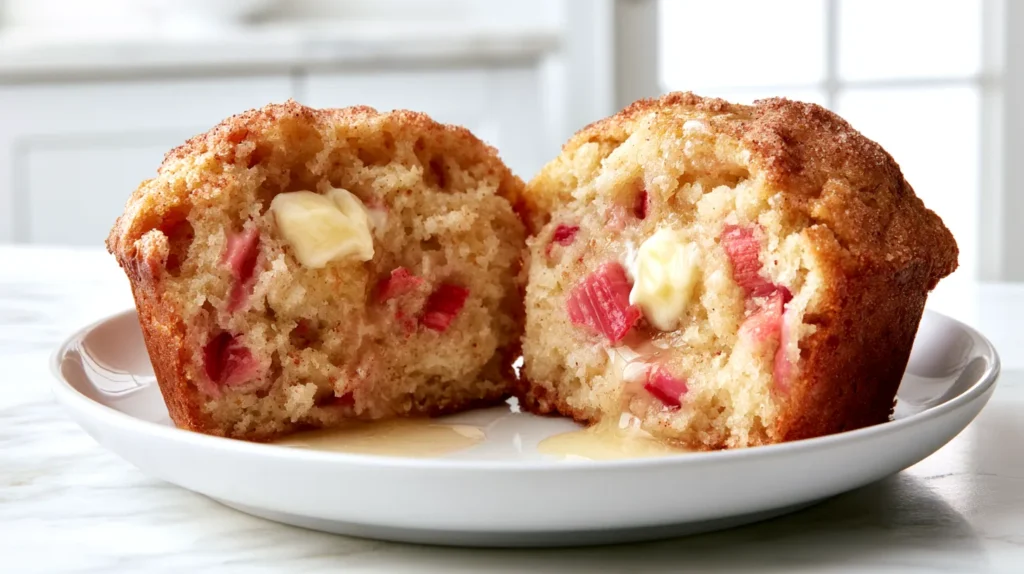
Rhubarb muffins store well, but they do need a little care. Because rhubarb has moisture, the tops can soften after a day. That doesn’t ruin them. It just means the crunchy top becomes more tender.
I like to cool muffins fully before storing them. Warm muffins create steam, and steam makes everything damp. So let them sit on a wire rack until no heat remains. Then place them in an airtight container lined with a paper towel.
Add another paper towel over the top before closing the lid. That small move catches extra moisture. It helps the muffins stay soft without turning sticky. Simple, but weirdly effective.
At room temperature, they keep well for two days. In the fridge, they last up to five days. However, the fridge can dull the texture. A few seconds in the microwave can help bring back softness.
Freezing works beautifully, too. Wrap cooled muffins one at a time in plastic wrap. Then place them in a freezer bag for up to three months. Label the bag, unless you enjoy freezer mystery roulette.
To reheat, unwrap one muffin and microwave it for 20 to 30 seconds. You can also warm it in a 300°F oven for 8 to 10 minutes. The oven method gives the best texture, especially for the top.
Here’s the sneaky truth. These muffins taste even better after resting for a few hours. The rhubarb settles into the crumb, and the flavor becomes rounder. So yes, make-ahead baking gets a tiny crown today.
If you serve them the next morning, warm them lightly first. That small step revives the texture. It also makes the cinnamon topping taste fresher. Tiny effort, lovely payoff.
Serving Suggestions That Make Them Look Special
Serving muffins can be extremely casual, which I respect. Still, a few small touches make them look more brunch-worthy. These rhubarb muffins already bring color and flavor, so you don’t need much.
For breakfast, serve them with:
- Salted butter, softened just enough to spread
- Cream cheese with a little honey stirred in
- Fresh strawberries or raspberries on the side
- Scrambled eggs for a more filling plate
- Hot coffee, iced coffee, or black tea
For brunch, I like the idea of setting them on a cake stand. It sounds slightly extra, which is the point. Add a small bowl of butter nearby, and suddenly muffins look planned. We love a low-effort illusion.
You can also split a muffin and toast it lightly. Then add butter so it melts into the crumb. This works especially well on day two. Slightly toasted edges bring back that fresh-baked mood.
For a sweeter plate, dust the tops with powdered sugar right before serving. Don’t do it too early, because the sugar can melt into the muffin. Last-minute dusting looks prettier and stays cleaner.
Here’s the little twist. These muffins also work after dinner. Serve one warm with vanilla ice cream, and it becomes dessert without a whole production. Not every dessert needs a spotlight and a speech.
If you’re packing them for a picnic, wrap them once cooled. Add napkins, because rhubarb can leave tender pink spots. Cute? Yes. Convenient? Not always. Still worth it, though.
For a spring brunch board, add fruit, butter, jam, and small plates. Then tuck the muffins between everything like you planned harder than you did. That is my favorite kind of hosting math. Very simple math.
Real-Life FAQs For This Tart Spring Bake
Can I use frozen rhubarb? Yes, frozen rhubarb works well in this recipe. Use it straight from the freezer, and remove extra ice first. Avoid thawing it fully, because thawed rhubarb releases too much liquid.
Do I need to peel rhubarb? Usually, no. Most rhubarb stalks bake well without peeling. However, you can pull away very stringy outer pieces if they bother you. Just don’t overthink it.
Can I add strawberries? Yes, but keep the total fruit at 1 1/2 cups. Use 1 cup rhubarb and 1/2 cup diced strawberries. More fruit can make the muffins too wet.
Why did my muffins sink? They may have too much liquid, too much fruit, or underbaked centers. Also, opening the oven door too early can cause sinking. Muffins like steady heat, not dramatic temperature swings.
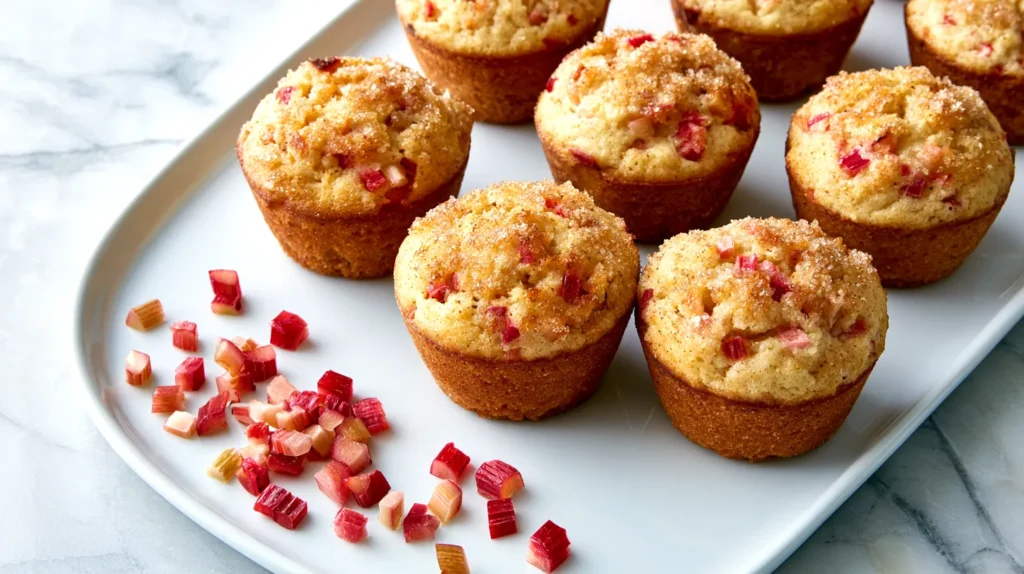
Can I make mini muffins? Yes, use a mini muffin pan and bake for 10 to 13 minutes. Check early, because small muffins can overbake fast. The tops should spring back gently.
Can I make these dairy-free? You can try unsweetened dairy-free milk and dairy-free sour cream. Choose a thick sour cream substitute for the best texture. Thin swaps can change the batter.
How do I know rhubarb is safe to use? Use only the stalks, not the leaves. Rhubarb leaves are not safe to eat. Trim them away fully before chopping the stalks.
If you remember one thing, remember the batter texture. Thick batter, small rhubarb pieces, and gentle mixing do the heavy lifting. Everything else is just kitchen confidence with a muffin pan. That’s the practical part hiding under the pretty top. Useful, but still very, very cute.
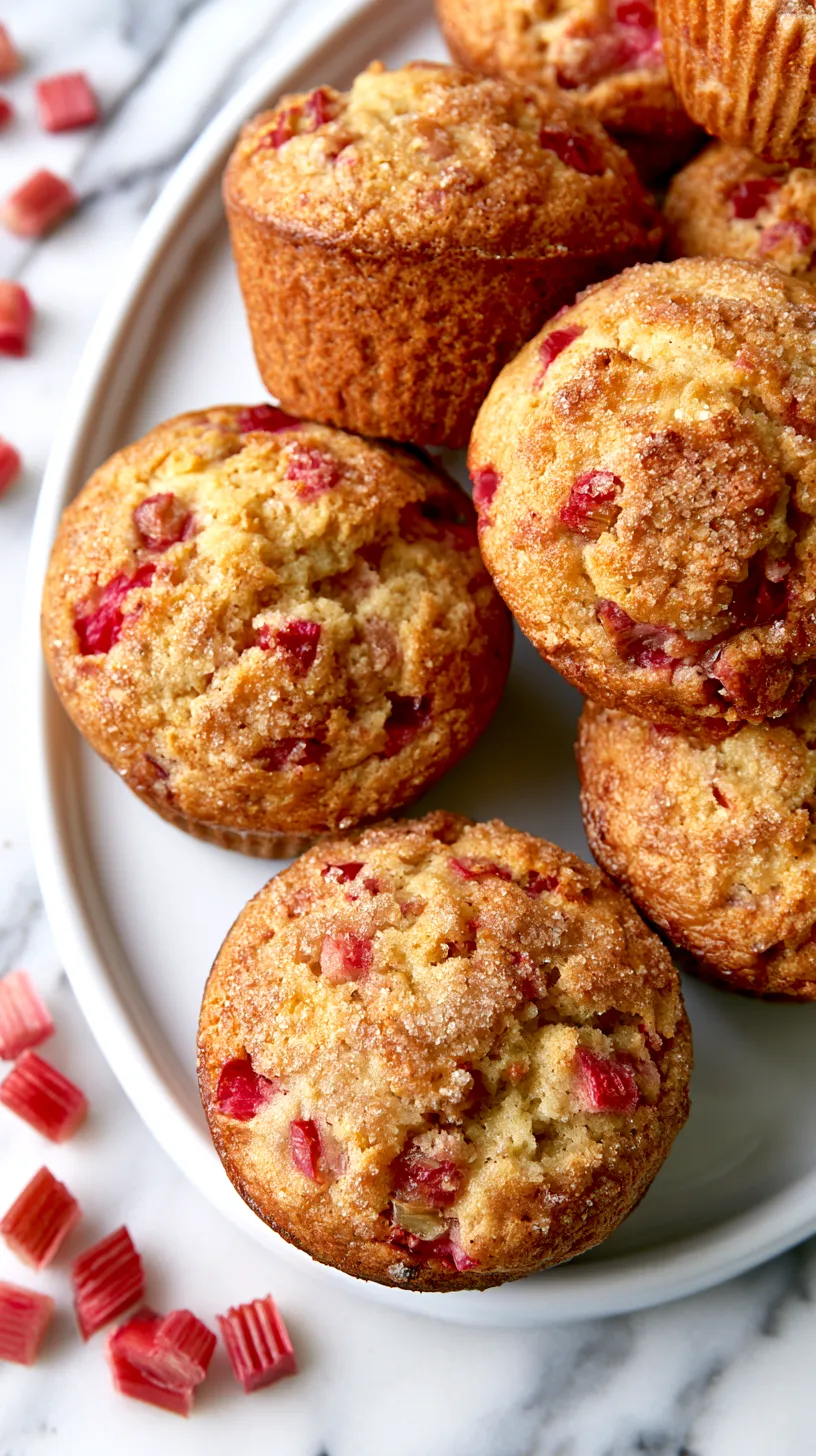
Rhubarb Muffins
Ingredients
Method
- Preheat the oven to 375°F.
- Line a 12-cup muffin pan with paper liners, or grease it well.
- Stir the topping ingredients together in a small bowl.
- Set the topping aside.
- In a large bowl, whisk the flour, granulated sugar, brown sugar, baking powder, baking soda, salt, and cinnamon.
- Break up any brown sugar lumps.
- In another bowl, whisk the eggs, sour cream, milk, oil, and vanilla until smooth.
- Pour the wet mixture into the dry mixture.
- Stir with a spatula until the flour almost disappears.
- Stop mixing before the batter looks completely smooth.
- Add the diced rhubarb.
- Fold the rhubarb gently into the batter.
- Divide the batter among the muffin cups, filling each one about three-fourths full.
- Sprinkle the cinnamon sugar topping over each muffin.
- Bake for 18 to 22 minutes.
- Start checking the muffins at 18 minutes.
- Bake until the tops look set and lightly golden.
- Check that a toothpick comes out clean or with a few moist crumbs.
- Let the muffins rest in the pan for 5 minutes.
- Move the muffins to a wire rack.
- Let the muffins cool for about 15 minutes before slicing or serving.
Tried this recipe?
Let us know how it was!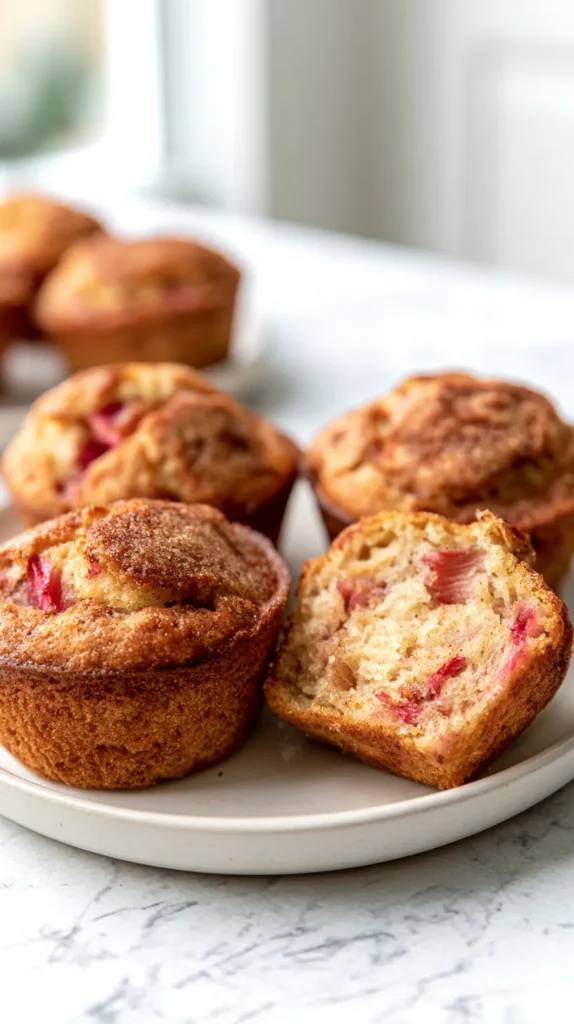
The Muffin Moment I’d Happily Repeat
I’ve found that recipes like this earn their place slowly. They’re not loud, trendy, or covered in twelve toppings. Instead, they keep showing up in useful little ways. Breakfast, brunch, snack plates, and coffee all give them room.
That’s why rhubarb muffins make so much sense to me. They bring enough tart flavor to keep things interesting, but they still taste familiar. I like that balance. It’s a little cozy and a little fresh, like spring wandered into the kitchen with opinions.
Living in Orlando, I lean hard into recipes that don’t sit heavy on bright mornings. These muffins fit that mood beautifully. They’re easy to serve, easy to freeze, and pretty enough for Pinterest without needing a full styling committee.
And because I’m a mom, I appreciate any recipe that works across several moments. A muffin can sit on a breakfast plate, slip into a lunchbox, or rescue a late-afternoon snack spiral. That kind of useful charm deserves respect.
So yes, I’m voting for more rhubarb in everyday baking. Not just pies, and not just jam. Muffins, too. Especially muffins with tart little pockets, soft centers, and cinnamon sugar tops. That’s the kind of quiet kitchen win I’ll take any day.
There’s also something sweet about a recipe that doesn’t try too hard. It just shows up, tastes bright, and makes the counter look better. Some recipes shout for attention; this one just gets eaten first. That is my kind of kitchen wink.