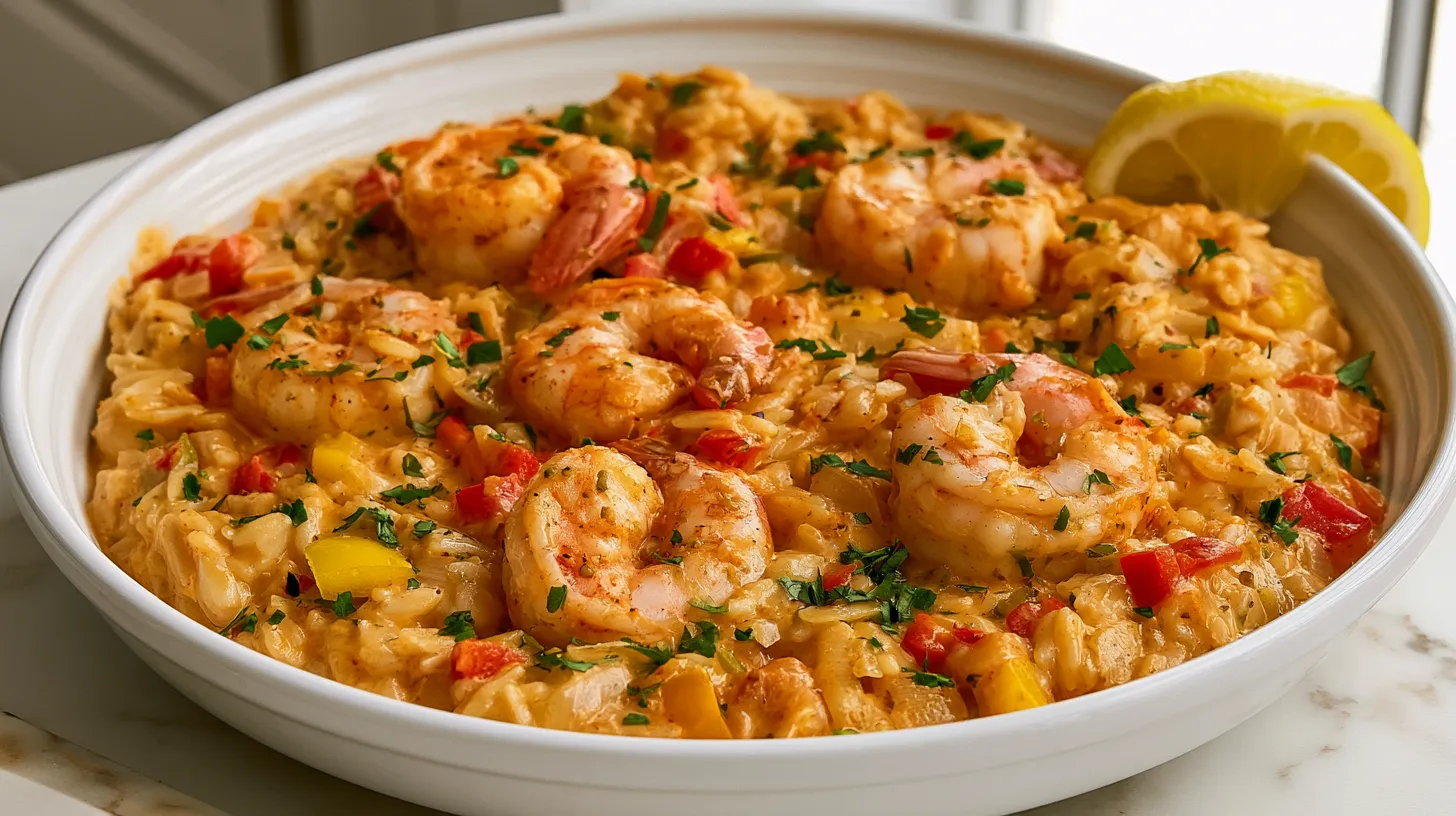
I tend to trust any dinner that starts with shrimp, garlic, and a little skillet noise. Cajun shrimp orzo has that weeknight drama I love, without asking me to wash four pans afterward. It looks a little fancy, yet it still belongs on a regular Tuesday.
There’s something deeply satisfying about tiny pasta soaking up Cajun seasoning, cream, parmesan, lemon, and sweet bell peppers. The whole thing tastes cozy, but not sleepy. It has heat, but it doesn’t bully anyone at the table. As a mom in Orlando, I appreciate dinners that taste fresh enough for warm weather too.
I’ve found that shrimp dinners can get weird fast when they try too hard. Too much sauce, too much spice, or shrimp cooked into little pink erasers? No thank you. This one keeps its manners, which is more than I can say for some dinner recipes. It gives enough flavor to feel special, without acting like it needs applause.
So, yes, this skillet has creamy comfort. However, it also has citrus, color, and a little Cajun sass. The best part sneaks in later, because the orzo does something almost unfair in the pan. That tiny pasta turns the sauce into something spoonable, glossy, and very hard to stop tasting. Also, it makes the whole skillet feel generous without costing much. That matters when dinner needs to satisfy everyone without feeling like a whole production. And that, my friend, is where this dinner gets fun.
A few links on this page are affiliate links, so if you click and buy, I might earn a small commission. It never costs you more, and it helps support the site. You can read my full disclosure if you’re into the fine print.
Why Cajun Shrimp Orzo Works So Dang Well
Cajun shrimp orzo works because it gives you contrast without making dinner complicated. The shrimp cooks fast, the orzo turns creamy, and the vegetables bring color. I like recipes that understand the assignment and don’t make me babysit twelve separate parts.
The Cajun seasoning brings smoky heat, while the cream keeps everything smooth. Then parmesan adds salty richness, and lemon cuts through the whole situation. That last squeeze matters more than people think. Without it, the skillet can taste good but a little too comfortable.
Here’s the sneaky part. Orzo looks like rice, but it cooks like pasta. So it soaks up broth, seasoning, and cream while still giving that soft little bite. This makes cajun shrimp orzo taste fuller than a plain shrimp pasta dish. It also keeps the sauce close, which means every spoonful has flavor.
Bell peppers and onions also do more than decorate the pan. They soften, sweeten, and balance the seasoning. Garlic joins later, because garlic burns fast and nobody invited bitter garlic to dinner. Timing sounds boring, but it saves the whole mood.
I’ve found that the best skillet meals have one main trick. They make every ingredient pull weight. Nothing sits around looking cute for no reason. Here, shrimp brings protein, orzo brings comfort, and lemon keeps each bite awake.
A lot of people assume creamy pasta must taste heavy. Not here. The sauce clings, the spice stays lively, and the lemon keeps the bowl bright. That’s the small twist that makes this recipe worth repeating. Once that balance clicks, the whole skillet tastes planned, not patched together, which is the goal.

Ingredients For Creamy Cajun Shrimp Orzo
This cajun shrimp orzo starts with basic ingredients, which is exactly why I like it. Nothing feels precious, but the finished skillet still looks thoughtful. I’m always here for “small effort, big applause” energy, especially on busy nights.
You’ll need these ingredients:
- 1 pound large shrimp, peeled and deveined
- 1 tablespoon Cajun seasoning, divided
- 1 tablespoon olive oil
- 2 tablespoons butter, divided
- 1 small yellow onion, diced
- 1 red bell pepper, diced
- 1 yellow bell pepper, diced
- 3 garlic cloves, minced
- 1 cup dry orzo
- 2 cups low-sodium chicken broth
- 1/2 cup heavy cream
- 1/2 cup freshly grated parmesan cheese
- 1 tablespoon fresh lemon juice
- 1 teaspoon lemon zest
- 1/4 teaspoon black pepper
- 1/4 teaspoon salt, plus more to taste
- 2 tablespoons chopped parsley, optional
I prefer large shrimp here because they stay juicy and don’t disappear into the orzo. However, medium shrimp still work if that’s what you have. Just watch them closely because smaller shrimp cook quickly. The goal is tender shrimp, not seafood confetti hiding in the skillet.
Freshly grated parmesan also matters. Pre-shredded cheese can turn grainy, and this skillet deserves better behavior. If you only have the tub stuff, use it, but expect a softer finish. I say that with affection and mild cheese concern.
Cajun seasoning brands vary a lot. Some taste salty, some taste smoky, and some come in swinging. Therefore, start with the recipe amount, then adjust near the end. Cajun shrimp orzo should taste bold, not like someone dropped the spice cabinet. The flavor should build slowly, then finish with that lemony lift at the end.
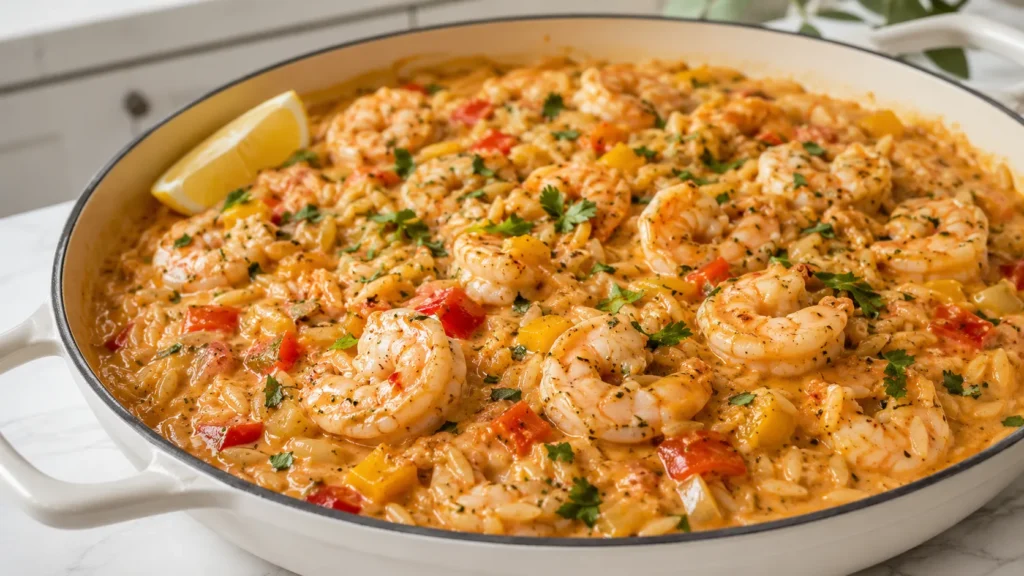
The Bell Pepper Trick That Makes The Skillet Better
Bell peppers look simple, but they can change the whole skillet. I like red and yellow here because they taste sweet and look cheerful. Green bell pepper works too, but it brings a sharper flavor. That can be great, if you want a little bite.
The trick is giving the peppers and onion enough time before adding garlic. This sounds small, yet it makes a big difference. Onion needs a few minutes to soften. Peppers need time to lose their raw edge. Garlic needs less time because it can go from fragrant to tragic fast.
I’ve found that this step sets the flavor for the whole recipe. If the peppers stay too crisp, the cajun shrimp orzo can taste unfinished. However, if they soften just enough, they blend into the creamy sauce beautifully. That is where the skillet starts tasting layered, not rushed.
Another little reframe here: vegetables in creamy pasta shouldn’t feel like an apology. They should make the dish better. These peppers add sweetness, color, and texture, not some sad “at least we tried” dinner energy. That matters because creamy dishes need little lifts.
A hot skillet helps too. You don’t need restaurant heat, but you do want a real sizzle. That sizzle keeps the vegetables from steaming into bland little squares. Nobody wants that.
Then the orzo enters and picks up all those browned bits. This is where the recipe starts to get smug. You’ll see the pasta toast slightly, the color deepen, and the pan smell like dinner has a plan. That’s when I think, “Okay, now we’re getting somewhere.” The pan looks colorful, the garlic smells rich, and the orzo starts looking important.

How To Make Cajun Shrimp Orzo Without Kitchen Chaos
Cajun shrimp orzo sounds a little dressed up, but the process stays friendly. The main thing is cooking the shrimp first, then pulling it from the skillet. Shrimp needs respect, not a 20-minute simmer.
This recipe serves 4 people. It takes about 15 minutes to prep and 25 minutes to cook. So the total time lands near 40 minutes, which feels fair for a creamy skillet dinner.
Steps:
- Pat the shrimp dry with paper towels.
- Toss shrimp with 2 teaspoons Cajun seasoning.
- Heat olive oil and 1 tablespoon butter in a large skillet.
- Cook shrimp for 1 to 2 minutes per side.
- Transfer shrimp to a plate once pink and opaque.
- Add remaining butter, onion, and bell peppers to the skillet.
- Cook for 5 to 6 minutes, stirring often.
- Add garlic and cook for 30 seconds.
- Stir in orzo, remaining Cajun seasoning, salt, and pepper.
- Toast orzo for 1 minute while stirring.
- Pour in chicken broth and bring it to a gentle simmer.
- Cover and cook 9 to 11 minutes, stirring often.
- Lower heat, then stir in cream and parmesan.
- Add lemon juice and lemon zest.
- Return shrimp to the skillet.
- Cook 1 minute, just until warmed through.
- Sprinkle with parsley, then serve warm.
The cover matters, but stirring matters too. Orzo can stick if left alone too long. So keep it moving every few minutes. That tiny bit of attention keeps the sauce creamy instead of clumpy.
If the sauce looks loose, give it a minute. The orzo thickens as it sits. That’s not a flaw. Think of it as dinner settling into itself, which sounds dramatic but very accurate.

The Creamy Sauce Situation Is Where People Panic
Cream sauce makes people nervous, and I get it. One second, everything looks glossy. Then the next second, someone worries it might split, thicken too much, or taste bland. Kitchen drama loves dairy, which feels rude.
The easiest fix is keeping the heat low when the cream goes in. You don’t need a rolling boil at that point. The orzo already cooked in the broth, so the cream only needs gentle heat. That keeps the sauce smooth and rich.
Parmesan should go in after the cream, not before. Stir it slowly and let it melt into the sauce. If you dump cold cheese into fierce heat, it may clump. We’re making dinner, not testing cheese’s patience.
This is also where the lemon earns its keep. Cajun shrimp orzo can taste rich without that bright finish. Lemon juice sharpens the sauce, while zest adds clean citrus flavor. Together, they stop the cream from tasting flat. That little hit of acid pulls everything forward.
A common assumption says more cream means better sauce. I disagree. Too much cream can mute the Cajun seasoning and bury the shrimp. Half a cup gives enough silk without turning the skillet into soup. Nobody needs spoon-standing sauce unless that was the plan.
If the sauce gets too thick, add a splash of broth. When it tastes too mild, add a pinch of Cajun seasoning. Small moves work better than wild overcorrections. That’s very annoying, but annoyingly true. The pan usually needs a nudge, not a rescue mission. That little bit of patience keeps the sauce glossy, calm, and ready for juicy shrimp again.
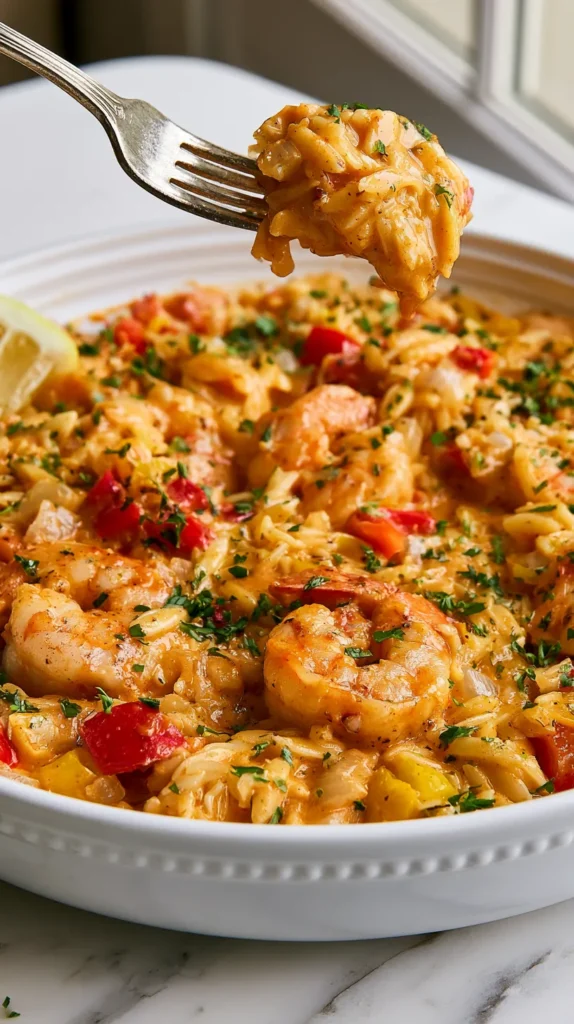
Cajun Shrimp Orzo Tips For Better Texture
Cajun shrimp orzo tastes best when the shrimp stays tender and the orzo stays creamy. That sounds obvious, but this recipe can swing too soft if nobody watches the pan. I like a creamy skillet, not a paste situation.
Keep these tips close:
- Dry the shrimp well before seasoning.
- Use a wide skillet so ingredients cook evenly.
- Don’t crowd the shrimp while searing.
- Remove shrimp as soon as it turns opaque.
- Stir the orzo often while it simmers.
- Add more broth if the pan dries too quickly.
- Use fresh parmesan for a smoother sauce.
- Add lemon at the end for brighter flavor.
- Taste before adding extra salt.
- Let the skillet rest for 2 minutes before serving.
That rest time sounds fussy, but it helps. The sauce thickens slightly, and the orzo finishes absorbing the cream. However, don’t let it sit forever. Orzo keeps drinking liquid, which sounds rude but useful.
If you want more heat, add cayenne or crushed red pepper. For less heat, choose a mild Cajun seasoning and reduce the amount slightly. Either way, keep the lemon. That part isn’t optional in my imaginary kitchen court.
I’ve found that creamy shrimp pasta needs balance more than richness. Butter, cream, and parmesan bring comfort. Meanwhile, peppers, lemon, and Cajun seasoning keep each bite interesting. Cajun shrimp orzo lands best when no single flavor takes over.
Here’s the surprise: better texture often comes from doing less. Cook the shrimp less, stir the orzo enough, and stop before the sauce turns heavy. Restraint can taste pretty smug. It also keeps the finished bowl bright, not sleepy, which matters with cream.

What To Serve With This Shrimp Orzo Dinner
This shrimp orzo dinner already has pasta, protein, vegetables, and sauce. So the sides don’t need to audition for a cooking show. I usually think of serving ideas that add crunch, freshness, or something cool beside the Cajun heat.
Good serving options include:
- A simple green salad with lemon vinaigrette
- Garlic bread or toasted baguette slices
- Roasted asparagus, if your crowd likes it
- Steamed green beans with butter and lemon
- Cucumber tomato salad with a light dressing
- Corn on the cob with a little Cajun butter
- A crisp coleslaw with vinegar dressing
- Sliced avocado with lime and salt
- Fresh fruit, especially pineapple or melon
- Iced tea, lemonade, or sparkling water
A salad works because it keeps dinner from leaning too rich. Garlic bread works because creamy sauce and bread have a long-standing arrangement. I’m not here to break up a good partnership.
For a lighter plate, serve smaller portions with a bigger salad. When dinner needs more heft, add bread and roasted vegetables. This makes cajun shrimp orzo flexible enough for busy nights or casual company.
One assumption I’d love to retire: creamy pasta always needs a heavy side. It doesn’t. The skillet already brings plenty of comfort. So a bright side often makes the whole meal taste better. This is especially true when Cajun seasoning brings warmth.
Leftovers can work, but shrimp never reheats like chicken. Warm them gently with a splash of broth or cream. Use low heat, stir slowly, and don’t microwave it into rubber. Nobody needs that ending. If reheating for lunch, add liquid before warming, not after. That small move helps the sauce come back.
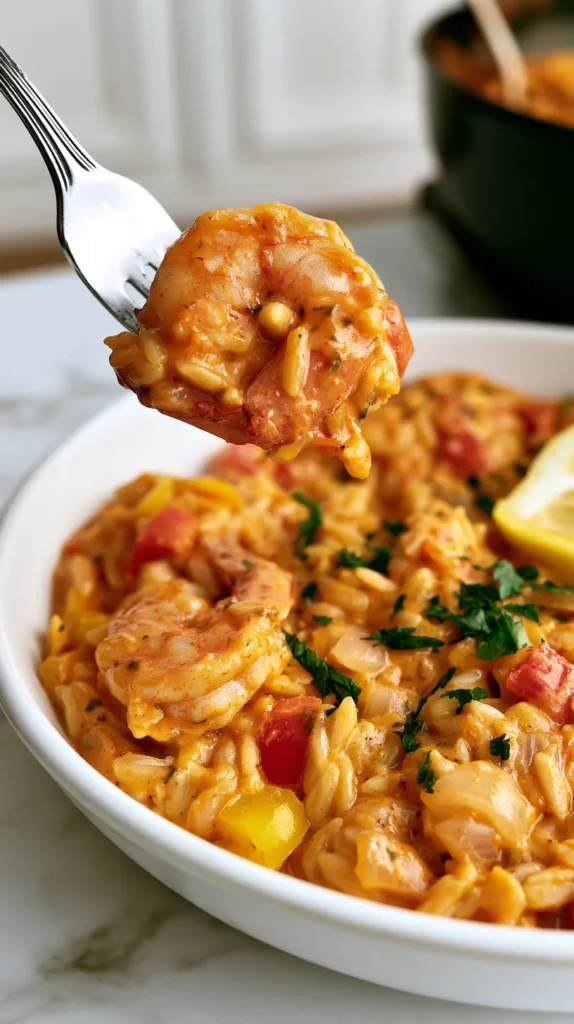
FAQs Before You Grab The Skillet
Can I use frozen shrimp? Yes, frozen shrimp works well. Thaw it fully, then pat it dry before seasoning. Extra water can dull the Cajun flavor and make the shrimp steam.
Can I make cajun shrimp orzo less spicy? Yes, use mild Cajun seasoning and reduce the amount slightly. You can also add extra cream or parmesan at the end. However, don’t skip the lemon because it keeps the sauce bright.
Can I use milk instead of heavy cream? You can, but the sauce will taste thinner. Whole milk works better than low-fat milk. For a richer texture, mix milk with a small spoonful of cream cheese.
What if my orzo is still firm? Add 1/4 cup broth and keep cooking over low heat. Stir often, then check again after two minutes. Orzo can vary by brand, which feels rude but true.
Can I add more vegetables? Yes, spinach, corn, zucchini, or mushrooms can work. Add spinach at the end. Cook mushrooms or zucchini with the peppers so they soften properly.
How should I store leftovers? Store leftovers in an airtight container for up to two days. Reheat gently with broth or cream. Shrimp gets tough when blasted with high heat, so treat it kindly.
The biggest FAQ answer is simple. Taste as you go. Cajun seasoning, parmesan, and broth all bring salt, so the final sprinkle depends on your ingredients. That one last taste can save dinner from being almost right. And almost right is such a bossy little disappointment. Luckily, a pinch of salt, lemon, or parmesan usually fixes it fast before serving the dinner bowls.

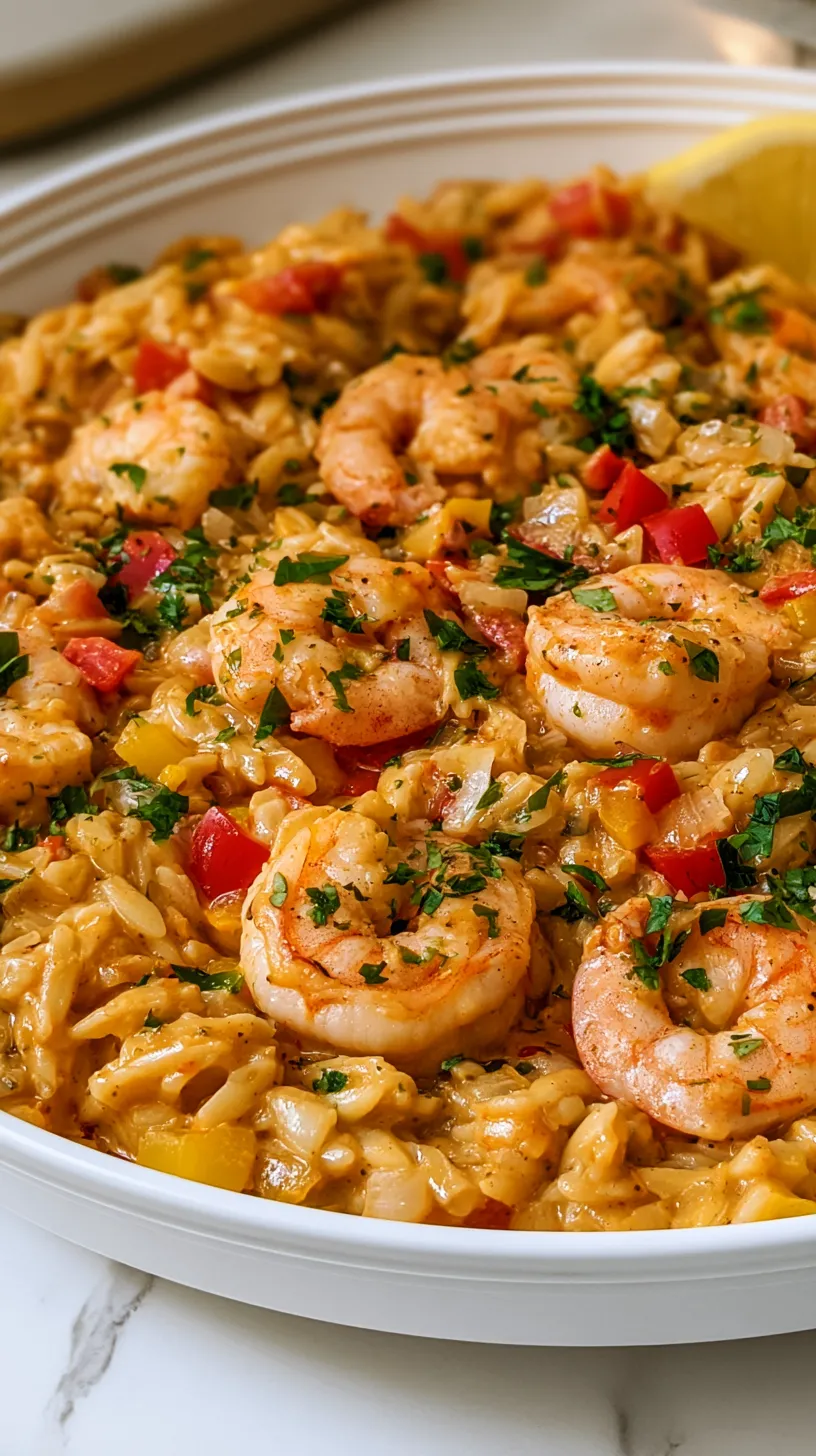
Cajun Shrimp Orzo
Ingredients
Method
- Pat the shrimp dry with paper towels.
- Toss the shrimp with 2 teaspoons Cajun seasoning.
- Heat olive oil and 1 tablespoon butter in a large skillet.
- Cook the shrimp for 1 to 2 minutes per side.
- Transfer the shrimp to a plate once pink and opaque.
- Add the remaining butter, onion, and bell peppers to the skillet.
- Cook for 5 to 6 minutes, stirring often.
- Add the garlic and cook for 30 seconds.
- Stir in the orzo, remaining Cajun seasoning, salt, and pepper.
- Toast the orzo for 1 minute while stirring.
- Pour in the chicken broth and bring it to a gentle simmer.
- Cover and cook for 9 to 11 minutes, stirring often.
- Lower the heat, then stir in the cream and parmesan.
- Add the lemon juice and lemon zest.
- Return the shrimp to the skillet.
- Cook for 1 minute, just until warmed through.
- Sprinkle with parsley, then serve warm.
Tried this recipe?
Let us know how it was!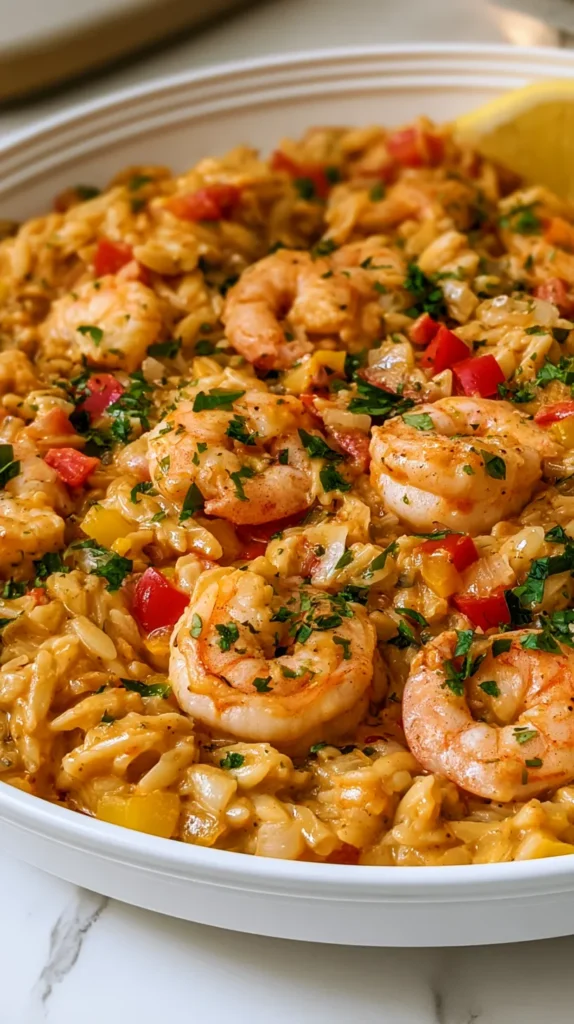
The Little Skillet Dinner That Deserves The Fuss
I like dinners that give a tiny bit of sparkle without making the kitchen look betrayed. Cajun shrimp orzo fits that mood so well. It has color, cream, lemon, spice, and enough comfort to make a normal night better.
Living in Orlando means I never fully want heavy food for too long. However, I still want cozy dinners that don’t taste like sad compromise. This skillet lands right in that sweet spot. It tastes bright enough for warm weather and rich enough for a real appetite.
I’ve found that recipes like this also do well on Pinterest because they look inviting fast. The peppers bring color, the shrimp looks special, and the creamy orzo gives that “save this” dinner energy. People can picture eating it before they even read the recipe.
That matters more than we admit. Dinner starts in the eyes, then wins with the first bite. A dish can be practical and still look like it tried. I tend to love that middle ground most. It gives enough payoff for a photo, but it still works for real dinner.
So, this is the skillet I’d keep for nights when plain shrimp pasta sounds too polite. The process stays friendly. Nothing tastes dull. It’s creamy, bright, a little spicy, and very pleased with itself.
Some dinners whisper. This one walks in with lemon, parmesan, and just enough Cajun confidence. That’s the kind of dinner I’ll gladly make room for.