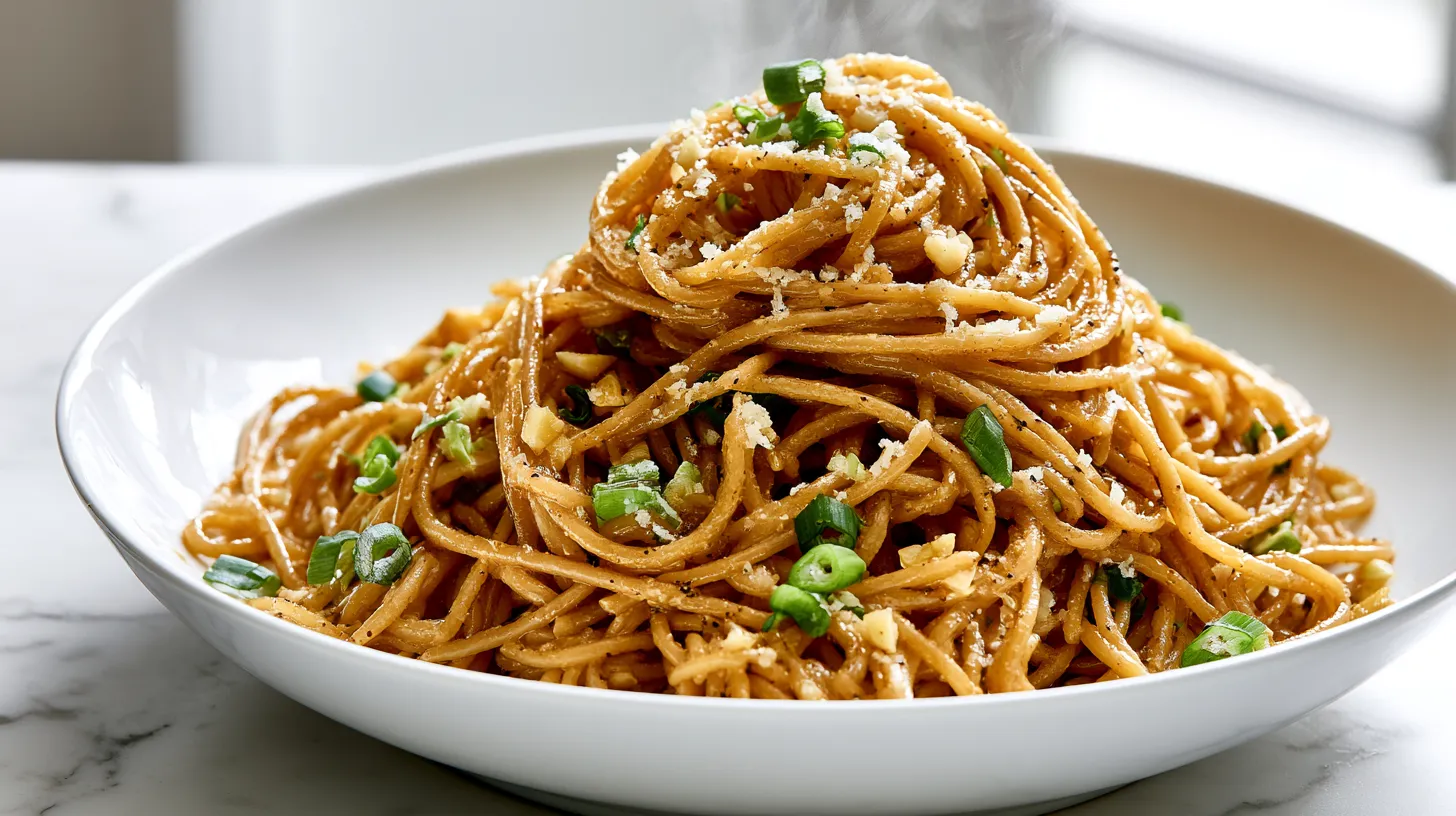
Asian garlic noodles sound like dinner that should require a special grocery run. Maybe a tiny chef hat, too. Also, emotional stamina. Thankfully, no. These noodles bring that glossy, garlicky, salty-sweet comfort without making the kitchen look chaotic.
I love a recipe that tastes bigger than its ingredient list. Not fancier, exactly. Just bigger. Like it has one tiny restaurant secret tucked in the pan. This one leans on butter, garlic, soy sauce, oyster sauce, sesame oil, and a little Parmesan. Yes, Parmesan. Stay with me, because that tiny twist matters later.
As a mom in Orlando, I’m always here for meals that work when the day gets loud. Heat, errands, hungry people, and “what’s for dinner?” can create a special kind of chaos. So I tend to notice recipes that land fast but still taste like someone cared.
That’s the charm here. Asian garlic noodles can sit beside grilled chicken, shrimp, veggies, dumplings, or nothing at all. They can be dinner, a side dish, or a late-night fork situation. No judgment from me.
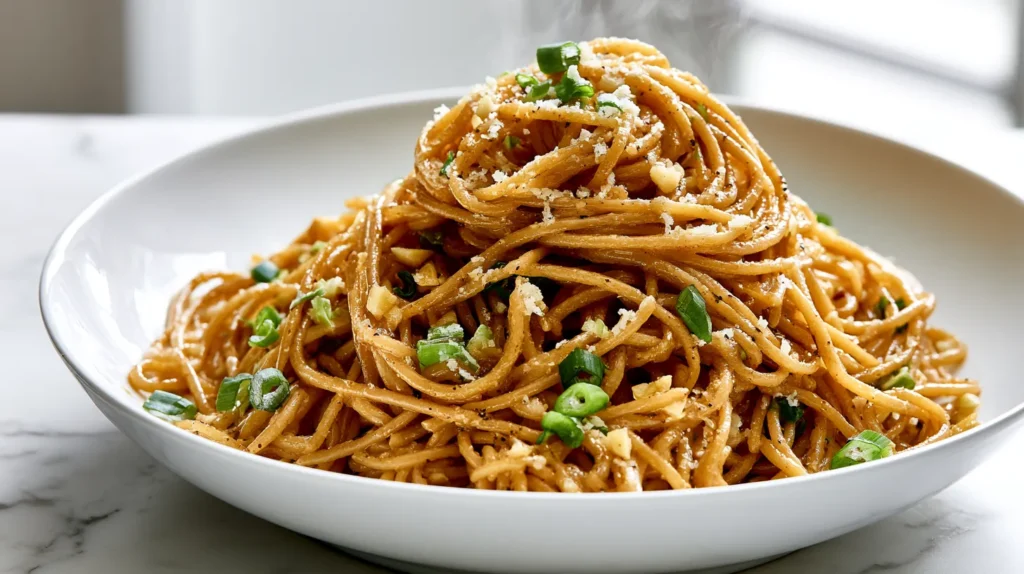
Even better, the sauce looks almost too simple at first. Then it hits the hot noodles and turns glossy, rich, and beautifully clingy. A few minutes later, the whole pan makes sense. The noodles look restaurant-level, but the effort stays refreshingly normal. Because some nights need comfort with shine, not another sink full of bowls. And that Parmesan twist? It is coming, and it is not nearly as strange as it sounds.
A few links on this page are affiliate links, so if you click and buy, I might earn a small commission. It never costs you more, and it helps support the site. You can read my full disclosure if you’re into the fine print.
Why Asian Garlic Noodles Hit So Hard
Asian garlic noodles work because they don’t try to be polite. They bring butter, garlic, soy sauce, and savory depth into one glossy tangle. However, the recipe still stays simple enough for a weeknight, which seems almost suspicious.
The first surprise is the balance. Garlic gives the dish its bold base, but it shouldn’t taste sharp or harsh. Butter softens the edges, while soy sauce adds salt and depth. Then oyster sauce brings that savory richness that makes people ask what you added.
A tiny bit of brown sugar helps, too. Not enough to make the noodles sweet, thank goodness. Instead, it rounds out the sauce and keeps the salty parts from taking over.
Here’s the opinion I will stand beside: these noodles taste best when they’re not overloaded. More sauce does not always mean better noodles. Sometimes it just means wet noodles with too much sauce. Nobody needs that.
I’ve found that the best version tastes glossy, not soupy. The noodles should look coated, with little bits of garlic tucked into every twist. That is where the recipe gets cozy without becoming heavy. It should taste bold, but still leave room for another bite.
Parmesan may sound odd in Asian garlic noodles, but it works. It adds salty, nutty flavor and helps the sauce cling. However, it should stay subtle, not turn the dish into heavy cheese pasta.
This recipe also plays nicely with real life. You can make it with spaghetti, linguine, lo mein, or any long noodle in the pantry. So yes, the whole thing seems a little fancy. Still, it stays friendly enough for a Tuesday, which matters more than fancy plating.
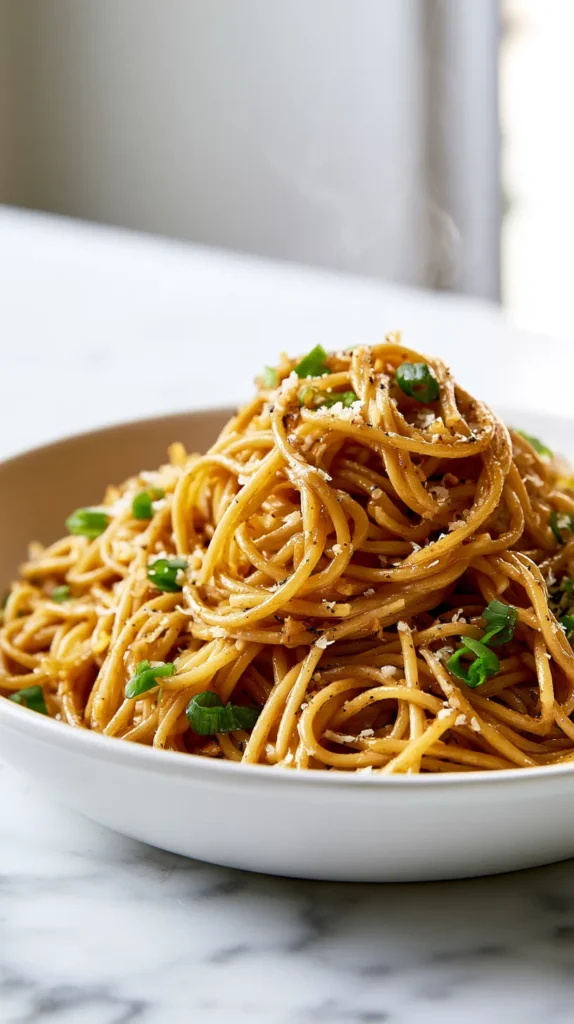
Ingredients That Make The Noodles Taste Rich
The ingredient list looks short, which I deeply respect. Still, each item pulls real weight. This is not the place for random pantry chaos, though I support pantry creativity in controlled doses.
Use 8 ounces of long noodles for this recipe. Spaghetti works beautifully, and linguine works too. Lo mein noodles give a softer, more takeout-style bite. However, plain pasta keeps this recipe easy for regular kitchens.
You’ll need:
- 8 ounces spaghetti, linguine, or lo mein noodles
- 4 tablespoons unsalted butter
- 6 garlic cloves, finely minced
- 1 tablespoon soy sauce
- 1 tablespoon oyster sauce
- 2 teaspoons brown sugar
- 2 teaspoons toasted sesame oil
- 1 teaspoon fish sauce, optional
- 1/4 teaspoon black pepper
- 1/3 cup grated Parmesan cheese
- 2 tablespoons sliced green onions
- 1 tablespoon chopped cilantro, optional
- Red pepper flakes, optional
- 1/4 cup reserved noodle water, as needed
Now, let’s talk garlic. Six cloves may sound dramatic, but this dish needs that backbone. However, mince it finely so it blends into the butter instead of burning in harsh little bits.
Oyster sauce gives Asian garlic noodles a rich, savory taste. If you need a vegetarian option, use vegetarian oyster sauce or hoisin sauce. Hoisin tastes sweeter, so reduce the brown sugar slightly.
Fish sauce adds a deeper salty flavor, but it’s optional. I like keeping it in the “nice bonus” category. Nobody should abandon dinner because one tiny bottle went missing.
Parmesan brings the sneaky finish. It blends with the butter and noodle water, creating a light clingy coating. That one move turns simple noodles into a bowl that tastes layered without kitchen gymnastics. It is the quiet difference between fine and fork-twirling good.
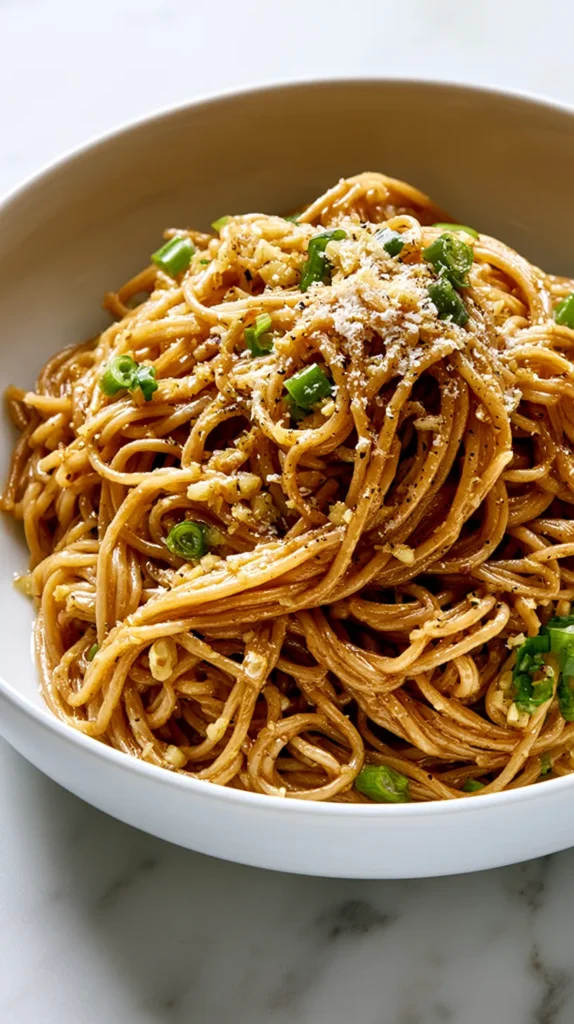
The Sauce Is Small But Mighty
This sauce starts in a small bowl, yet the flavor still lands big. That’s what I like about it. Big flavor does not always need seventeen bottles lined up beside the stove.
Start by stirring together soy sauce, oyster sauce, brown sugar, sesame oil, fish sauce, and black pepper. The brown sugar should mostly dissolve before the sauce touches the pan. However, don’t fuss over perfection. A tiny grain or two may remain, and dinner will survive.
The butter and garlic do the first round of work in the skillet. Cook the garlic gently, because burned garlic tastes bitter fast. I tend to notice people rush this part, then wonder why the whole bowl tastes too sharp.
Medium-low heat helps. The garlic should smell rich and warm, not toasted into tiny brown dots. Once it smells amazing, the sauce goes in and bubbles for a few seconds. That short sizzle blends the salty, sweet, and savory parts.
Here’s the reset: the sauce should not reduce for long. This is not a glaze, and we’re not auditioning for dramatic kitchen lighting. A quick simmer blends the flavors, then the noodles finish the job.
Reserved noodle water matters more than it sounds. The starch helps the sauce spread and cling. Without it, the sauce can sit in patches, which wastes all that garlic work.
When Parmesan joins the pan, it needs heat and movement. Toss fast, add a splash of noodle water, and watch the coating turn smooth. If it looks dry, add more water. When it looks loose, toss longer.
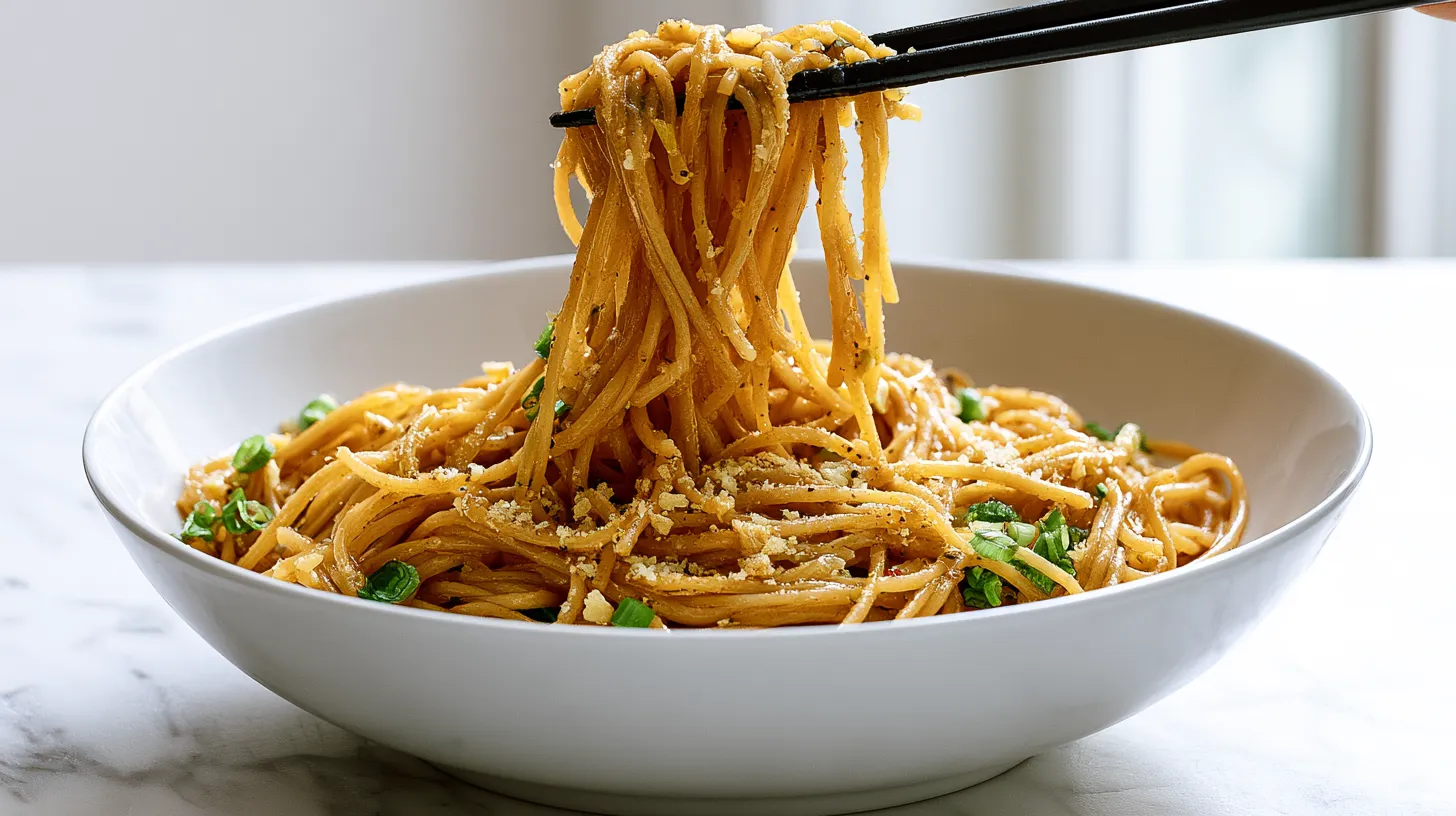
Asian garlic noodles should land glossy and savory. Not sticky or greasy. Just rich enough to make everyone strangely quiet for a minute, which is always useful.
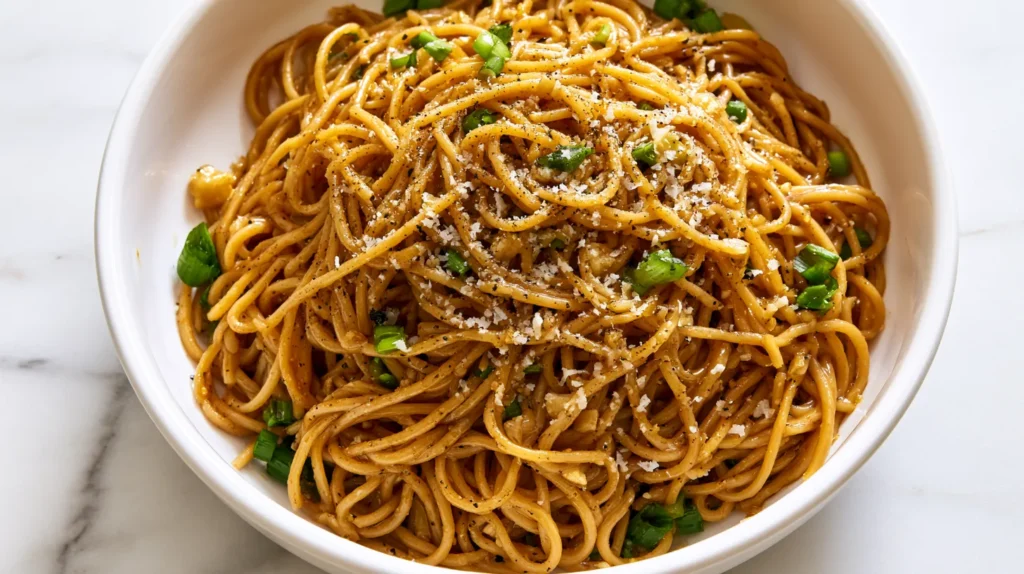
How To Make Asian Garlic Noodles Without Drama
Making Asian garlic noodles should move quickly, not frantically. So I like setting everything beside the stove before the noodles finish boiling. Garlic waits for nobody, and frankly, rude.
First, boil the noodles in salted water until tender. Save 1/4 cup of noodle water before draining. That starchy water looks boring, but it helps the sauce come together.
Here’s the full process:
- Bring a large pot of salted water to a boil.
- Cook 8 ounces of noodles until tender, using package directions.
- Reserve 1/4 cup noodle water, then drain the noodles.
- Stir soy sauce, oyster sauce, brown sugar, sesame oil, fish sauce, and pepper together.
- Melt 4 tablespoons butter in a large skillet over medium-low heat.
- Add minced garlic and cook for 1 to 2 minutes.
- Pour in the sauce mixture and let it bubble for 20 seconds.
- Add the drained noodles and toss well.
- Sprinkle in Parmesan and toss again.
- Add noodle water, one tablespoon at a time, until glossy.
- Finish with green onions, cilantro, and red pepper flakes, if wanted.
- Serve hot while the noodles still look shiny.
The main thing is timing. Don’t cook the sauce first, then wander away. This recipe moves fast once garlic meets butter.
Also, use tongs if you have them. Tongs grab the noodles and help the sauce coat every strand. A spoon can work, but it mostly scoots noodles around without much progress.
If the noodles clump, add more reserved water. However, add it slowly. You want glossy noodles, not a loose sauce that thins the whole bowl.
Taste at the end before adding salt. Soy sauce, oyster sauce, fish sauce, and Parmesan already bring salt. That little taste check saves dinner from becoming a salt lick in pasta form.
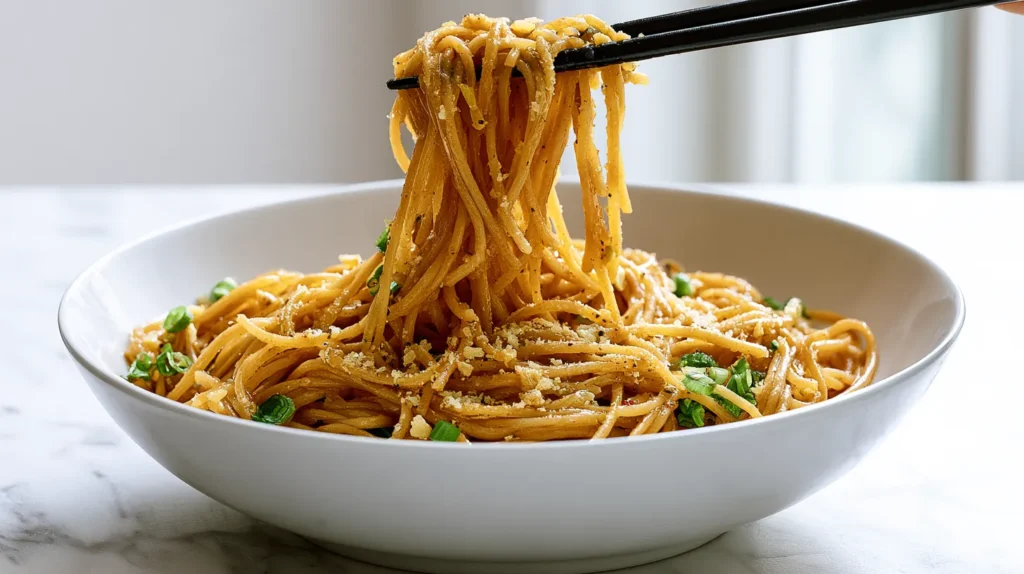
Best Noodles For Asian Garlic Noodles
The best noodles for Asian garlic noodles depend on the mood of the meal. That sounds dramatic, but noodle shape really changes the bite. A thick noodle gives chew, while a thinner noodle lets the sauce take center stage.
Spaghetti is my easiest pick because most kitchens already have it. It gives the dish a familiar texture and holds the sauce well. Plus, it keeps the recipe simple, which matters when nobody wants a grocery store side quest.
Linguine works when you want something a little wider. It catches more sauce, so the bowl tastes richer. However, it can turn heavier if you overcook it, so watch the timer.
Lo mein noodles give the recipe more classic takeout energy. They taste softer and slightly springy. If you use fresh lo mein noodles, cook them gently and avoid turning them mushy.
Rice noodles can work, but they change the whole mood. They don’t hold buttery sauce the same way wheat noodles do. So I’d use them only when needed, not as my first choice.
Here’s the part people forget: the noodle must be ready for tossing. Overcooked noodles break apart and soak up sauce unevenly. Slightly firm noodles give you a better final texture.
Asian garlic noodles also need enough space in the pan. A cramped skillet makes tossing annoying, and dinner should not require a wrestling match. Use a large skillet, even if it looks too big at first.
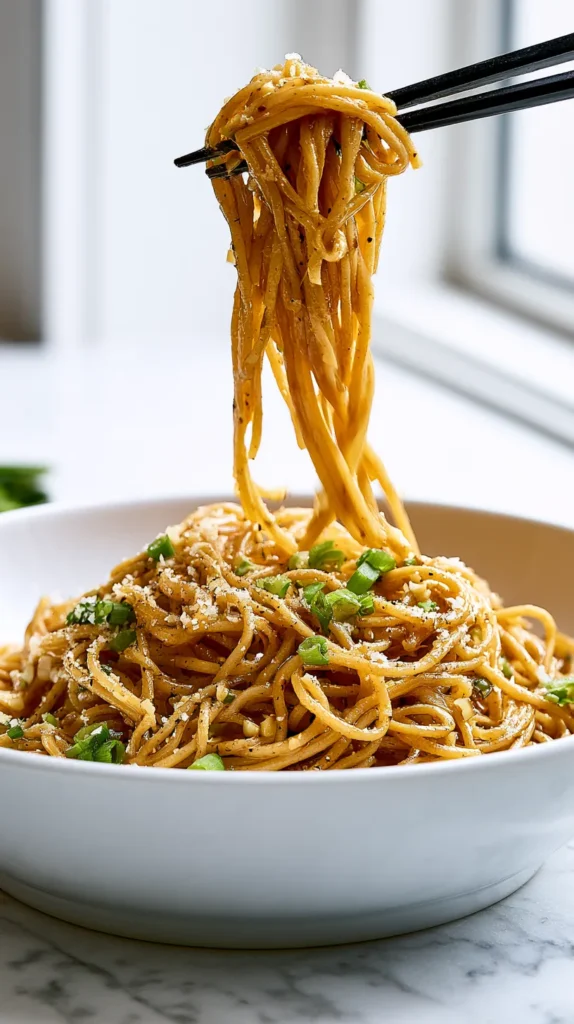
The right noodle should taste coated, not buried. That is the quiet little secret. Texture carries the sauce. Then the recipe moves from good to “second forkful, please.” That tiny shift is the whole point.
Simple Tips That Keep The Flavor Big
Asian garlic noodles don’t ask for much, but the little details matter. That’s annoying and wonderful, because small moves can change everything. Luckily, none of those moves require chef-level patience.
First, use fresh garlic. Jarred garlic can work in a pinch, but it tastes sharper and flatter. Fresh minced garlic gives the sauce a warmer flavor. It also smells better immediately.
Also, don’t skip the noodle water. I know it sounds like pasta nonsense, but it does real work. The starch helps the butter, sauce, and Parmesan come together smoothly.
Keep these tips close:
- Mince garlic finely so it cooks evenly.
- Use medium-low heat to prevent bitter garlic.
- Reserve noodle water before draining.
- Toss the noodles while they’re hot.
- Add Parmesan after the noodles enter the pan.
- Use tongs for better coating.
- Taste before adding extra salt.
- Add red pepper flakes only if you want heat.
- Serve right away for the best texture.
Another small win comes from grated Parmesan. Use the fine, fluffy kind if possible. Large shreds may clump, which can ruin your proud little dinner moment.
If your noodles taste too salty, add a squeeze of lime. You can also toss in more plain noodles, if you have them. However, don’t add sugar first, because that can make the sauce taste muddy.
For more richness, add one extra tablespoon of butter. To build more depth, add a tiny splash of soy sauce. Still, make changes slowly. This recipe rewards restraint, even though restraint is boring in many other situations.
The best tip is simple. Toss longer than you think. Those extra seconds help the sauce coat, smooth out, and settle into the noodles properly.
Serving Suggestions For Asian Garlic Noodles
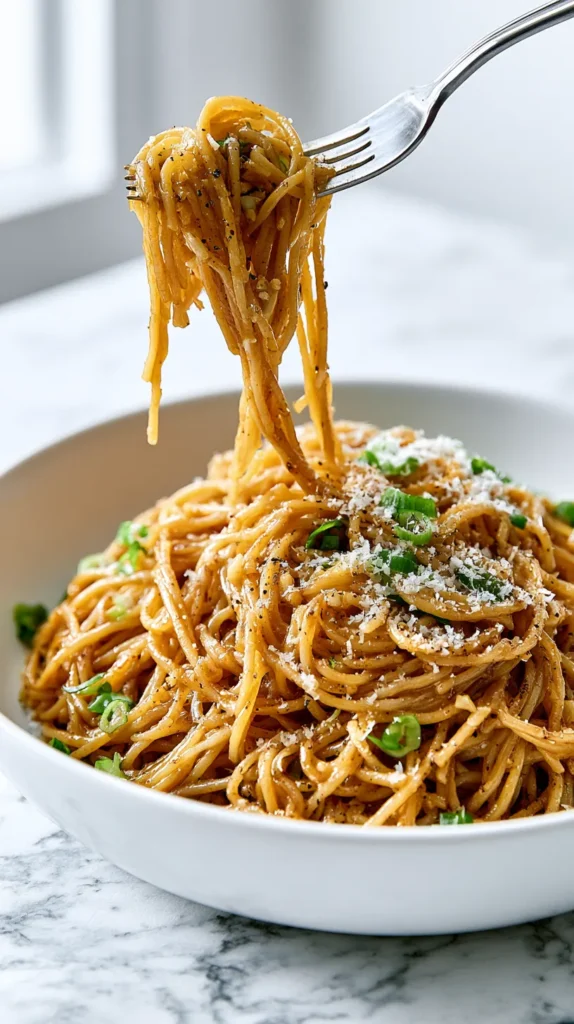
Asian garlic noodles can stand alone, and I respect that kind of dinner math. Still, they also make a fantastic base for easy add-ons. This is where dinner can become casual, filling, or a little dressed up.
For protein, keep things simple. Grilled chicken, pan-seared shrimp, crispy tofu, or sliced steak all work well. However, season the protein lightly, because the noodles already bring plenty of flavor.
Try these serving ideas:
- Serve with grilled chicken and cucumber slices.
- Add shrimp with lime and green onions.
- Pair with steamed broccoli, snap peas, or bok choy.
- Top with a fried egg for a richer bowl.
- Add rotisserie chicken for a fast dinner.
- Serve beside dumplings or spring rolls.
- Pair with salmon and roasted green beans.
- Add chili crisp for heat and crunch.
- Finish with sesame seeds and extra scallions.
Now, a tiny warning. Don’t add too many strong toppings at once. Chili crisp, fried egg, shrimp, and extra sauce can turn dinner into a crowded room. Pick one main add-on and keep the rest simple.
For a lighter plate, serve Asian garlic noodles with crisp vegetables. Cucumbers, carrots, cabbage, and snap peas cut through the richness. That crunch makes the bowl taste fresher without stealing the whole scene.
If you’re feeding kids or picky eaters, keep the spicy toppings on the side. Then everyone can add heat without turning the table into a negotiation summit. I’ve found that side bowls make dinners calmer, which counts as a small household victory.
Leftovers can work, too. Reheat gently with a splash of water in a skillet. The microwave works, but the skillet brings back more of that glossy texture.
FAQs For This Cozy Noodle Situation
Can I Make Asian Garlic Noodles Ahead Of Time? Yes, but they taste best fresh. The sauce clings better when the noodles come straight from the pan. However, you can prep the sauce and mince the garlic earlier.
What Can I Use Instead Of Oyster Sauce? Vegetarian oyster sauce works best. Hoisin sauce can work, too, but it tastes sweeter. If you use hoisin, reduce the brown sugar to 1 teaspoon.
Can I Make This Recipe Spicy? Absolutely, and I support that tiny bit of drama. Add red pepper flakes, chili crisp, sriracha, or sliced Fresno peppers. Start small, because heat grows fast.
Do I Have To Use Parmesan? You can skip it, but the sauce will taste less rich. Parmesan adds salty depth and helps the coating turn smooth. Nutritional yeast can add a savory note, though it tastes different.
Can I Add Vegetables? Yes, but cook them separately first. Snap peas, mushrooms, broccoli, carrots, and bok choy work well. Keep them tender-crisp so they don’t water down the sauce.
How Do I Store Leftovers? Store leftover Asian garlic noodles in an airtight container for up to three days. Add a splash of water before reheating. Then warm them in a skillet or microwave until hot.
Why Did My Sauce Turn Clumpy? The pan may have been too hot. Also, the Parmesan may have hit dry noodles. Add warm noodle water and toss well. That usually smooths everything out.
Can I Double The Recipe? Yes, but use a very large skillet. Crowded noodles won’t toss evenly. Also, double the sauce slowly and taste before adding extra salt. Big batches need careful tossing and a little patience.
Asian Garlic Noodles
Ingredients
Method
- Bring a large pot of salted water to a boil.
- Cook 8 ounces of noodles until tender, using package directions.
- Reserve 1/4 cup noodle water, then drain the noodles.
- Stir soy sauce, oyster sauce, brown sugar, sesame oil, fish sauce, and pepper together.
- Melt 4 tablespoons butter in a large skillet over medium-low heat.
- Add minced garlic and cook for 1 to 2 minutes.
- Pour in the sauce mixture and let it bubble for 20 seconds.
- Add the drained noodles and toss well.
- Sprinkle in Parmesan and toss again.
- Add noodle water, one tablespoon at a time, until glossy.
- Finish with green onions, cilantro, and red pepper flakes, if wanted.
- Serve hot while the noodles still look shiny.
Tried this recipe?
Let us know how it was!A Bowl Worth Keeping On Repeat
Some recipes earn their spot because they’re practical. Others earn it because they scratch that cozy, salty, garlicky itch without much fuss. Asian garlic noodles somehow do both, which seems like getting away with something.
I like recipes that leave room for real life. Maybe dinner needs shrimp and cucumbers tonight. Another night, it needs leftover chicken tomorrow. Or maybe it needs nothing but a bowl, a fork, and five quiet minutes.
Living in Orlando keeps me loyal to meals that don’t make the kitchen hotter than necessary. So a fast skillet dinner always has my attention. Add buttery garlic and glossy noodles, and I’m listening with both ears.
This is also the kind of recipe that Pinterest loves for a reason. It looks cozy, tastes bold, and doesn’t need complicated steps. Plus, the ingredient list stays friendly enough for a random weeknight.
The sneaky beauty is the balance. Butter keeps things rich, garlic brings the punch, and the sauces add depth. Then Parmesan adds a quiet little finish that makes the whole bowl taste complete.
I’ve found that the best comfort food doesn’t need a grand entrance. It just needs to taste like you did something clever without making a big production. That’s the real win here, especially when the day already spent its manners.
Serve it hot, toss it well, and don’t drown it in sauce. The glossy little middle ground is where this recipe shines best, especially with hot noodles. Dinner can be simple, a little dramatic, and absolutely worth the fork twirl.