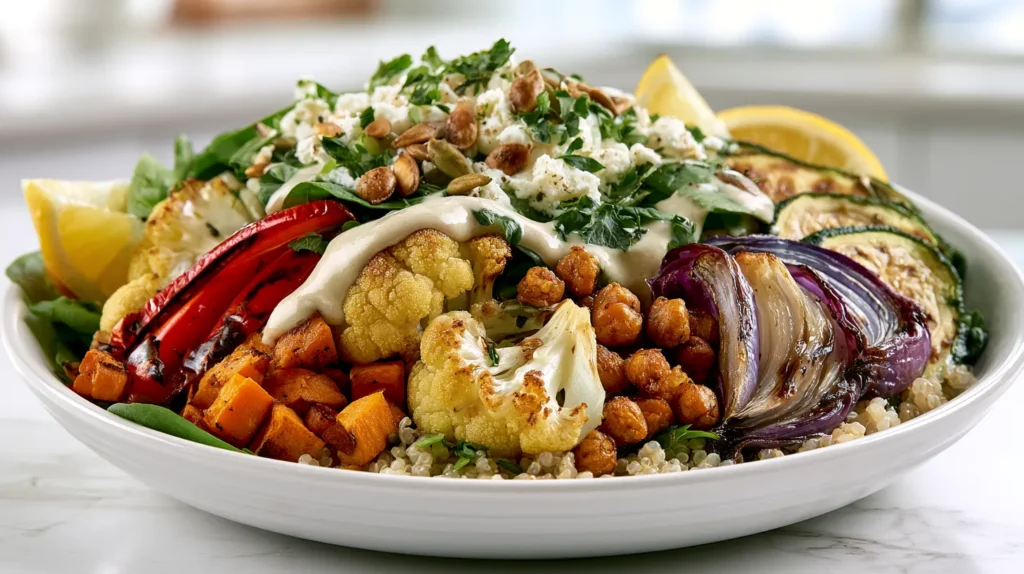
Roasted vegetable bowls sound like the kind of dinner people pretend they invented after buying cute linen napkins. Yet I’ve found they’re a smart way to turn basic produce into something colorful and satisfying. They look fancy, but they don’t ask for fancy behavior. Bless that.
I tend to notice one funny dinner truth. Nobody complains when a bowl has enough color, crunch, sauce, and something filling underneath. That’s the whole little secret here. The vegetables matter, of course, but the bowl around them matters too. Otherwise, dinner can become a sad pile of carrots wearing olive oil.
As a mom, I’m always drawn to meals that can bend without falling apart. One person wants rice. Another wants extra sauce. Someone side-eyes zucchini like it owes them money. Fine. This kind of meal can handle all that drama with grace.
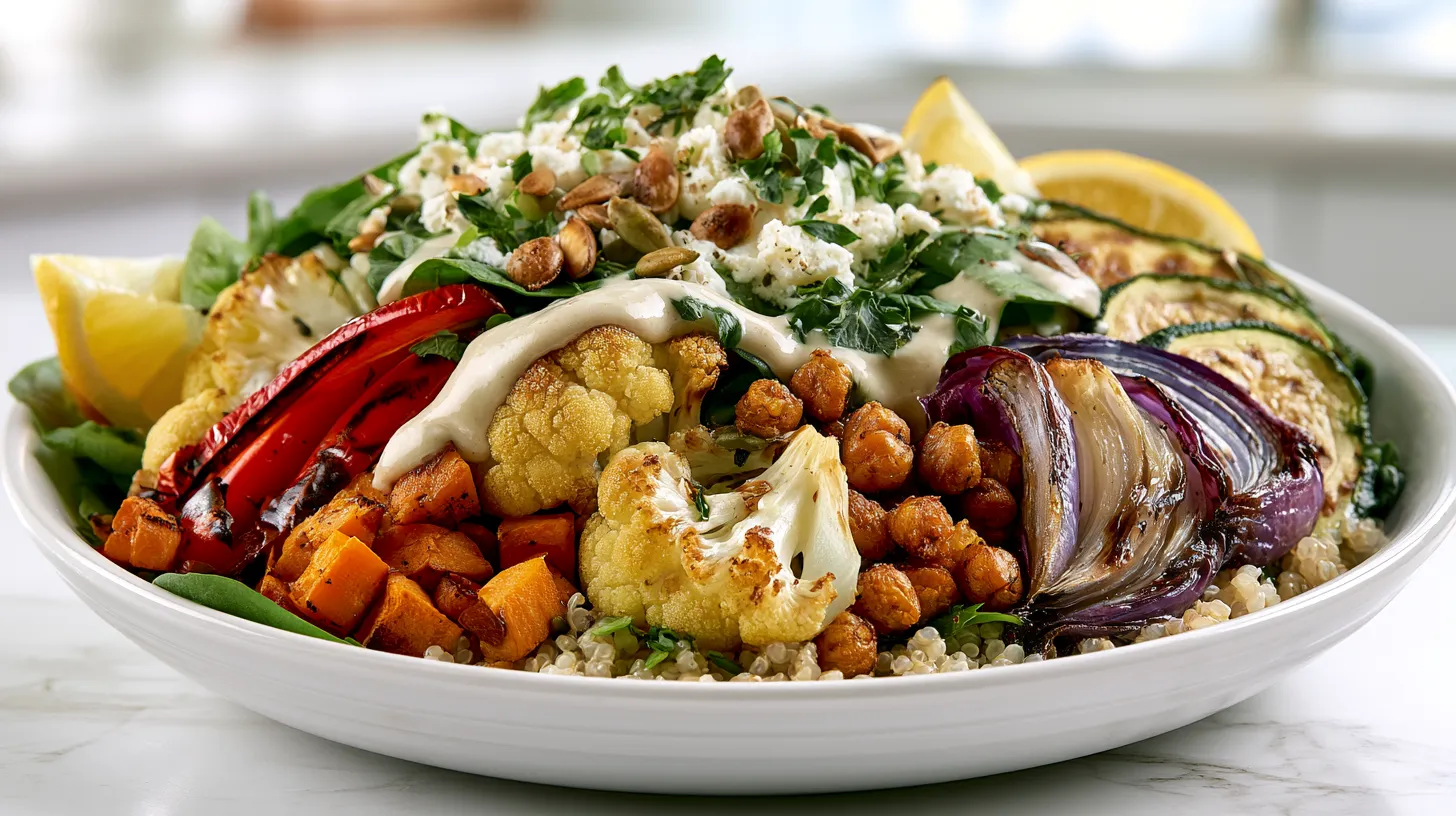
Instead of treating roasted vegetables like a polite side dish, this recipe puts them in the center. There’s a warm grain base, crispy chickpeas, creamy sauce, bright toppings, and enough texture. However, the best part sneaks up later. Once you learn the bowl formula, you can change it all season long without starting over.
That is where dinner gets dangerously useful, in the best possible way. It starts as a sheet pan meal, but it quietly becomes a whole dinner system. The sauce does some heavy lifting, the toppings add the sparkle, and suddenly vegetables feel like the plan. Not the backup plan. The actual plan.
A few links on this page are affiliate links, so if you click and buy, I might earn a small commission. It never costs you more, and it helps support the site. You can read my full disclosure if you’re into the fine print.
Roasted Vegetable Bowls Start With The Right Ingredients
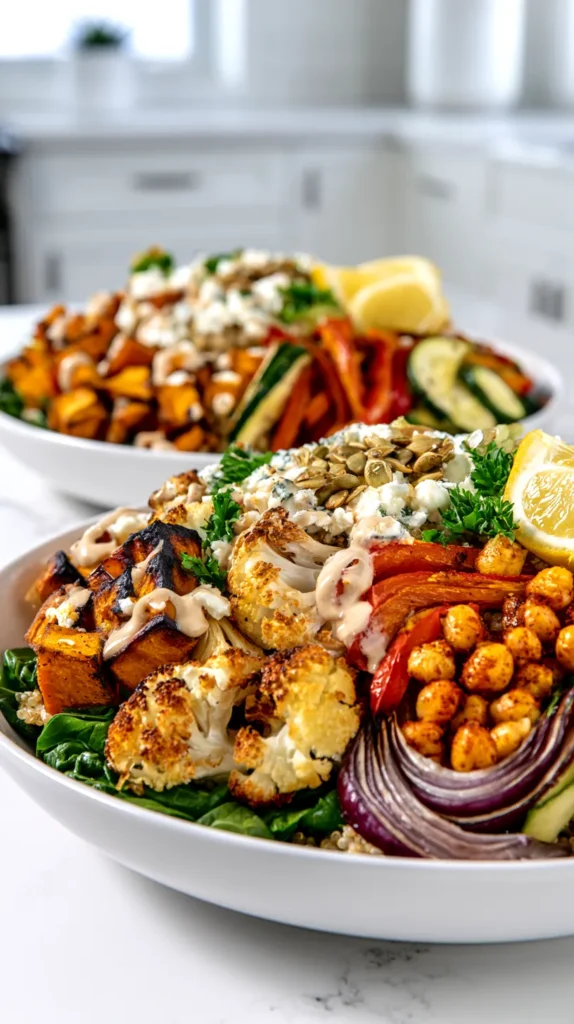
I’m going to say the quiet part first. Roasted vegetable bowls only taste special when the vegetables have room to roast. Crowded pans create steamed vegetables, and steamed vegetables do not bring the same energy. They sit there. Roasted edges, however, make this whole meal worth the oven heat.
For this recipe, I like a mix of sweet, earthy, and sturdy vegetables. You want pieces that cook at a similar speed. However, you don’t need perfection here. Dinner should not require measuring butternut squash cubes with tiny tweezers. Aim for close enough, then move along like a normal person.
Use this full ingredient list for four generous bowls. These measurements keep the bowls hearty. They will not become a produce avalanche.
- Diced sweet potato: 2 cups, cut into 1/2-inch cubes.
- Cauliflower florets: 2 cups, cut small and even.
- Red bell pepper: 1, sliced into thick strips.
- Onion: 1 small red, cut into wedges.
- Zucchini: 1 medium, sliced into half-moons.
- Chickpeas: 1 can, drained, rinsed, and patted dry.
- Olive oil: 3 tablespoons, divided.
- Kosher salt: 1 teaspoon, plus more to taste.
- Garlic powder: 1 teaspoon.
- Smoked paprika: 1 teaspoon.
- Cumin: 1/2 teaspoon.
- Black pepper: 1/4 teaspoon.
- Cooked rice, quinoa, farro, or couscous: 3 cups.
- Baby spinach or chopped romaine: 2 cups.
- Feta, goat cheese, or dairy-free cheese: 1/2 cup.
- Toasted pumpkin seeds or sliced almonds: 1/4 cup.
- Lemon wedges, fresh herbs, and sauce for serving.
Here’s the part people skip too fast. Dry chickpeas roast better than wet ones. That tiny move gives them a crisp edge instead of a soggy little shrug. Also, salt the vegetables before roasting, not after. Seasoning early helps every bite taste planned, even when dinner started with fridge panic.

The Roasting Process Does More Than Cook The Vegetables
Roasting sounds simple because it is simple. However, simple does not mean careless. The oven does the heavy lifting, but you still set the stage. I notice the best flavor starts before the pan enters the oven. That tiny bit of care changes the whole bowl.
First, heat the oven to 425 degrees F. That temperature matters because vegetables need real heat. A lower oven can work, but it takes longer and gives softer edges. For roasted vegetable bowls, I want browned corners, tender centers, and a little crispness. Basically, I want dinner to have a pulse.
Cut everything close to the same size, but don’t panic over each piece. Sweet potatoes need smaller cubes because they take longer. Zucchini cooks faster, so thicker half-moons help it keep shape. Meanwhile, cauliflower loves high heat and turns nutty at the edges. Red onion adds sweetness, which is very helpful.
Use two sheet pans if you can. One pan holds the sweet potato, cauliflower, onion, and bell pepper. Another pan gets the zucchini and chickpeas. That split keeps moisture under control. Also, it lets the chickpeas roast without hiding under a vegetable blanket.
Toss the vegetables with olive oil, salt, garlic powder, smoked paprika, cumin, and pepper. Then spread them out. Space looks wasteful, but it creates browning. Crowding seems efficient, yet it steals texture. Rude, but true.
Roast the first pan for about 25 to 30 minutes. Add the zucchini pan for the final 18 to 22 minutes. Stir once, then let the edges darken slightly. Color means flavor, not trouble. If one piece gets extra brown, I call that character and keep moving. Bossy, but useful.

How To Make Roasted Vegetable Bowls Without Overthinking Dinner
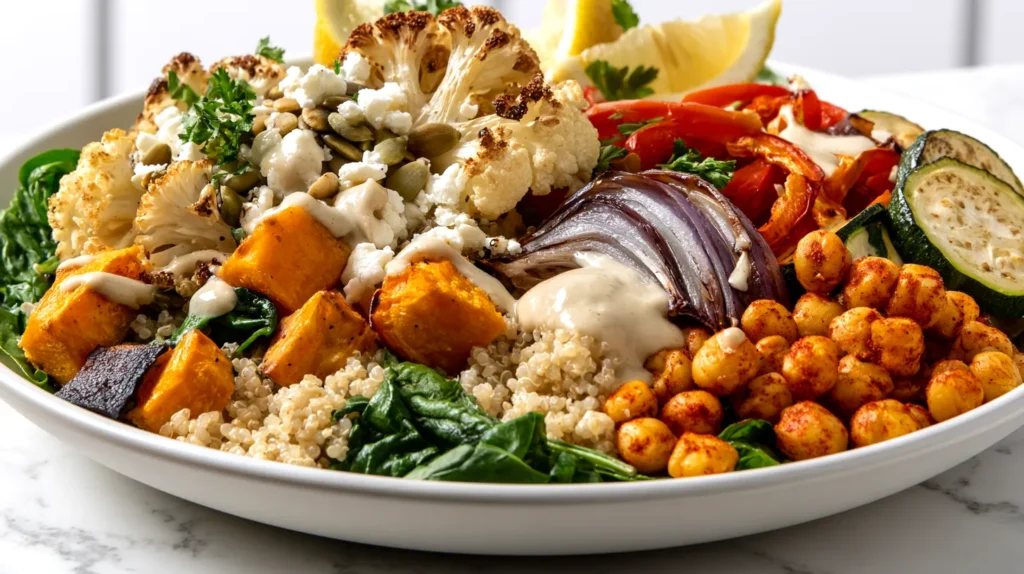
Once the vegetables roast, the rest should feel easy. I love a meal that looks planned but forgives a chaotic kitchen. Roasted vegetable bowls do that beautifully. They let you use cooked grains, greens, toppings, and sauce without turning dinner into a production.
Here’s the basic process from start to finish. Read it once, then trust the sheet pans:
- Preheat the oven to 425 degrees F.
- Line two large sheet pans with parchment paper.
- Toss sweet potato, cauliflower, onion, and bell pepper with 2 tablespoons olive oil.
- Season that pan with salt, garlic powder, smoked paprika, cumin, and black pepper.
- Toss zucchini and chickpeas with the remaining 1 tablespoon olive oil.
- Spread everything in even layers, with space between pieces.
- Roast the main vegetable pan for 25 to 30 minutes.
- Cook the zucchini and chickpeas for 18 to 22 minutes.
- Warm the cooked grain while the vegetables finish roasting.
- Add grain, greens, vegetables, chickpeas, cheese, seeds, herbs, and sauce to bowls.
Now let’s talk timing, because this saves sanity. Prep takes about 20 minutes. Cooking takes about 30 minutes. Total time lands around 50 minutes, and the recipe makes four bowls. That feels reasonable for dinner with color, texture, and leftovers that don’t punish you.
A common assumption says bowls need twenty toppings to taste good. Nope. They need contrast. Warm vegetables need something cool. Soft grains need crunch. Rich sauce needs lemon. When those pieces show up, the bowl tastes complete without becoming a grocery receipt.
If you serve picky eaters, keep toppings separate. Then everyone builds their own bowl. It looks relaxed, but it quietly solves half the dinner complaints. Control can be a condiment, apparently.
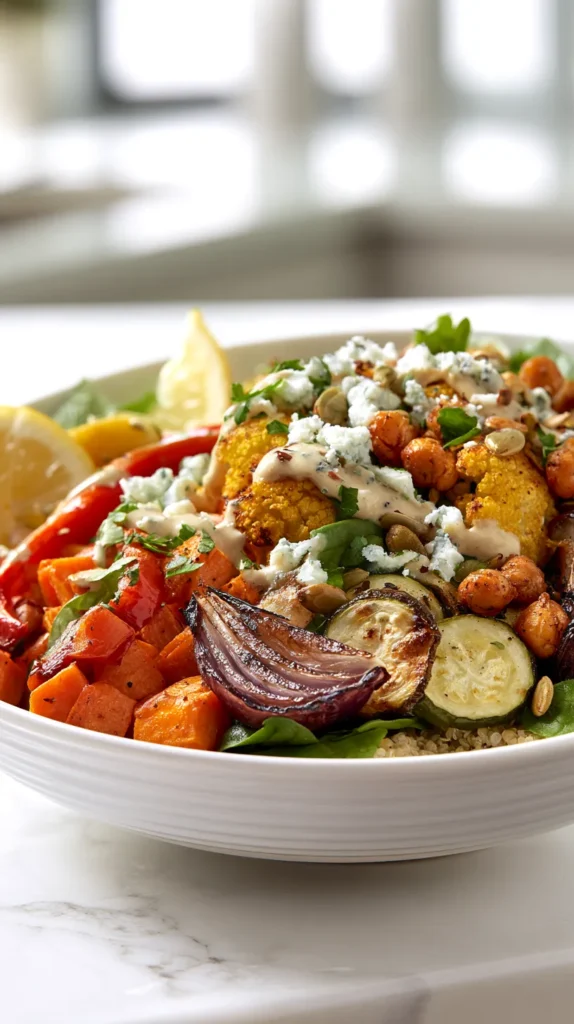
A Creamy Sauce Makes The Bowl Feel Finished
Here’s where the whole thing shifts. Roasted vegetables taste lovely on their own, but sauce makes them feel finished. Without sauce, the bowl can taste like meal prep with ambition. With sauce, it becomes the thing people remember.
For these roasted vegetable bowls, I like a lemon tahini sauce because it hits creamy, tangy, and savory. It also clings to the vegetables without making everything heavy. If tahini tastes too bold for you, use Greek yogurt instead. Both versions work, and neither requires a blender. That deserves applause.
For the tahini sauce, whisk 1/4 cup tahini with 3 tablespoons lemon juice. Add 2 tablespoons warm water, 1 tablespoon olive oil, and 1 teaspoon maple syrup. Stir in 1 small grated garlic clove, 1/2 teaspoon kosher salt, and 1/4 teaspoon black pepper. Add more warm water if it looks too thick. The sauce should drizzle, not plop.
For a yogurt version, swap tahini for 1/3 cup plain Greek yogurt. Then reduce the water to 1 tablespoon. Add a little extra lemon if you like a sharper bite. However, don’t skip the maple syrup. It doesn’t make the sauce sweet. That tiny bit smooths the edges.
This is also where bland bowls get exposed. If the sauce tastes flat, add salt first. Should it taste heavy, add lemon. When it tastes too sharp, add a tiny bit more maple syrup. Small changes matter. Sauce tells on everything.
One more thing deserves attention. Sauce thickens as it sits, especially tahini sauce. Stir in warm water one teaspoon at a time before serving. Suddenly, it behaves again. That tiny stir can take the sauce from paste to drizzle, which changes the whole bite.

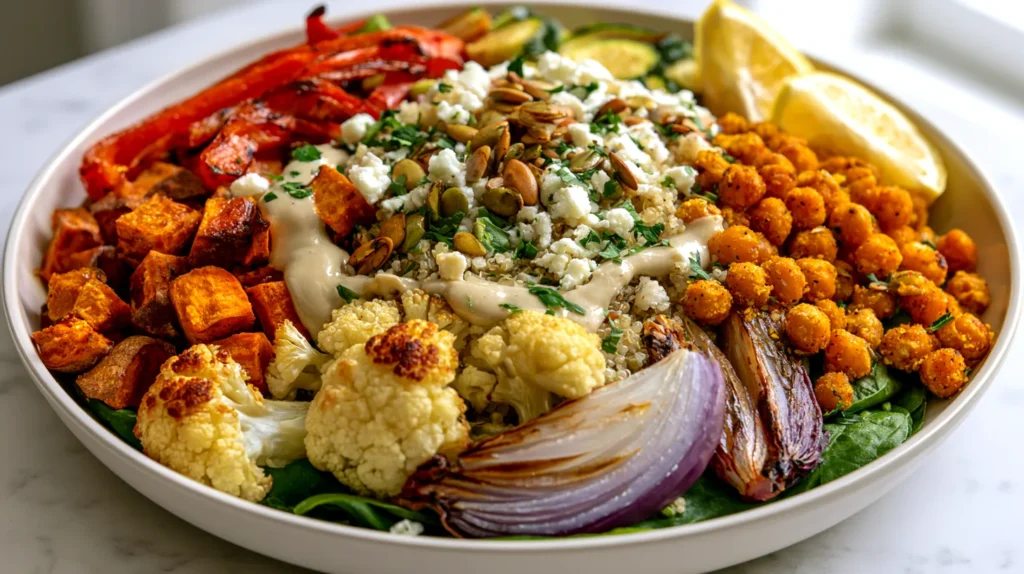
Roasted Vegetable Bowls Need Texture, Not Fancy Toppings
I will defend a crunchy topping with my whole kitchen soul. Roasted vegetable bowls need texture because soft-on-soft meals can get boring fast. Even delicious vegetables need backup. A few crunchy, creamy, and bright extras make the bowl feel layered.
Think of toppings in small groups, not giant piles. You don’t need all of them. However, choosing one from each group gives you balance. It also keeps the bowl from tasting like random leftovers in a trench coat.
- Crunch: use toasted pumpkin seeds, sliced almonds, crushed pita chips, or crispy chickpeas.
- Creamy flavor: add feta, goat cheese, avocado, hummus, or dairy-free cheese.
- Brightness: use lemon juice, pickled onions, fresh parsley, dill, cilantro, or scallions.
- Heat: try chili crisp, hot honey, red pepper flakes, or jalapeño slices.
- Extra protein: add grilled chicken, salmon, shrimp, tofu, turkey meatballs, or boiled eggs.
Here’s the reframe. Toppings should not hide boring vegetables. They should make good vegetables more fun. If the roasted base tastes weak, no sprinkle of seeds can save the mood. Season first, decorate second.
For serving, start with warm grains in the bottom of each bowl. Add greens next, so they soften slightly without turning limp. Then pile on roasted vegetables and chickpeas. Finish with sauce, cheese, seeds, herbs, and lemon.
I like serving these bowls right away, while the vegetables still have crisp edges. Still, they work well for meal prep. Store the sauce separately, and your future lunch will avoid the soggy bowl situation. Nobody needs that kind of lunch betrayal.
Another small move helps more than expected. Add lemon after the sauce, not before. That final squeeze brightens the bowl without watering down the roasted edges.

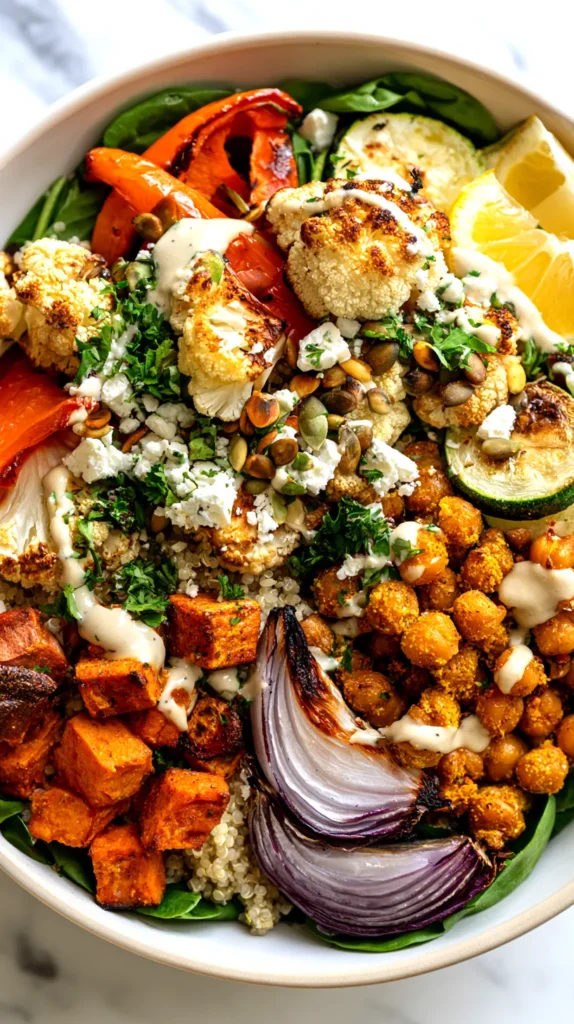
Serving Suggestions That Make This Dinner Feel Less Expected
The easiest serving move is the obvious one. Put everything in bowls and call it dinner. That works, and I support it. Still, roasted vegetable bowls can do more than sit there looking healthy. They can lean cozy, fresh, spicy, or party-ish, depending on what you add.
For a Mediterranean version, use couscous, romaine, feta, cucumber, parsley, and lemon tahini sauce. Add warm pita on the side if you want dinner to feel fuller. The texture gets crisp, creamy, and bright without much extra work. This version also tastes great at room temperature.
For a fall version, use farro, spinach, goat cheese, pumpkin seeds, and maple mustard sauce. Sweet potato already gives that cozy base. Meanwhile, the seeds add crunch, and the goat cheese brings a creamy tang. A little dried cranberry can work too, but don’t go wild.
If you want a taco-ish bowl, swap the seasoning for chili powder, cumin, garlic, and oregano. Use rice, lettuce, avocado, salsa, and a lime crema. That version feels more casual, which can be exactly right on a busy night.
A common myth says healthy bowls must stay quiet and polite. Please no. Add sharp pickles, spicy sauce, crunchy chips, or smoky meat if that sounds good. A bowl can be nourishing and still have opinions.
For a simple side, serve these with warm naan, pita, garlic bread, or soup. Tomato soup works well. Lentil soup makes it heartier. However, the bowl can absolutely stand alone when the toppings show up. That is the beauty here. It can be the meal, not the side act. Still, a little bread on the side never hurt dinner’s reputation. No tiny side salad needed.
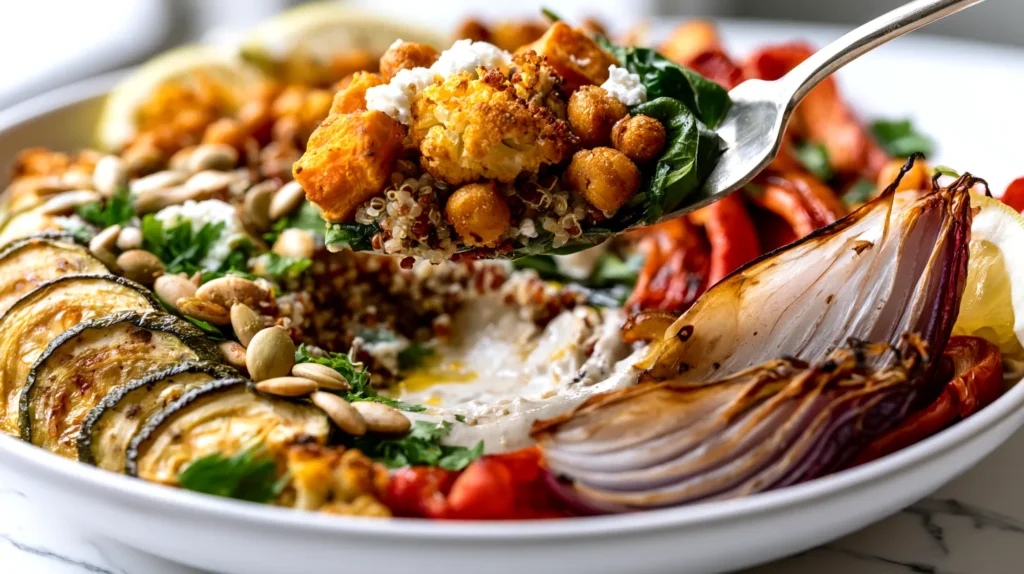
Smart Tips For Roasted Vegetable Bowls That Taste Better Tomorrow
Meal prep can get a bad reputation because some leftovers taste like resignation. Roasted vegetable bowls avoid that problem when you store each part with a little strategy. The goal is simple. Keep crisp things crisp, saucy things separate, and greens away from heat. Your fridge is not a mixing bowl.
Here’s what I’ve found works best. The tiny storage choices matter more than expected. They also keep tomorrow’s bowl from tasting like yesterday’s compromise.
- Store roasted vegetables in a shallow container, not a deep one.
- Keep sauce in a small jar with a tight lid.
- Store grains separately, so they don’t soak up every drop of moisture.
- Add fresh greens right before serving.
- Keep crunchy toppings in the pantry until the last minute.
- Reheat vegetables in an air fryer or oven for the best texture.
- Use the microwave when speed matters, but expect softer edges.
The air fryer deserves a tiny spotlight here. Reheat vegetables at 375 degrees F for 4 to 6 minutes. They won’t taste exactly fresh from the oven, but they’ll come close enough. That’s a win on a Tuesday.
Also, don’t build all four bowls too early unless you like wilted greens. Assemble the sturdy parts instead. Grains, vegetables, and chickpeas can hang out together. Sauce, greens, herbs, and seeds should wait.
Roasted vegetable bowls last about four days in the fridge. However, zucchini softens faster than sweet potatoes or cauliflower. If texture matters most, eat the zucchini bowls first. Future you deserves the good bowl, not the mushy one hiding in the back. That container has already made choices. Let it be someone else’s problem, preferably never yours. Simple, but bossy.
FAQs For The Tiny Dinner Details
Can I Make Roasted Vegetable Bowls Ahead Of Time? Yes, and they’re great for meal prep. Roast the vegetables, cook the grains, and whisk the sauce ahead. Then store each part separately. Assemble the bowls right before eating for the best texture.
What Vegetables Work Best For This Recipe? Use sweet potatoes, cauliflower, bell peppers, onions, zucchini, carrots, or mushrooms. However, mix vegetables with similar cook times when possible. Hard vegetables need smaller pieces. Soft vegetables need thicker cuts.
Can I Make This Recipe Vegan? Yes. Use tahini sauce, skip the cheese, or choose dairy-free cheese. Add avocado, hummus, or extra chickpeas for creamy texture. The bowl still tastes full without dairy.
What Protein Goes Well With These Bowls? Try chicken, salmon, shrimp, turkey meatballs, tofu, tempeh, lentils, or eggs. Chickpeas already add protein. However, extra protein makes the bowl more filling. Use whatever fits your night.
How Do I Keep The Vegetables From Getting Soggy? Use high heat, dry the chickpeas, and avoid crowding. Also, roast on parchment for easier cleanup. Don’t pile vegetables too close. Space gives you browned edges.
Can I Use Frozen Vegetables? Yes, but roast them from frozen. Don’t thaw them first. Use a hot oven, spread them well, and expect softer texture. Frozen vegetables save time, though, and I respect that deeply.
What Sauce Can I Use Instead? Try ranch, green goddess, pesto, salsa, thinned hummus, or maple mustard sauce. The best sauce adds contrast. Creamy, tangy, spicy, or herby all work.
Can I Serve These Cold? Yes, but I prefer warm vegetables with cool toppings. Cold bowls work best with couscous, romaine, cucumber, feta, and extra lemon. That version leans fresh instead of cozy.

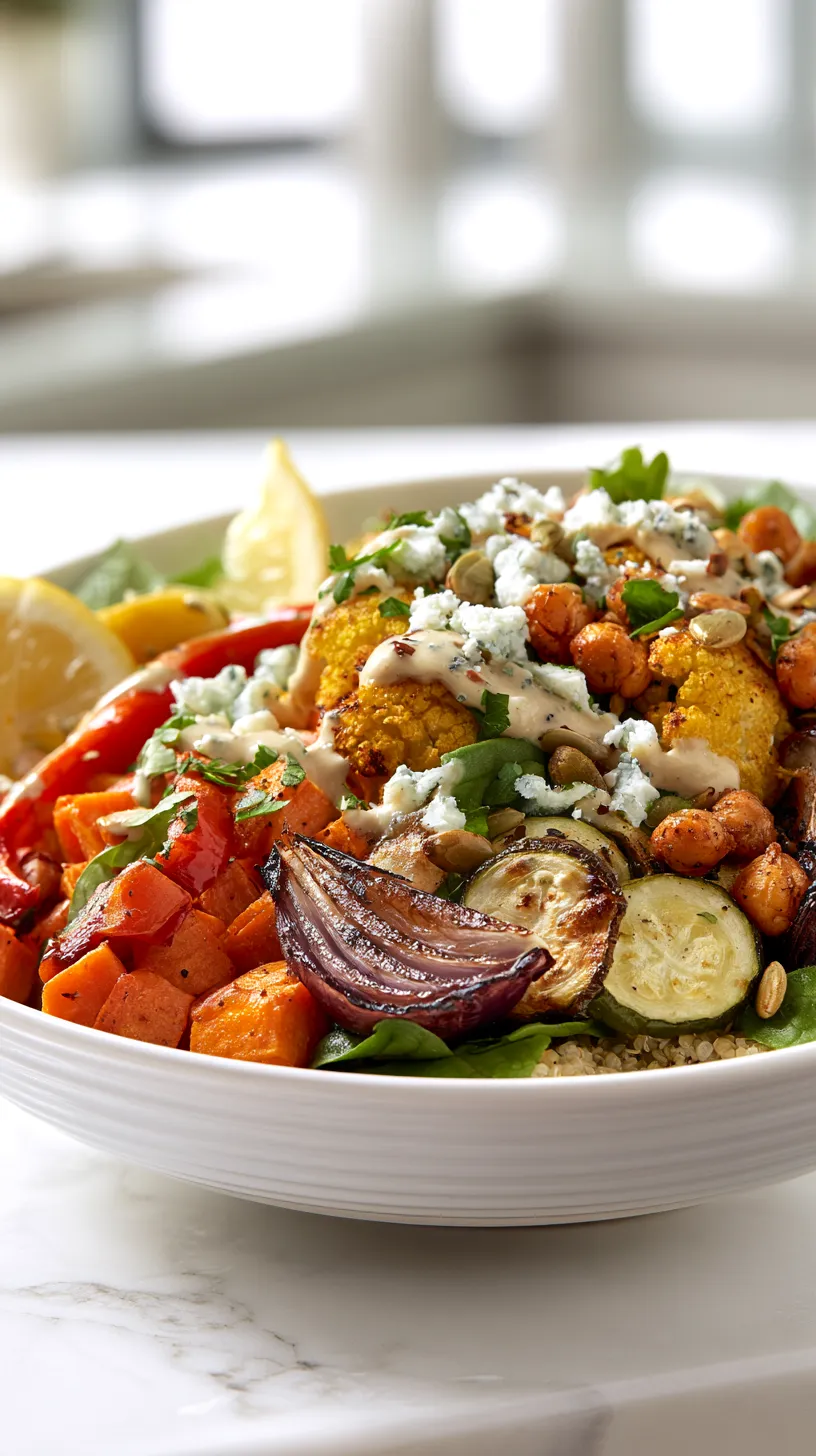
Roasted Vegetable Bowls
Ingredients
Method
- Preheat the oven to 425 degrees F.
- Line two large sheet pans with parchment paper.
- Add the sweet potato, cauliflower, red onion, and red bell pepper to one sheet pan.
- Toss those vegetables with 2 tablespoons olive oil.
- Season them with the kosher salt, garlic powder, smoked paprika, cumin, and black pepper.
- Spread the vegetables into an even layer with space between the pieces.
- Add the zucchini and chickpeas to the second sheet pan.
- Toss the zucchini and chickpeas with the remaining 1 tablespoon olive oil.
- Spread them into an even layer with space between the pieces.
- Roast the sweet potato, cauliflower, red onion, and red bell pepper for 25 to 30 minutes.
- Add the zucchini and chickpea pan during the final 18 to 22 minutes of roasting.
- Stir the vegetables once while they roast.
- Let the vegetables roast until the edges are browned and the centers are tender.
- Warm the cooked rice, quinoa, farro, or couscous while the vegetables finish roasting.
- Whisk the tahini, lemon juice, warm water, olive oil, maple syrup, grated garlic, kosher salt, and black pepper together.
- Add more warm water, one teaspoon at a time, if the sauce is too thick.
- Place the warm grain in the bottom of each bowl.
- Add the baby spinach or chopped romaine.
- Top with the roasted vegetables and chickpeas.
- Add the feta, goat cheese, or dairy-free cheese.
- Sprinkle with toasted pumpkin seeds or sliced almonds.
- Add fresh herbs and lemon wedges.
- Drizzle with the creamy lemon tahini sauce.
- Serve right away.
Tried this recipe?
Let us know how it was!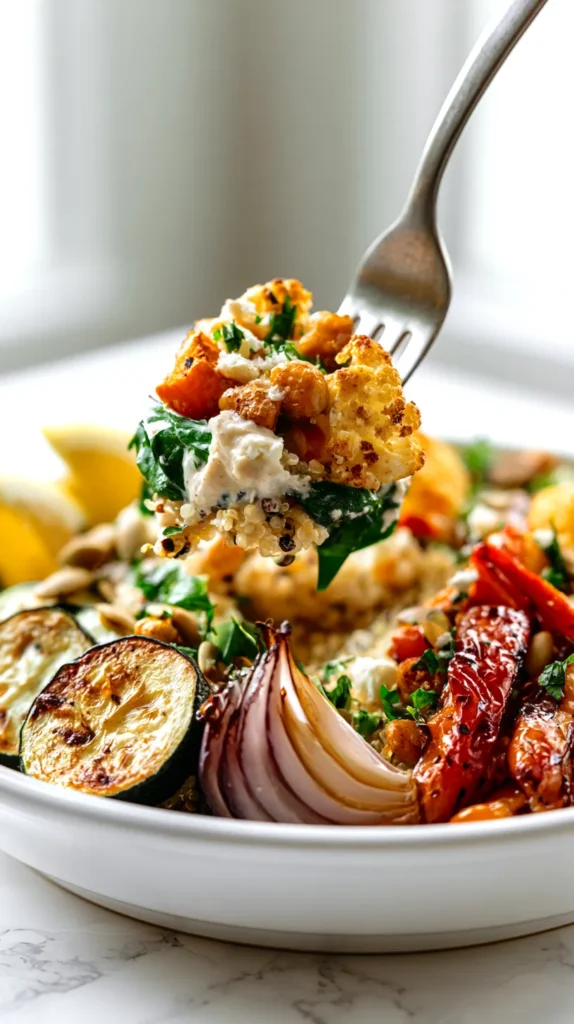
The Bowl Formula I’ll Keep Coming Back To
I like dinners that give me options without making me negotiate with twelve pans. That’s why roasted vegetable bowls make so much sense to me. They take humble ingredients and give them a little swagger. Not fake fancy. Just colorful, useful, and dinner-table friendly.
As a mom, I appreciate meals that can bend around real life. Some nights need extra protein. Other nights need a fast grain, leftover vegetables, and a sauce with personality. This recipe handles those shifts without acting precious. That matters more than a perfect topping lineup.
I also love that this meal plays nicely with Pinterest brains. It has color, texture, and that “wait, I could make that” energy. More importantly, it works beyond the pretty picture. A good bowl should taste better than it photographs, which feels like a tiny kitchen victory.
The real trick, though, isn’t complicated. Roast with space. Season with confidence. Add crunch. Use sauce like you mean it. Then let everyone build a bowl that suits their mood. No dinner committee required, which already makes it charming.
Some dinners ask for precision. This one asks for a sheet pan, a spoon, and the nerve to add more lemon. It gives you color without fuss and comfort without heaviness. That is a rare little win, especially on a night when dinner could go sideways.
And when a bowl makes vegetables feel like the main event, I’m not arguing. That kind of dinner earns repeat status, and I will take that little win gladly.